
We have just purchased a two-family house, the house was built in 1920, with a wooden facade/frame.
In 1975 a facade change was made and brick was used along with additional insulation.
Some questions have arisen, as we want to redo the interior surfaces and rewire the electricity. But as I understand it, I cannot add insulation on the inside, which I would have wanted to do if I make installation frames for the surface layer.
Another thing that worries me is that the previous owner insulated the upper floor, an additional insulation on the inside. Is this something that should be opened immediately to see if the wall has held up?
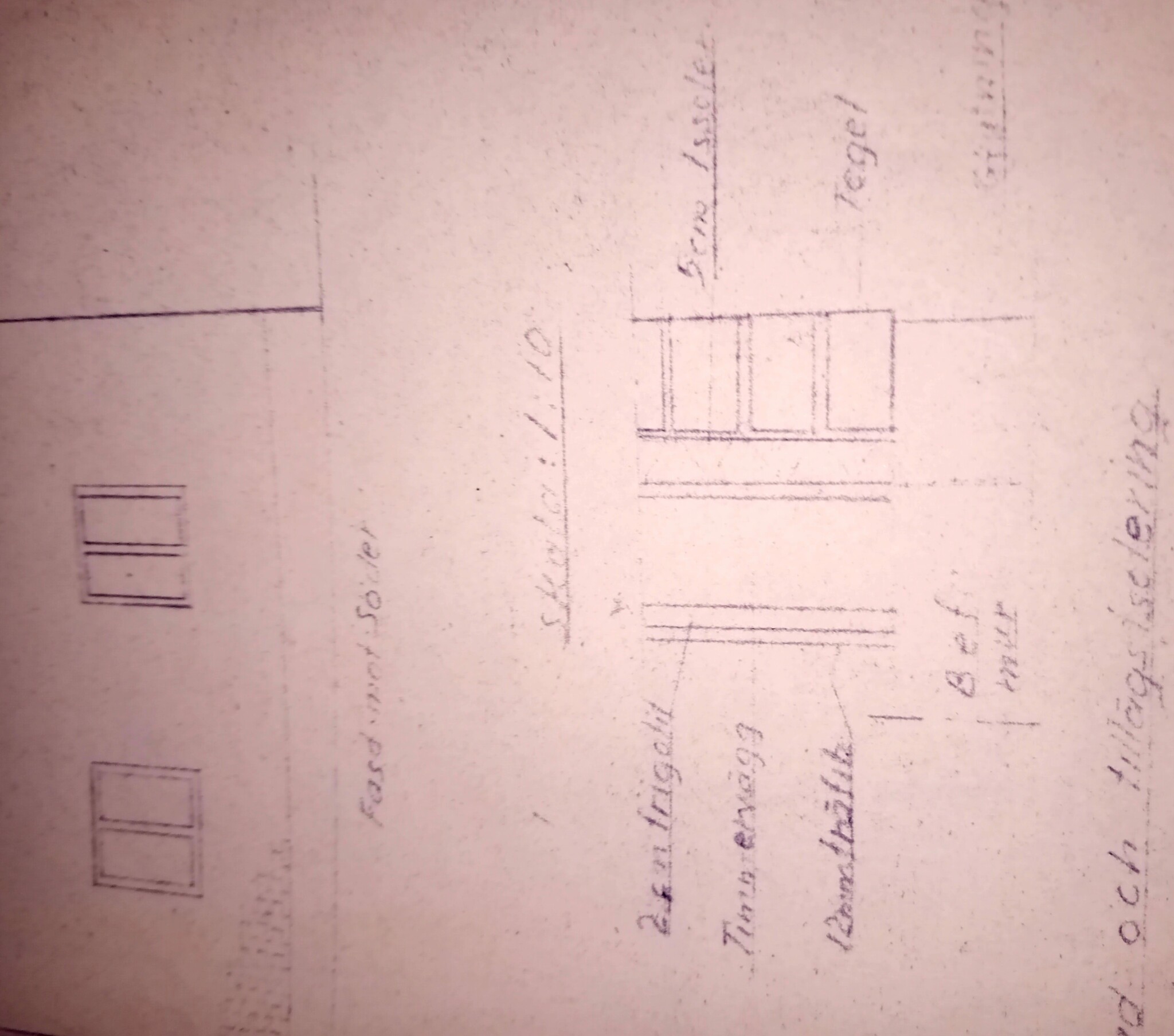
According to the drawing:
Inside to outside
12 mm wooden board
2 cm foam
Log wall
5 cm insulation
Brick
What are the risks in the construction, frankly, I would like to remove the foam from a fire safety point of view.
What is the correct construction of these walls so that they are as energy efficient as possible?
Thanks for the answer
In 1975 a facade change was made and brick was used along with additional insulation.
Some questions have arisen, as we want to redo the interior surfaces and rewire the electricity. But as I understand it, I cannot add insulation on the inside, which I would have wanted to do if I make installation frames for the surface layer.
Another thing that worries me is that the previous owner insulated the upper floor, an additional insulation on the inside. Is this something that should be opened immediately to see if the wall has held up?
According to the drawing:
Inside to outside
12 mm wooden board
2 cm foam
Log wall
5 cm insulation
Brick
What are the risks in the construction, frankly, I would like to remove the foam from a fire safety point of view.
What is the correct construction of these walls so that they are as energy efficient as possible?
Thanks for the answer
If you have timber walls, I would tear down to the timber, frame with 45s to run new electricity, insulate, and at the same time be able to straighten if the wall is skewed.
And is there no risk of moving the condensation point? Should one use a vapor barrier in this case? Also, is fiberglass insulation something to avoid and instead choose wood fiber insulation or similar?ingenjören101 said:
Click here to reply