
5,120 views ·
5 replies
5k views
5 replies
Home Theater - Interior Walls and Ceiling
Home Theater Room
My partner and I bought a house a little over a year ago. In the basement of the house, there's a smaller room that I think would be excellent as a home theater room. I've never built a home theater room or done anything similar before, so I thought I'd ask you for advice.
The dimensions of the room are:
Width 345 cm
Length 462 cm
Height 200 cm
The room, as mentioned, is in the basement. The walls are already covered with some type of plastic paneling that the previous owner must have installed. Behind the plastic wall is the usual rough concrete wall that's common in basements. The entire floor is covered with tile flooring. The ceiling is covered with wood paneling. I want to remove all of this.
Then, I want to (with the help of builders):
1. Install interior walls (drywall with metal studs) on all the walls in the room. Through the home insurance, I've been able to speak a little with a building engineer over the phone (a service the home insurance provides), and he told me that to avoid moisture problems, I should have an air gap between the concrete wall and the interior wall. Additionally, I should have air gaps both at the top and bottom where the wall meets the ceiling and the floor. To achieve this, I could use trim that allows air/moisture to pass through.
Question: Is what I've written correct? Is it feasible? Will I have moisture problems?
2. Install Ecophone Sombra A ceiling tiles in the room. The height in the room is, as mentioned, 200 cm with the current wood panel ceiling. Removing the wood panel should provide additional centimeters.
Question 1: Ecophone Sombra A can be hung with a suspension system. When I check Ecophone's website, it seems that Sombra A can be either hung with a suspension system or directly mounted on the ceiling. I'm unsure how much the ceiling is lowered by this. Does anyone know? Do I have enough height in the room to be able to use a ceiling like Sombra A?
Question 2: Is it possible to install spotlights in a Sombra A ceiling? I assume it requires using the suspension system?
Question 3: Can cables be run above the Sombra ceiling tiles?
3. Place a carpet in the room on top of the tile flooring. I've looked online, and there are breathable carpets that should work in basements and allow moisture to pass through. I don't think I would want to fasten the carpet to the floor.
Question: Does anyone here have experience with carpet in a basement on top of tile flooring? How has it worked?
4. The room is 345 cm wide and 462 cm long.
Question: Is that sufficient to make it a home theater room? I was thinking of having about a 100-inch screen.
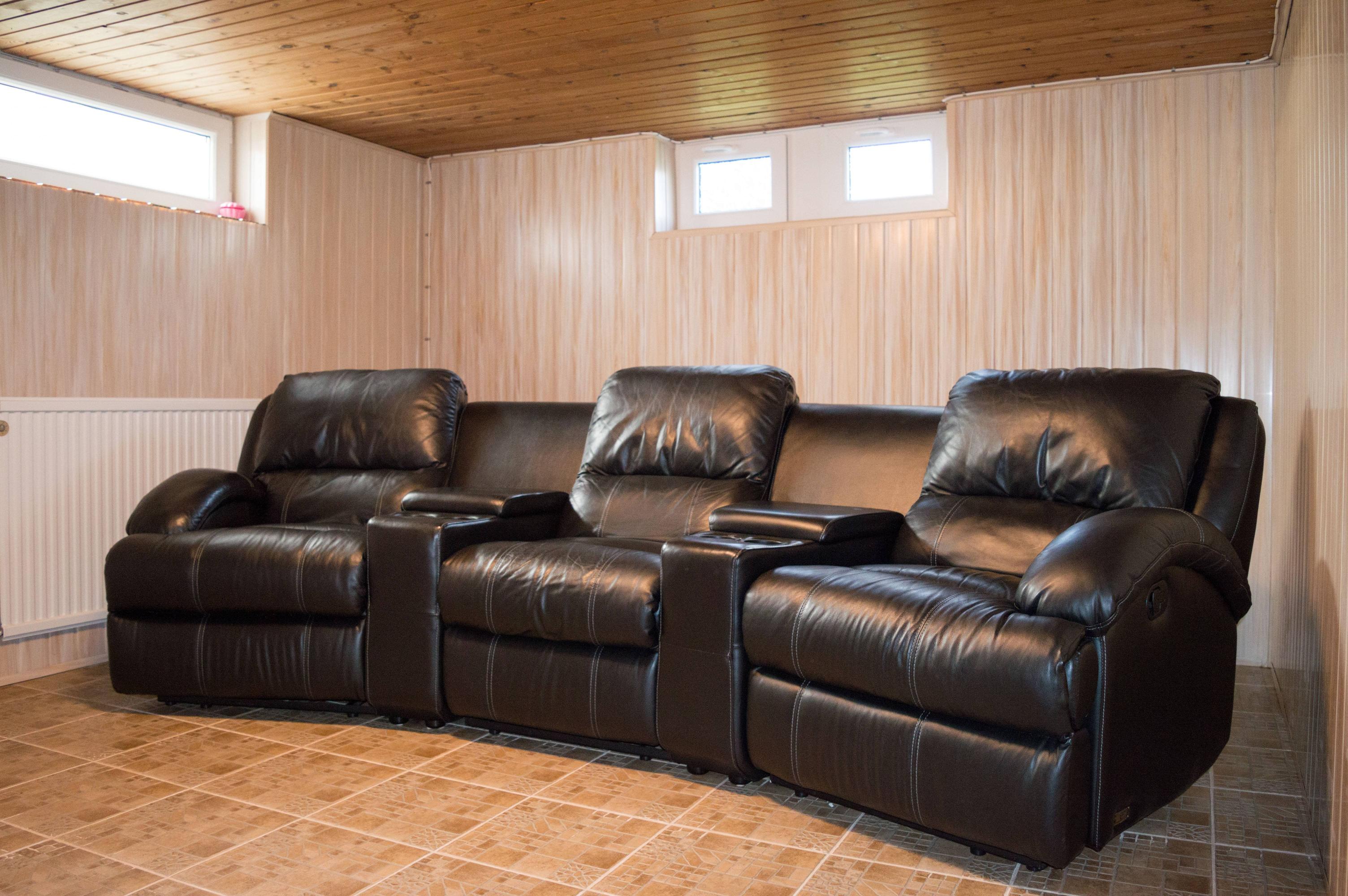

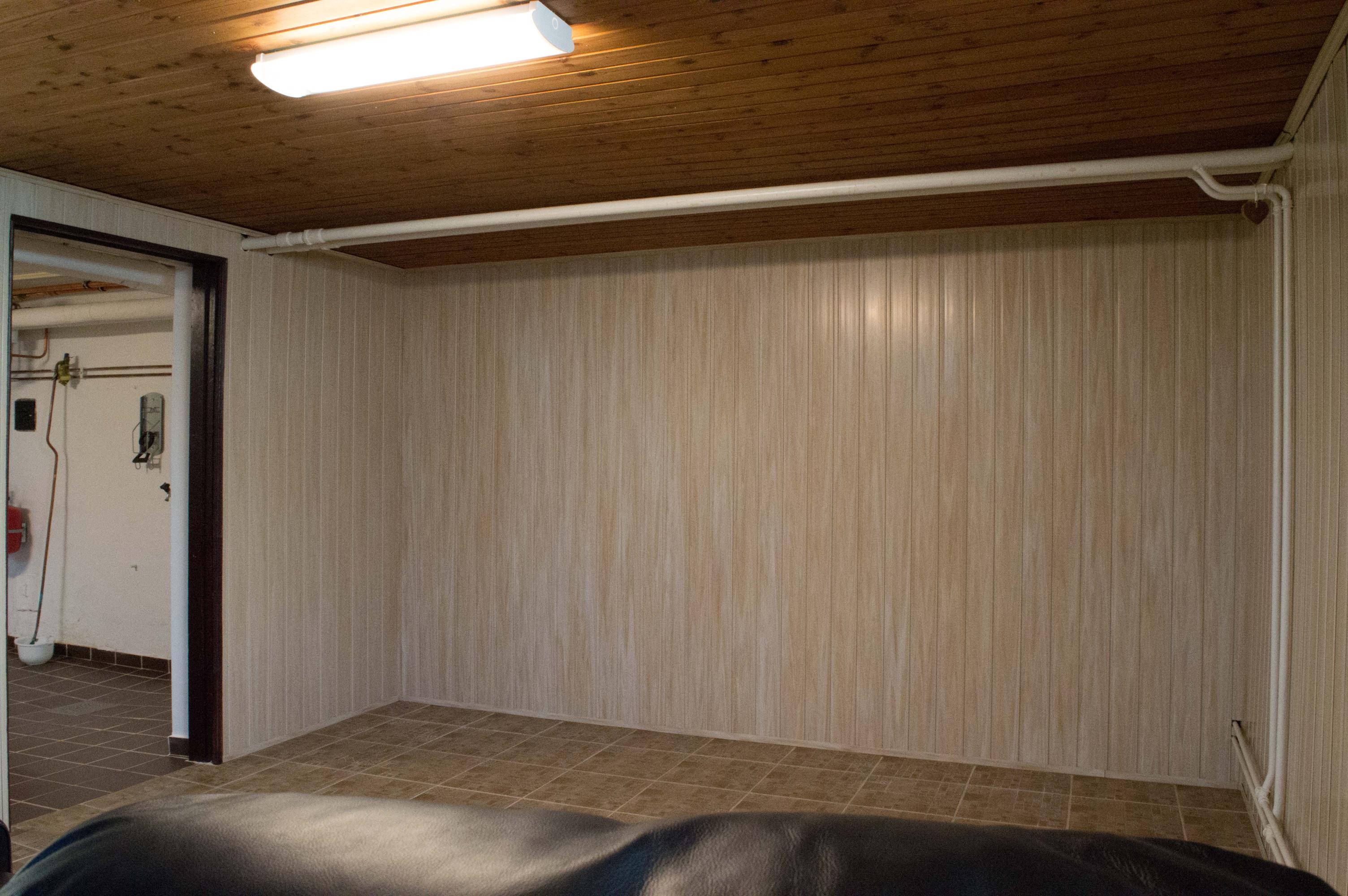
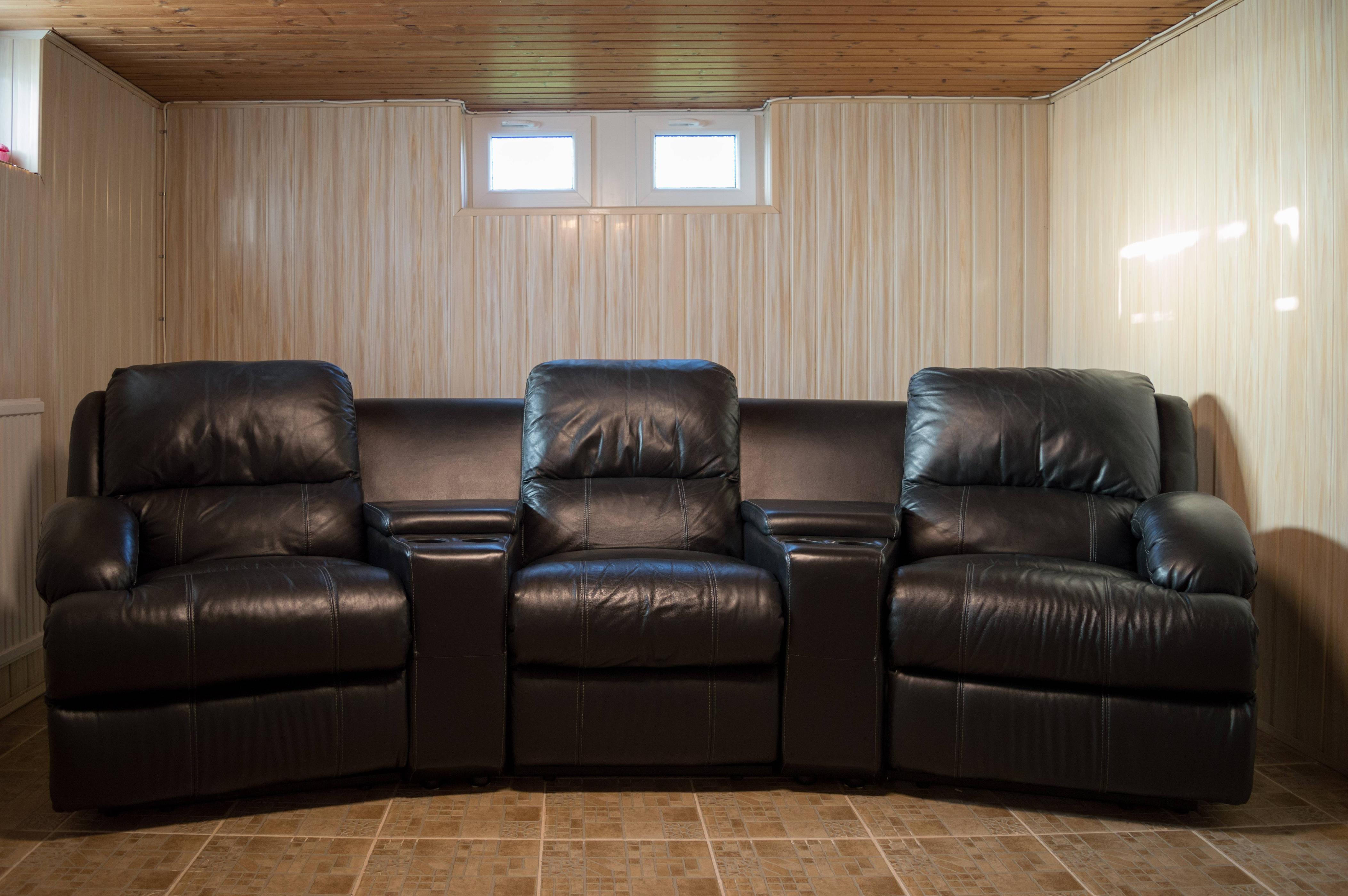
My partner and I bought a house a little over a year ago. In the basement of the house, there's a smaller room that I think would be excellent as a home theater room. I've never built a home theater room or done anything similar before, so I thought I'd ask you for advice.
The dimensions of the room are:
Width 345 cm
Length 462 cm
Height 200 cm
The room, as mentioned, is in the basement. The walls are already covered with some type of plastic paneling that the previous owner must have installed. Behind the plastic wall is the usual rough concrete wall that's common in basements. The entire floor is covered with tile flooring. The ceiling is covered with wood paneling. I want to remove all of this.
Then, I want to (with the help of builders):
1. Install interior walls (drywall with metal studs) on all the walls in the room. Through the home insurance, I've been able to speak a little with a building engineer over the phone (a service the home insurance provides), and he told me that to avoid moisture problems, I should have an air gap between the concrete wall and the interior wall. Additionally, I should have air gaps both at the top and bottom where the wall meets the ceiling and the floor. To achieve this, I could use trim that allows air/moisture to pass through.
Question: Is what I've written correct? Is it feasible? Will I have moisture problems?
2. Install Ecophone Sombra A ceiling tiles in the room. The height in the room is, as mentioned, 200 cm with the current wood panel ceiling. Removing the wood panel should provide additional centimeters.
Question 1: Ecophone Sombra A can be hung with a suspension system. When I check Ecophone's website, it seems that Sombra A can be either hung with a suspension system or directly mounted on the ceiling. I'm unsure how much the ceiling is lowered by this. Does anyone know? Do I have enough height in the room to be able to use a ceiling like Sombra A?
Question 2: Is it possible to install spotlights in a Sombra A ceiling? I assume it requires using the suspension system?
Question 3: Can cables be run above the Sombra ceiling tiles?
3. Place a carpet in the room on top of the tile flooring. I've looked online, and there are breathable carpets that should work in basements and allow moisture to pass through. I don't think I would want to fasten the carpet to the floor.
Question: Does anyone here have experience with carpet in a basement on top of tile flooring? How has it worked?
4. The room is 345 cm wide and 462 cm long.
Question: Is that sufficient to make it a home theater room? I was thinking of having about a 100-inch screen.
Of course, it should be a cinema room! Almost the same dimensions as mine, and it works well.
1. Why use studs and drywall on the walls that increase the risk of problems? The walls might be good enough as they are to just paint over. Alternatively, smooth them out if they need to be more even. Studs & drywall also make the room smaller. If it’s going to be a cinema room with a projector, you should go for a dark color (black). Paint with silicate paint or something similar.
2. Is the panel installed later as an interior ceiling, or is it nailed directly to the studs? Let it stay and paint over. I wouldn’t install anything that reduces the ceiling height. I have no experience with the Sombra ceiling, but if you’re looking for soundproofing features, it works best with an air gap behind, which lowers the ceiling further. But then you also have space for cables behind and can install spotlights.
Lighting is the least important thing in a cinema room, even if it looks cool and adds to the cinema atmosphere. I still don’t think you can have anything like that on while the projector is running. The slightest extra light ruins the blackness in the picture.
I installed wall lamps instead. There's also LED "tape" you can connect and place in the ceiling along the walls that adds very little to the height.
3. Carpet on the floor shouldn’t be a problem regarding moisture. Warmer to walk on, and it dampens sound well too. Just tape it at the edges and clamp under a skirting board.
I have a 106" tensioned screen and my room is only 3.30 wide. A bit more space for speakers on the sides would have been good, but it absolutely works.
Tips:
Invest in good blackout. A curtain works at the opening, and cover the windows. I’ve made fabric-covered frames that I can press into the window recesses for 100% blackout. The whole room is black.
Make sure all cables can be hidden in channels/skirting boards, so it becomes much nicer and easier to clean.
Start with the basics, so you can begin using the room. Then you can add later with Sombra ceiling, absorbers & diffusers, cozy lighting, and curtains and other knick-knacks.
1. Why use studs and drywall on the walls that increase the risk of problems? The walls might be good enough as they are to just paint over. Alternatively, smooth them out if they need to be more even. Studs & drywall also make the room smaller. If it’s going to be a cinema room with a projector, you should go for a dark color (black). Paint with silicate paint or something similar.
2. Is the panel installed later as an interior ceiling, or is it nailed directly to the studs? Let it stay and paint over. I wouldn’t install anything that reduces the ceiling height. I have no experience with the Sombra ceiling, but if you’re looking for soundproofing features, it works best with an air gap behind, which lowers the ceiling further. But then you also have space for cables behind and can install spotlights.
Lighting is the least important thing in a cinema room, even if it looks cool and adds to the cinema atmosphere. I still don’t think you can have anything like that on while the projector is running. The slightest extra light ruins the blackness in the picture.
I installed wall lamps instead. There's also LED "tape" you can connect and place in the ceiling along the walls that adds very little to the height.
3. Carpet on the floor shouldn’t be a problem regarding moisture. Warmer to walk on, and it dampens sound well too. Just tape it at the edges and clamp under a skirting board.
I have a 106" tensioned screen and my room is only 3.30 wide. A bit more space for speakers on the sides would have been good, but it absolutely works.
Tips:
Invest in good blackout. A curtain works at the opening, and cover the windows. I’ve made fabric-covered frames that I can press into the window recesses for 100% blackout. The whole room is black.
Make sure all cables can be hidden in channels/skirting boards, so it becomes much nicer and easier to clean.
Start with the basics, so you can begin using the room. Then you can add later with Sombra ceiling, absorbers & diffusers, cozy lighting, and curtains and other knick-knacks.

The minimum is 4.5cm with Sombra or another ceiling panel that should not be glued. This means extremely tight against the existing ceiling and tricky to get the panels in place, as you have to build with panels and the framework simultaneously. Since the framework is 45mm high. Glue panel is available in 20mm.


What is your ambition with this room? When I start the cinema project, the first call will go to Jens at Resonator.
http://resonatorstockholm.com/
...who will help me with the room design, without proper acoustic regulation it will be like that... or like in any living room.
http://resonatorstockholm.com/
...who will help me with the room design, without proper acoustic regulation it will be like that... or like in any living room.
Hello! I have a room with approximately the same dimensions in the basement that will become a home theater, and the size is just right. What's more important to consider is the distance from the screen to the projector and how large an image the projector can project at that distance.
I'm going to remove the wall covering, skim coat, and paint the plaster.
"It was suggested to paint with silicate paint or something similar." When I talked to the paint store, they said that silicate paint is for outdoor use and indoors one should use indoor paint - simply acrylic-based wall paint. It also supposedly has the advantage that the paint "releases" if there are moisture problems... I'm not really sure what's best there. What do the experts say?
I'm going to remove the wall covering, skim coat, and paint the plaster.
"It was suggested to paint with silicate paint or something similar." When I talked to the paint store, they said that silicate paint is for outdoor use and indoors one should use indoor paint - simply acrylic-based wall paint. It also supposedly has the advantage that the paint "releases" if there are moisture problems... I'm not really sure what's best there. What do the experts say?

The paint store is WRONG!blygarn said:...
"Paint with silicate paint or similar" was suggested. When I talked to the paint store, they believe that silicate paint is for outdoor use and indoors you should have indoor paint - simply acrylic wall paint. It is also supposed to have the advantage that the paint "releases" if you have moisture problems... not really sure what is best there. What do the experts say?
Never plastic paint on basement walls.
Silicate paint.
If the sound becomes too "hard" or there's too much echo with just basement walls, thick fabric curtains should be able to address/mitigate this.
Click here to reply