It was difficult to write a headline that reflects the issue here.
The previous owner of our house opened a hole and made an arch between the largest bedroom (later "dining room") and the living room. We considered installing double doors to reclaim the bedroom, so we removed the moldings to check which module size would be reasonable.
When the hole was exposed, we became puzzled. I'm attaching several images below. The question, in short, is whether the wall is in any way load-bearing.
The house is one-story with a basement, built in '63. We have truss roof rafters (W-shape) and, as I understand it, they should be self-supporting. However, we see what we believe might be a beam for a door shown on the house plans (which is no longer there), which has clearly been cut into.
Here come the images, and a drawing of the ground floor. It concerns the longitudinal wall, furthest to the west on the drawing. I have marked in red how the wall runs today. The roof ridge runs over the middle, as seen from the eastern exterior wall.
Drawing, with some red marking. The original door is not there today, as mentioned.
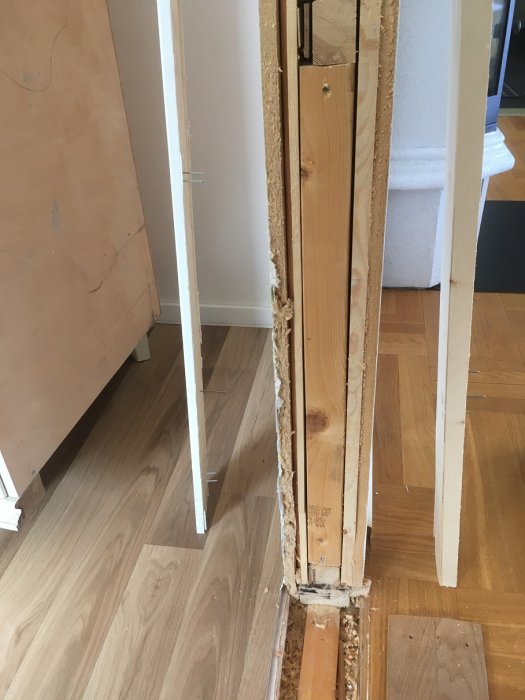
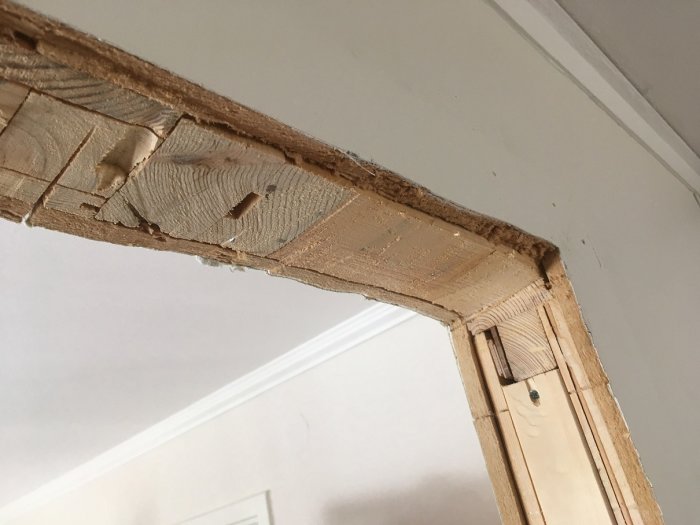
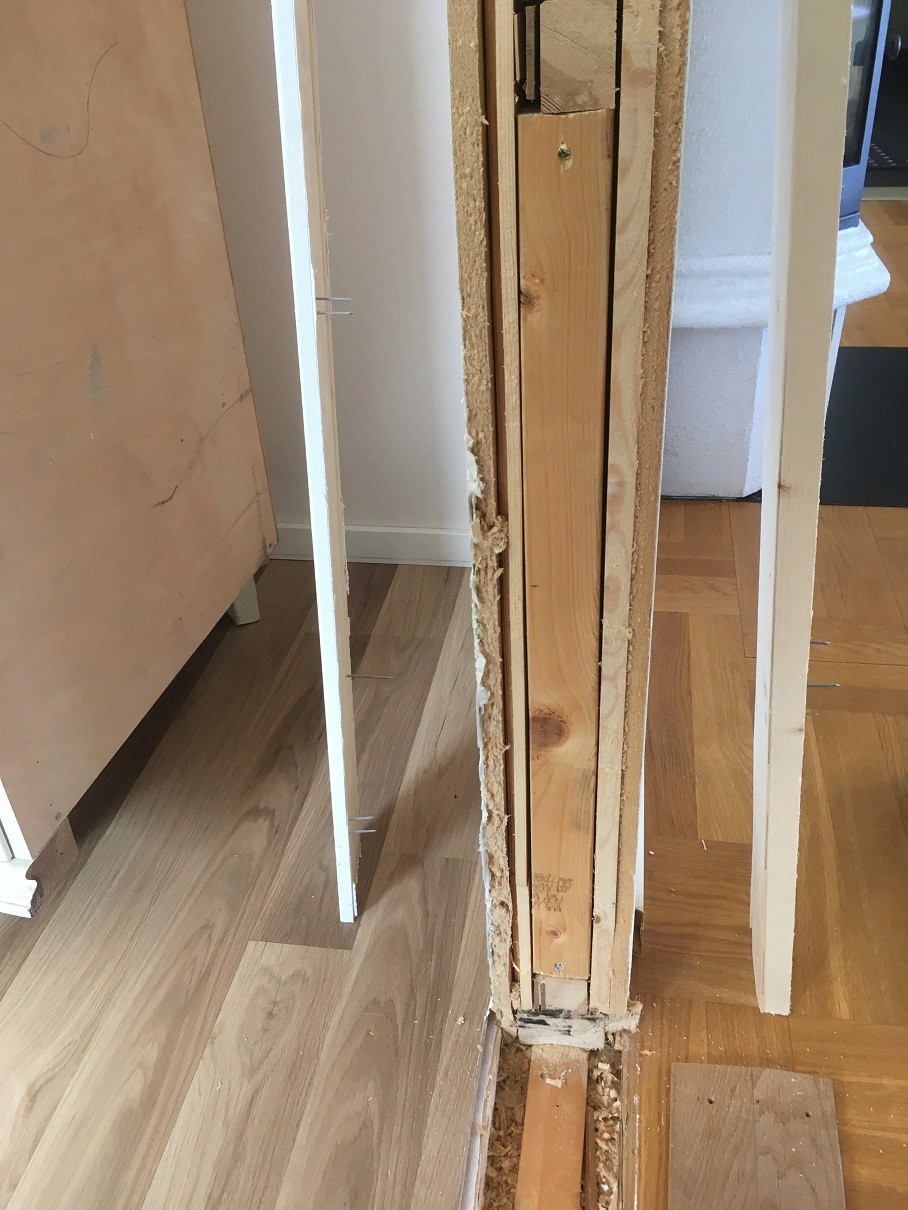
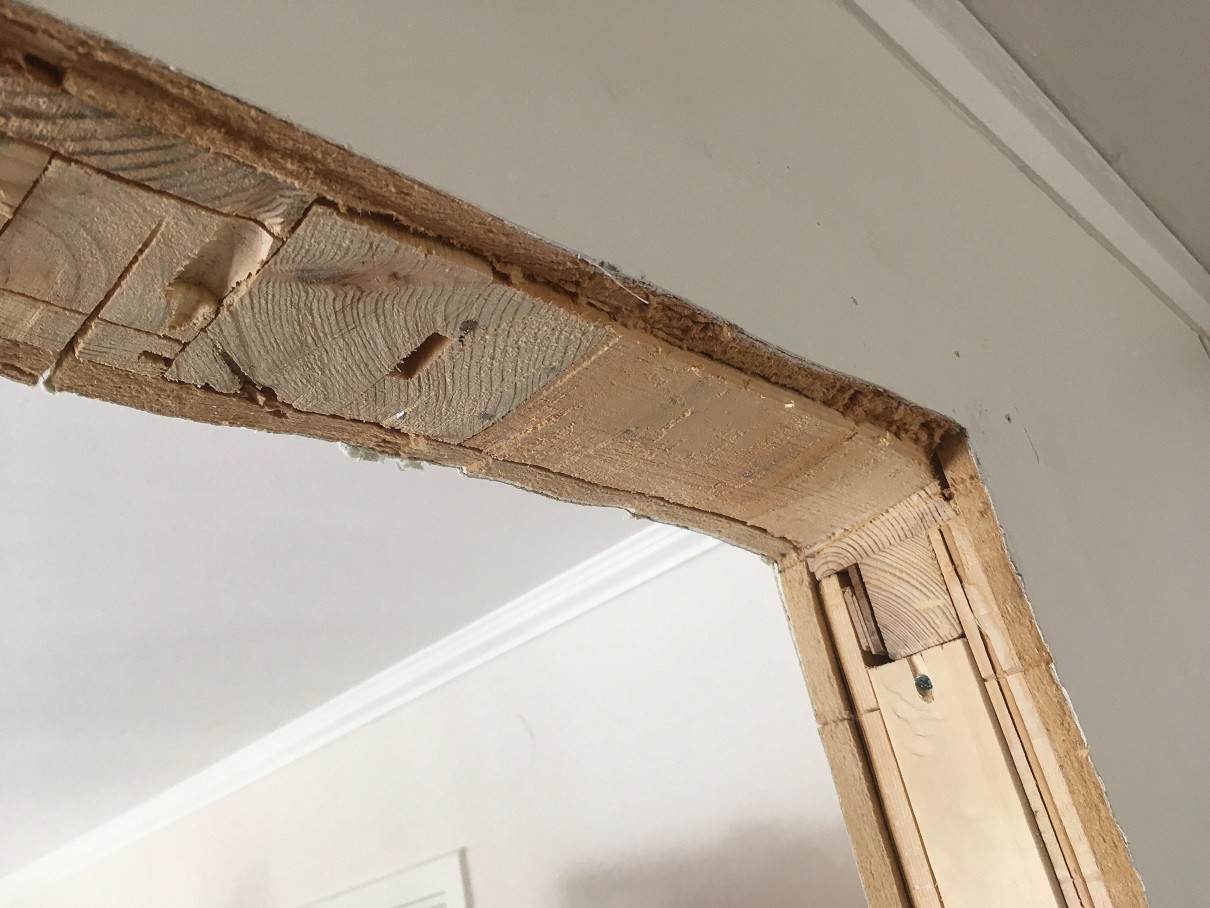
These two images are the upper and lower corners to the east. In the image of the upper corner, the suspected beam can be seen, where a handy person has cut a small 90-degree angle. Next to it are two larger vertical studs and one smaller one, a total of 3 (!), and some cut-off nails. Below is a horizontal stud that is slightly shimmed.
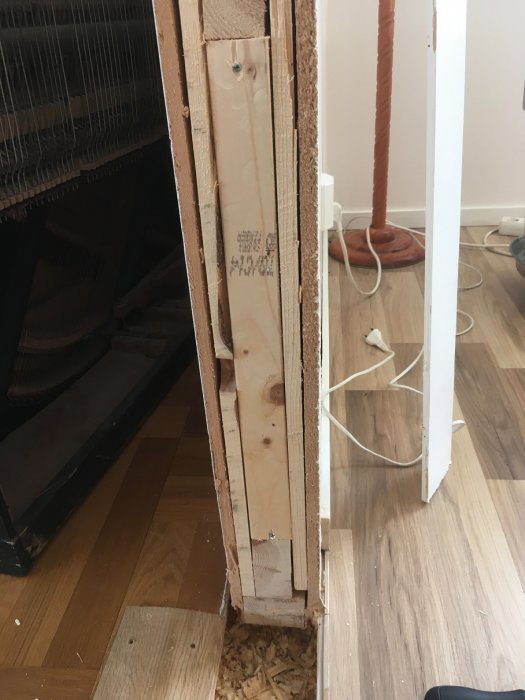
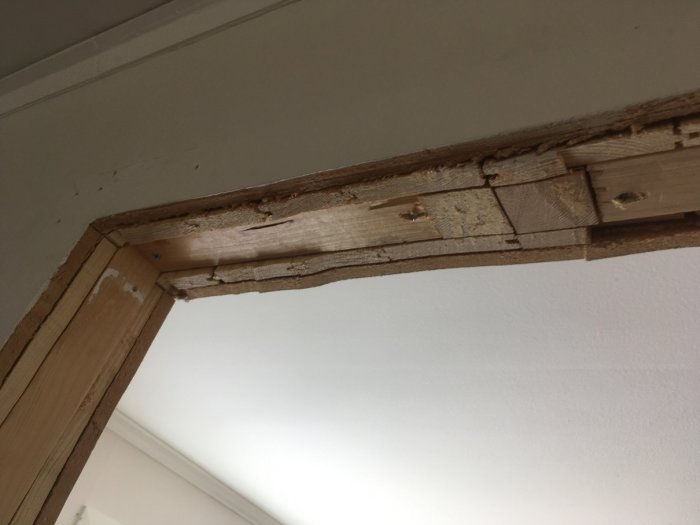
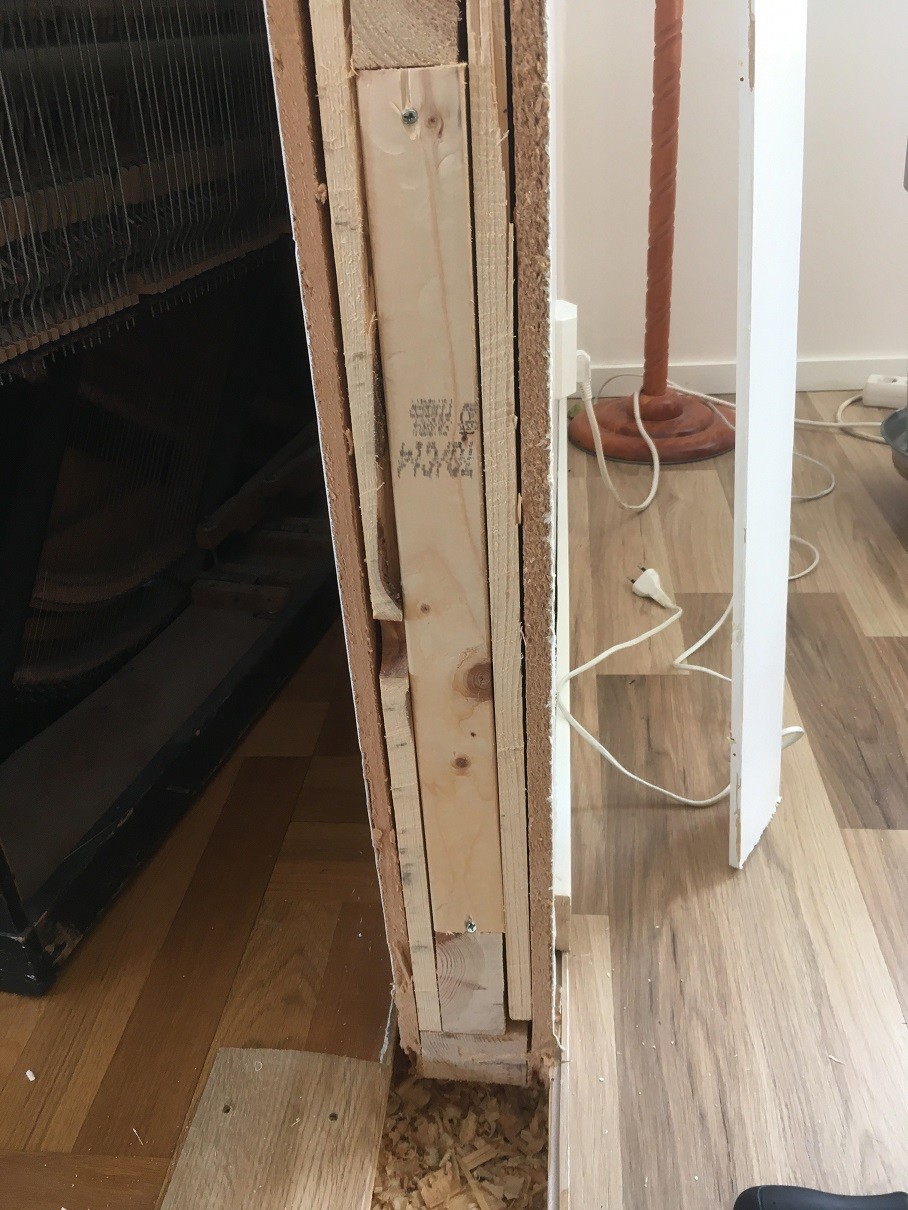
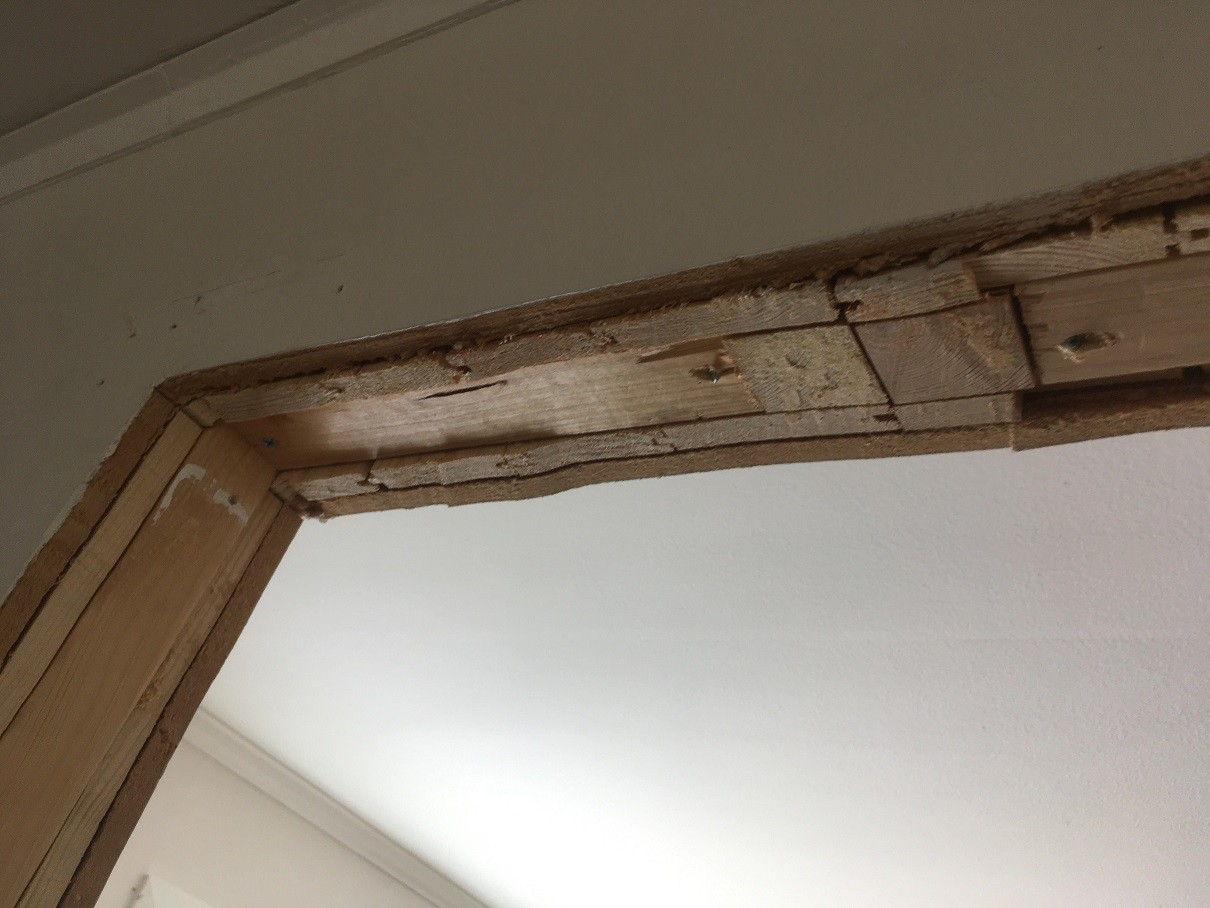
These two images are the upper and lower corners to the west and are just to get an overview of how it was done. The reciprocating saw has been used; vertical and horizontal studs have been cut off, and timber has been added between the panel gaps. The sill cut off.
Is this okay? Obviously, the hole is measured so that you can at best fit a 13.3x20 door frame with slightly too large margins. We would probably have liked to cut up to 13.3x21. But seeing this, as amateurs, we're inclined to think we might have other problems than poorly planned measurements.
Sawing more upwards is unlikely to make any difference in durability.
Ok, but is it right from the start? Do you mean that the wall is probably not load-bearing at all? No chance that it's a load-bearing beam for the old door on the drawing then?
If there are truss rafters, the wall is not load-bearing. It is a Hultfredshus. They used special wall elements. It is most clearly visible in image 2. The elements should not be left hanging in the air in that way. Some simple form of reinforcement is appropriate.
Click here to reply
Vi vill skicka notiser för ämnen du bevakar och händelser som berör dig.