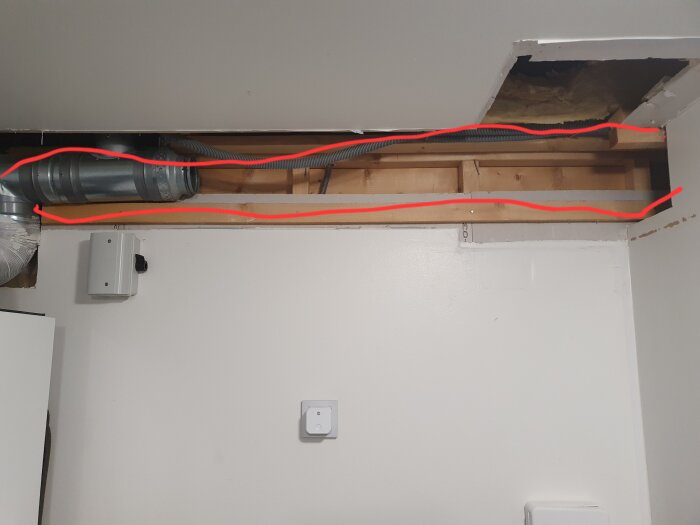
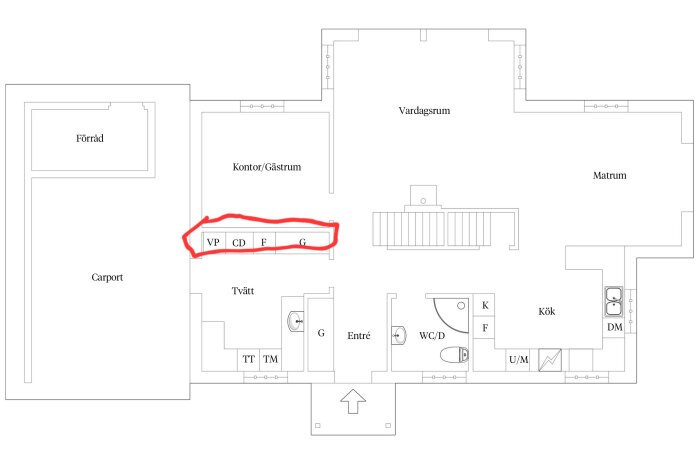
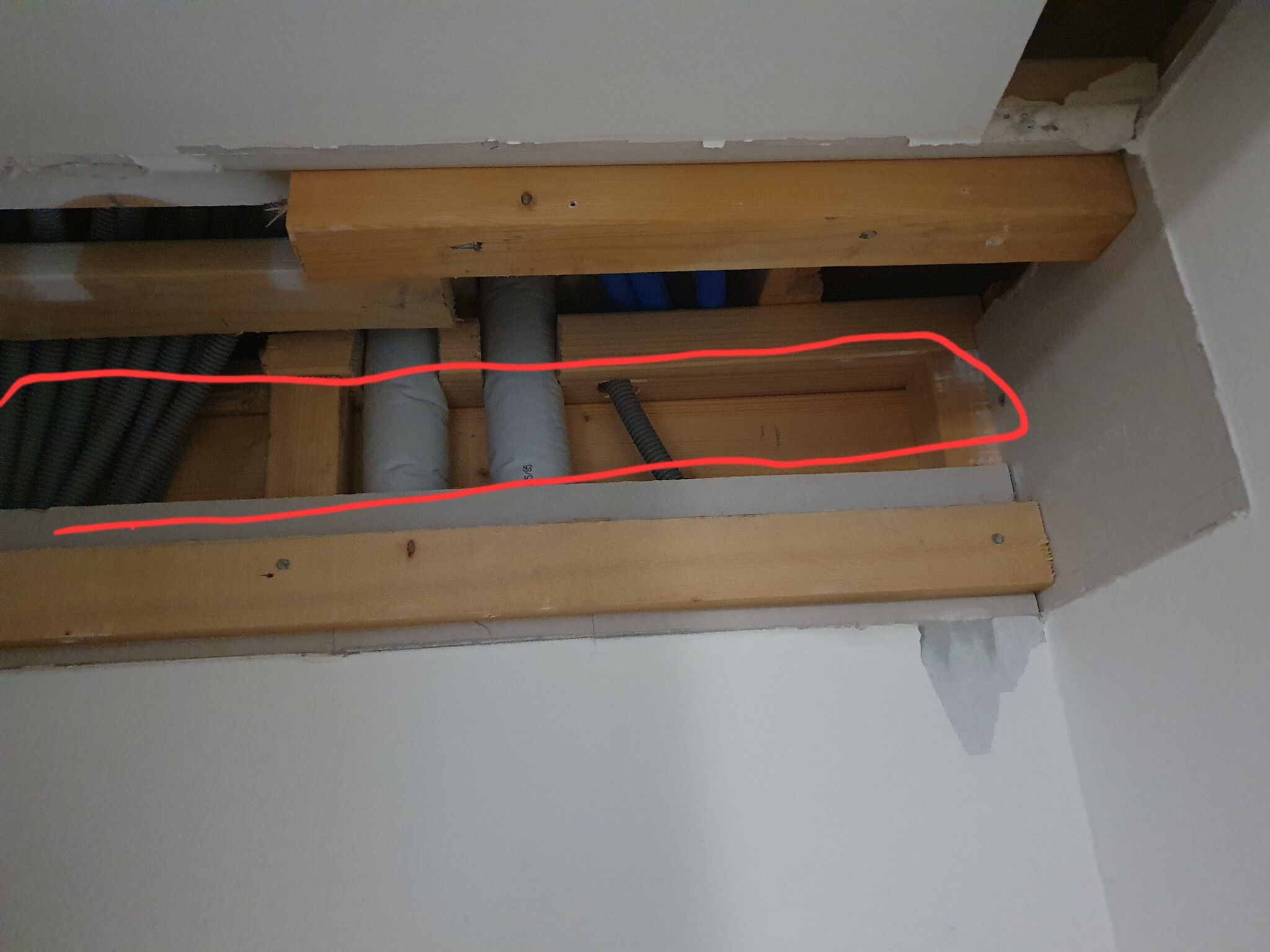
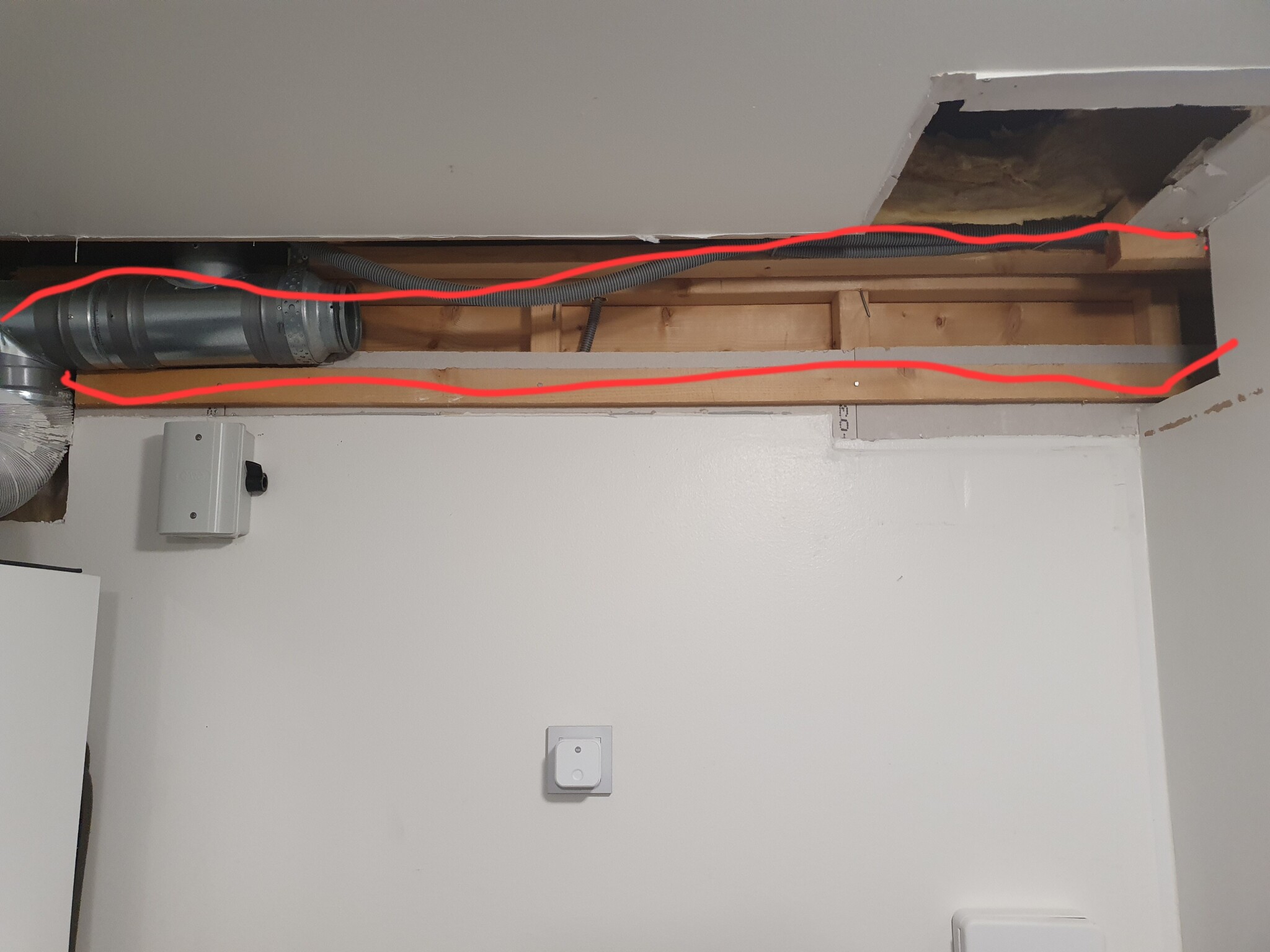
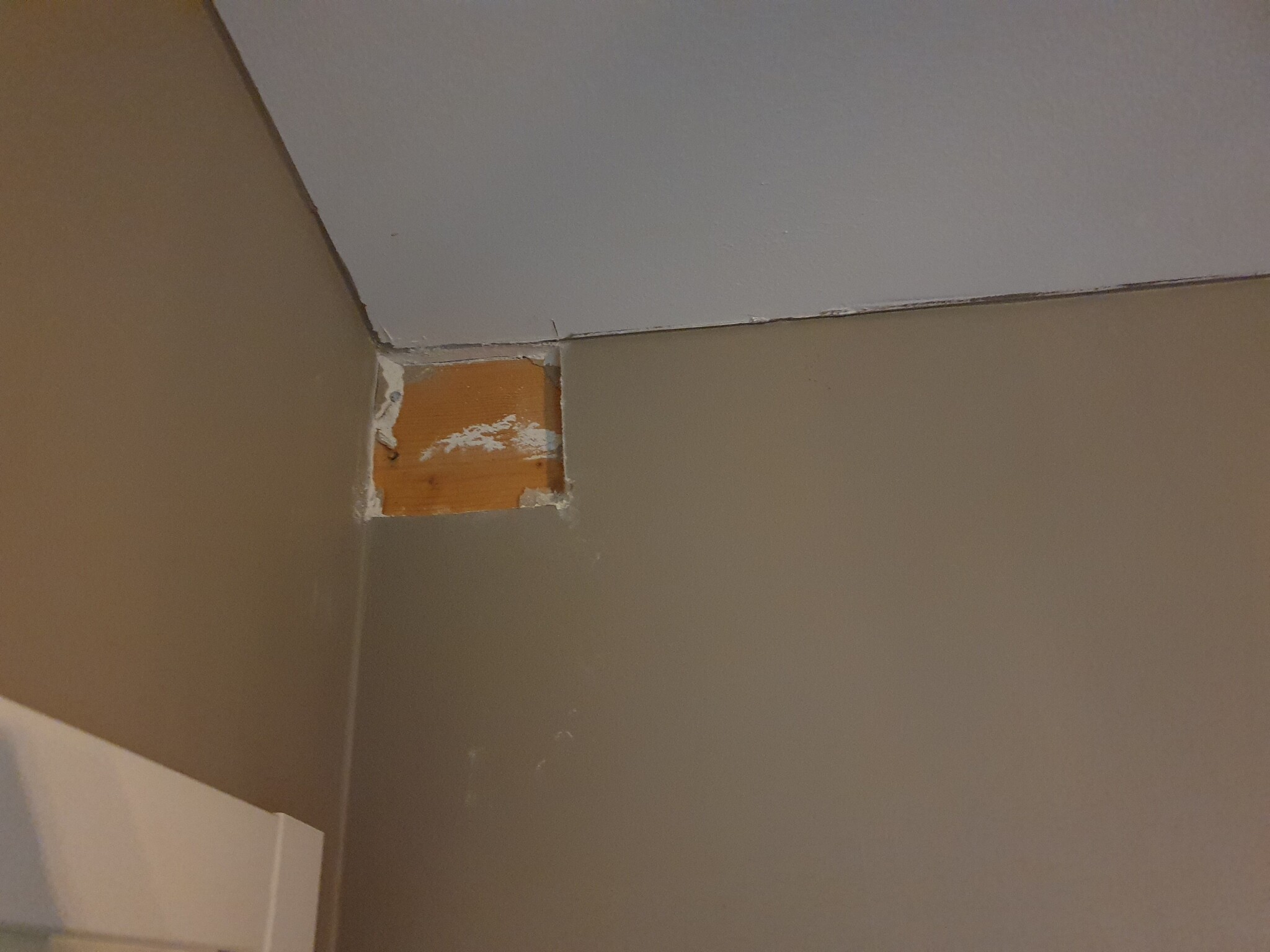
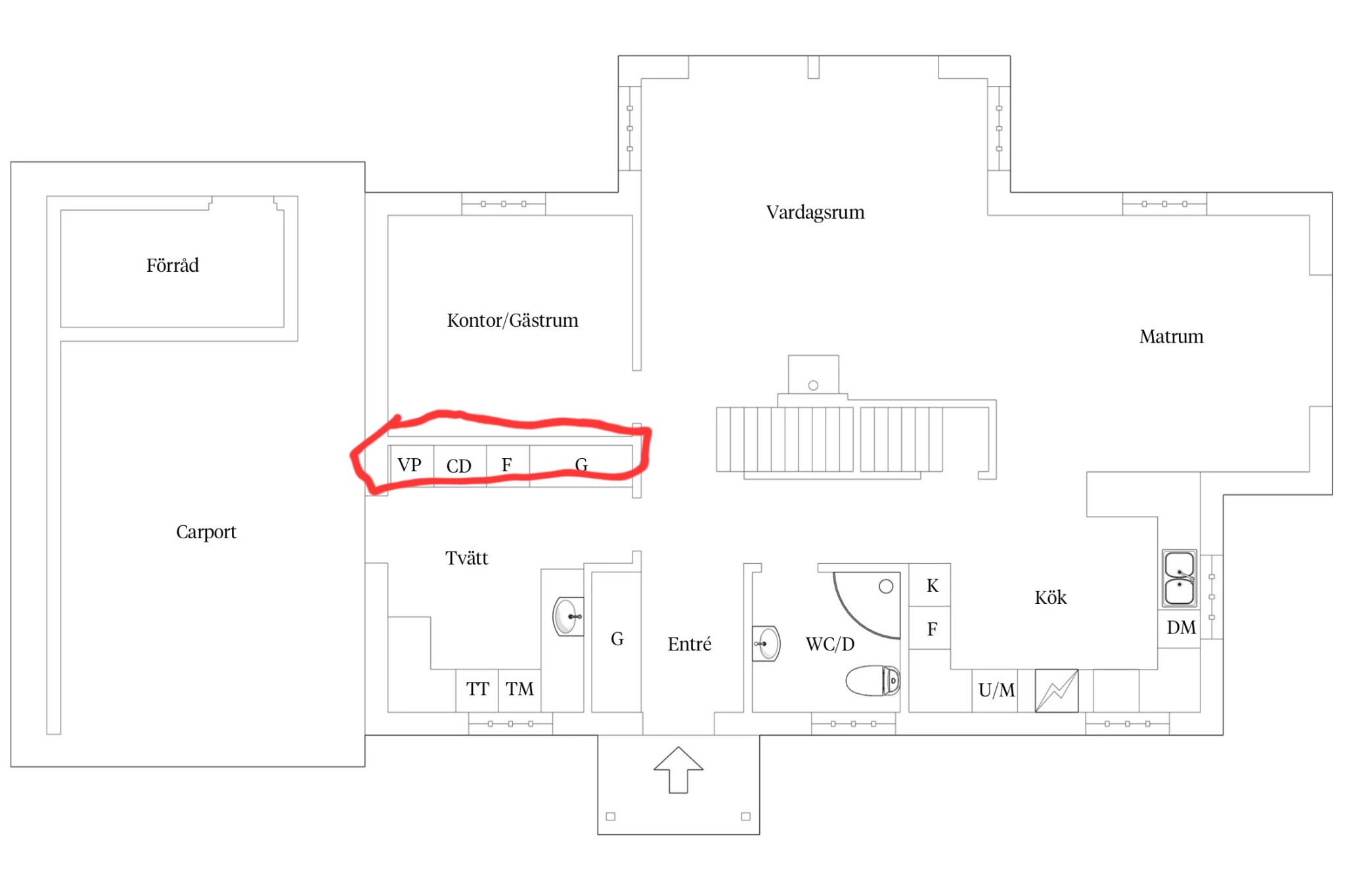
Planning to install supply air ducts. I plan to run a duct through the wall, up near the ceiling, between two of the rooms. However, when I remove the plasterboard, I see that a joist, presumably 220x45x3600 mm, runs horizontally in one of the rooms. The room is a laundry room and in that wall, there are both water and electrical lines since the electrical panel is located there. The joist seems to be present only in that room and doesn't extend through the house.
I was thinking of drilling a 130 mm hole right through it but I'm uncertain if it's load-bearing in any way or if it merely serves as protection for electrical cables and water pipes. Maybe it would be better to try to go above/below the joist?
Anyone willing to make a guess?
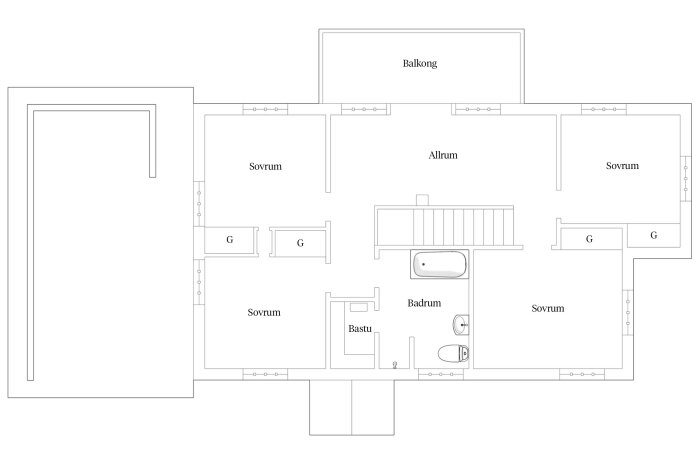
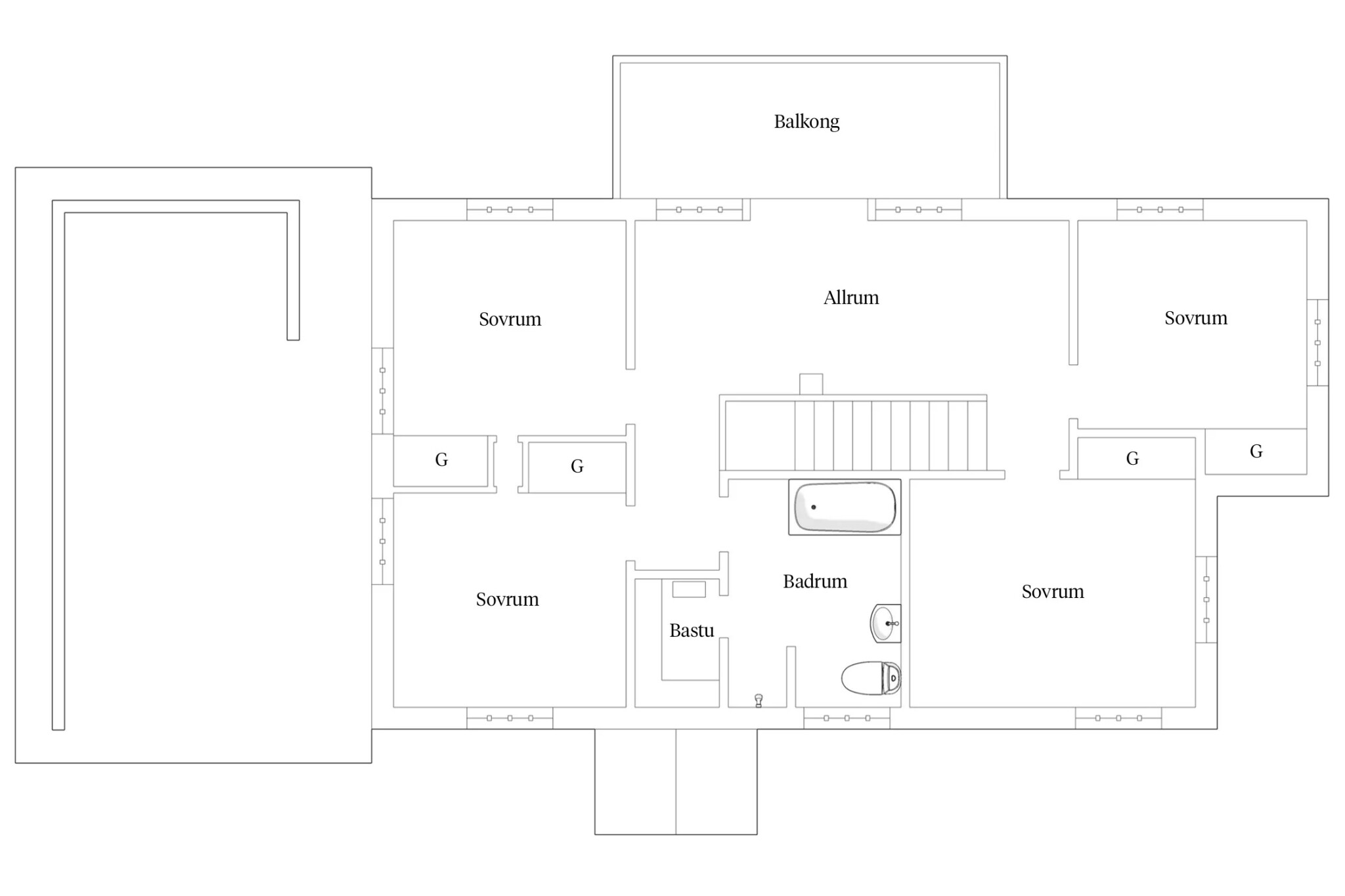
The house is a two-story villa built in 2009. There are two steel beams running horizontally through the house on the lower floor which should support everything. The wall in question is on the lower floor.
The joist runs horizontally behind the electrical and water lines.
Yes, there is a support beam in the wall to bear a floor/ceiling, use a hole saw and make your hole..
You can see where the beams for the upper floor go so you don't drill directly under one..
Yes, it's a load-bearing beam in the wall for supporting a floor/roof, go ahead and use a hole saw to make your hole.
You can see where the joists for the upper floor go so you don't drill directly under one.
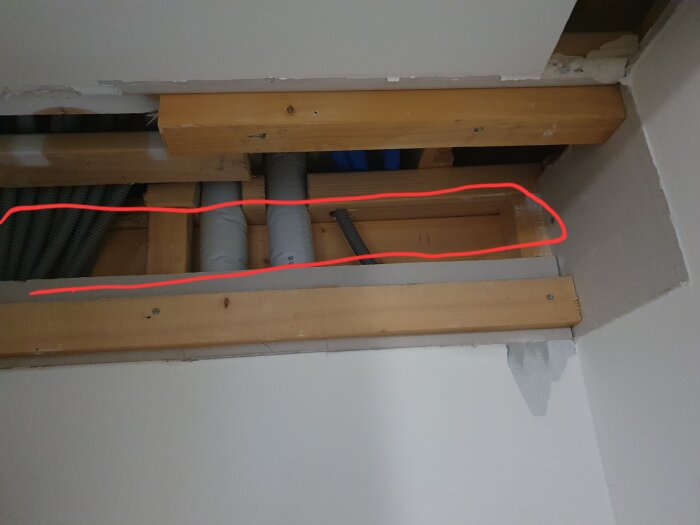
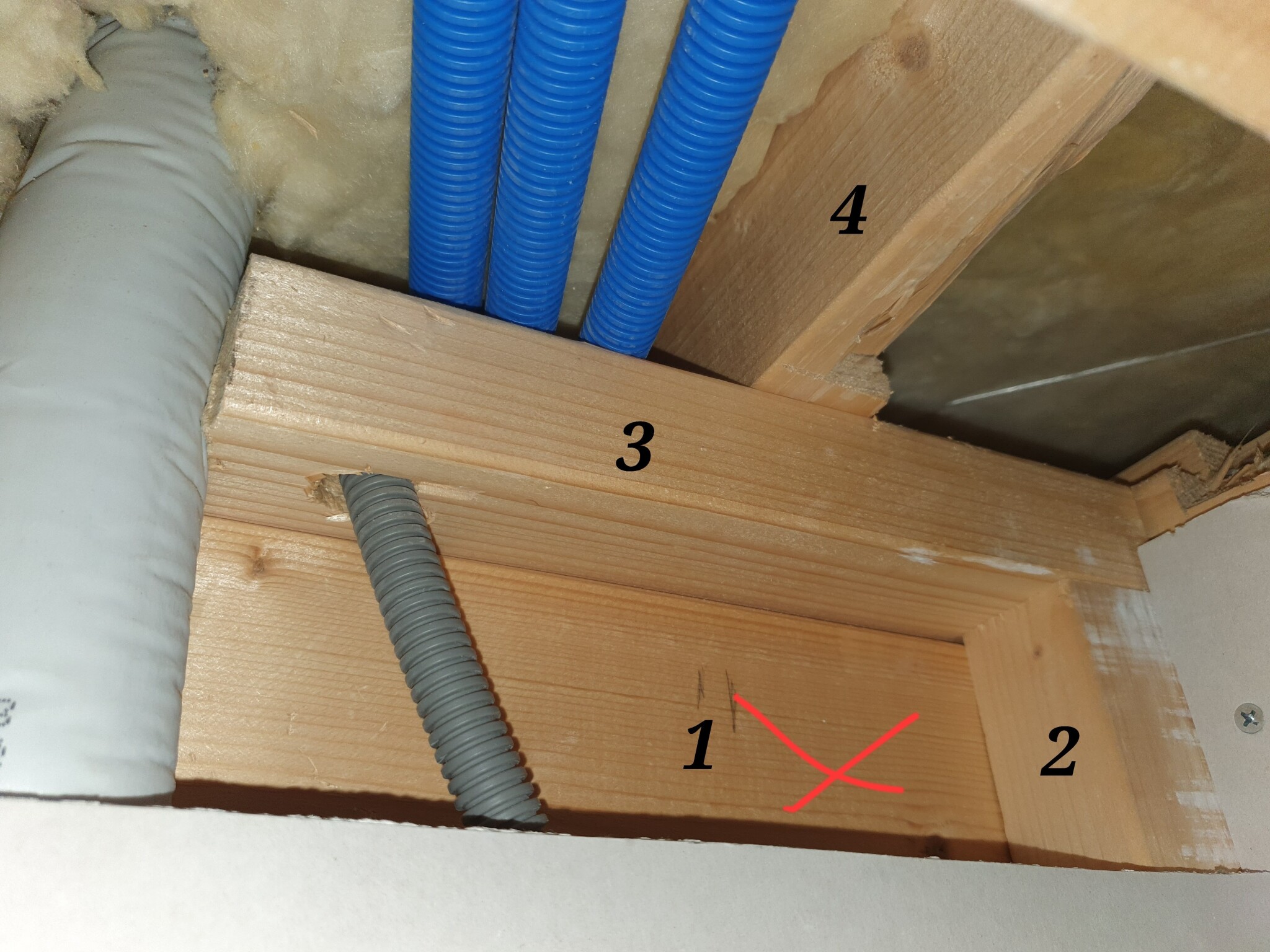
Thanks! It sounds risky to saw into a load-bearing beam though. But I've looked a bit more. It looks like this (risking incorrect terminology, but see picture and numbers):
1. The stud/load-bearing beam I was thinking of drilling through.
2. Standing wall studs that are in front of #1.
3. Ceiling joist/top plate. This rests on top of #1. It also rests on the standing wall studs, #2.
4. Floor beams for the upper floor? These in turn rest on #3.
So if I'm thinking correctly, #2 and #3 should primarily be load-bearing and must be avoided, while #1 itself is not load-bearing but perhaps relieving/stabilizing and okay to saw through, even if the hole is >50% of its width. Am I thinking correctly?
1 is supportive for the floor joists between the posts. Since the floor joists are not directly above the standing studs in the wall, this offset becomes supportive.
1 is load-bearing for the floor joists between the posts. Since the floor joists are not directly above the upright studs in the wall, that offset becomes load-bearing.
Thank you for the response!
Does it matter where I make the actual hole? For example, if I make a hole between the floor joists so that the hole is not directly under a floor joist.
It was so long ago that I studied strength of materials, but it can probably be solved with reinforcements even though it's a very large hole.
It might be easier to place the hole further down below the beam.
Make the hole as far to the left as possible your house will not collapse..
3 is a hammarband now that you have learned so much you also know the name of it😉
You can also s:a yourself over the hammarband between the floor beams which is the easiest
Yes, I'll see if I can get over with some flexible duct. Going from below means the duct would end up unnecessarily far down on the wall in the other room.
JJansson69 said:
Make the hole as far to the left as possible; your house will not collapse...
3 is a hammarband now that you have learned so much, you also know the name for it😉
Awesome! I'll see if I can get over with a flexible duct; otherwise, I'll have to try to place the hole exactly between the floor beams. Sort of behind the electrical duct and next to the water pipe... Great to be able to flaunt "hammarband" at work, which is as far from this as you can get, thanks!
Yes, I'll see if I can make it across with a flexible duct. Going underneath means the duct will end up unnecessarily low on the wall in the other room.
Awesome! I'll see if I can make it across with a flexible duct, otherwise it'll be about trying to place the hole right between the floor joists. Like behind the electrical duct and next to the water pipe... Cool to be able to shine with "hammarband" at work, which is as far from this as you can get, thanks!
You don’t use flexible ducts in walls and joists, you have to use bends and pipes...
You don't use flexible hoses in walls and joists, rather you should use bends and pipes.
It's likely I'll drill through the wall plate instead. I have a hard time seeing how I can get even 30 cm of pipe into that small space above without cutting even more structures.
Partially, they become a dust trap inside, and they are not as shape-stable as solid parts. The sound will probably be amplified too, but I'm not a sound expert...
Click here to reply
Vi vill skicka notiser för ämnen du bevakar och händelser som berör dig.

Matti_75 said: