I am renovating a bit at home in the apartment and have moved a wall slightly. This means that I also want to move an interior door a bit so that it doesn't end up right at the edge of the wall.
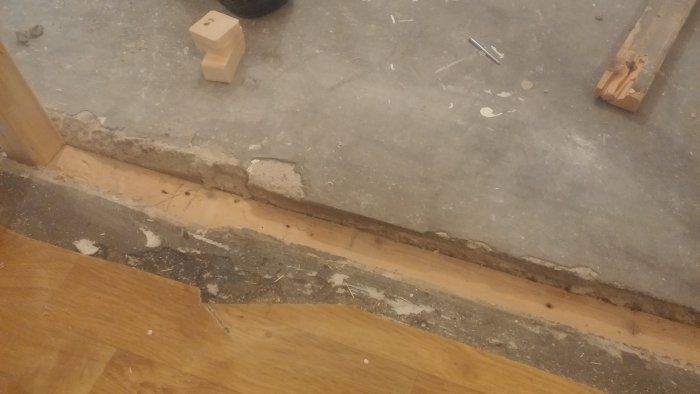
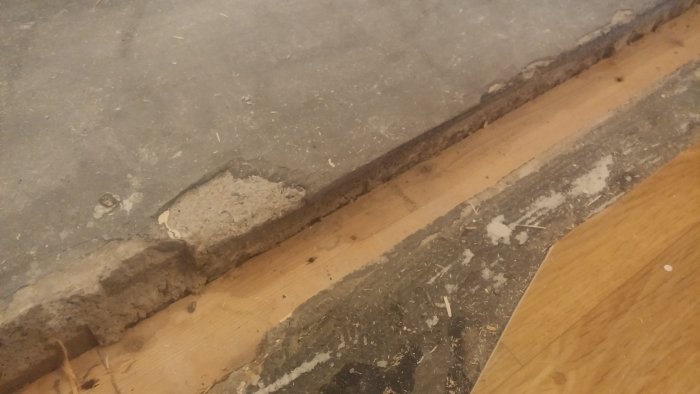
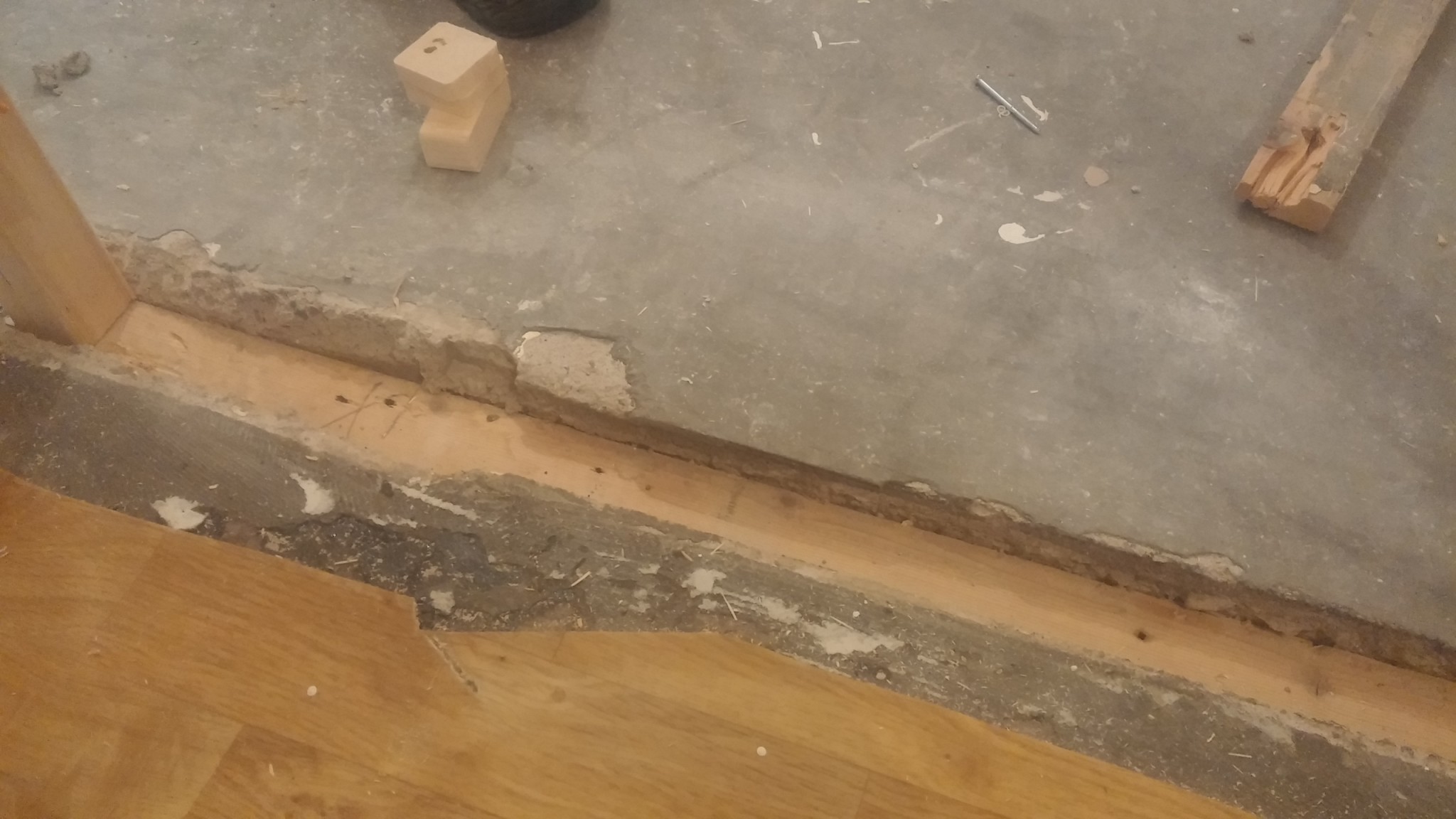
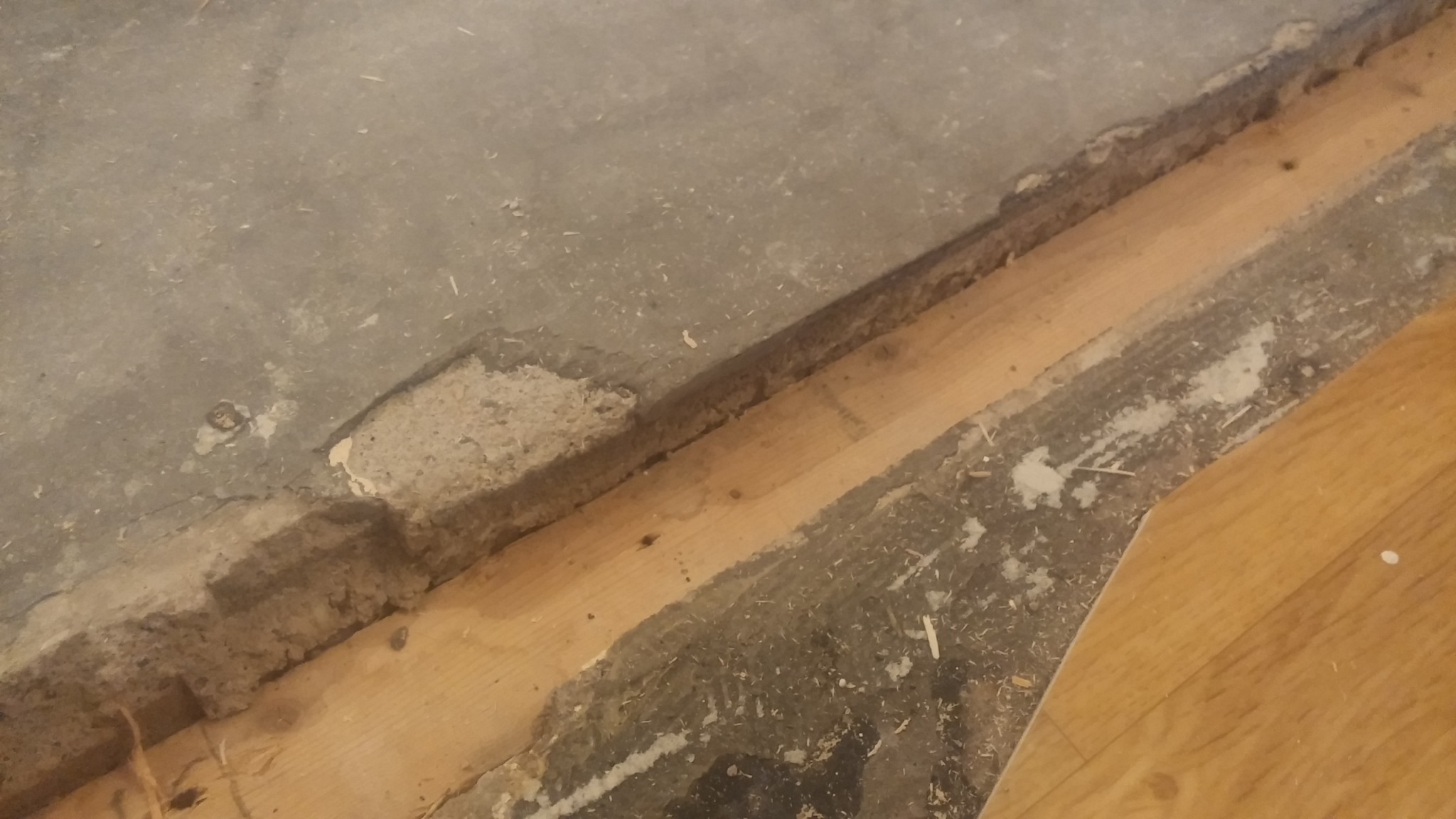
When I began with that, it turns out that part of the wall and the studs for the door are attached to a wooden beam that is embedded in the concrete. I've chipped away the concrete now (what a fun part it is to chisel by the way!!!) so that I can attach the door studs where I want them.
But now there's quite a hole where the threshold will be! It's about 30mm deep.
How would you handle this here? Embed the beam, and if so, with what? Concrete seems to only come in 25kg bags, do I really have to buy one of those?
I've read here that one shouldn't embed concrete, but the beam has already been embedded for almost 50 years since the house was built, and it still seems completely healthy.
Otherwise, of course, I can also break away the beam before I fill the hole.
Or maybe it's enough to try to fit pieces of wood so that it's level as well as possible?
If you plan to have laminate or parquet flooring on top, it's enough to support underneath with joist timber. You screw the joist into the lower part, or alternatively glue it.
It's really only if you plan to have glued carpet that you need to fill in with a cement-based product.
You're not supposed to cast wood in concrete if it's on ground level, if it's above ground level it probably won't rot anyway. Depending on how much work it is, I would have taken it out and cast it again and then put it back, but if that means an unreasonable amount of work, I probably would have ignored it, I think.
If it's on ground level, I definitely would have removed it all.
Thanks for both answers! I just wish I had seen corres' answer before I got too impatient because I'm going to have parquet there later.
And now I've removed the wood. It took a long time, first had to remove all the studs I had already put in for the new door, and then it was a lot of work with the crowbar and drill, but it felt somehow like the best choice, even though it might not have been necessary since it's at the top of the house.
Now I instead have a hole that's about 8cm deep and 3.5cm wide. I've never done any casting before, what should I use to fill this? Fine concrete?
And should I fill all the way up to the edges, so to speak, or leave a bit for leveling compound or something the last bit, or will it be smooth and even anyway? I'm thinking if concrete settles when it dries and so on?
Do I need to buy a lot of masonry tools, or do you think it would work simply to pour in the concrete (or whatever I'm supposed to use ) and smooth it out with a regular spatula?
ah, put wood in the hole again so you don't have to mess with cement and such in the apartment. It just wastes buckets and tools unnecessarily
If you do it, buy fine cement and mix carefully with a wooden spoon or plank, and an old spatula is good for smoothing it out.
You can top it up to 5mm above the floor at most, more than that and you'll get a bump later.
You shouldn't embed wood in concrete if it's at ground level; if it's above ground level, it won't rot anyway. Depending on how much work it is, I would have taken it out and re-cast it, then put it back again. But if it means an unreasonable amount of work, I probably wouldn't bother.
If it's at ground level, I would definitely remove everything.
Unfortunately, I think I'll have a hard time laying down wood again, it's really not even at the bottom of the hole now. I actually don't understand how they managed to get the wood that was there to lay straight from the beginning!
But fincement you say, thanks! I'll get a sack of that. Although it seems really hard to cast things if you read about how to do it, that you have to water and stuff for at least a day before casting and then afterwards. It undeniably seems messy to do indoors, and it means that like the whole next weekend will be spent on this
It's not that difficult, water the hole with a spray bottle first, pour in the cement and water and smooth the surface after an hour, cover with plastic wrap for protection and wait two days.
You need so little cement, and it's a rather marginal load, so it doesn't need to be too complicated.
It's not that difficult, water the hole with a spray bottle first, pour in the cement and water and polish the surface after an hour, cover with plastic wrap as protection and wait two days. It’s such a small amount of cement you need, and also a pretty marginal load, so you don’t need to make it complicated.
Sounds good, thanks! I'll give it a try this weekend!
nino said:
Can't you simply buy a bag of self-leveling compound, mix it and pour it in?
Byggmax has cheap ones that should do
Is self-leveling compound better?
The hole is quite deep now at about 8cm. I looked a bit at self-leveling compound and it says the maximum layer thickness is 30mm. Maybe I can do it in stages then? Though I would rather not
Well, in a way you are right that there is a maximum thickness for leveling, but I -think- it's mostly for drying times. If you call technical support, I think it's fine; it's essentially the same process to mix both fine concrete and leveling compound, even if leveling might be a bit easier to mix, especially if you have a machine.
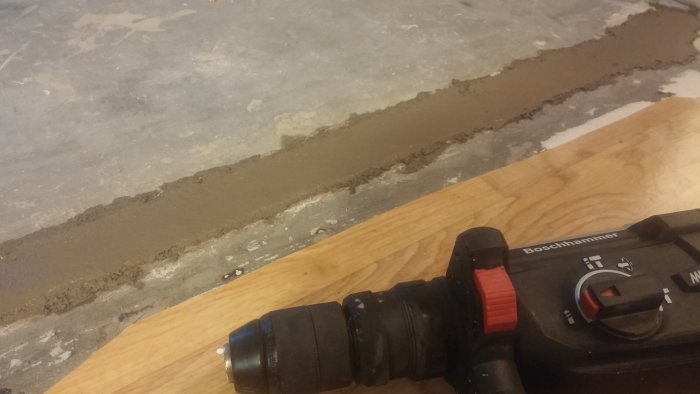
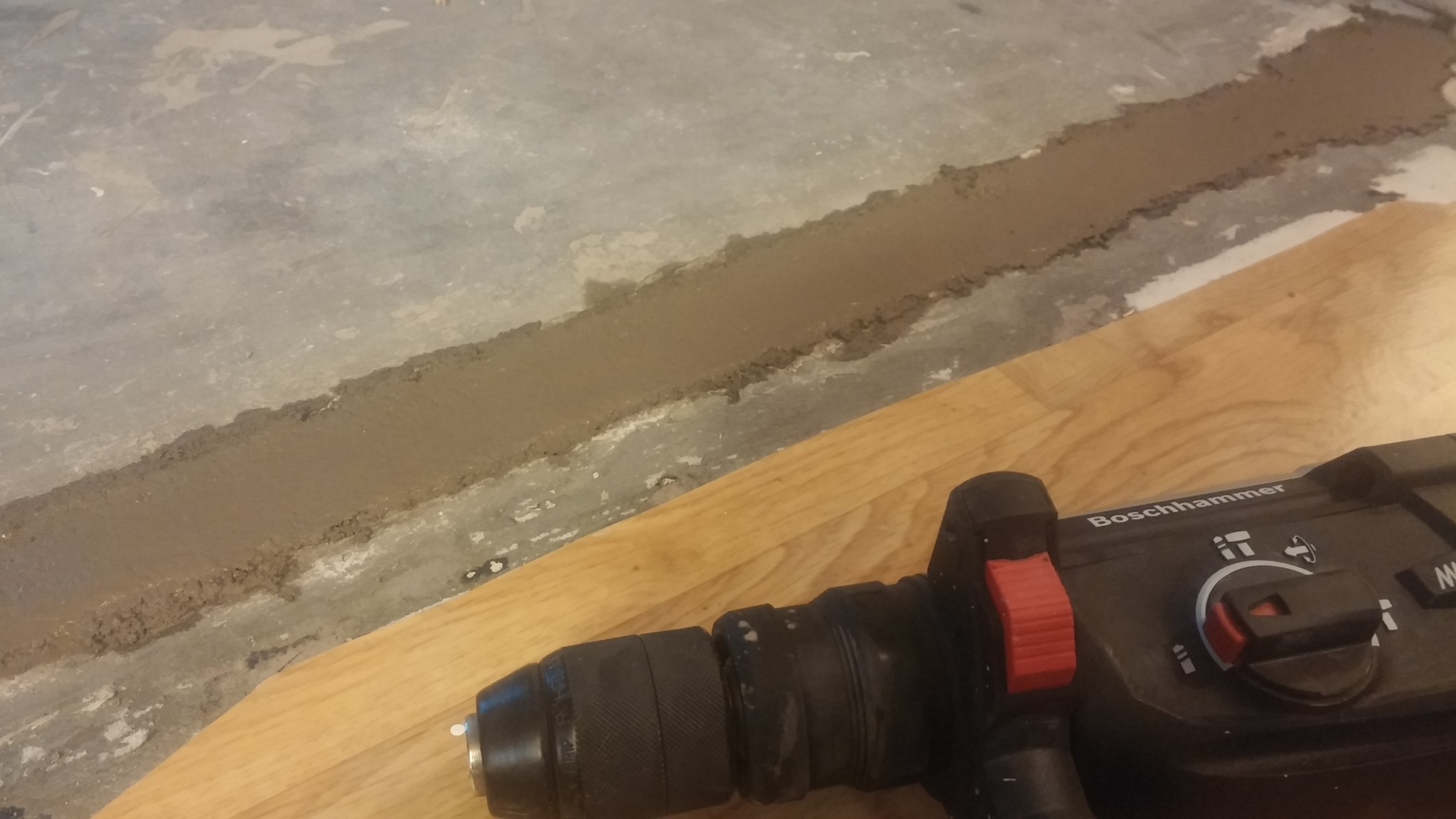
There you go! Home from work and start mixing cement right away It became cement mortar A. I was too scared to call and ask about the self-leveling compound
It didn't turn out as well as I had hoped, not completely even. Especially not on the edges, but I hope it will suffice once it has dried, and really it's mostly under where the threshold will be that it needs to be even.
The cement was incredibly difficult to mix too! Although it might have been because I'm so tired I can barely stand and because I bought a mixer for the drill for 39:- at Coop
A lot got stuck along the edges of the bucket that didn't really want to mix even though I was there helping with a piece of wood.
By the way, how do you usually clean the tools after doing something like this? Garden hose outside?
I bought that mixer and two different kinds of "bricklaying tools," but I'll probably have to throw them away now, surely can't rinse a lot of cement down the sink