
32,518 views ·
63 replies
33k views
63 replies
Help! Elfa in lightweight concrete - Best approach

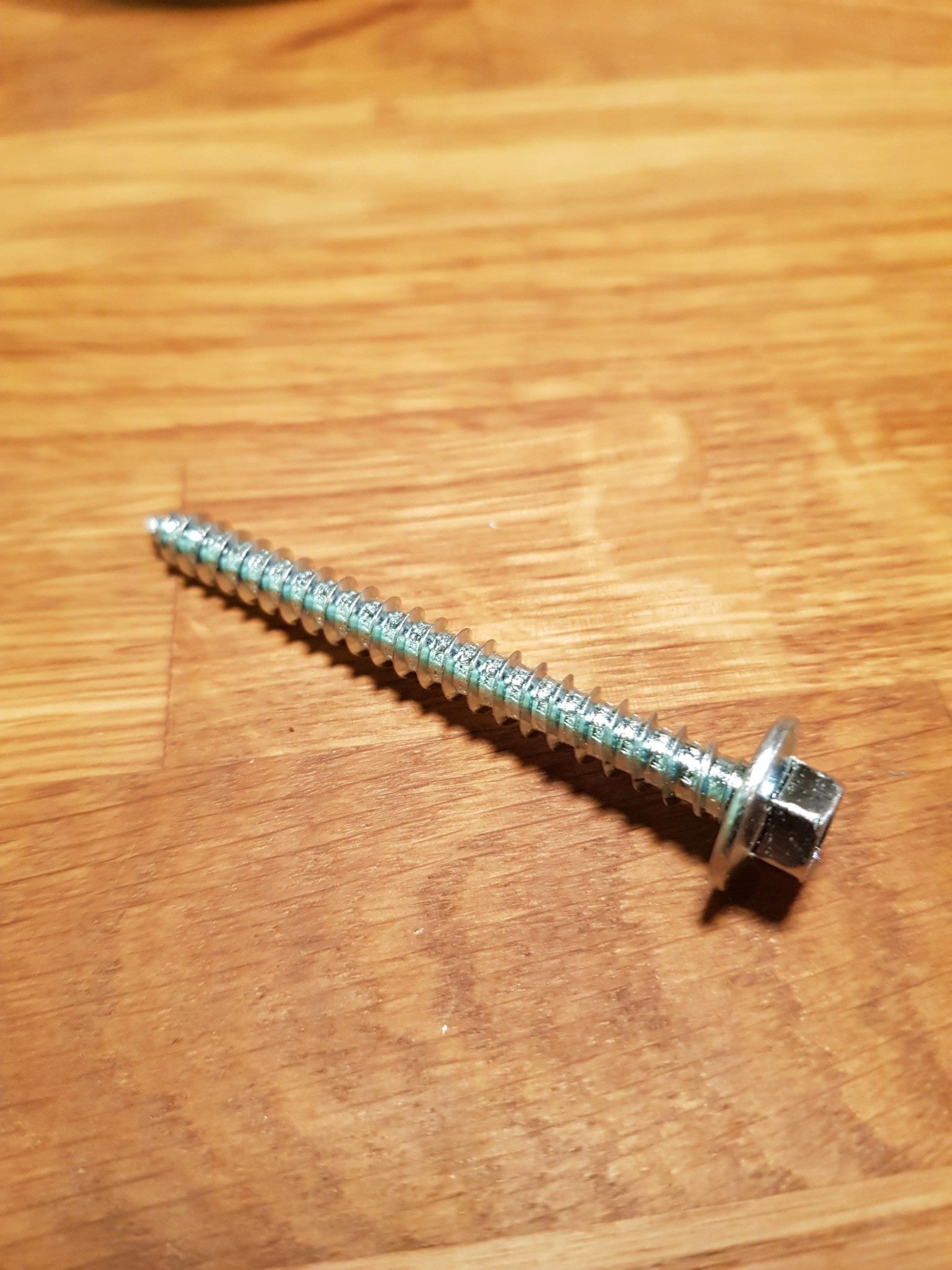
Looks like fischer turbo in plastic.M maximm said:
It can be screwed in with an allen key.
https://www.fischer-international.c...s/plastic-fixings/turbo-aircrete-anchor-ftp-k
Last edited:
https://www.k-rauta.se/byggvaruhus/lättbetongskruv-kbrm-8x65-t30-10-sb
Of course, other lengths are available
Just be careful not to overtighten the screw
Of course, other lengths are available
Just be careful not to overtighten the screw

Also, keep in mind that the vertical bracket mounts should be able to slide past the screw heads sideways. You'll need to check that beforehand to ensure it works. Alternatively, just fasten the hanger rail at the ends and then place the bracket mounts exactly where you want them. The hanger rail is slotted at one or a couple of places at the top where it's possible to hang the bracket mounts, then they must be moved sideways.
Thank you for all the fantastic answers!
However, all the questions remain
However, all the questions remain
- Which plug + screw can handle the highest specified loads in 10CM Lättbetong AAC4?
- Which plug + screw can handle the highest specified loads in 15CM Lättbetong AAC4?
- Should I have two horizontal rails instead and have two rows of screws to distribute the loads?
- Should I glue the plugs for extra strength?
- Are the specified loads per plug, per vertical rail, or per vertical section of 90cm?

I can recommend Fischer GB. Had issues with a porous lightweight concrete wall and thanks to GB, the shelf held like a rock. I mounted a shelf that was 60cm deep with brackets on the wall and placed various heavy household appliances on it, no problem!
elfa hanging rail is not very good if you want to load something on the shelves, the rail bends in the middle.
On the other hand, the wall rail is good, there you get holes for screws in the rail & can attach in a good way with fisher gb plug, sits like a rock!
On the other hand, the wall rail is good, there you get holes for screws in the rail & can attach in a good way with fisher gb plug, sits like a rock!


I normally drill with wood drills in my lightweight concrete walls, I think the centering is better. For plugs, I use Fischer GB or TOX YTOX, which work excellently. I have several hanging rails mounted in lightweight concrete with these, with shelves up to 60 cm deep. No problems. The rail for the kitchen wall cabinets is also mounted with a mix of Fischer GB and lightweight concrete screws.
OT
For smaller plugs (red/yellow Essve), I use an old crosshead screwdriver and drive it into the wall. One advantage of this is that the sides of the hole are compacted and hold better. Another advantage is that there is less mess during drilling.
OT
For smaller plugs (red/yellow Essve), I use an old crosshead screwdriver and drive it into the wall. One advantage of this is that the sides of the hole are compacted and hold better. Another advantage is that there is less mess during drilling.
Called Fischer Sweden and got the following info regarding their plugs
From best to worst
Checked with ELFA and it's possible to saw the hanging rails. So the option to divide the wall into two support rails is probably wise.
Regarding the classes, class 4 is specified to 550kg/m^3.
So my inner walls are class 4 and outer walls are class 2.
So there is an extremely much better load-bearing capacity in the inner walls than the outer walls due to the density/compression pressure they can handle.
From best to worst
- Duo Power 65mm = 60kg/plug
- GB10 = 54kg/plug
- Turbo = 50kg/plug
Checked with ELFA and it's possible to saw the hanging rails. So the option to divide the wall into two support rails is probably wise.
Regarding the classes, class 4 is specified to 550kg/m^3.
So my inner walls are class 4 and outer walls are class 2.
So there is an extremely much better load-bearing capacity in the inner walls than the outer walls due to the density/compression pressure they can handle.
Last edited:
Duo max, as mentioned earlier, doesn't work so well in a lightweight concrete wall. GB10, on the other hand, is great (though they do make a relatively large hole). If the wall is plastered, the plaster may need to be removed around the hole to avoid damaging the GB plug's wings. Lightweight concrete screws can work well in class 4 walls, but if you tighten them a bit too much, they completely give way. Regular nylon plugs and screws are much more forgiving (and work well if you use a slightly larger screw than intended).
What makes you think that duo power (I wrote it wrong) isn't suitable for lightweight concrete? Fischer themselves say it has better load capacity in a lightweight concrete wall than GB plugs. Shouldn't their data sheet be accurate?B Byggmarodören said:Duo max doesn't work as well in a lightweight concrete wall as mentioned earlier.
GB10 is great though (however, they create relatively large holes). If the wall is plastered, the plaster may need to be removed around the hole to avoid damaging the GB plug's wings.
Lightweight concrete screws can work well in class 4 walls, but if you tighten them a bit too much, they lose grip completely. Regular nylon plugs and screws are much more forgiving (and work well if you use a slightly larger screw than intended).
I have used Fischer aerated concrete screws with very good results. Unfortunately, they are only available in larger sizes and are probably too thick for an Elfa track. Just as someone mentioned earlier, the wall will collapse long before a well-tightened aerated concrete screw comes loose.
Duo power probably works well, but plugs with small wings can be a bit difficult for initial grip. Maybe it's just me drilling poorly, but I had more problems with Fischer SX than Fischer S plugs (in some holes they followed the screw around, even though I started screwing the screw into the plug before pushing it into the hole). Once they were in, they seemed to hold well, so there's nothing wrong with the grip strength.