
11,530 views ·
25 replies
12k views
25 replies
Help, wet insulation in installation layer
Hello
A couple of weeks ago, I erected a garage and installed a door. The frame is 145mm and I have insulated the walls with 145mm, installed a vapor barrier, and then attached 45x45mm horizontally. It will be osb + gypsum. The ceiling has been covered with plastic, installed with 28x70 battens, and then blown 50cm with loose-fill. I have also installed a 125mm fresh air vent and an exhaust vent with an Intellivent fan.
Around the door, I have installed 45mm insulation + osb/gypsum and then mounted the door. The rest of the garage hasn't been insulated, only has 45mm studs and plastic behind. I'm about to start electrical wiring.
But now to the point, I went out this week and felt the insulation behind the gypsum, and it's soaking wet. There must have been condensation behind the insulation against the plastic. Why?! What should I do about this?
I haven't turned on the underfloor heating, only using a diesel heater to keep it at +20 degrees inside. I need to do the wiring before I can turn on the underfloor heating, which I planned to do in the summer/spring. I have also taped over the vents and placed a Woods dehumidifier inside that has been running for a week now.
What should I do about this? I am terrified that I will get mold behind there.
Why has this happened?
It's not higher up on the wall, but only further down towards the sill and the compartment above.
A couple of weeks ago, I erected a garage and installed a door. The frame is 145mm and I have insulated the walls with 145mm, installed a vapor barrier, and then attached 45x45mm horizontally. It will be osb + gypsum. The ceiling has been covered with plastic, installed with 28x70 battens, and then blown 50cm with loose-fill. I have also installed a 125mm fresh air vent and an exhaust vent with an Intellivent fan.
Around the door, I have installed 45mm insulation + osb/gypsum and then mounted the door. The rest of the garage hasn't been insulated, only has 45mm studs and plastic behind. I'm about to start electrical wiring.
But now to the point, I went out this week and felt the insulation behind the gypsum, and it's soaking wet. There must have been condensation behind the insulation against the plastic. Why?! What should I do about this?
I haven't turned on the underfloor heating, only using a diesel heater to keep it at +20 degrees inside. I need to do the wiring before I can turn on the underfloor heating, which I planned to do in the summer/spring. I have also taped over the vents and placed a Woods dehumidifier inside that has been running for a week now.
What should I do about this? I am terrified that I will get mold behind there.
Why has this happened?
It's not higher up on the wall, but only further down towards the sill and the compartment above.
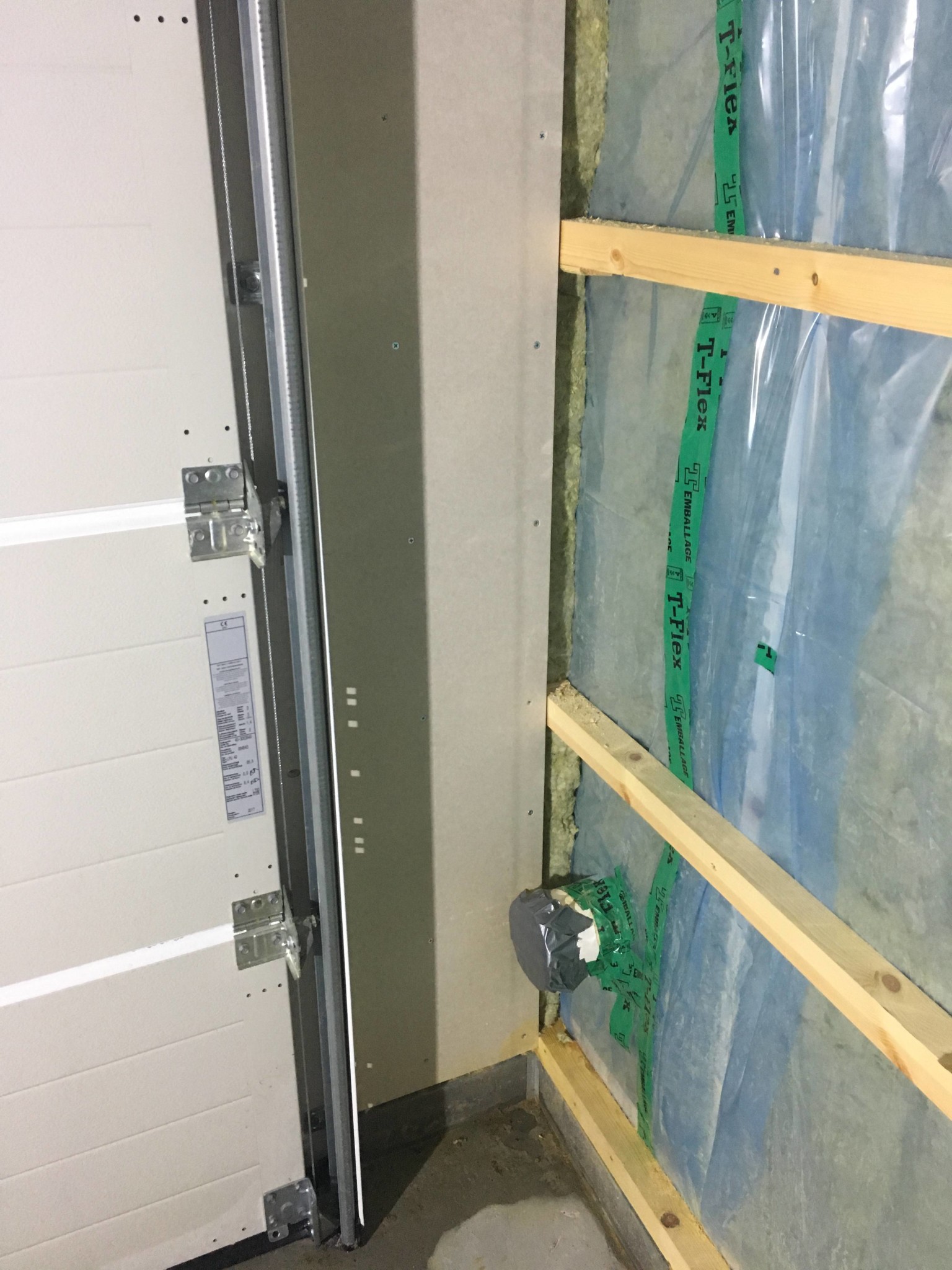
The door appears to be set deep into the wall. You probably need to have it outside the moisture barrier to ensure the temperature in the installation layer doesn't get too low. On the small piece next to the door, you might not need to insulate the installation layer. Your diesel cannon essentially produces as much moisture as it consumes diesel.
Hmm, do you mean that the door should have been set further in? So the installation layer against the door instead?D Daniel 109 said:The door seems to be set deep into the wall. You'll probably need to have it outside the moisture barrier so that the temperature in the installation layer doesn't get too low. On the small piece next to the door, you can skip insulating the installation layer. Your diesel cannon delivers as much moisture as it consumes diesel.
I went in there now, maybe it's "too" tight? I can't even light a lighter. There's too little oxygen there. Completely impossible to light.
Then it seemed to be only towards the corner that it's wet, reached my arm further in, and it's dry there. So nearest the corner. I took the opportunity to photograph another corner that isn't sealed. Condensation, I taped over the staples on the plastic.
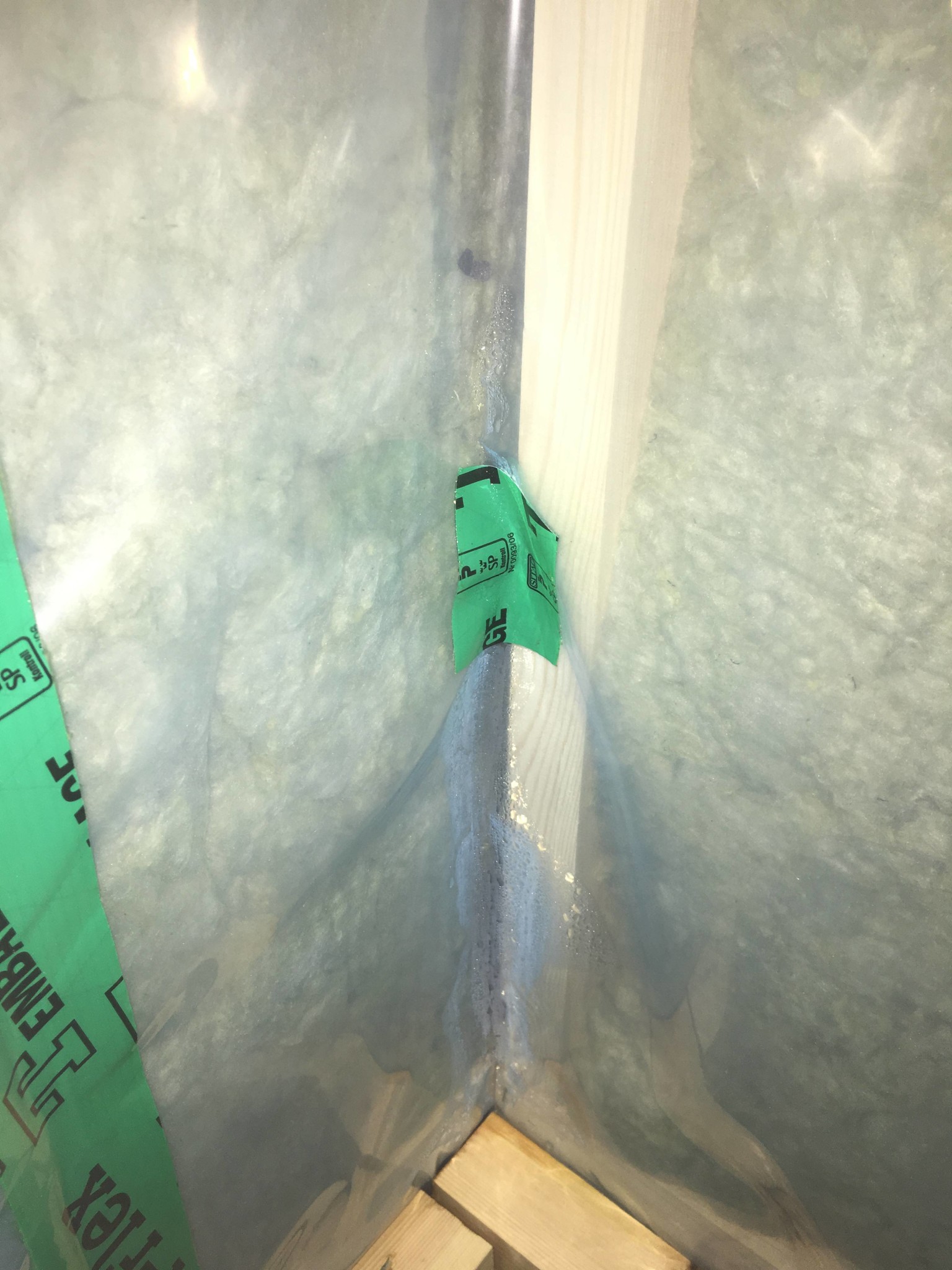
Then you likely have extremely high humidity in the garage. I meant that the door is set too far inward. But if you also get condensation on uninsulated plastic, nothing like that will help.
Alright! What should I do about this?D Daniel 109 said:
Turn off the diesel heater? Install a radiator and keep the vents completely sealed and run the dehumidifier?
Or should I open up the vents?

Have now opened the vents 50/50, and put in a heater and a "construction fan" 2kw blowing on the wall.useless said:
Now you can light a lighter in there, so some oxygen has come in.
How can you dare to nail the walls when it's like this... Is this due to humidity? There's 5cm of condensation on the windows too.
Vent out through the door a few times.

Do you have any thermal bridging in the corner? The vent should maintain the outdoor temperature. You will get condensation on cold surfaces.
As for the doors, overhead doors are always installed on the inside, so that is completely correct.
As for the doors, overhead doors are always installed on the inside, so that is completely correct.
M
Marcussjogren
Member
· Västra Götaland
· 3 083 posts
Marcussjogren
Member
- Västra Götaland
- 3,083 posts
There have been very large temperature fluctuations over the day in recent days, at least for us.
Possibly the insulation has gotten cold during the night and then the air has quickly risen and therefore started to condense when it reaches the insulation. But it almost seems more likely that it hasn't been completely sealed? And that it's therefore warm air from the garage that has condensed.
Possibly the insulation has gotten cold during the night and then the air has quickly risen and therefore started to condense when it reaches the insulation. But it almost seems more likely that it hasn't been completely sealed? And that it's therefore warm air from the garage that has condensed.
M
Marcussjogren
Member
· Västra Götaland
· 3 083 posts
Marcussjogren
Member
- Västra Götaland
- 3,083 posts
Because the insulation is on the inside.
But the moisture is on the inside. The wet insulation is located inside the moisture barrier next to the door.