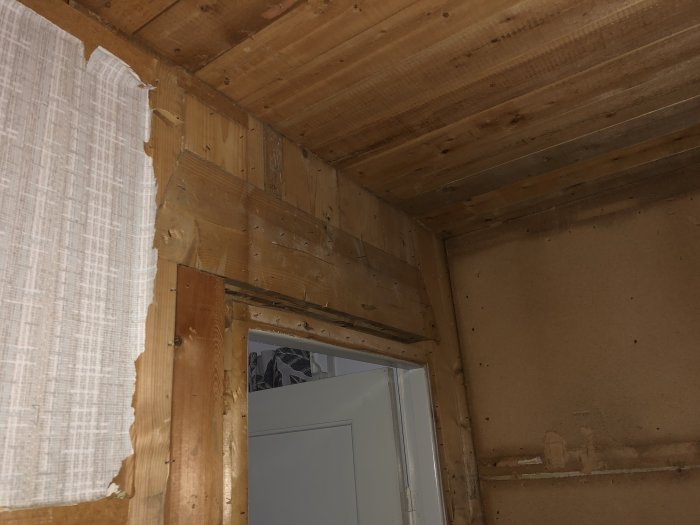
I am planning to demolish a wall on the upper floor.
I need help with some assessment here.
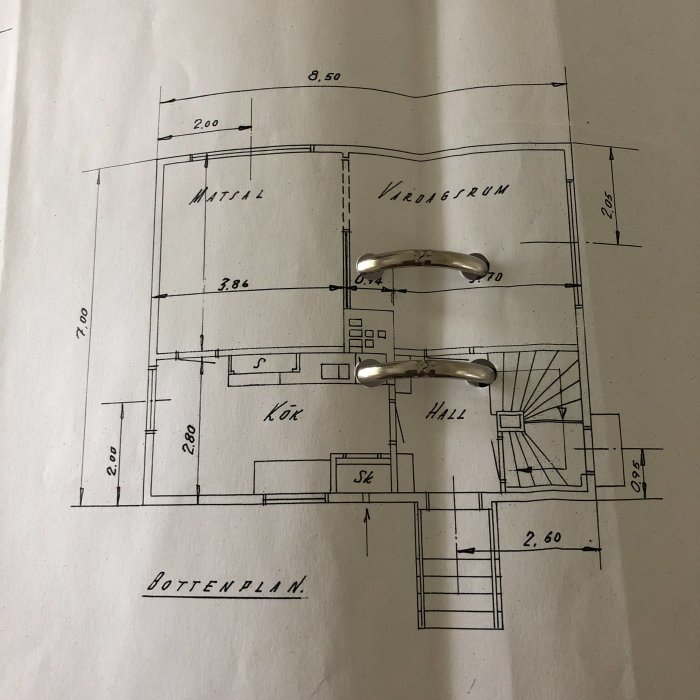
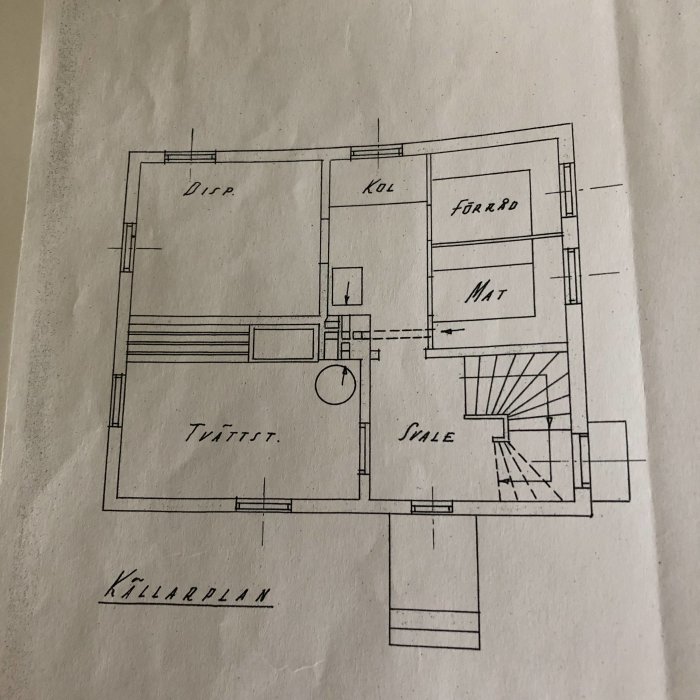
Unfortunately, there are no construction drawings but I'm attaching some images of other drawings.
The house was built in 1950.
It has a fairly flat roof, about 10 degrees according to the roofer.
There is only one wall that goes straight through the house. And it is noticeably thicker.
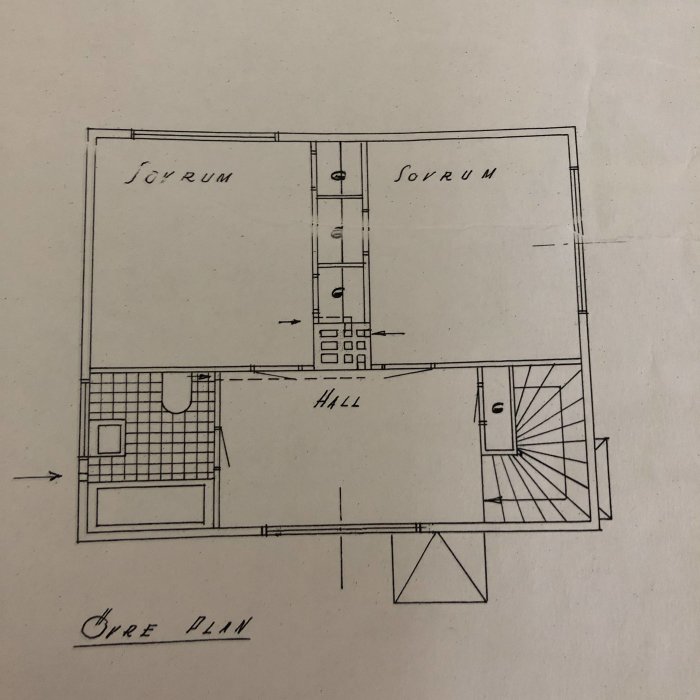
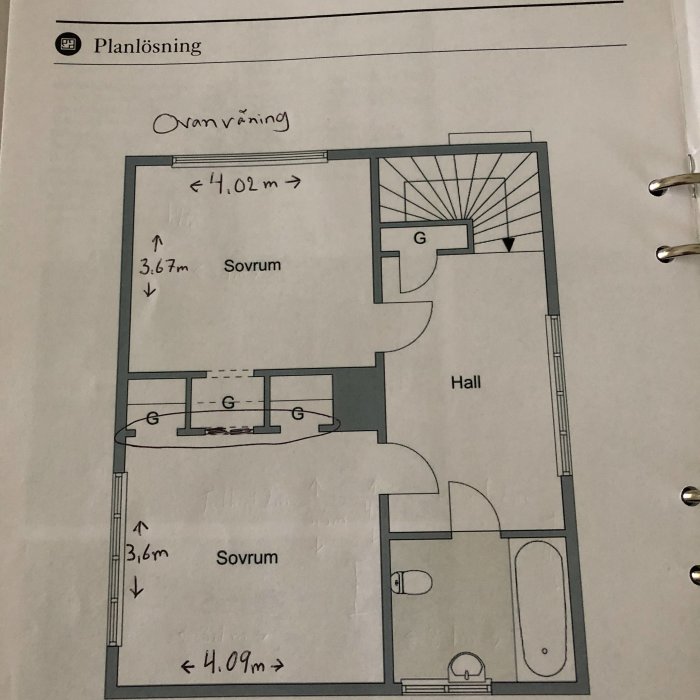
Here is the floor plan.
The wall in the bedroom at the upper left with two closet doors I want to remove.
The marked wall is the one I intend to demolish and install sliding doors instead.
The wall that is planned to be demolished from the inside.
I think the wall looks really damn thick.
But maybe that's how they built back then.
It is made of 70mm thick planks.
About 170mm wide.
I don't have access to any attic to see the beams.
The only possible way is to cut a hole in the ceiling from where I've taken the photo if necessary.
The house has a plank frame. The planks should have originally measured 3x7 inches, i.e., approximately 75x175 mm. What you have marked on the drawing does not match the photographs since they later show a door leading to another room. You need to be more specific. The area around the chimney stack is a bit sensitive. There is likely some form of support that needs to be checked first. The rafters are probably supported by the longitudinal wall, but an exterior photo can help explain, even if the roof is hipped.
I have done the procedure you describe. I have an identical house in terms of age, functionalism, hip roof, and grandeur. I recall having 175x50 planks in the wall. Checked in the attic to see which direction the beam was lying and how it was attached to the chimney. Determined in this way which walls were likely load-bearing.
Finally, you'll notice if the reciprocating saw binds when you're at the end of the wall. Then you get a confirmation of the wall's status.
Click here to reply
Vi vill skicka notiser för ämnen du bevakar och händelser som berör dig.