Hi.. I have bought a split-level townhouse and need to remove a wall.
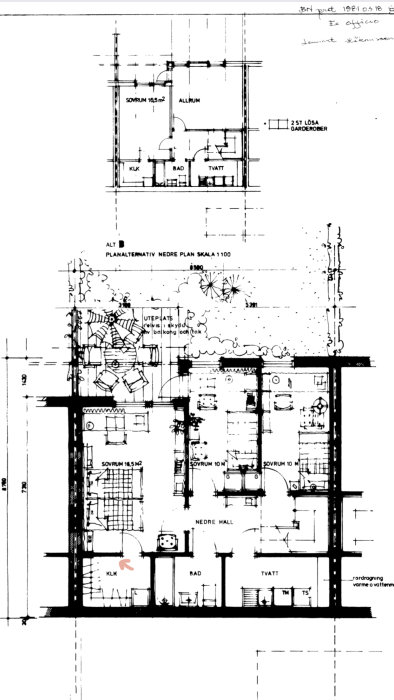
We haven't gained access yet and don't have any available blueprints except these I found in the municipal archive.
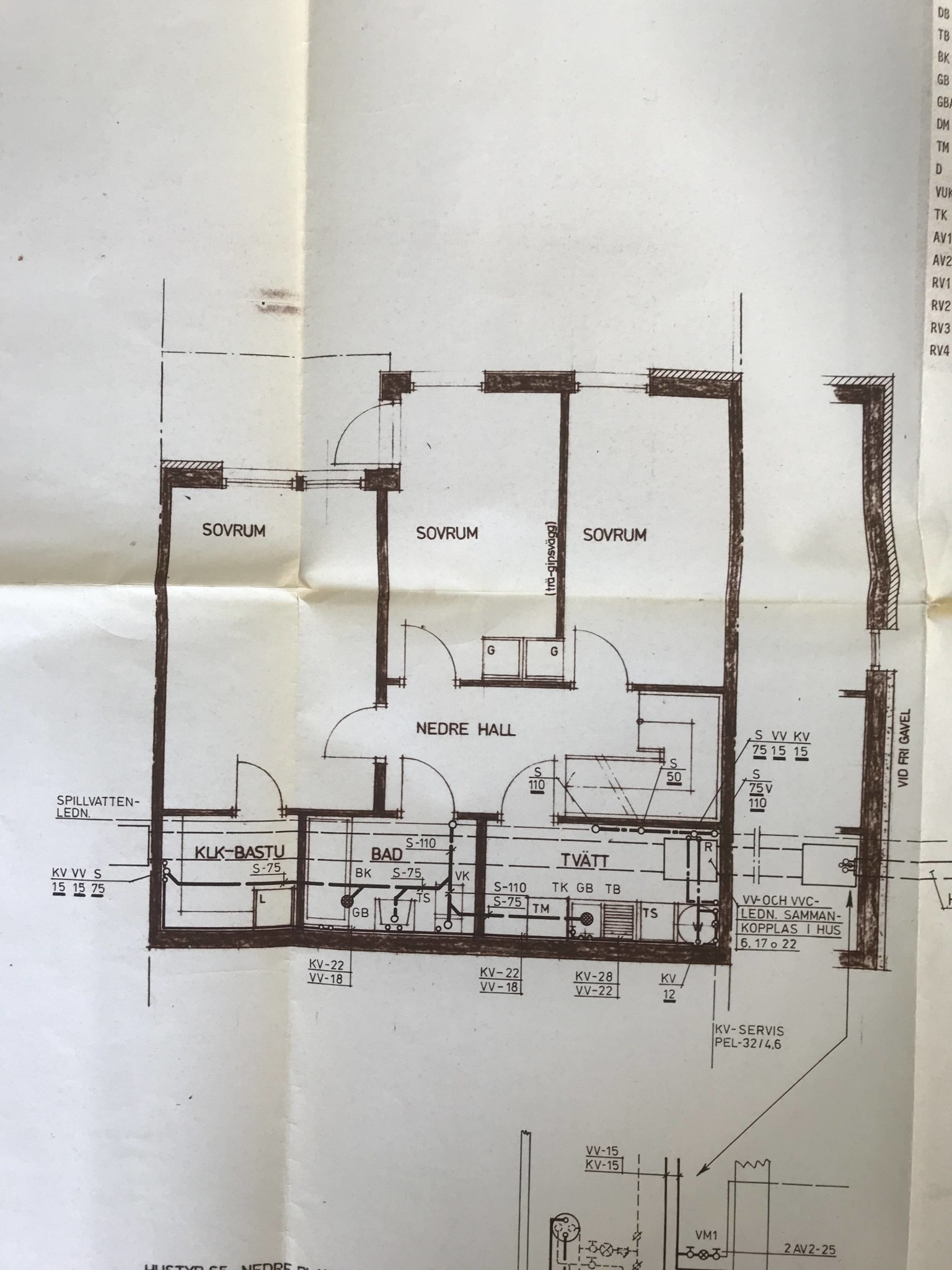
Can it be determined if the wall is load-bearing by looking at these?
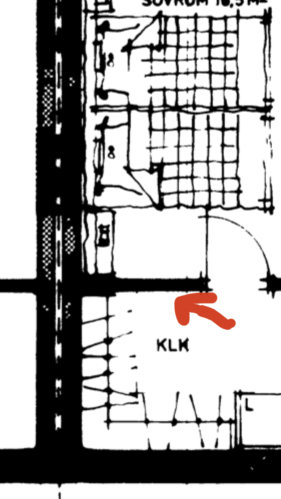
I have marked the wall with a red arrow at the bottom left.. The wall is solid when tapping on it..
Presumably, it is not load-bearing, but you can only say that with certainty when you know how the house is built. The type of flooring between the floors is an important aspect. The year of construction is also good to know. It looks a bit 1970s-like.
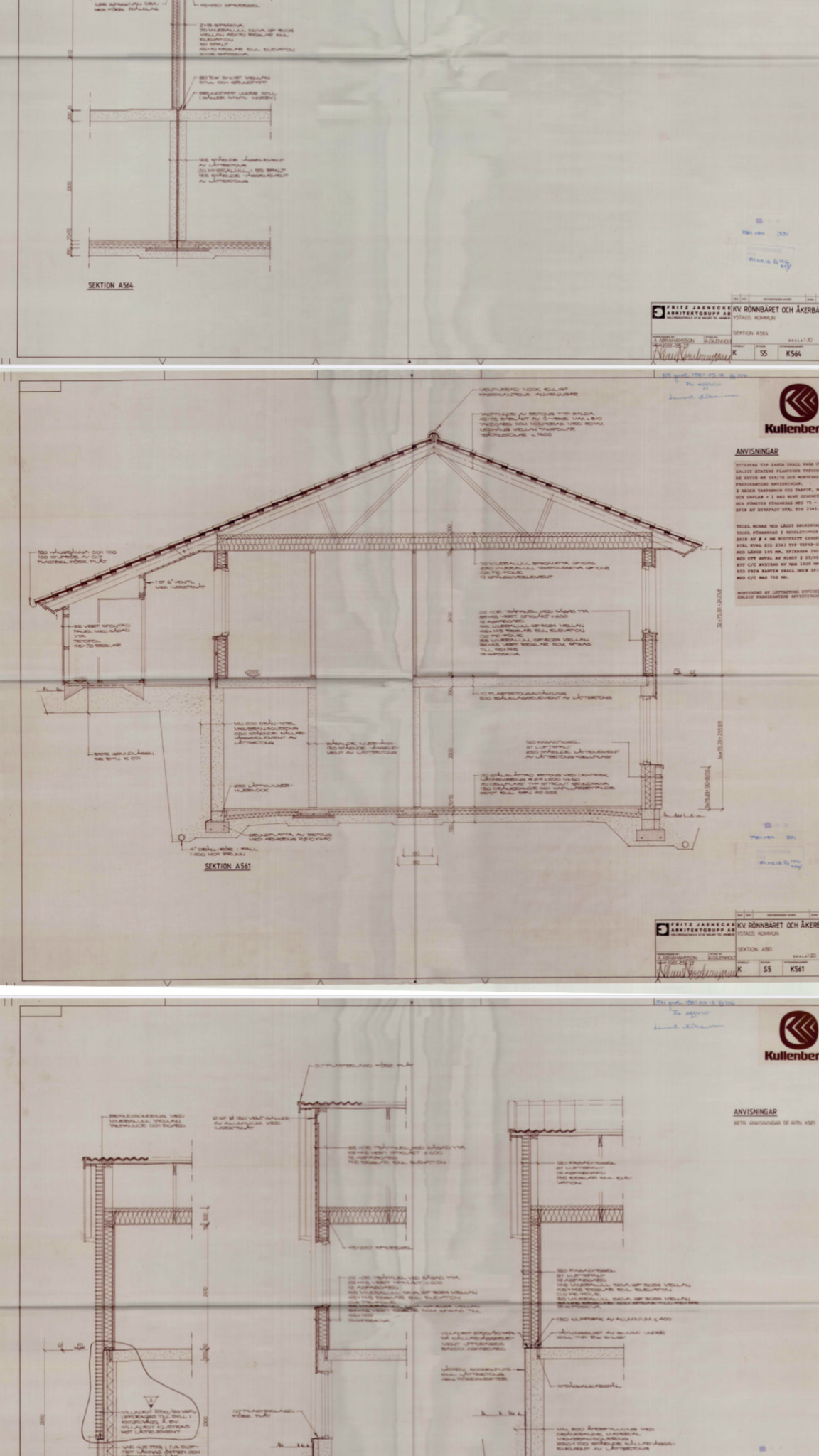
How does the ridge beam run, horizontally in the large image?
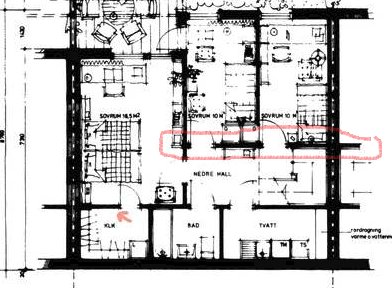
Then I might think that what I've highlighted in red here could possibly have a load-bearing function:
Note, I am not an expert on this!
Guessing it's not load-bearing, but you can only say for sure when you know how the house is built. Type of flooring between the floors is an important aspect. The construction year is good to know too. It looks a bit 70s-like.
Hi.. I got hold of the drawing now, from the lady selling the townhouse, but it's like the one I uploaded roughly in the first post.. The house was built in 1982..
I'm also uploading the image from the paper drawing..
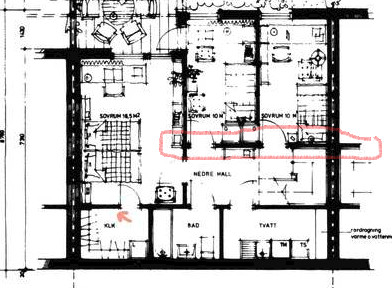
How does the ridge beam run, horizontally in the large picture? Then I would think that maybe what I have marked in red here might have a load-bearing function: [image] NOTE, I am not an expert on this!
Hello!
Yes, the ridge beam runs as you thought, horizontally with the picture
A very elegant house! Congratulations. Fritz Jaeneke was a German architect who came to Sweden in the 1930s. He was a long-time partner with Professor Sten Samuelsson. Together, they designed, among other things, the Nya Ullevi in Gothenburg and Malmö Stadium. The partition walls on the upper floor are not load-bearing because the roof trusses are of the truss type. How it stands with the ground floor entirely depends on how the flooring between the ground floor and upper floor is constructed. Without information about that, it's not possible to say anything certain.
It would take a lot to disagree with you, Justus, but doesn't it look like there is no reinforcement of the foundation under just that wall towards klk/bath/laundry, unlike the wall between the lower hall and the two bedrooms to the right?
The reinforcement I'm referring to is visible in the latest picture. It is also a reasonable place to reinforce since it's approximately in the middle of the intermediate floor. The question is how it's done just above the interesting bedroom with the adjoining klk? Could it be managed by the fact that the outer wall is recessed there?
Most evidence suggests that the wall is not load-bearing, including the lack of footing under the foundation. However, I will withhold the final judgment until I have seen more reliable data.
A very elegant house! Congratulations. Fritz Jaeneke was a German architect who came to Sweden in the 30s. He was a partner with Professor Sten Samuelsson for a long time. Together, they designed, among other things, Nya Ullevi in Gothenburg and Malmö Stadium. The walls on the upper floor are not load-bearing since the roof trusses are of the truss type. How it is with the ground floor depends entirely on how the slab between the ground floor and upper floor is constructed. Without information about that, nothing can be said for sure.
Thank you for your response.. I will try to get hold of the construction drawings at the building office tomorrow
Reupload the images and ensure that the resolution is not degraded. In this condition, they are not readable. When you received them from the kommunen, they were high-resolution.