
I nailed an X-hook into the drywall in my hallway yesterday. There was a bit of soft resistance after about 1 cm into the drywall, and I don't know if it's double drywall here and that was simply the cause. I'm slightly terrified right now that I hit a wire, and how would I know if I did?
I don't have an apartment above me, if that matters for how the wiring is laid out.
I don't have an apartment above me, if that matters for how the wiring is laid out.
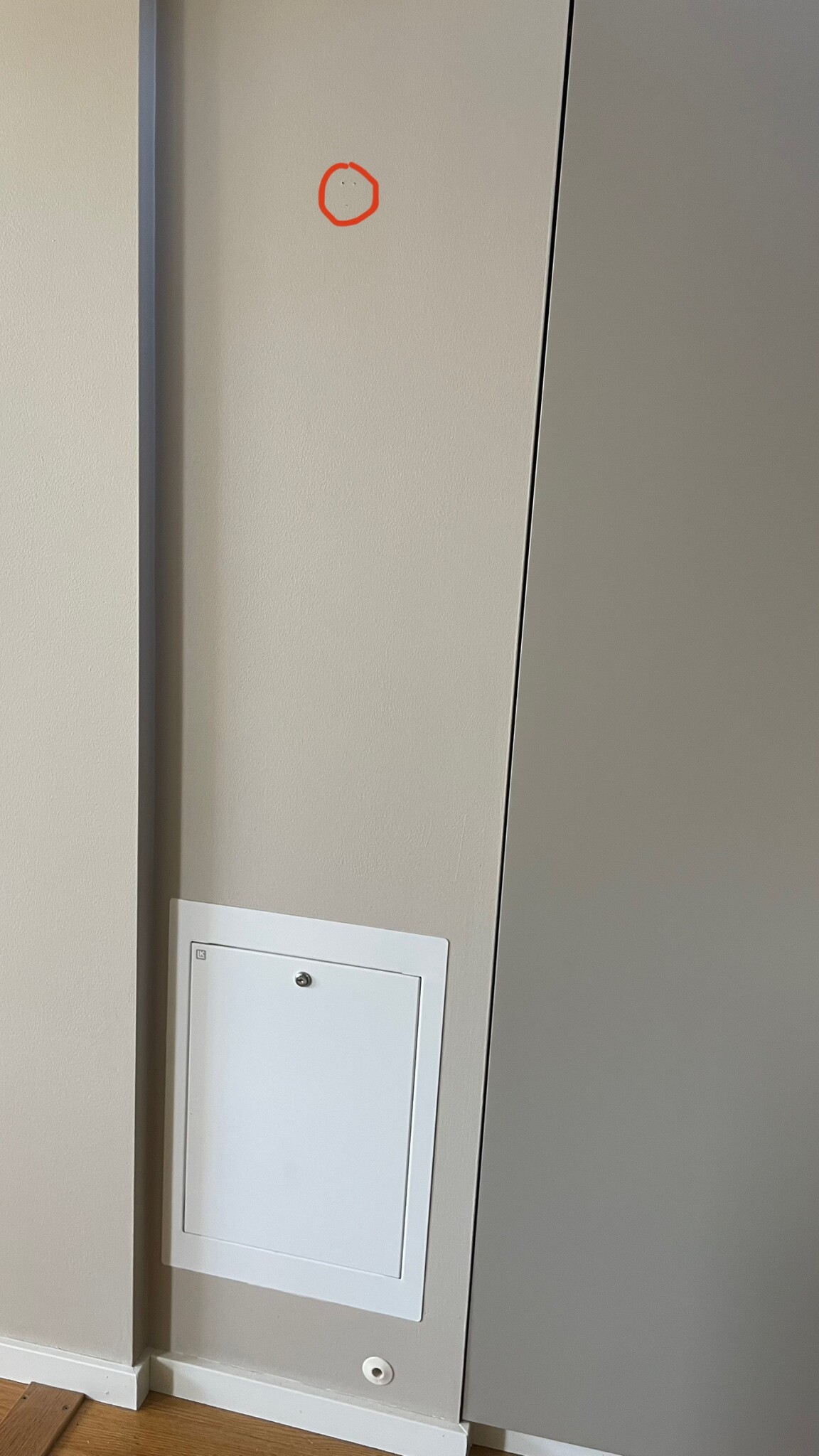
It looks like an inspiration hatch for something. So something could be there. Open the hatch and see what is there.
Edit sees a gossip pipe under the hatch, it is some waterborne heating system or some other water branching there. So if you have nailed into a water pipe, you want to know quickly.
Edit sees a gossip pipe under the hatch, it is some waterborne heating system or some other water branching there. So if you have nailed into a water pipe, you want to know quickly.

An X-hook with a nail one cm long should not cause any damage to cables, etc. The nail will likely not go through the wall. If there are VP-rör in the wall, the nail cannot penetrate the pipe without extreme hammering and a completely fixed and immovable pipe.
You can open the hatch and see if it's possible to determine the wall's thickness.
You can open the hatch and see if it's possible to determine the wall's thickness.
What kind of management do you think it is? It sounds like you have enkelgips. If you mean there's more resistance than gips, it could be OSB.
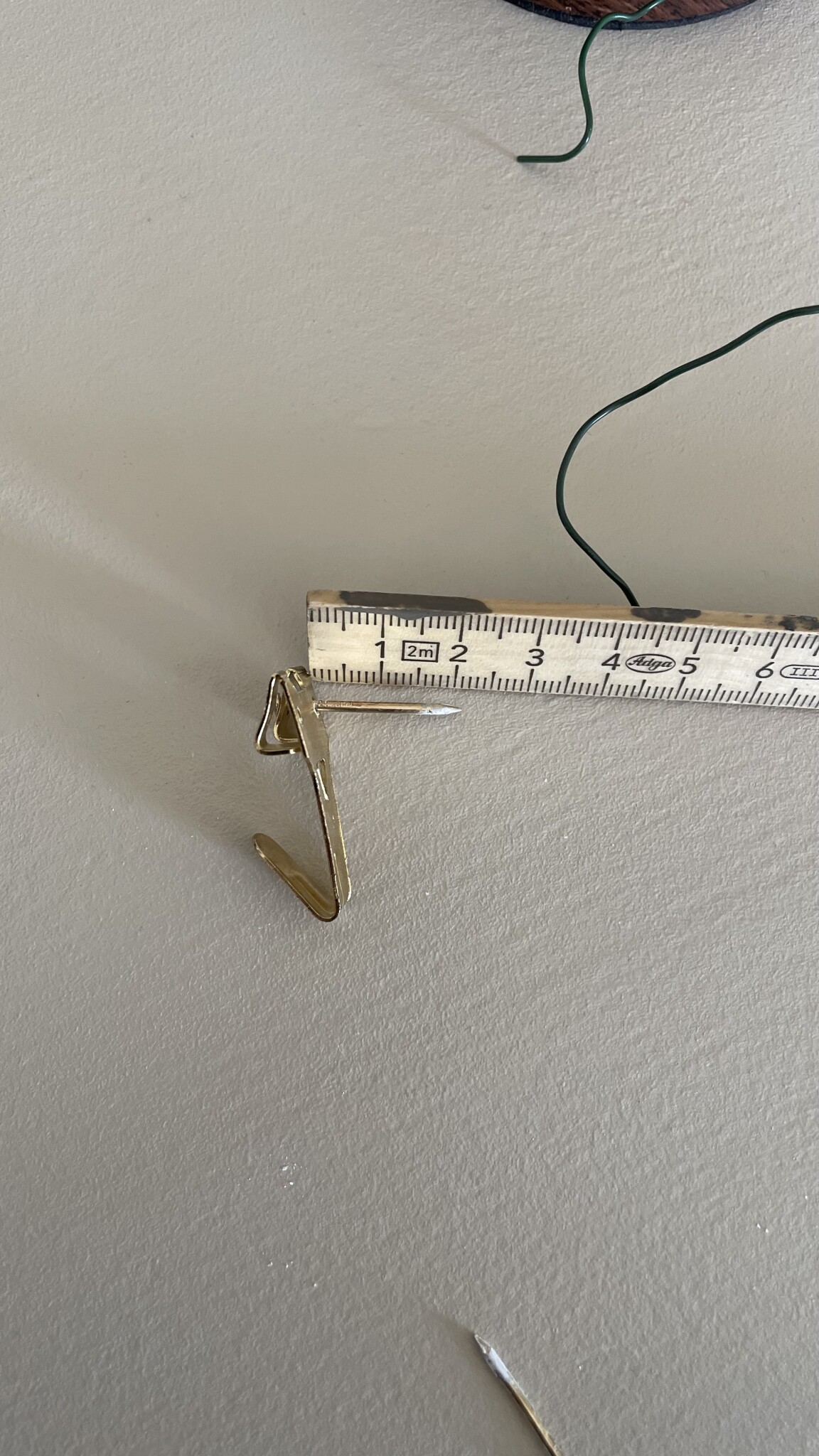
Open the hatch below and upload a picture of how it looks inside. Also, take a picture of the edge in the cabinet; that way you can probably see how the wall is constructed. Also, take a picture of the nail you used with a tumstock so we can see the scale.
The small hole to the right below the cabinet is probably a so-called skvallerrör. The cabinet is built so that in case of a leak, water runs out there for early detection. If it's dry there, it seems very unnecessary to worry.
Open the hatch below and upload a picture of how it looks inside. Also, take a picture of the edge in the cabinet; that way you can probably see how the wall is constructed. Also, take a picture of the nail you used with a tumstock so we can see the scale.
The small hole to the right below the cabinet is probably a so-called skvallerrör. The cabinet is built so that in case of a leak, water runs out there for early detection. If it's dry there, it seems very unnecessary to worry.

If you've installed pipe-in-pipe upwards in the picture... Otherwise, it only flows out of the indicator pipe if there's a leak inside the cabinet itself.jonmo said:
Hmm, I think that even if you haven't installed pipe-in-pipe (which you almost always do if you have such a box?) the water often runs along the pipe downwards and will therefore indicate regardless. But sure, there's a risk it won't be visible.useless said:
If the thread is about calming TS's worries (after all, it is a cry for help), I think one can say that you can be pretty sure no water has penetrated if the indicator pipe is dry.
To TS: How old is the house?
Thank you so much for your reassurance. The house is from 2012. I've seen via real estate ads for identical houses (even though building details may of course have changed) that people have everything from a full-length mirror to a fire blanket hung on the same wall where I have nailed, but of course, it can be attached in other ways.Hmm, I think that even if you haven't used pipe-in-pipe (which you typically do if you have such a box?) water often runs along the pipe downwards and will therefore reveal the leak anyway. But sure, there's a risk it might not be visible.
If the thread is about easing TS's worry (after all, it's a cry for help), I think you can say that you can be pretty sure no water has penetrated if the indicator pipe is dry.
To TS: how old is the house?
Click here to reply