Hello, I've searched online but find it difficult to interpret calculations.
In short, I'm wondering what load a HEA 100 beam can handle if it's 3.5m long and supported on posts at each end? And if anyone knows the deflection in mm at a specific weight?
I have a bathroom that will be built in the old kitchen at home. The span of the joist is about 4m between the outer wall and the load-bearing inner wall that the joist rests on.
In the old kitchen, there will be 2 rooms: a bathroom against the outer wall and a hallway before the bathroom.
In the laundry room in the basement, there's a non-load-bearing inner wall that needs to be demolished; the space, which is about 1m between the wall and the outer wall, houses a sauna and a WC.
The beam should be installed before the inner wall is demolished, and the reason I want to install it beforehand is to account for the possibility that the joists may have sagged and started to load the inner wall, and I don't want any settling in the joist that could result in cracks in the bathroom being built.
All the walls we're talking about are brick walls.
The free span of the HEA 100 beam will be 3.5 meters between the steel posts.
The joist will then be in the outer wall, 1M free, then rest on the HEA beam, then another 2.6M to the load-bearing inner wall.
Now you might think I'm overdoing it with the supports since the existing joists have such a short free span, and I'm also going to reframe the joist to 30cm centers, but as it is today, the floor is incredibly firm and fine, you wouldn't believe it's an 80-year-old wooden joist, and with the HEA beam in the basement, it will be right under the new bathroom, so there will really be no bounce.
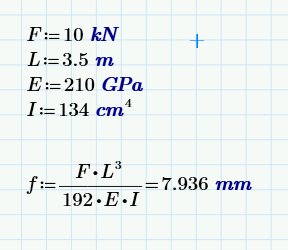
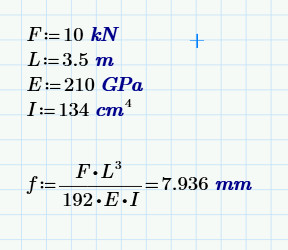
HEA100, L=3.5 meters loaded with 10 kN.
I saw that you might want some more support, but yes, it's possible to calculate. Contact a structural engineer and they can solve it.
HEA100, L=3.5 meters loaded with 10 kN.
I noticed you might want some more support, but yes, it can be calculated. Contact a structural engineer and they can solve it.
[image]
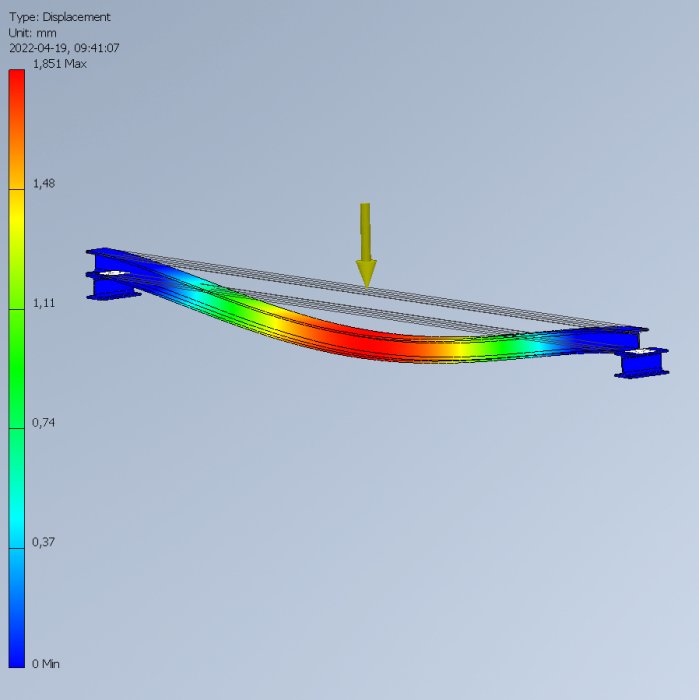
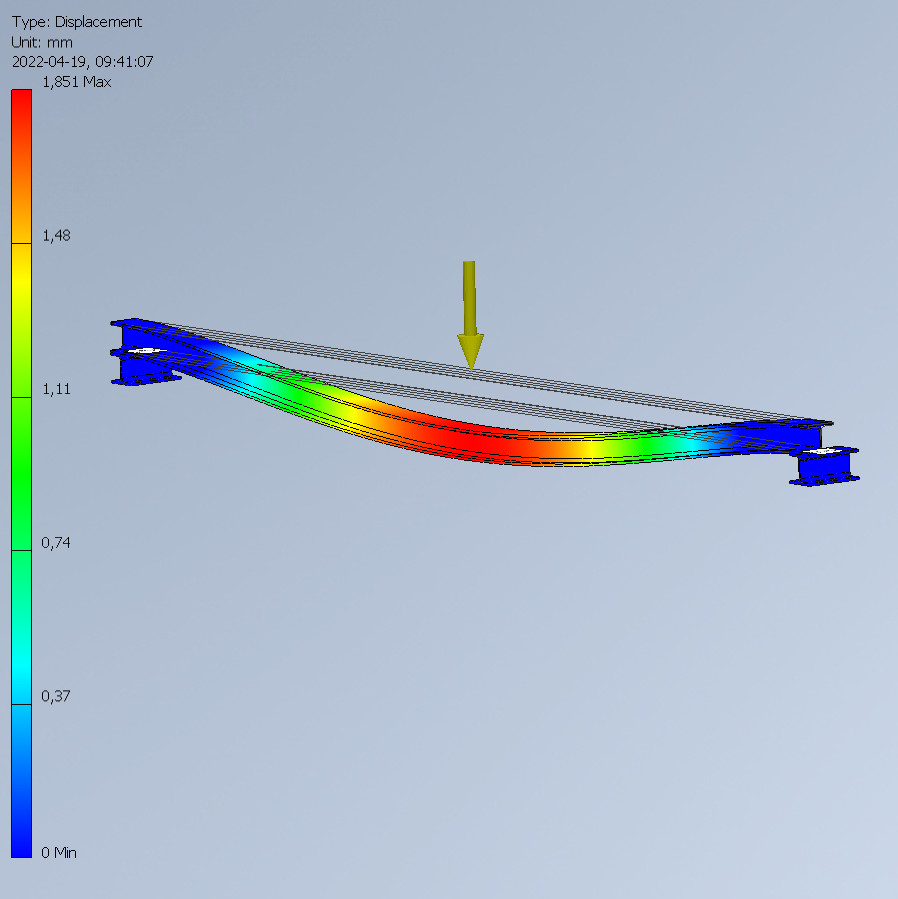
How should I interpret the deflection, in mm according to the scale or according to the image that it has bent down equivalent to the beam's thickness?
I interpret it as the beam being loaded with 10 kN in the middle?
I just wanted to demonstrate that it's possible to calculate this, but I would prefer that you consult an expert on this if you're uncertain. Preferably someone who can look at the entirety of the house and how the loads are distributed. If you know more precisely what the loads will be, then you can calculate remotely, but as you might understand, it takes some time to go back and forth to determine what's reasonable.
The image is exaggerated to show how the loads are distributed, but the scale on the left is accurate. The beam is loaded with ~1 ton over the entire length of the beam.
A 3.5m long HEA 140 subjected to a 1-ton distributed load will bend down 2.5mm
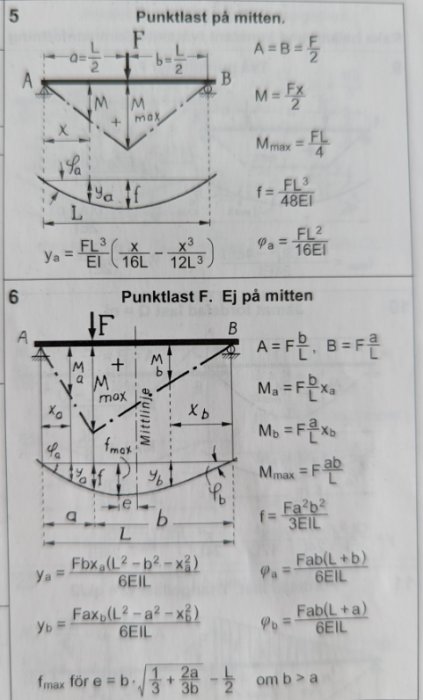
The formula for deflection of a simply supported beam with uniformly distributed load is: (5 x load (in Newtons) x length raised to the power of 3) / 384 x E (elasticity modulus) x I (moment of inertia).
I just wanted to show that it's possible to calculate this, but I prefer that you bring in expertise if you're not sure. Preferably someone who can look at the entire house and how the loads will be. If you know more precisely what the loads will be, you can calculate it remotely, but as you might understand, it takes a little time to do this and go back and forth on what is reasonable.
The image is exaggerated to show how the loads distribute, but the scale on the left is accurate. The beam is loaded with ~1 ton over the entire length of the beam.
I understand what you're saying and appreciate you taking the time.
So, I interpret it as a 1-ton distributed load over the beam results in a deflection of 1.84 mm in the middle?
That's acceptable in my world; I have greater margins and, in the worst case, can just shim some joists under the floor,
since this HEA beam will run along the outer wall where the floor framing is anchored but 1M away, there are actually smaller loads in reality that the beam will bear.
In general, beams tend to deflect more than one might think. A beam that is only 100mm probably sags quite a bit just from its own weight over that length. For large openings and load transfers, it's not uncommon for 2-300mm beams to be partially recessed into the ceiling.
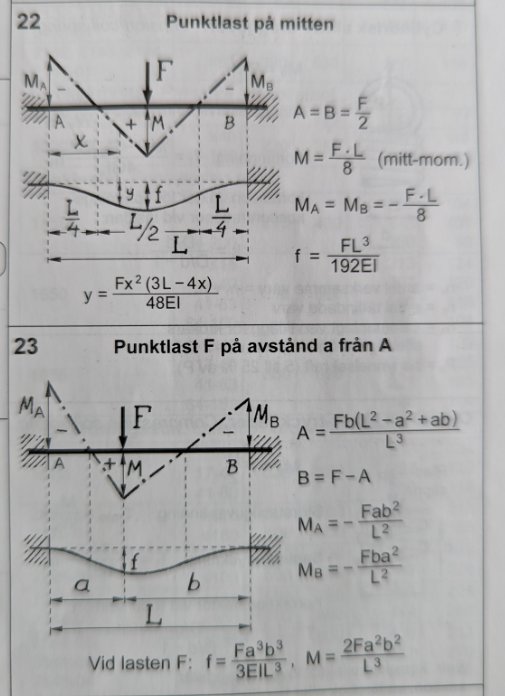
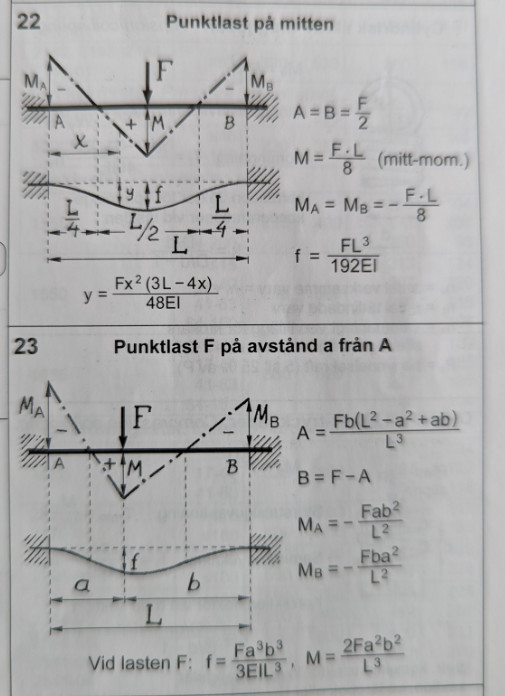
Correct, although clamped at the ends as I showed.
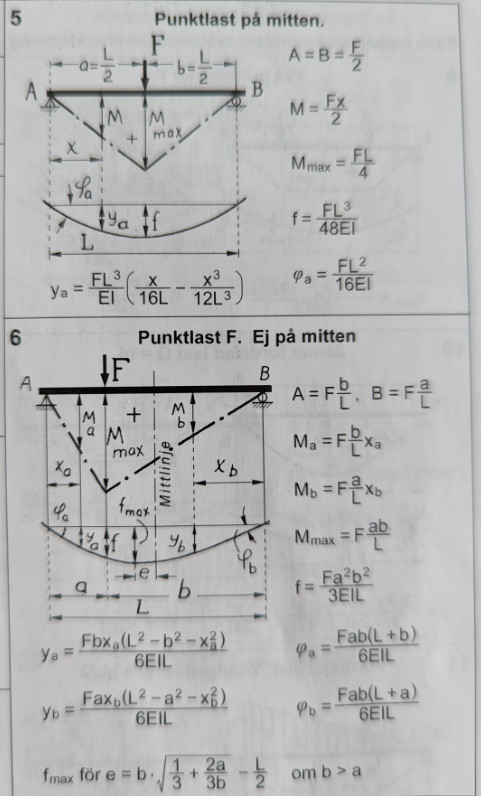
Buy yourself a Karl Björk for mechanics and you can calculate everything then
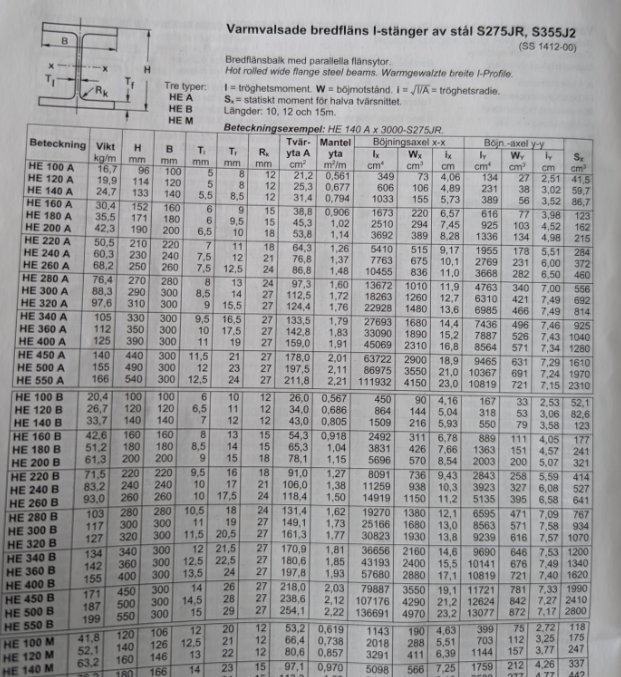
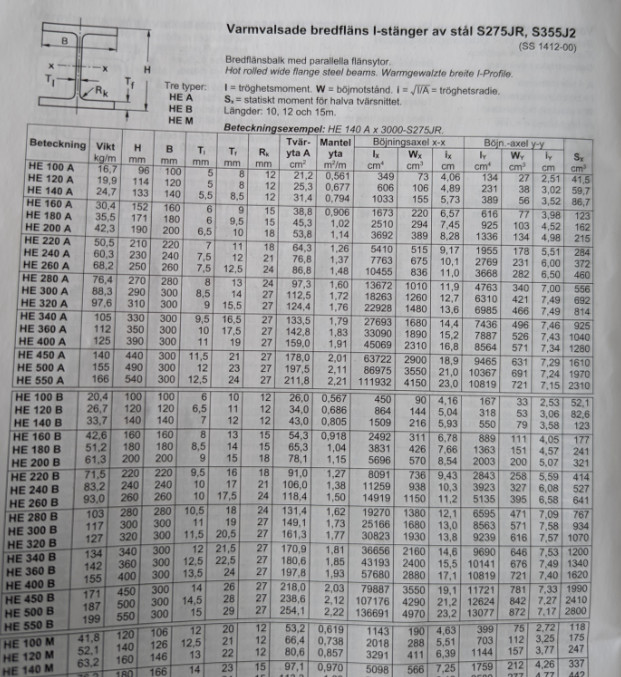
I would think the bending occurs in Iy, y-y, feel free to correct me Gabbe.
[image]
[image]
[image]
[image]
Well,
The moment of inertia for a HEA100 is about 349 cm4 (if you use the beam in the usual way)
And wasn't it distributed load (not point load) that TS requested?
Otherwise, I agree with you that you can manage quite well with Karl Björk's little yellow one...

Alex husbyggare said: