
11,694 views ·
43 replies
12k views
43 replies
Have we accidentally demolished a load-bearing wall?
Tack snälla snälla du!!! 🙌🙌🙌BirgitS said:
Om väggen nu skulle vara bärande så behöver du göra en bygganmälan till kommunen som ska vara godkänd innan arbetet påbörjas. I bygganmälan behöver man oftast redovisa beräkningar för hur man kom fram till hur stor balk och tjocka pelare som behövs för att bära upp vikten ovanifrån och det är sånt som du behöver hjälp med av en byggkonstruktör.
Jag tror inte att en sån stålregel kan bära någon större vikt utan att vika sig. Det man brukar använda som balk är en limträbalk: [link]
som då ska vila på pelare: [link]
Finns text och en del bilder gällande avväxling här: [link]
Det gör det kanske lättare att förstå vad det handlar om.
Läsvärt, även om det handlar om villor:
[link]
[link]
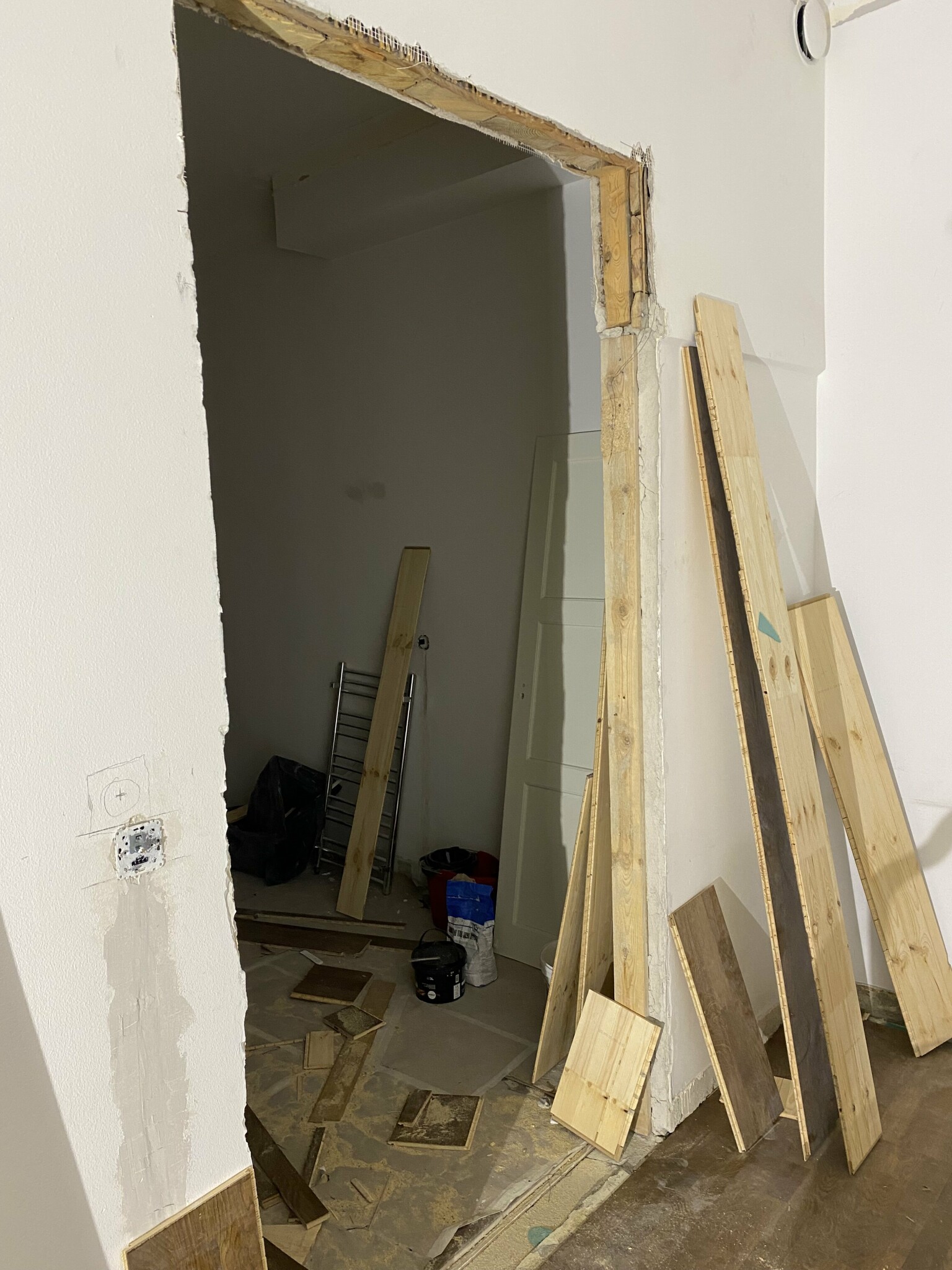
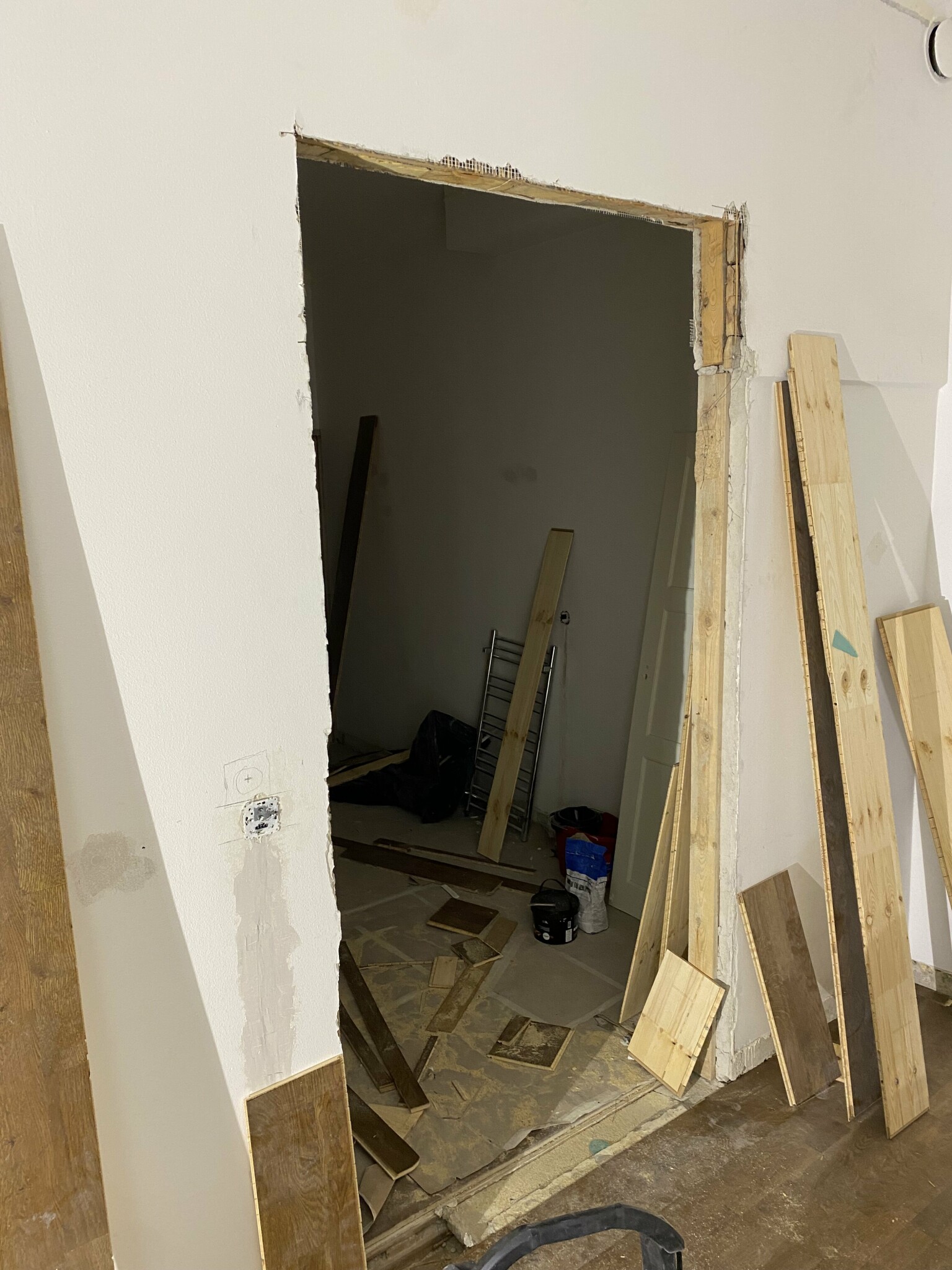
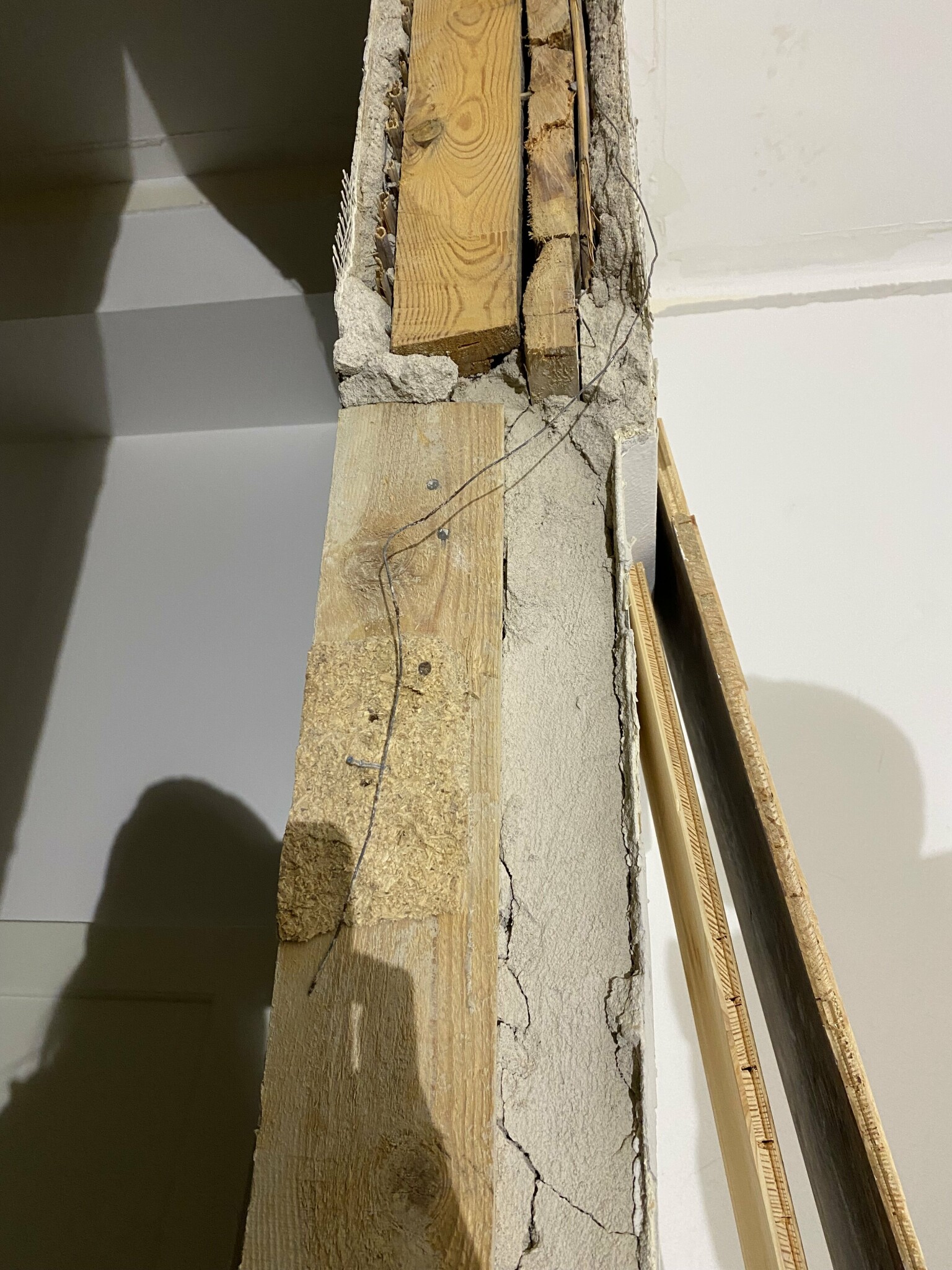
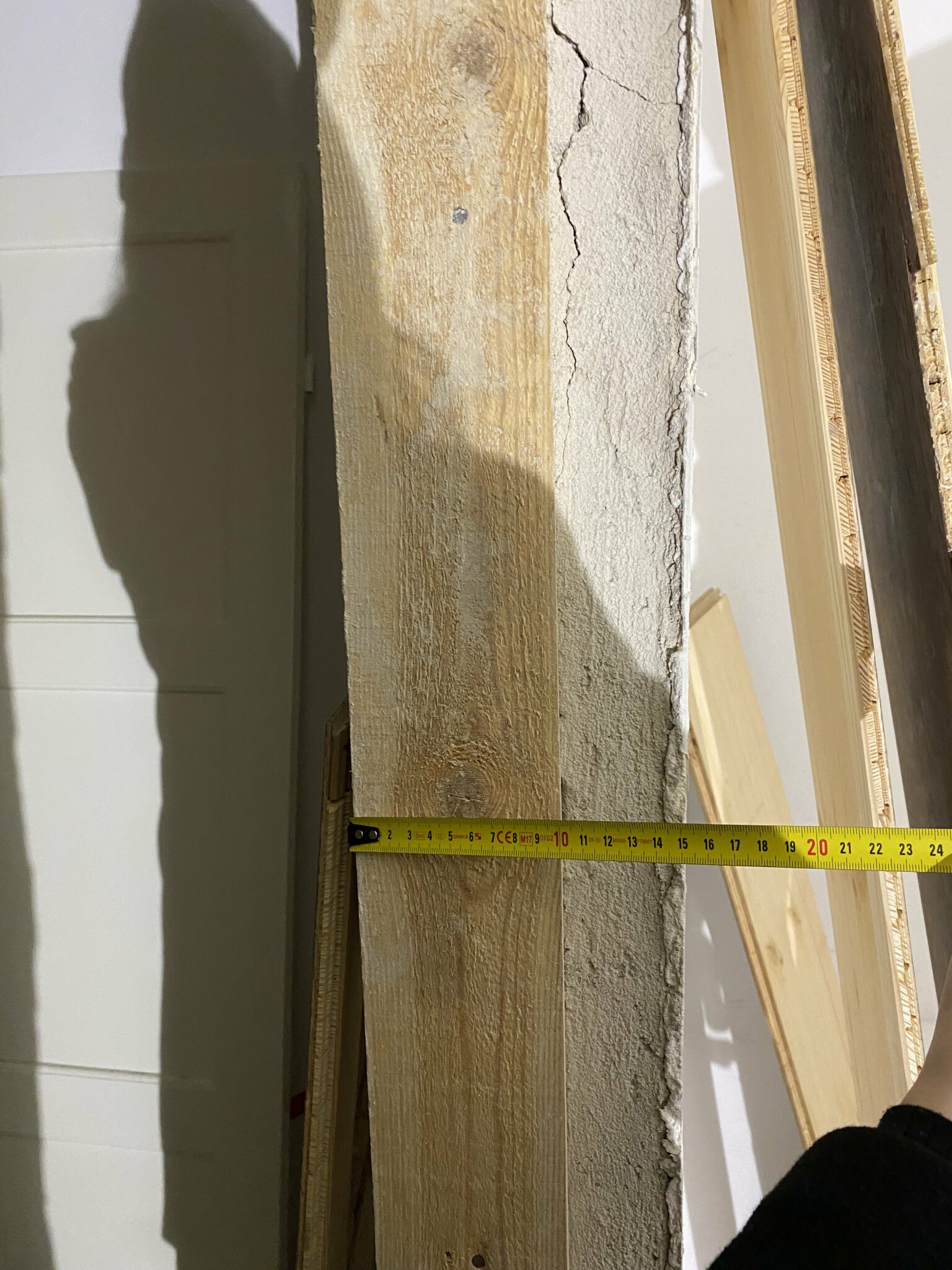
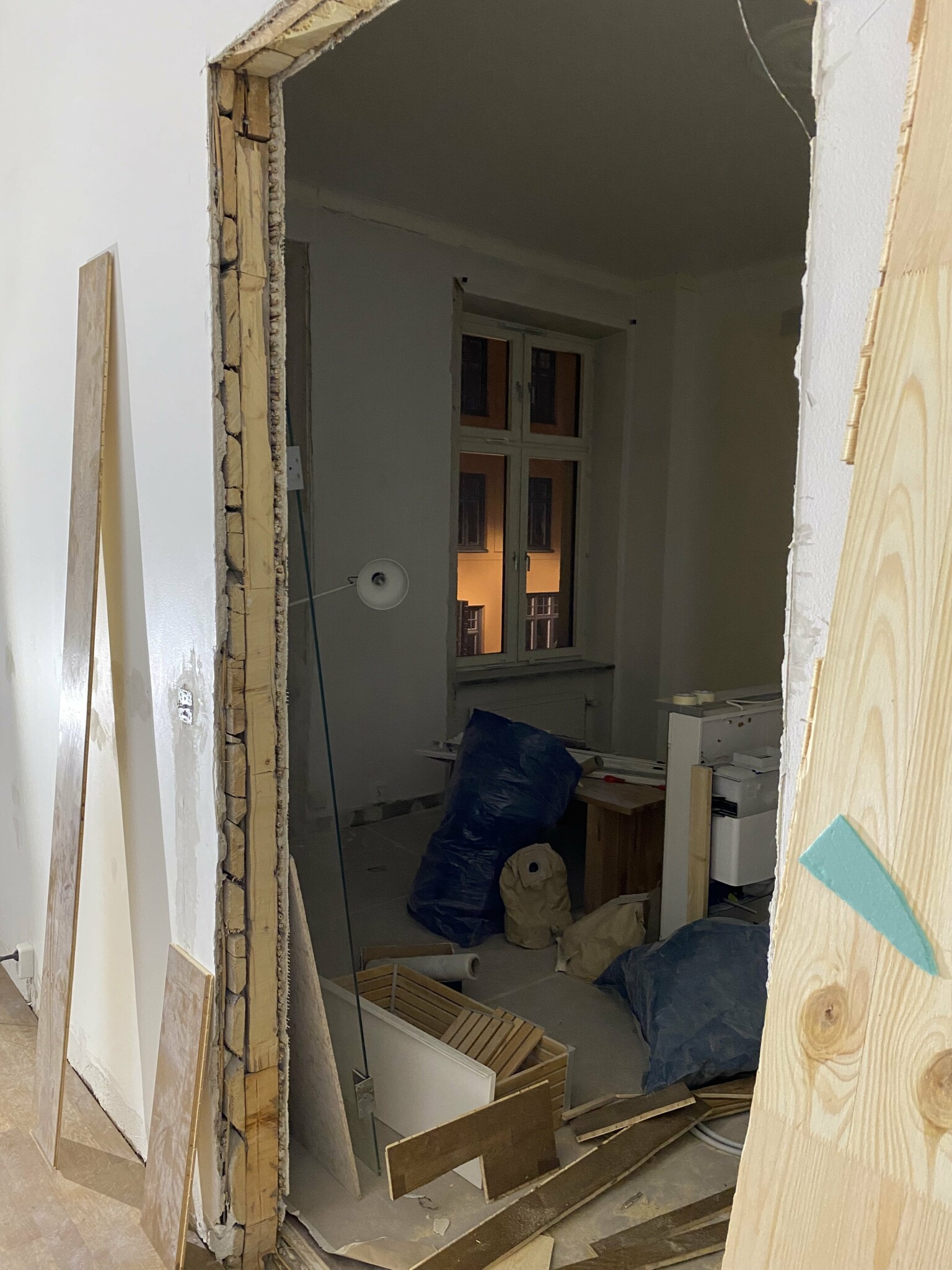
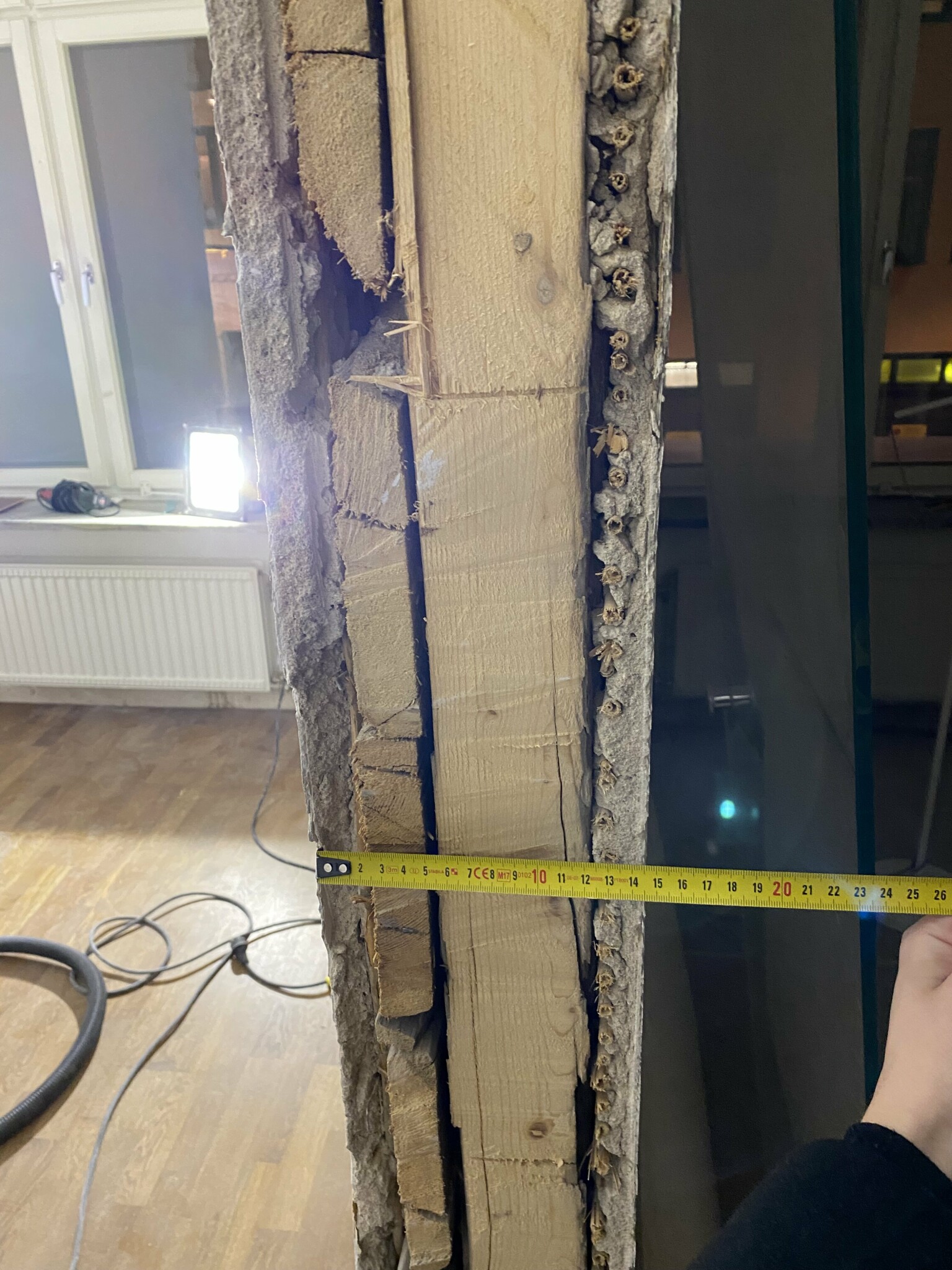

It can't look like that in a load-bearing wall. Moreover, the sectional drawing clearly shows that the wall is not load-bearing. It's not you who needs to call in an engineer; it's them who need to learn to read the existing drawings.
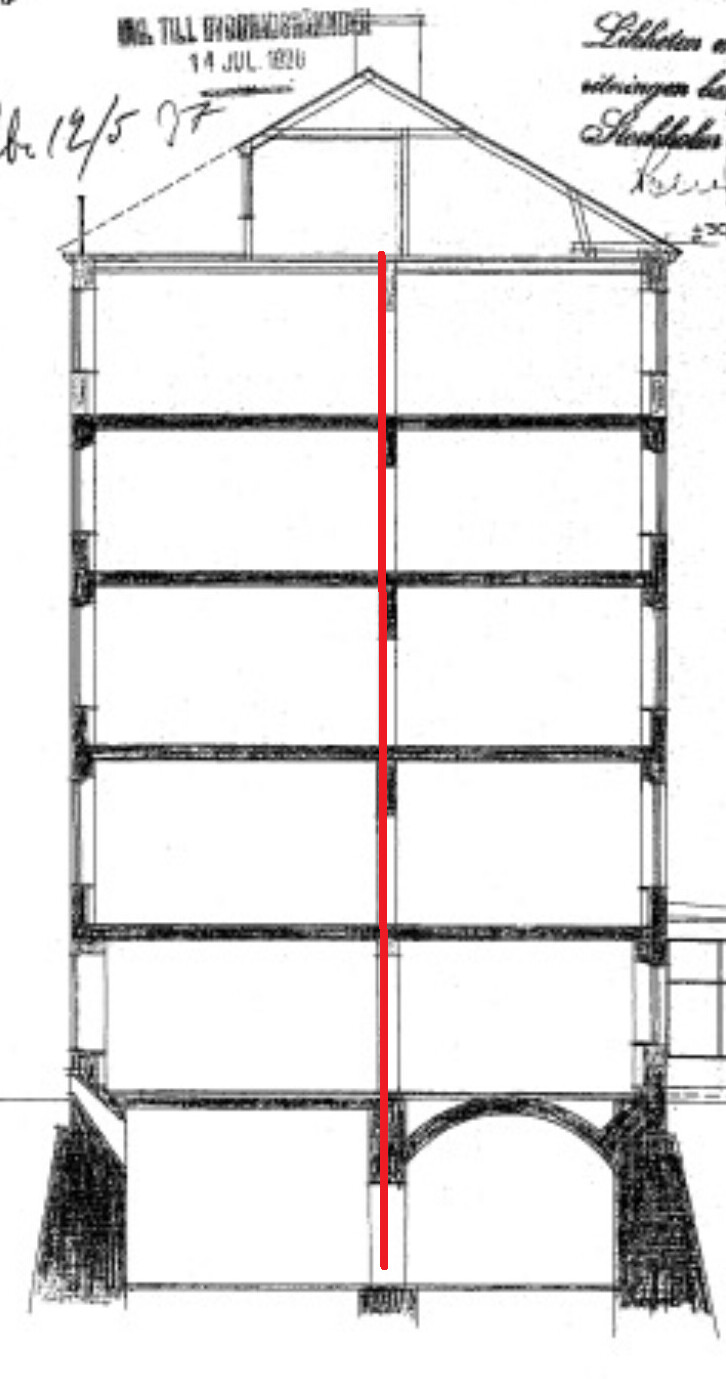
I have marked with a red line the load-bearing wall in the sectional drawing and in the plan drawing. The red is the same wall in both drawings, and it is load-bearing. Not the others. It is for any changes in the red-marked wall that you need an engineer.
(of course, you can't mess with the thickened wall between the kitchen and the bedroom, because there are probably risers there)

Everything indicates, as mentioned, that it is a non-bearing wall. However, it probably won't help you, no matter how many people here say it. Unfortunately, you will still need to obtain a certificate from an engineer to convince your landlord/Brf.
No, TS doesn't have to. Reverse burden of proof does not apply. Even if the board might want it.A AG A said:
Exactly as you say, reverse burden of proof does not apply. Therefore, the landlord/Brf does not need to prove anything about the wall.1 16386 said:
If, on the other hand, it were the Brf/landlord who, against the tenant's will, wanted to tear down the wall. Then the burden of proof would lie with them.
But - isn't it reasonable that the BFR board knows which walls are load-bearing? You don't bring in a structural engineer to find out if the wall is load-bearing or not, but to calculate how to proceed when opening holes in load-bearing walls.A AG A said:
One might think so. But very few in a BRF are trained in construction or building. Few can read a construction drawing. If no one has previously considered changing their layout, there probably hasn't been a reason to delve into it. A structural engineer does far more than what you mentioned. Interpreting drawings is a common task for a structural engineer. Or, based on a site visit, figuring out how a building is constructed, and thereby which walls are load-bearing and not.Anna_H said:
It is still unreasonable to impose these requirements instead of learning which walls in the building you are responsible for are actually load-bearing. It's disrespectful, that's what it is. It's not like it requires years of education or sky-high intelligence; it takes fifteen minutes at most to get and understand that information if you ask the right person.A AG A said:You might think so. But very few in a BRF are trained in construction or building. Very few can actually read construction drawings. If no one has previously considered changing their floor plan, it's likely that there hasn't been a reason to delve into that matter.
A structural engineer does much more than what you mention. Interpreting drawings is a common task for a structural engineer. Or, based on visits to the site, figuring out how a building is constructed, and thereby determining which walls are load-bearing and which are not.
I totally agree, tiresome and unnecessary costs because the brf refuses to take a look at the drawings that according to them might be incorrect 😂It's unreasonable to make these demands instead of learning which walls in the building you're responsible for that are actually load-bearing. It's disrespectful, that's what it is. It's not like it requires years of education or sky-high intelligence, it takes at most fifteen minutes to get and understand the information if you ask the right person.

If you were on the board, would you want to guarantee that one of the neighbor's walls is not load-bearing just by looking at the drawings?I Ismi said:
Considering that if a load-bearing wall is removed, it can have large and very costly consequences for the entire building.
The 3 engineers I have been in contact with think it's crazy that the housing association expects them to go out and check on-site, as they almost always just rely on drawings. All 3 believe that it's clearly visible on the drawing that the wall is not load-bearing and does not require a visit.