
2,982 views ·
12 replies
3k views
12 replies
Have they ignored the vapor barrier?

Hello!
I'm pondering how to attach the vapor barrier on the finished attic in my garage.
Ideally, I would like to have the rafters a bit visible.
But then it gets a bit tricky with the vapor barrier, I guess.
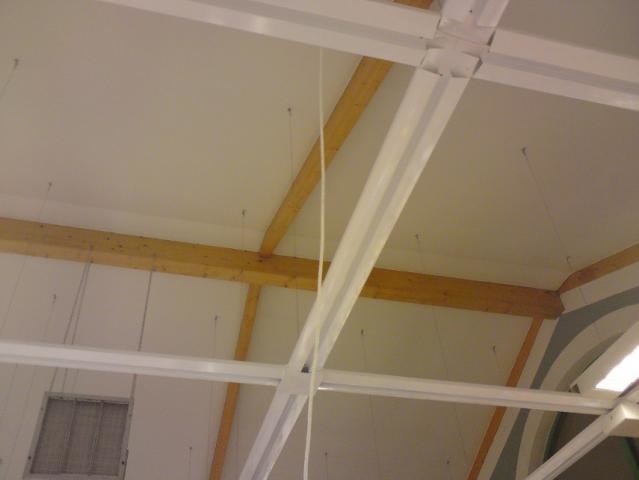
I went into our local store and looked up and saw this?
Visible rafters and beams!!!!
Sure, at least 10 times bigger than my garage, but how have they solved the vapor barrier here?
...If they have one?
All comments are welcome!
Any tips on whether it's possible to have visible rafters, maybe you just attach the vapor barrier between them?
Best regards,
Fredrik
I'm pondering how to attach the vapor barrier on the finished attic in my garage.
Ideally, I would like to have the rafters a bit visible.
But then it gets a bit tricky with the vapor barrier, I guess.
I went into our local store and looked up and saw this?
Visible rafters and beams!!!!
Sure, at least 10 times bigger than my garage, but how have they solved the vapor barrier here?
...If they have one?
All comments are welcome!
Any tips on whether it's possible to have visible rafters, maybe you just attach the vapor barrier between them?
Best regards,
Fredrik
In many cases, you still have to build on existing roof trusses to accommodate the desired insulation thickness - and then you need an air gap. Then you might as well just keep building on top again if you want them visible as hakaner wrote.
...or insulate externally and place the moisture barrier on top of the rafters.
From inside out:
Rafters /Moisture barrier/ /Råspont /Diffusion-open roofing felt /Insulation (EPS or similar)
/Battens /Tile or Metal
(Then you simultaneously get a more moisture-proof attic space /Roof)
See e.g. www.themisol.se
From inside out:
Rafters /Moisture barrier/ /Råspont /Diffusion-open roofing felt /Insulation (EPS or similar)
/Battens /Tile or Metal
(Then you simultaneously get a more moisture-proof attic space /Roof)
See e.g. www.themisol.se
Nothing independent. But they can probably refer:hakaner said:
http://www.ekofiber.se/Default.aspx?tabIndex=5&tabId=153
I myself learned that it exists maybe 2 months ago. And it seems interesting to me.
I am planning to build myself.
For example:hakaner said:
http://www.sbuf.se/ProjectArea/Docu...byggda med träregelstomme utan plastfolie.pdf
There are several reports from SP where they have looked at the combination of cellulose insulation and non-diffusion-tight membrane which show that it is as safe a construction as when using plastic. Search via their website.
Thank you frhe, I will continue searching! The report you linked doesn't mention moisture protection, but it does show that it's possible to build airtight even without plastic sheeting... I will keep looking...
But I still haven't heard anyone explain why one would want to avoid the plastic sheeting? Anyone willing to explain?
But I still haven't heard anyone explain why one would want to avoid the plastic sheeting? Anyone willing to explain?
Hello!
Is it then entirely unacceptable to just stretch the vapor barrier between the rafters if you still seal the edges with something like sealant or similar?
Looking at the description, there are still holes in the vapor barrier for the floor structure between two floors:
http://www.icopal.se/upload/icopals...roduktinformation/akvaden folder_okt_2009.pdf
...the hole in the vapor barrier for the floor structure is admittedly smaller, but still large, I think.
Grateful for comments
Regards
Fredrik
Is it then entirely unacceptable to just stretch the vapor barrier between the rafters if you still seal the edges with something like sealant or similar?
Looking at the description, there are still holes in the vapor barrier for the floor structure between two floors:
http://www.icopal.se/upload/icopals...roduktinformation/akvaden folder_okt_2009.pdf
...the hole in the vapor barrier for the floor structure is admittedly smaller, but still large, I think.
Grateful for comments
Regards
Fredrik
On SP's website, they state that air tightness has proven to be much more important than vapor tightness to avoid moisture damage in cold attics, and that's why they've investigated alternative ways to achieve an airtight construction. I'll see if I can link to a study on this. I'll get back to you.hakaner said:
Here is, for example, an article that discusses the importance of air tightness in relation to diffusion tightness
http://www.thebestconference.org/best1/pdfs/044.pdf
In the above article, it should be remembered that it deals with houses in Florida where the outdoor climate is warm and humid and the indoor climate is cold and dry. Therefore, their constructions look different. However, the conclusion is that airflow is a bigger cause of moisture problems than diffusion.
http://www.buildingscience.com/documents/reports/rr-0004-air-barriers-vs-vapor-barriers
The above article reaches the same conclusion, that airflow (and stopping it) is significantly more important than preventing diffusion. This also touches on the reason why vapor-tight membranes should not be used.
http://www.thebestconference.org/best1/pdfs/044.pdf
In the above article, it should be remembered that it deals with houses in Florida where the outdoor climate is warm and humid and the indoor climate is cold and dry. Therefore, their constructions look different. However, the conclusion is that airflow is a bigger cause of moisture problems than diffusion.
http://www.buildingscience.com/documents/reports/rr-0004-air-barriers-vs-vapor-barriers
The above article reaches the same conclusion, that airflow (and stopping it) is significantly more important than preventing diffusion. This also touches on the reason why vapor-tight membranes should not be used.
Click here to reply