
1,253 views ·
2 replies
1k views
2 replies
Hard material under plastered wall + new plaster
Hello!
I've knocked down the plaster in my garage, or at least the outermost layer and/or what's loose. In the main part of the room, the plaster is directly on the lightweight concrete, but in the back part that has been used as a hobby room, there is something between the plaster and the plaster. Can anyone advise on what it might be and if it can remain before new plaster is applied? The material is rock hard and the concrete grinder I tried struggled to make even a tiny dent. The previous owner has evidently had moisture problems. The non-functioning drainage has now been fixed and the foundation insulated with isodrän.
Attaching some pictures. In one picture, salt efflorescence is visible. Does it need to be treated in any special way? I'm thinking new plaster and paint that allows moisture to pass through.
Grateful for any answers / Frippe
I've knocked down the plaster in my garage, or at least the outermost layer and/or what's loose. In the main part of the room, the plaster is directly on the lightweight concrete, but in the back part that has been used as a hobby room, there is something between the plaster and the plaster. Can anyone advise on what it might be and if it can remain before new plaster is applied? The material is rock hard and the concrete grinder I tried struggled to make even a tiny dent. The previous owner has evidently had moisture problems. The non-functioning drainage has now been fixed and the foundation insulated with isodrän.
Attaching some pictures. In one picture, salt efflorescence is visible. Does it need to be treated in any special way? I'm thinking new plaster and paint that allows moisture to pass through.
Grateful for any answers / Frippe
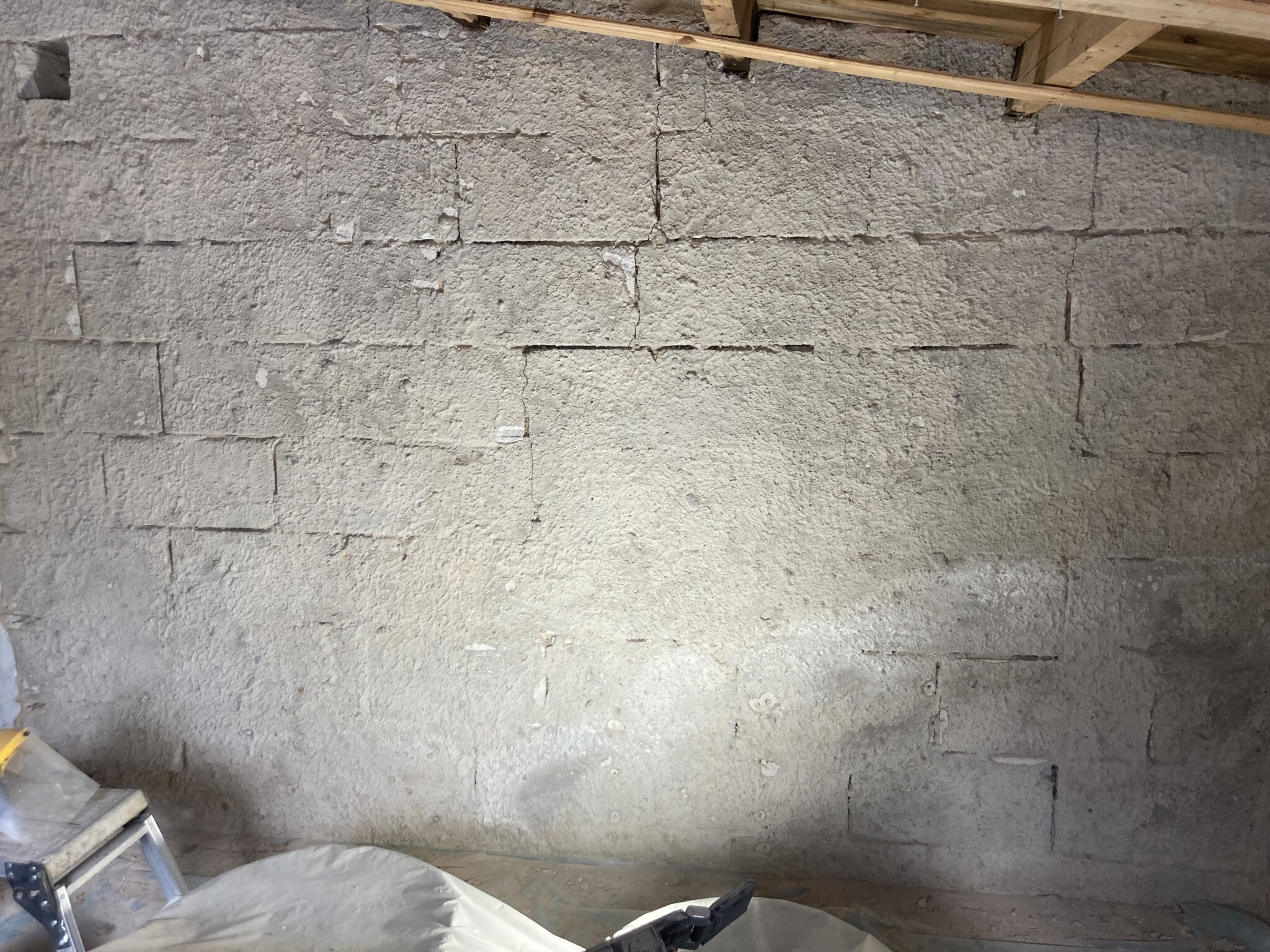


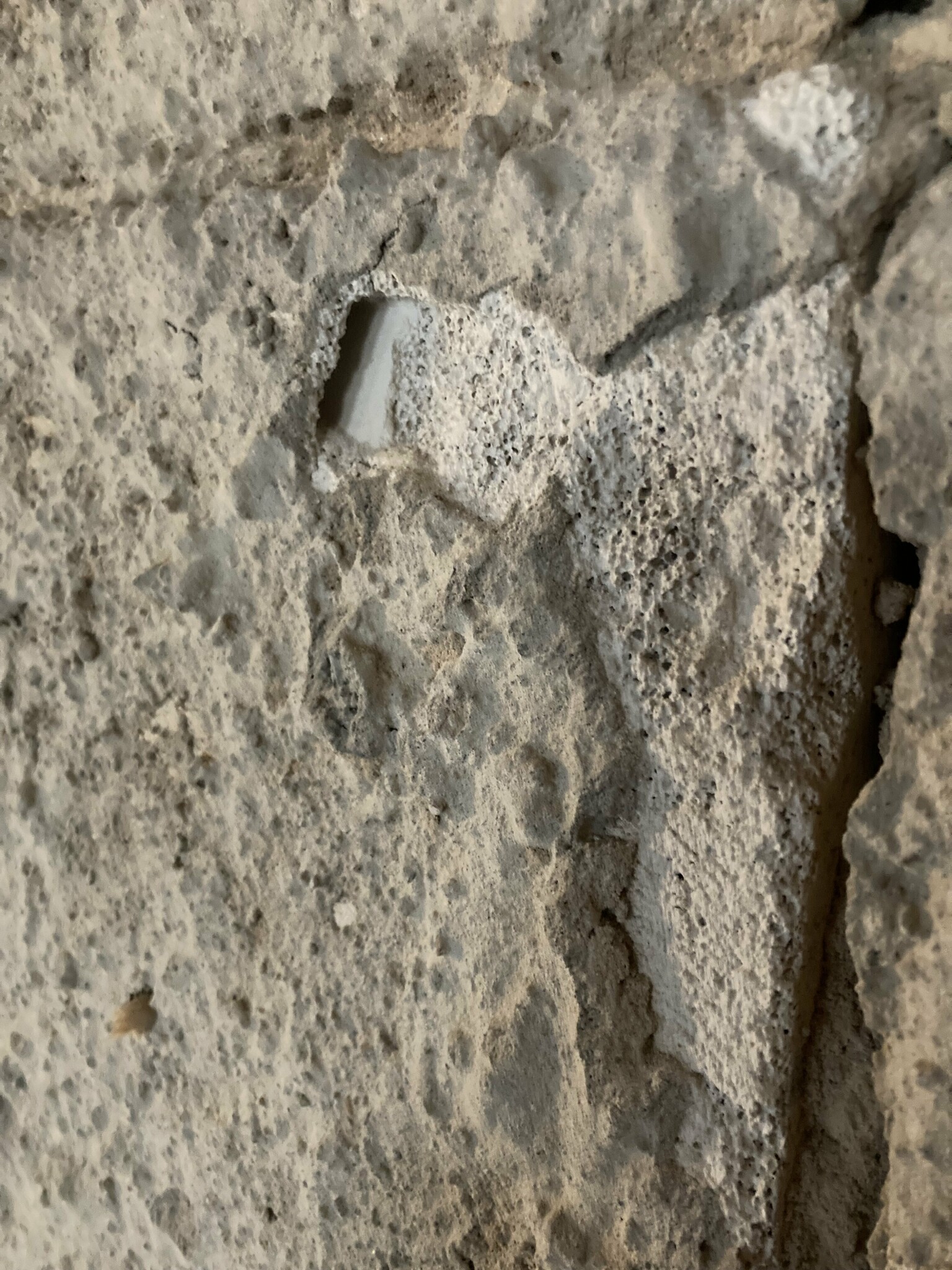
If it's holding well, there's probably no reason to grind it off. Local high points should be very easy to remove if you use an angle grinder with a diamond blade.
For lightweight concrete, you should use low-alkali mortar. I think this might be sufficient:
https://www.finja.se/produkter/gjuta-mura-putsa-laga/putsbruk-c-lagalkaliskt?id=5545505
Or an equivalent product from weber.
I haven't plastered on lightweight concrete indoors, so I'm not aware if some form of priming of the substrate is necessary, if it needs to be primed first, mesh applied, etc. There are various systems, it's best if you find a work instruction for the system you purchase.
For lightweight concrete, you should use low-alkali mortar. I think this might be sufficient:
https://www.finja.se/produkter/gjuta-mura-putsa-laga/putsbruk-c-lagalkaliskt?id=5545505
Or an equivalent product from weber.
I haven't plastered on lightweight concrete indoors, so I'm not aware if some form of priming of the substrate is necessary, if it needs to be primed first, mesh applied, etc. There are various systems, it's best if you find a work instruction for the system you purchase.
Hello! Thanks for the quick response! My question might not have been 100% clear. I was mostly wondering if it was a material that prevents the wall from breathing or not, in terms of whether to remove it or not. It's stuck like hell, so if I shouldn't remove it, it can absolutely stayB BSOD said:If it's stuck well, there's really no reason to grind it off, is there? Local high points should be very easy to remove if you use an angle grinder with a diamond blade.
For lättbetong, you should use low-alkaline mortar. I think this might be sufficient:
[link]
Or an equivalent product from Weber.
I haven't specifically plastered on lättbetong indoors, so I'm not familiar if it requires any kind of priming of the surface, if it needs to be primed first, meshed, etc. There are different systems, so it's best if you find installation instructions for the system you purchase.

Click here to reply