
1,927 views ·
14 replies
2k views
14 replies
Hall renovation post under the ceiling

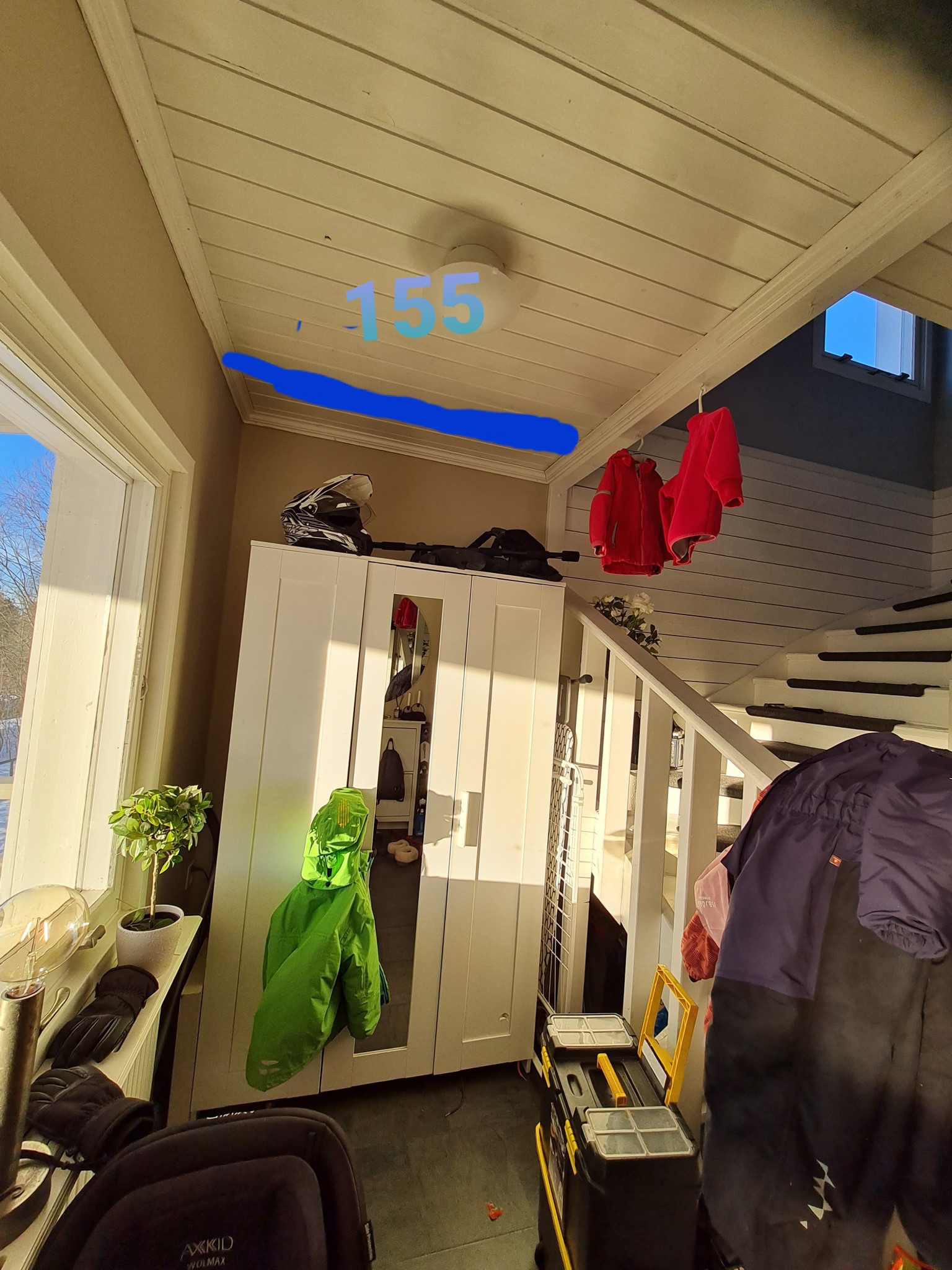
I was about to start with the hallway and staircase renovation (plastering walls and ceiling, electric underfloor heating, tile floor, parquet floor on the staircase just treads, new railing for the staircase, a total renovation it will be) but there is one thing that bothers me, I don't know what to do with it and I don't want it, it's a post in the middle of the hallway by the stairs. As you can see in the picture, from wall to wall is 3 m and with the yellow mark it is 60 cm where I plan to build a wall with just 45 studs to put a sliding door wardrobe that will be 150 wide, so if I frame 60 cm with just studs (support for the ceiling) then there is about 2.5 m left but what does that post actually do? Does it support the whole ceiling? It's 95×95
The post will not fit when I have renovated the entire hallway and staircase so what solutions do you have, can you help me with this
Thank you in advance
(not sure which forum this belongs to)
Has everyone stopped with byggahus or? Where are you?
This is a @justusandersson question, but my guess is that the pole is bearing quite a bit of load and needs to be replaced in a sensible way.


It is hardly a situation where someone puts up a post just because it looks nice. You can probably assume that it has a load-bearing function. 95x95 suggests that it is not very old. Drawings are the best aid when analyzing such a problem. Floor plans for the ground floor and upper floor as well as a section. Also, some information about the house: Year of construction, approximate location.
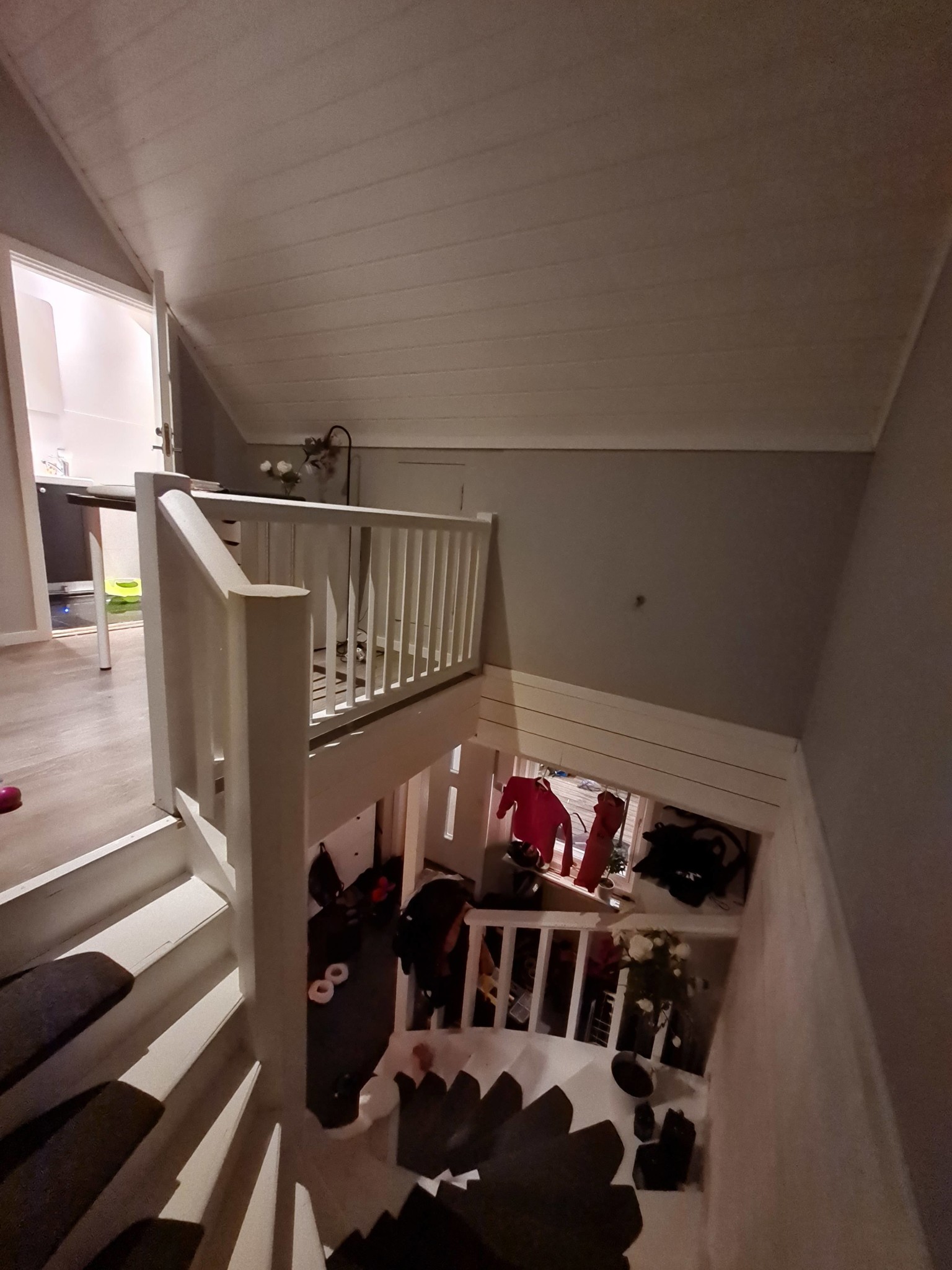
Unfortunately, I don't have any blueprints, never received them and they stopped responding after we bought the house. But this is what it looks like on the ground floor and a picture from the upper floorJ justusandersson said:It's hardly a situation where someone places a post just because it looks nice. It's reasonable to assume that it has a load-bearing function. 95x95 suggests that it's not that old. Blueprints are the best tool when analyzing a problem like this. Floor plans for the ground floor and upper floor as well as a section. Also, some information about the house: Year of construction, approximate location.
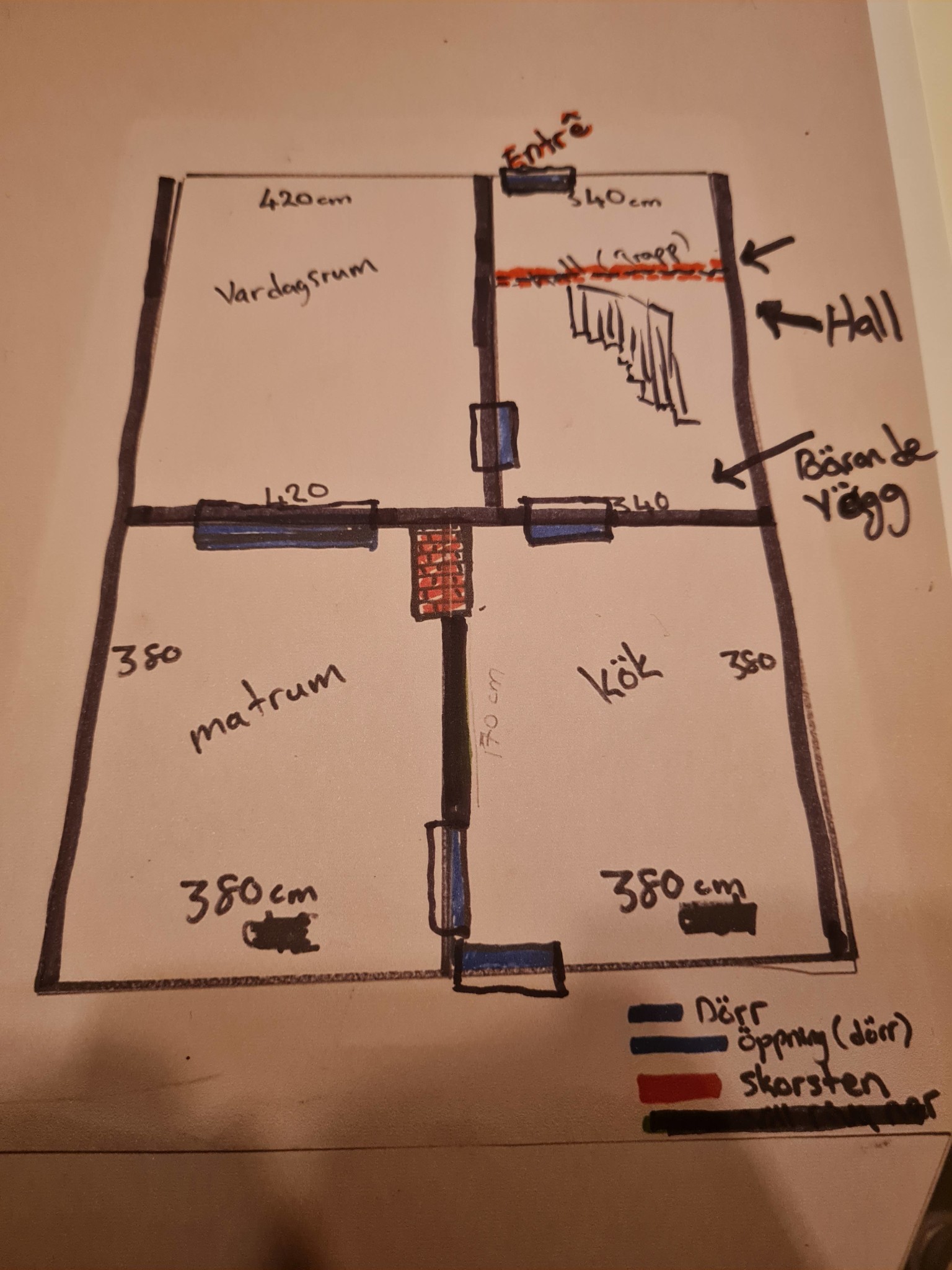

Your drawing and the photo explain the connections quite well. I get the sense that the staircase is the result of a later renovation, and in such cases, original drawings don't usually help much. If the staircase is original, there might be K-drawings at the municipality, and that is, of course, interesting. I believe there is a supporting beam directly under the beautiful stair railing, resting on the beam which in turn rests on the post. I think you have two options: 1) Leave it as it is and 2) remove enough paneling, plaster, etc., so you can see the actual construction, measure dimensions, etc.
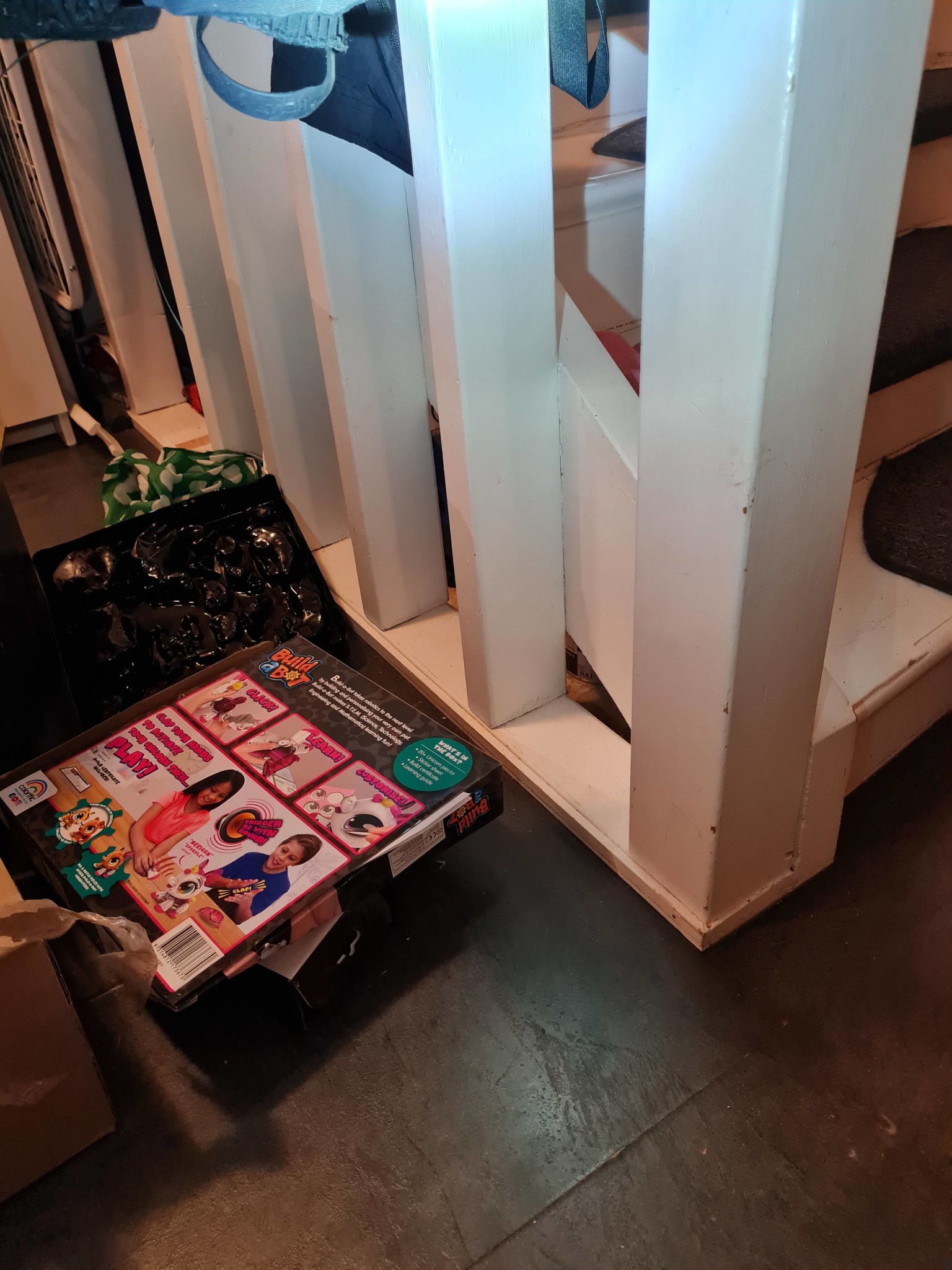
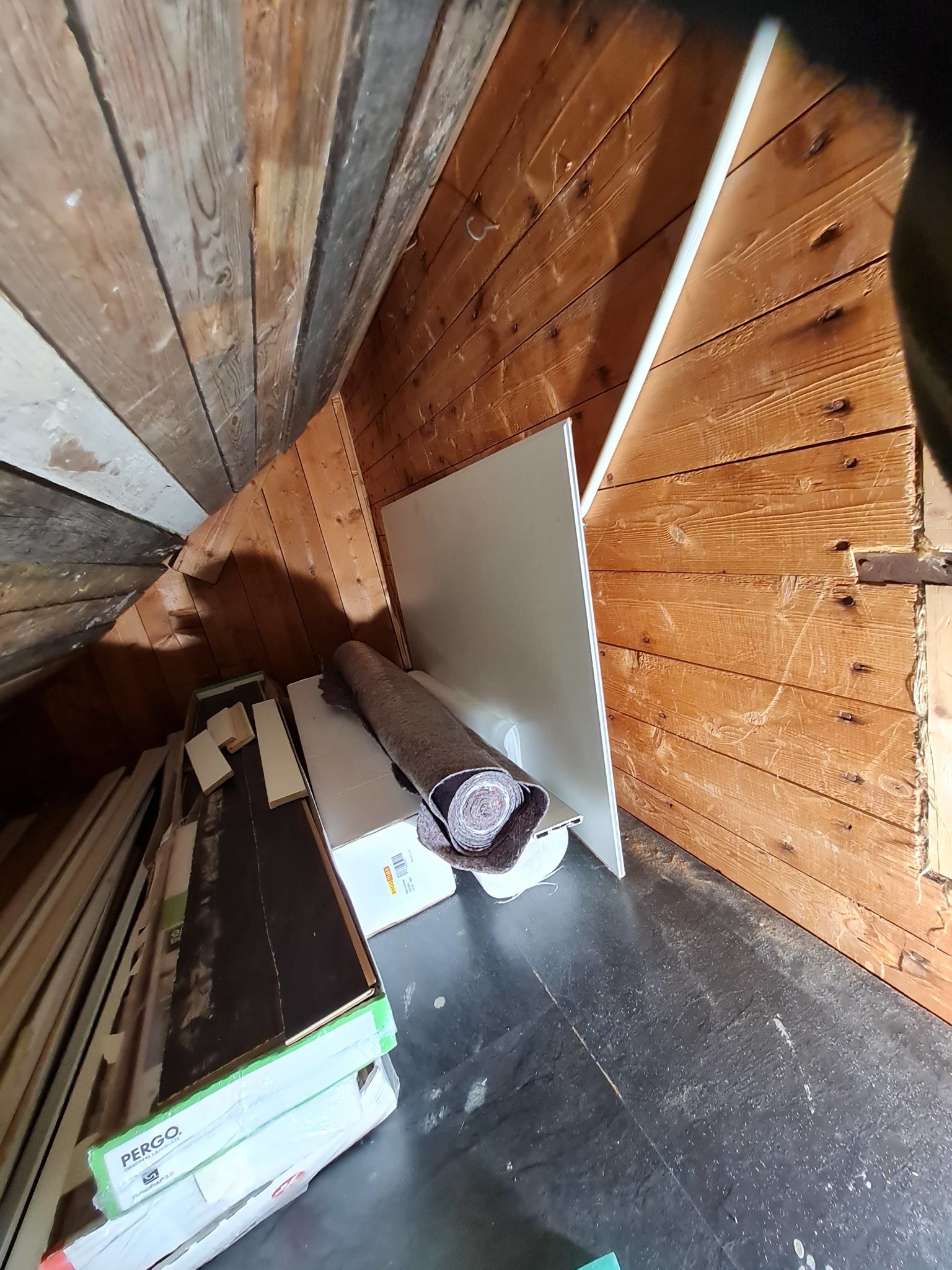
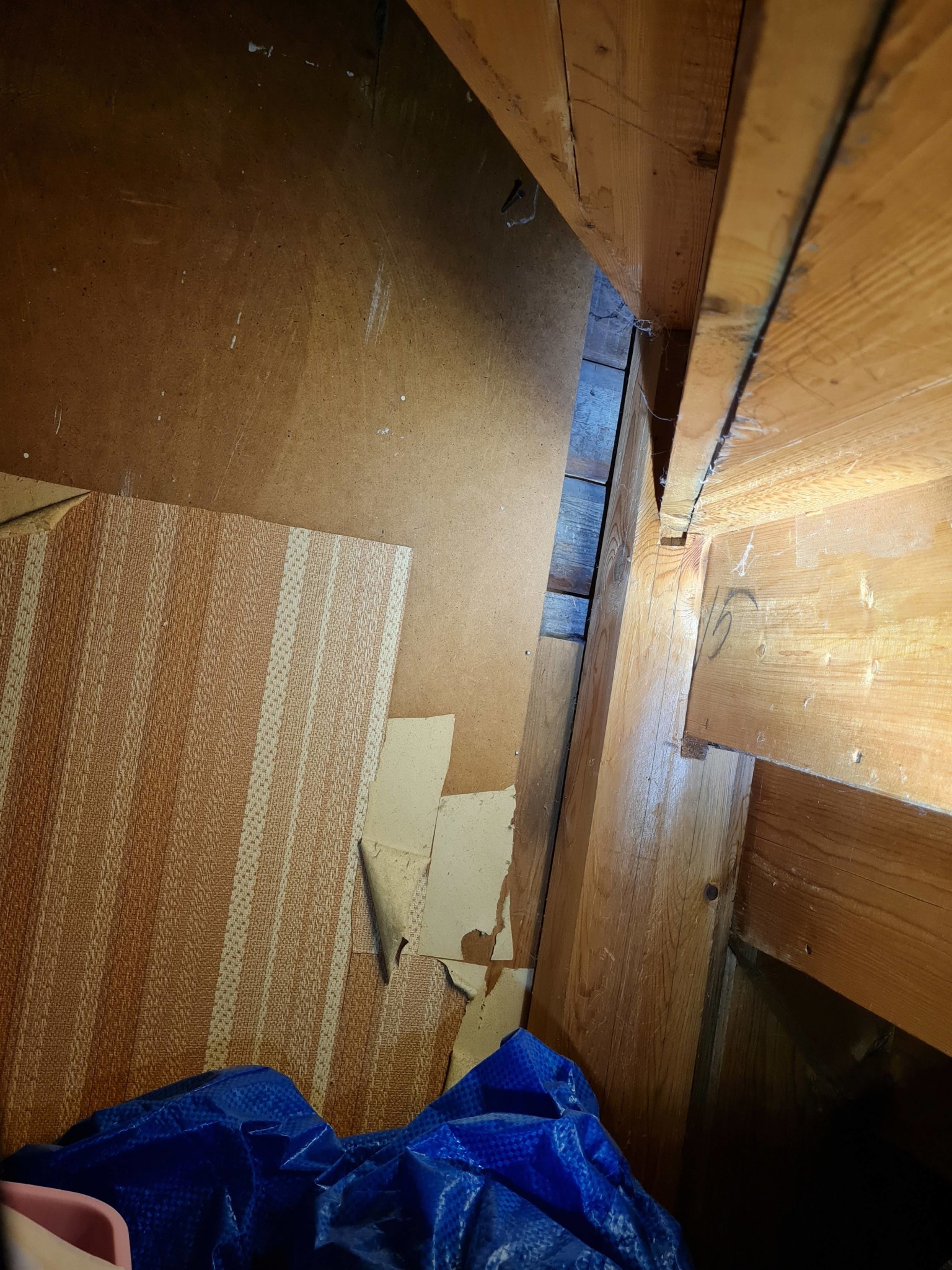
I will talk to the municipality on Monday.
Here come more pictures that might help a little more, but I don't think the stairs are from 1930, they look very fresh and clean.
The small attic above the stairs has about a 70 mm thick wooden wall like rough boarding, and the trusses do not go all the way down but rest on that wall. Then they have extended (spliced) the trusses.
The post stands on a 45×95 beam that is nailed to a plastic mat (under the stairs is an old plastic mat).
The picture showing under the stairs, you can see some dark timber behind the masonite, they've been in certain parts of the house, and I think they are from the 30s.
But I think I will choose option 2 as Justusandersson@ says, tear away as much as I can and see what is under that wall, it's no problem because I will reframe the roof and gypsum the walls instead of masonite boards.
But here come more pictures
The staircase is not original. It rests on a glulam pillar. This can be seen in the photo from the backside of the staircase. Glulam is a German invention from the 1920s. It was first used in Sweden at train stations as platform protection. The house is a plank house, with a frame made of 3-inch planks. It's not that difficult to calculate what the dimensions of the beams should be in order to then compare with reality.
And that means the post is not from the house's construction year but was put there when they added the staircase.J justusandersson said:The staircase is not original. It rests on a glulam pillar. You can see it in the photo from the back of the staircase. Glulam is a German invention from the 1920s. It began to be used in Sweden first at train stations as platform protection. The house is a plank house, with a frame of 3-inch planks. It's not that difficult to calculate what the dimensions of the beams should be to then compare with reality.
The stair railing is made of 45×95 stud, the post is 95×95, and both stand on the stud that lies on the floor. What I'm trying to say is that the post was put up when they built the railing and staircase, and now the question is why?
To keep the railing stable or to support the roof?
They made the stairwell a bit larger when they rebuilt the stairs (and possibly moved them), which increased the need for beams. That the post is not original could have been said from the start since its dimension is 95x95 mm. Until the early '70s, all lumber dimensions were in inches.
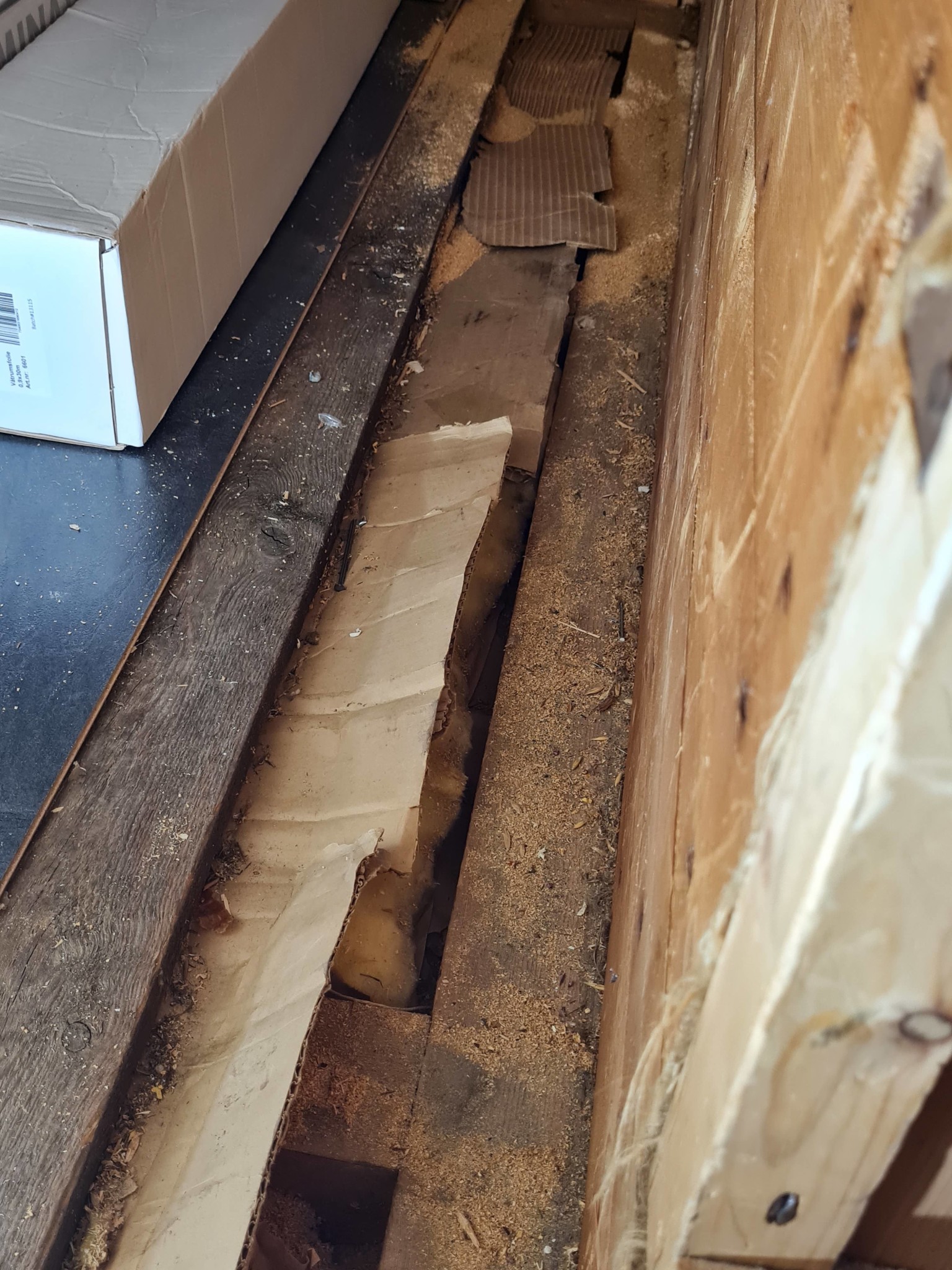
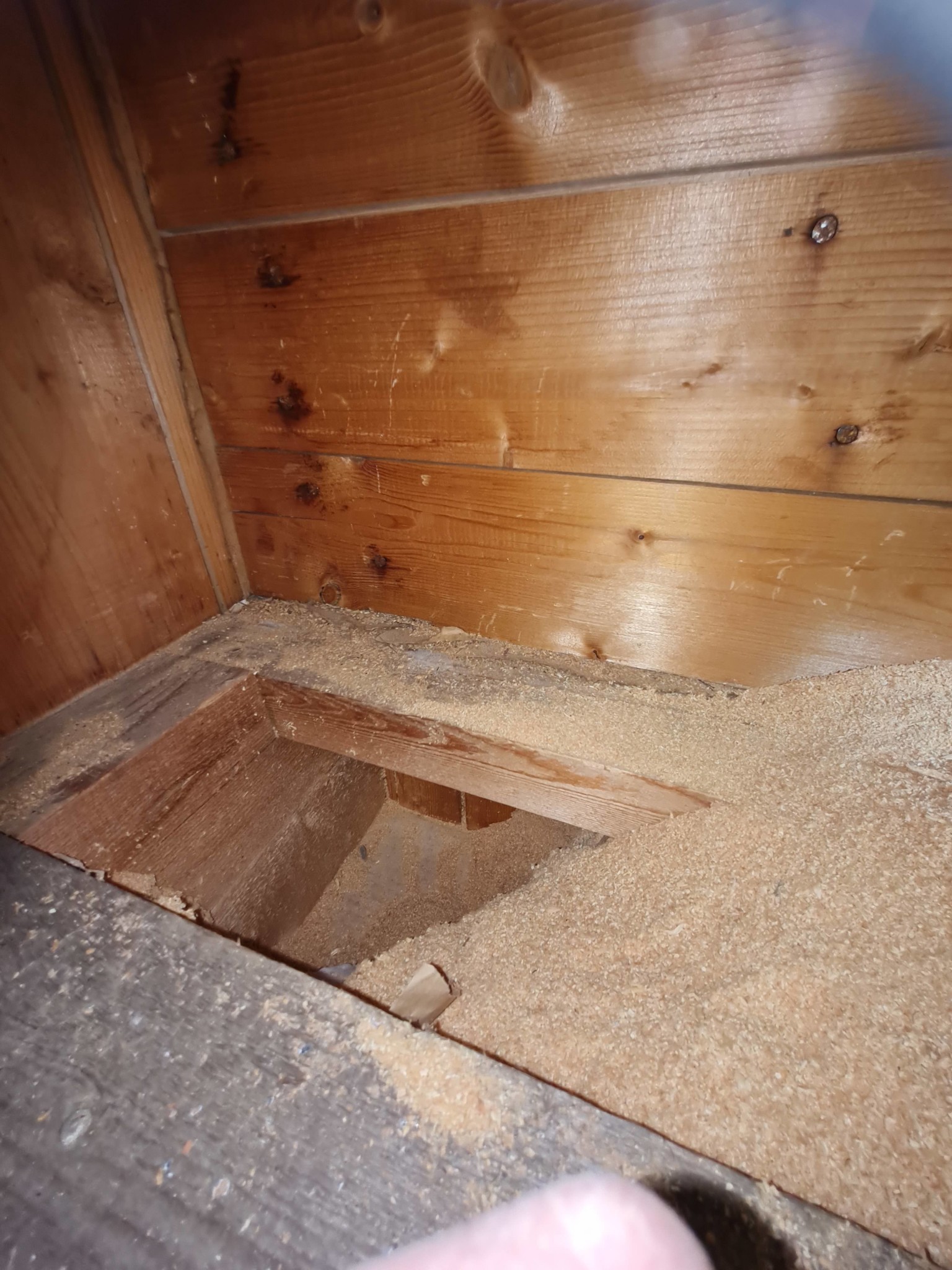
I removed the post and tried to open up as much as possible to see how the construction was, and when I removed the post it felt like it was loose, meaning the floor or wall above the post was not attached to the post, and here are some more pictures showing the floor joists, (blue) dimensions were about 200×75J justusandersson said:The staircase opening was made a bit larger when renovating the staircase (and possibly relocating it), which increased the need for beams. That the post is not original I could have told from the beginning because its dimension is 95x95 mm. Until the early 70s, all lumber dimensions were in inches.
And then there is a beam on the joists which was hard to see the dimensions (yellow) since it is under the short wall
Red * where the post was.
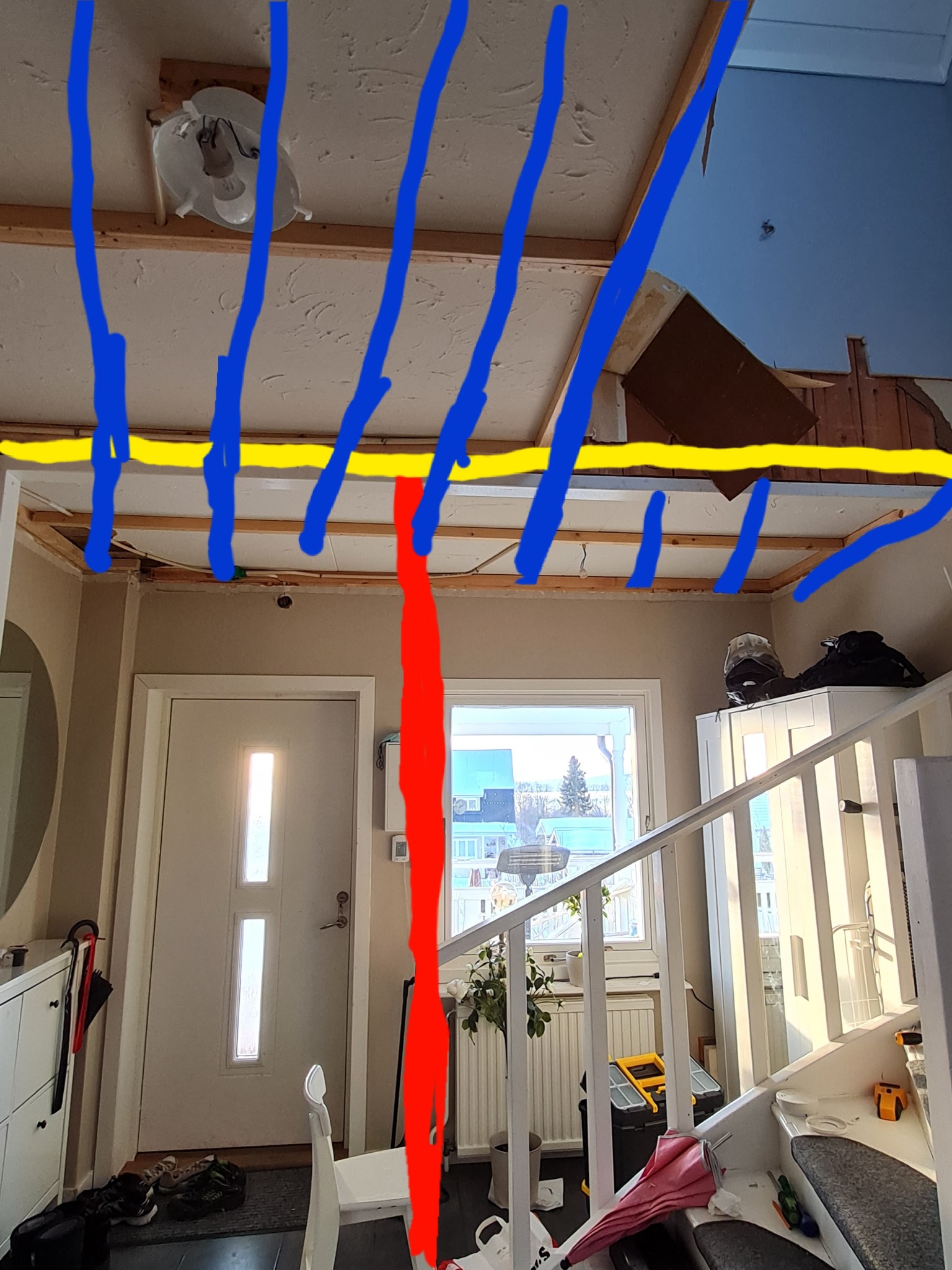
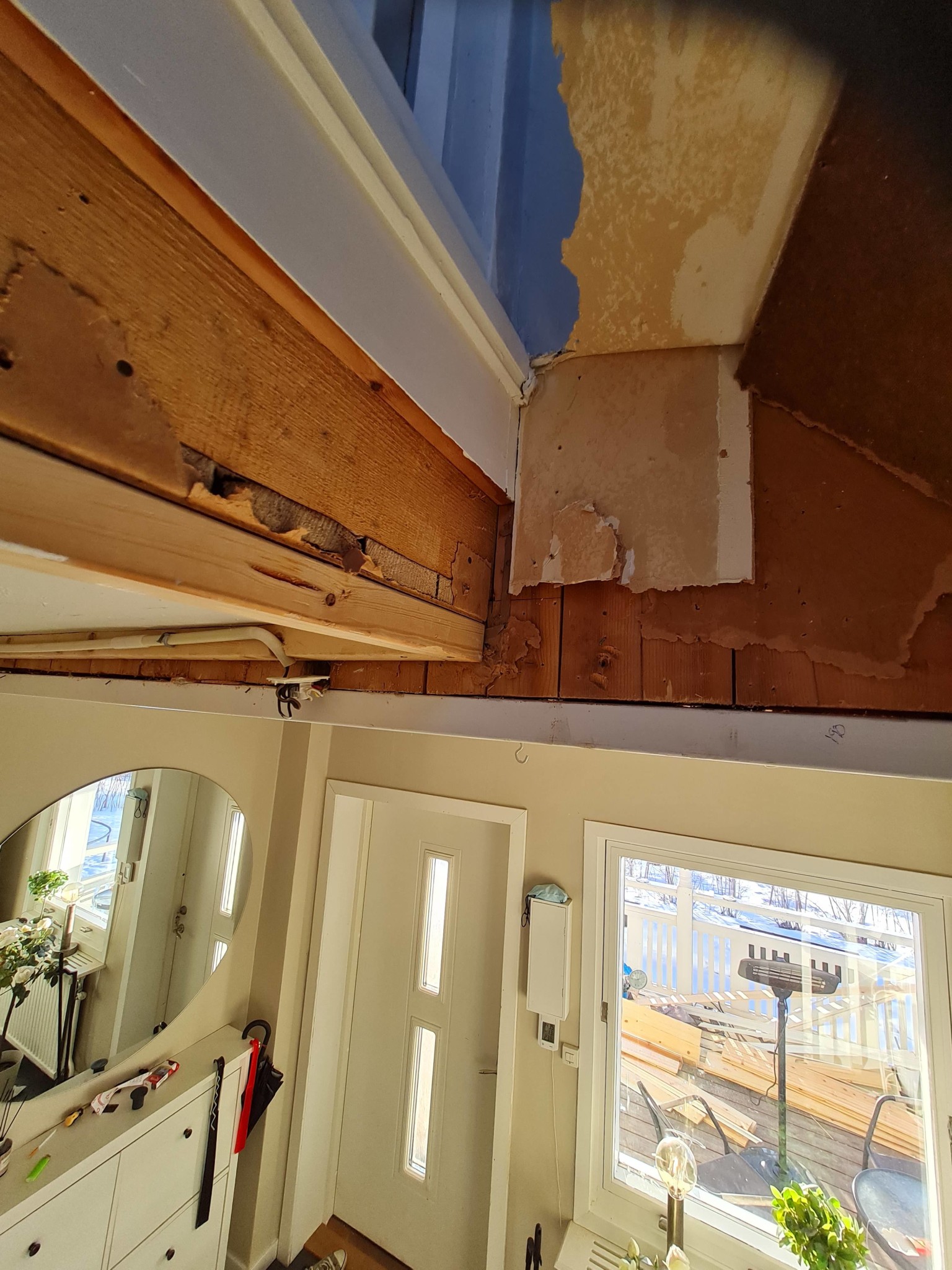
If you are going to calculate it, you need to know the dimensions, but since the post was loose, it can't have had any load-bearing function. 75x200 (3x8 inches) corresponds to 45x240 mm in rigidity, so it's sturdy stuff. If it feels good when you walk on the upper level, just continue.
Thank you so much for all the information and help, yes it feels good when walking on the upper floor, and before I removed the post, I measured from the floor to the ceiling to see if there was any drop or not, so when I removed it and measured again, there wasn't even 1 mm difference. But I'm thinking of putting the post back anyway on the 95x45 noggin that's there and support it with studs at the ends just to be safe, or is that not helpful?J justusandersson said:
Click here to reply
Similar threads
-
Behålla gamla radiatorer? Renovering källare
Värme allmänt -
Installera kabelhållare till laddstolpen, hjälp?
Laddboxar -
Tillbehör dubbelladdstolpe (betongsugga, kabelhållare, stolpfäste)
Säljes, Uthyres & Skänkes -
Strength of renovation gypsum
Building Materials and Construction Technology -
Hjälp vid hallrenovering med golvvärme
Golv