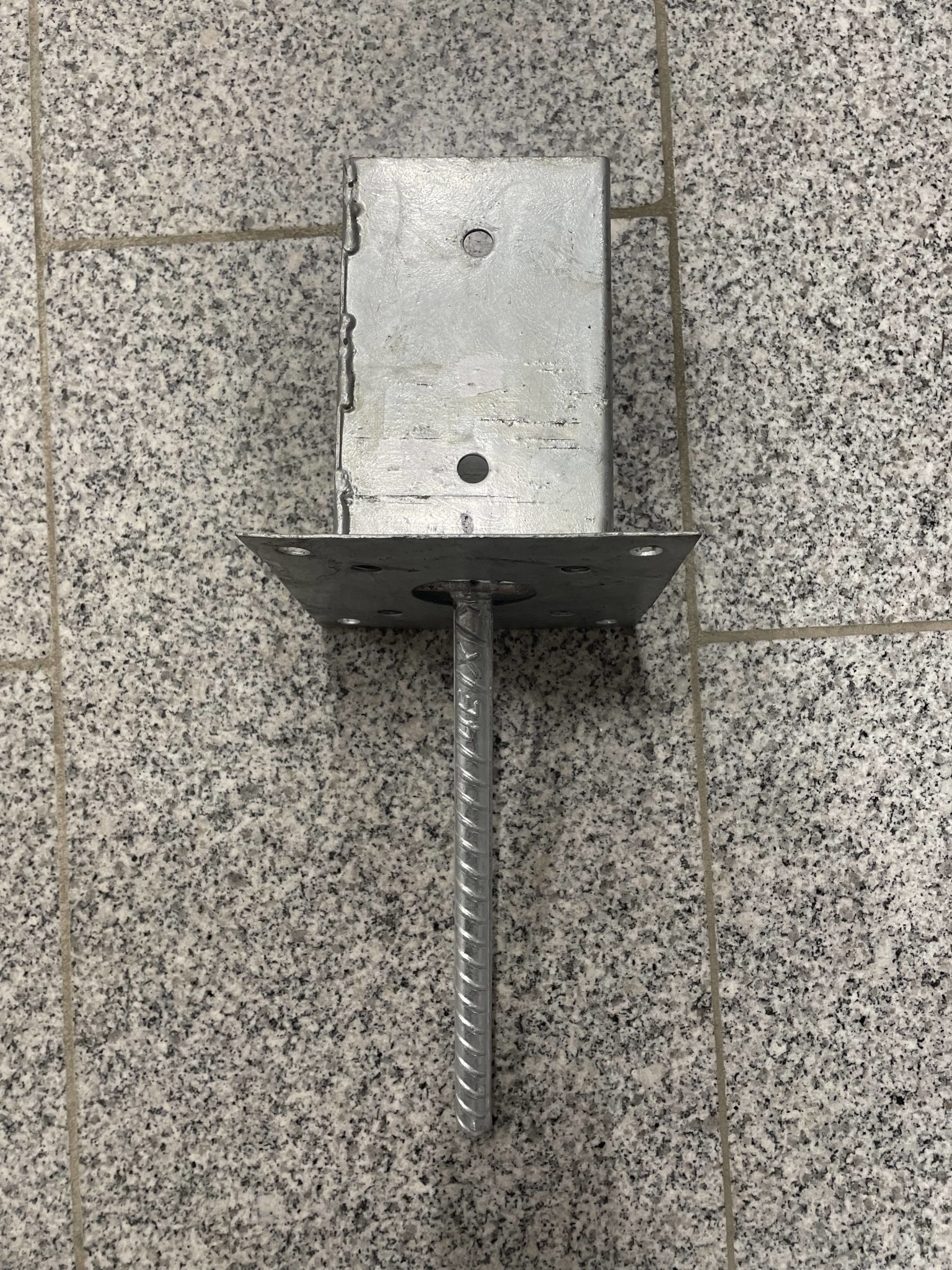
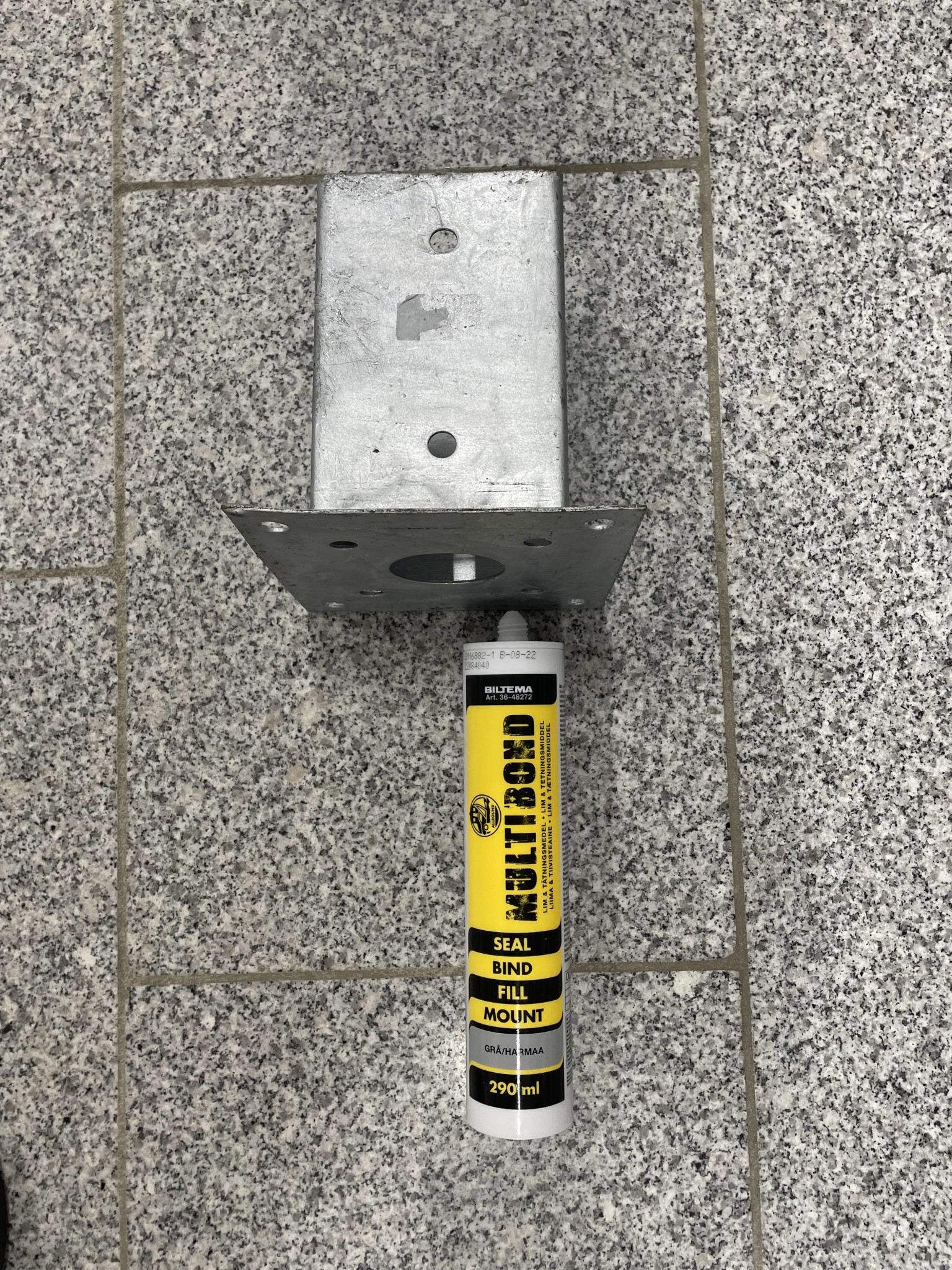
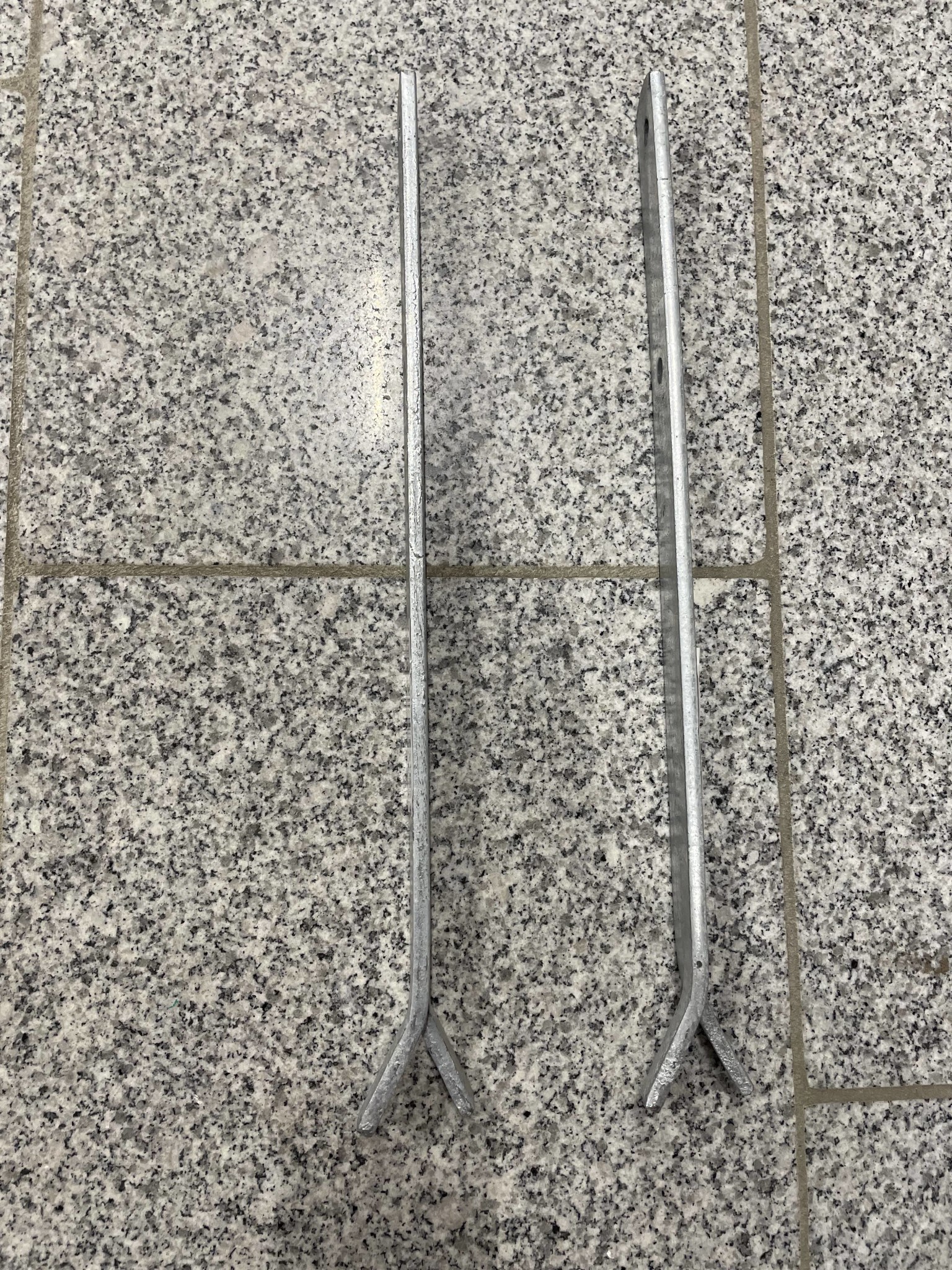
No. A wooden post, treated or not, that is cast into concrete will have an unreasonably short lifespan. It rots. Which I assume you've noted since you are thinking of replacing the post. The solution is to also change the method:
Remove the post. Mix some mortar of any kind you have at home. Fill the hole. Insert the anchor's iron into the mortar and let it cure. Screw the post into the anchor.
I'll probably have to agree, stop using wood and switch to galvanized steel or something else resistant a decimeter above ground level. Wood has a short lifespan underground.
As the previous speaker mentioned, that is a completely incorrect approach! Cast a post shoe in the hole so the post ends up a few cm above ground level.
Ok! Thanks for your input. However, I can confirm that the posts are in prime condition under and in the concrete. They’ve been in place since 1970.
Does anyone have tips on iron that fits in a 100x100 hole? I'm thinking they probably shouldn’t be placed at the edge of the hole but must be angled to meet 95x95.
Not very interested in the shoe with just one rebar in the center downwards. Feels like it will vibrate loose over time. Or?
Thanks,
J
They can be bent with a vise and a hand mallet. I have done it myself when building a natural stone wall with planks on top. The stones are often in the way then.
If you want to make it easy for yourself, use anchoring compound. It becomes rock-hard when it cures. It also seals quite well if you apply it around the post at the top. It prevents rainwater from running down into the hole. Anchoring compound is not so cheap, it's one of the few things I buy at Biltema, their anchoring compound actually seems to work well. But as others have already pointed out, the actual construction might not be optimal, the post is likely to be wet/damp at the bottom all the time. But if you don't have too many posts to do, I would still use anchoring compound and use it as a filler.
Hello.
I drove to Biltema to check out some different solutions. What do you think about the following?
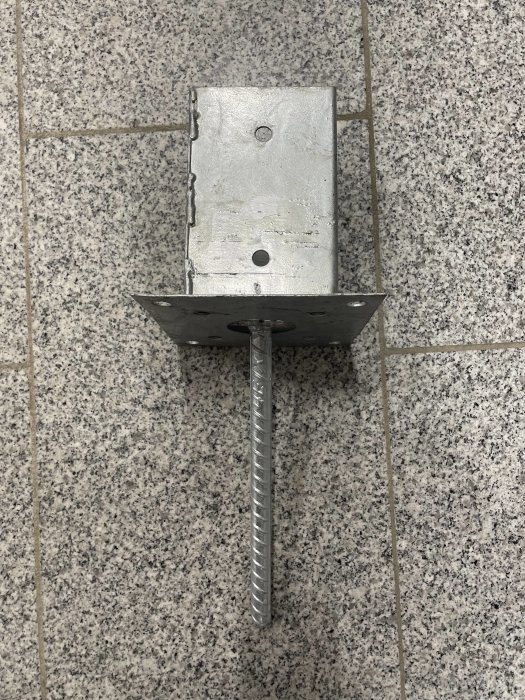
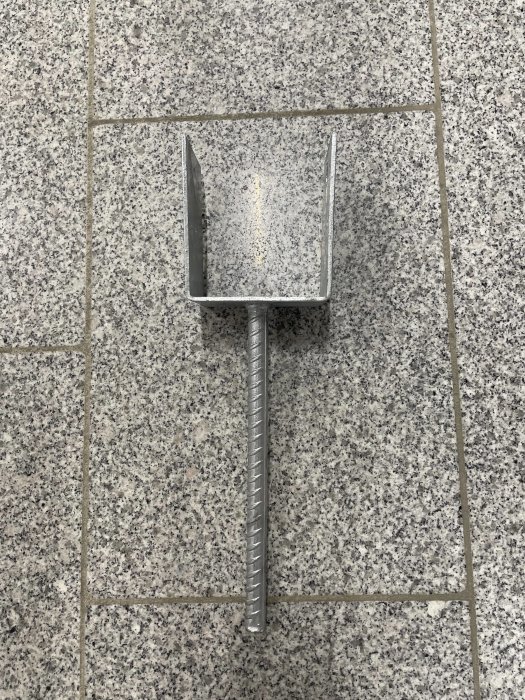
Post holder that screws down into the concrete block and onto the side of the post. Galvanized iron that is countersunk into the post and cast into the hole in the block. In this case, I need to find galvanized iron.
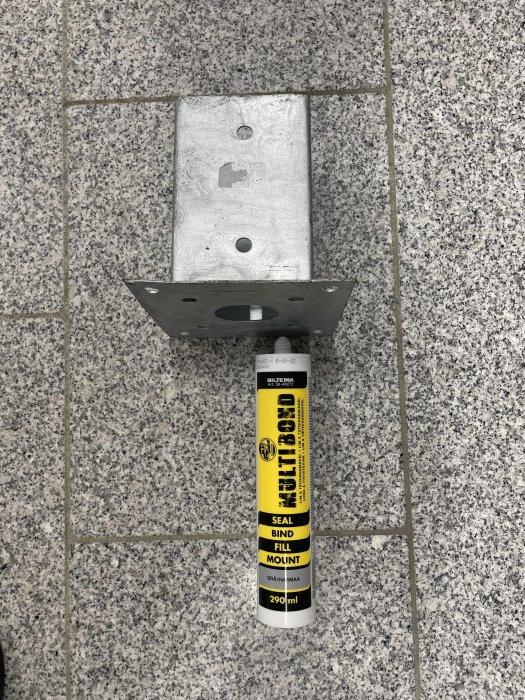
Post holder opens up at the bottom and the post runs through and down into the concrete block. Filled with multibond or anchor compound. Post holder is screwed into both the concrete and the post.
Post shoe cast in and post screwed on. I am doubtful about the wind on a 2.6 m plank. Cast it fully and then drill and use anchor compound for iron?
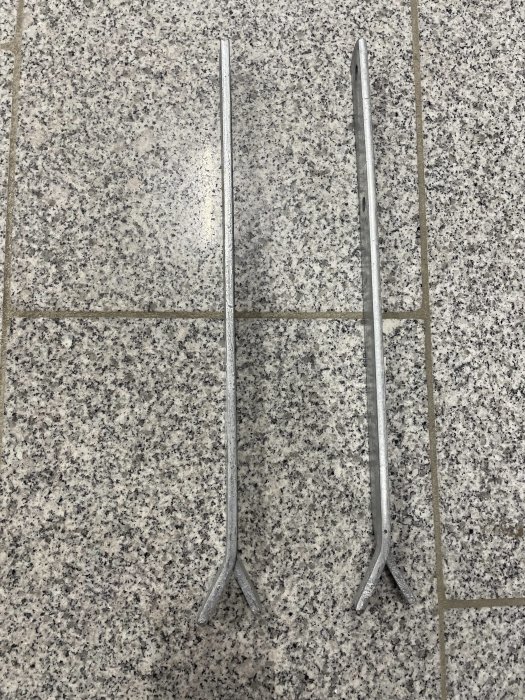
Bend and cast in foundation iron. Post screwed on.
The point of the plintjärn is that you get screws/bolts further away from the end grain and with a longer distance. I have no experience with Biltema's, but the longer the better. It is best if you can manage with a through bolt/threaded rod.
Sounds like you're considering reusing the hole and putting the post back in after all.
Keep in mind that the posts that were there since the 70s were also impregnated in the 70s. Back then, completely different agents were allowed, which gave the wood a *significantly* longer lifespan. If you try to replicate that with a post you bought now, you will be very disappointed shortly.
Vi vill skicka notiser för ämnen du bevakar och händelser som berör dig.


Larsa said: