
22,976 views ·
58 replies
23k views
58 replies
Floor gypsum - why?

The floor will still have plasterboard as planned, which is why it's not sealed around the floor drains. If we proceed with the self-leveling compound now, the joists will be filled with self-leveling compound...
Hi, sorry for butting in a little here, but floor gypsum is not approved today if you are going to have a waterproofing layer on top. Regardless of whether there is putty or not. Partly because they say there is a risk that the paper edge will peel off the gypsum, but also because it is extremely sensitive to mold. Regarding the new industry regulations, minerit will be required on walls... ps. I work with water damage... ds
Floor gypsum is not approved today according to what rules? As both I and Janus wrote earlier in the thread, you will not be allowed to use paper-faced gypsum in bathrooms according to the new PER industry regulations. They come into effect on 1/7 and have a transition period of one year.
But I would like to know what you are talking about.
But I would like to know what you are talking about.
I have no idea how the drains are mounted, I assume in the subfloor. Then square holes are cut around the drains fairly well.jon_h said:
Of course, we will fully glue with approved adhesive.
So this thing about the presence or absence of plaster. As long as it was approved when it was built, then there shouldn't be any issues, right?
Exactly, and it is approved today. Klitsie oddly does not know what he/she is talking about, despite working with water damage.
Then of course, one could reason that if you know you risk having problems with a certain construction, you might choose to avoid it, even if it hasn't been banned in the industry regulations yet.
Then of course, one could reason that if you know you risk having problems with a certain construction, you might choose to avoid it, even if it hasn't been banned in the industry regulations yet.
I have now talked to a carpenter and he has already moved away from floor gypsum. So now it will either be double floor chipboard (if we need to raise the level) or just try to seal around the drains in some way. What can be used to do that? Silicone?
Oh, so he managed to convince you then.. What arguments did he have that I didn't?
How big are the gaps? Aren't there any kortlings underneath? Isn't the drain mounted on a mounting plate? The filler can't hang freely over a gap without support underneath for any significant distance.
How big are the gaps? Aren't there any kortlings underneath? Isn't the drain mounted on a mounting plate? The filler can't hang freely over a gap without support underneath for any significant distance.
There were no persuasions. I had planned to ignore the plaster until I found out that it wasn't sealed around the drains. I'm not really sure how the drains are fastened, that's the plumber's (brother-in-law's) job. I'll see if I can dig up a picture I took before the floor chipboard was put in place.jon_h said:
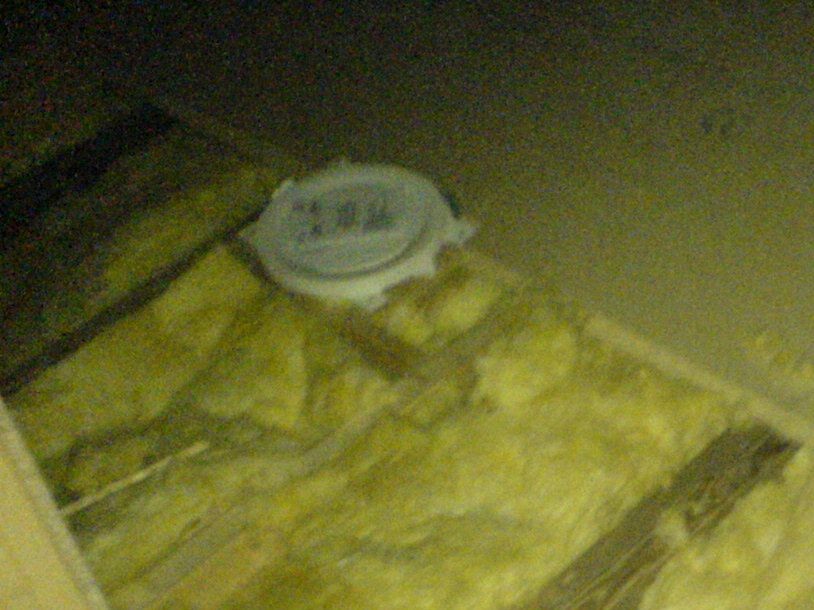
Measured now and it is 12mm from the chipboard to the upper edge of the well. That's a heck of a lot of leveling compound and another layer of flooring chipboard won't work. I see there's something called "golv rotspån" which is 10mm, what is that? Could that work you think?
Never mind now, we bought floor plasterboard anyway. According to the guy at K-Rauta, there won't even be any new regulations. He had apparently talked to "them" the other day. Also said that much more leveling compound is needed if you are plastering on wood against plasterboard.
