
6,346 views ·
7 replies
6k views
7 replies
Found surface mold on the timber frame that will be enclosed. How should we proceed?
Hello!
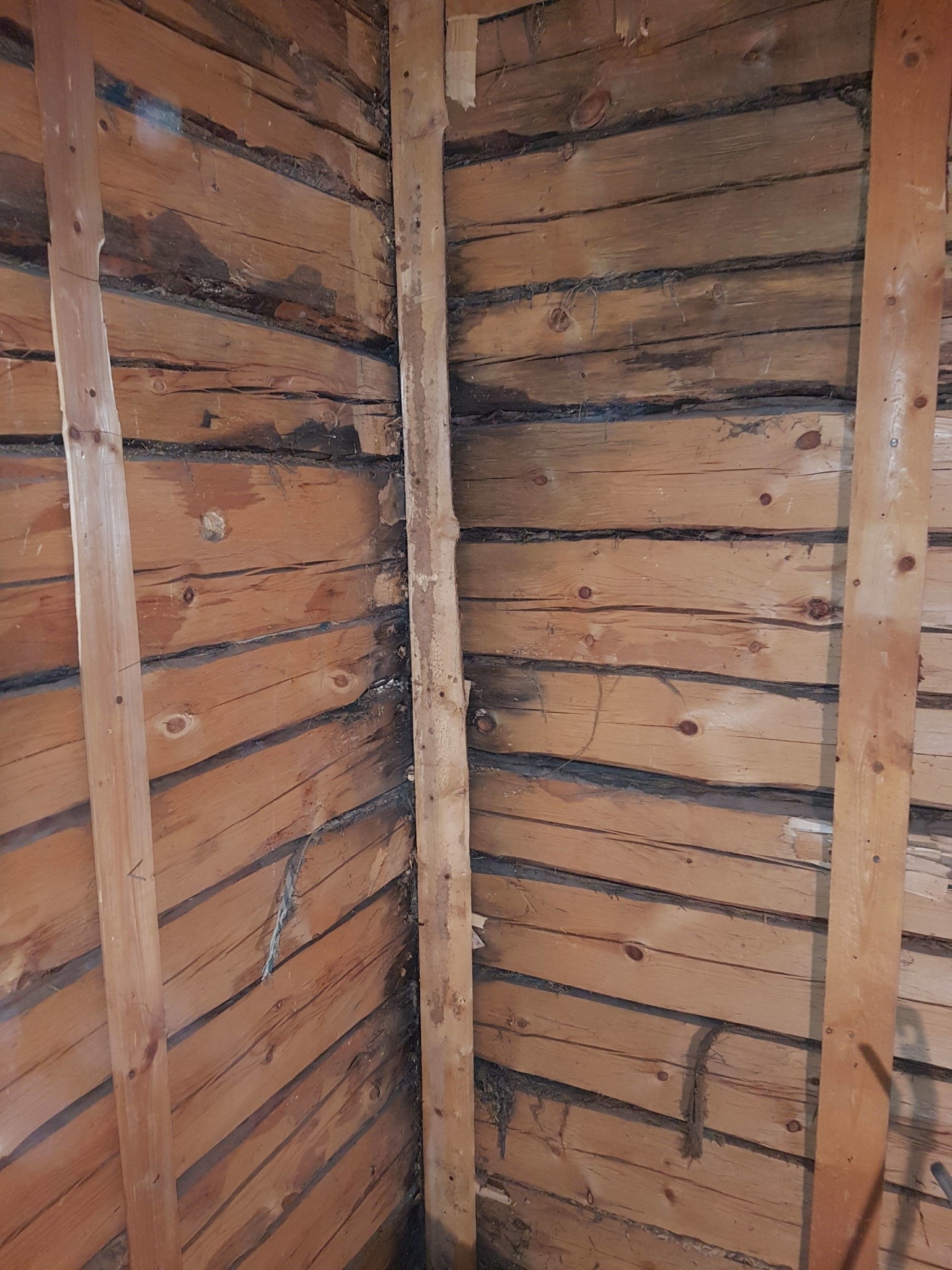
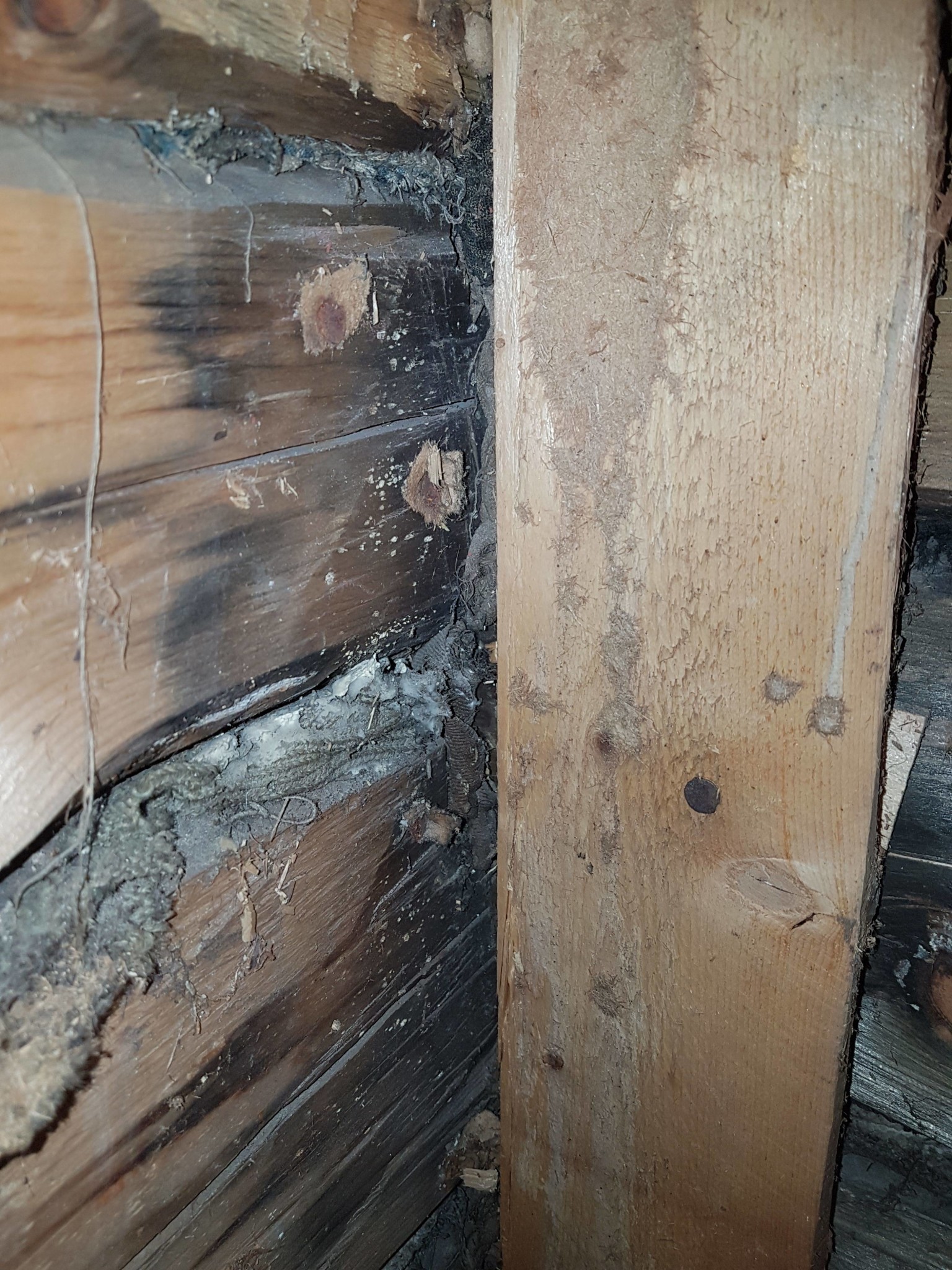
We are going to build a new bathroom in this part of the house, which has a timber frame built at the end of the 1800s. When we removed the existing wall covering, it looked a bit darker in this corner (See pictures). Upon closer inspection, it also looks like there's a little white mold on a piece of fabric used for insulating between the logs. However, it doesn't feel damp, and the wood is firm and not soft or rotten.
Can we dare to build this up again without first more thoroughly checking the condition of the frame? Ideally, we would check the joint outside, but unfortunately, it is covered by two layers of paneling with insulation in between, so it's not straightforward to break it up to take a look.
As mentioned, the wood feels hard and fine apart from the surface changing color slightly, so our hope is that it's an old damage that shouldn't worsen.
We are going to build a new bathroom in this part of the house, which has a timber frame built at the end of the 1800s. When we removed the existing wall covering, it looked a bit darker in this corner (See pictures). Upon closer inspection, it also looks like there's a little white mold on a piece of fabric used for insulating between the logs. However, it doesn't feel damp, and the wood is firm and not soft or rotten.
Can we dare to build this up again without first more thoroughly checking the condition of the frame? Ideally, we would check the joint outside, but unfortunately, it is covered by two layers of paneling with insulation in between, so it's not straightforward to break it up to take a look.
As mentioned, the wood feels hard and fine apart from the surface changing color slightly, so our hope is that it's an old damage that shouldn't worsen.

Know-It-All
· Västra Götaland
· 12 293 posts
If it's dry, it's likely from an older, more humid environment; I assume there's a ventilated outer panel?
Wash off the mold, dry it thoroughly, and it should be fine to build it in.
Wash off the mold, dry it thoroughly, and it should be fine to build it in.
Check the moisture level in the corner with a moisture meter!
It appears to be previous moisture damage!
How are you planning to solve the construction?
It is likely that the house's structure has been leaky at the joint, and moisture could have come from both inside and outside?
I would have laid a layer of cellulose in a slot under the sheet material, which should not be gypsum, but instead, I would have chosen wet room board in EPS with a fiberglass surface that can be tiled on or fitted with a mat!
Consider the ventilation!
It appears to be previous moisture damage!
How are you planning to solve the construction?
It is likely that the house's structure has been leaky at the joint, and moisture could have come from both inside and outside?
I would have laid a layer of cellulose in a slot under the sheet material, which should not be gypsum, but instead, I would have chosen wet room board in EPS with a fiberglass surface that can be tiled on or fitted with a mat!
Consider the ventilation!
Thank you for your response!
@Johannes Carlsson It is not certain that there is an air gap between the panel and the timber (in the innermost layer), the latter layer was probably added in the 90s when additional insulation was done. It might be that there is no air gap there either, as they put fiberglass insulation outside the existing panel and nailed new panel on top of this.
@byggarätt It is a company that will be building the bathroom, and we haven't had much opinion (yet) on how they should proceed. What is the advantage of EPS board with a fiberglass surface compared to gypsum?
@Johannes Carlsson It is not certain that there is an air gap between the panel and the timber (in the innermost layer), the latter layer was probably added in the 90s when additional insulation was done. It might be that there is no air gap there either, as they put fiberglass insulation outside the existing panel and nailed new panel on top of this.
@byggarätt It is a company that will be building the bathroom, and we haven't had much opinion (yet) on how they should proceed. What is the advantage of EPS board with a fiberglass surface compared to gypsum?
Know-It-All
· Västra Götaland
· 12 293 posts
The advantage of eps + fiberglass is that it is a dense building block, but it's probably not something the construction company will want to use; they would most likely prefer to build with plywood + gypsum + waterproofing + tiles.
Check if the outermost panel has an air gap behind it. If it does, it reduces the risk of trapped moisture in the wall, and driving rain doesn't penetrate the wall as easily.
Check if the outermost panel has an air gap behind it. If it does, it reduces the risk of trapped moisture in the wall, and driving rain doesn't penetrate the wall as easily.
Member
· Västernorrland
· 12 021 posts
you don't need to wash anything away... as long as it's dead, it's dead and merely cosmetic. It still looks unusually nice for a recently dressed frame... That little spot hardly indicates any major damage.
The advantage is that there is nothing that can mold or become moisture damaged!P Pgam said:Thanks for the response!
@Johannes Carlsson It's not certain that there is an air gap between the panel and the timber (in the innermost layer), the latter layer was put in place in the '90s we believe, when additional insulation was added, it might be that there is no air gap there either, as they put fiberglass insulation on the existing panel and nailed new panel on top of this.
@byggarätt There's a company that's going to rebuild the bathroom, and we haven't had much opinion (yet) on how they should proceed. What is the advantage of EPS board with fiberglass surface compared to gypsum?
It provides a better base for the tiles and is faster to build!
At the same time, you can create an air gap between the EPS board and the timber structure that I would fill with cellulose, which is hydrophobic and moisture-balancing, to solve problems with your facade.
Construction veteran
· Åland
· 2 076 posts
Even if the framework is old (dry?), keep in mind that it can move significantly in height. Are there no issues with the windows? Claddings/windows, etc., in log houses are usually mounted on so-called sliding brackets. This is to avoid clamping the units. I have seen vertical paneling, where the timber has hung on the panel so it was open in the joints.
Click here to reply