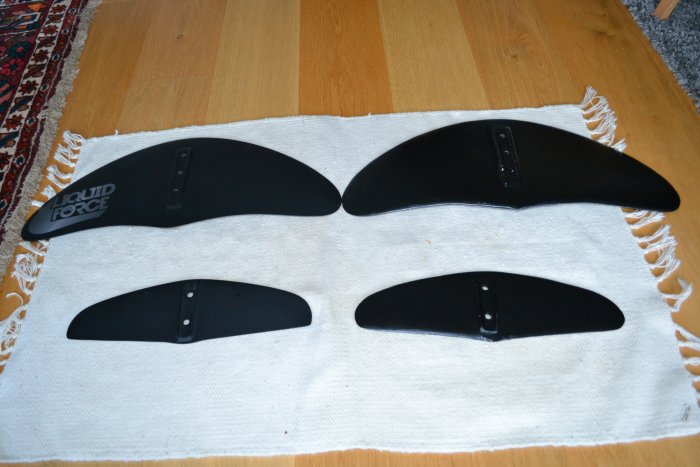
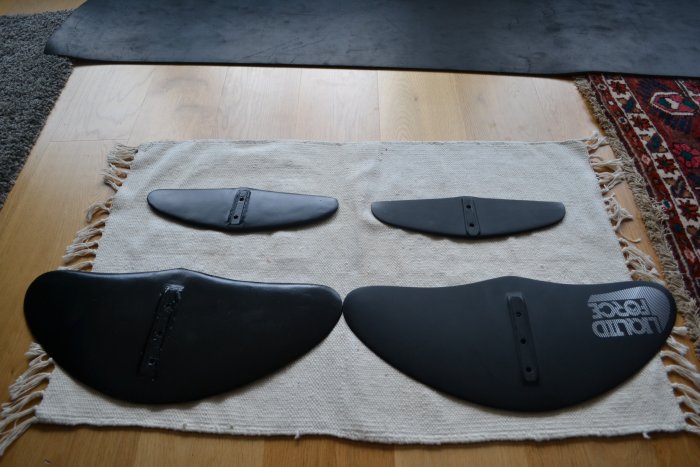
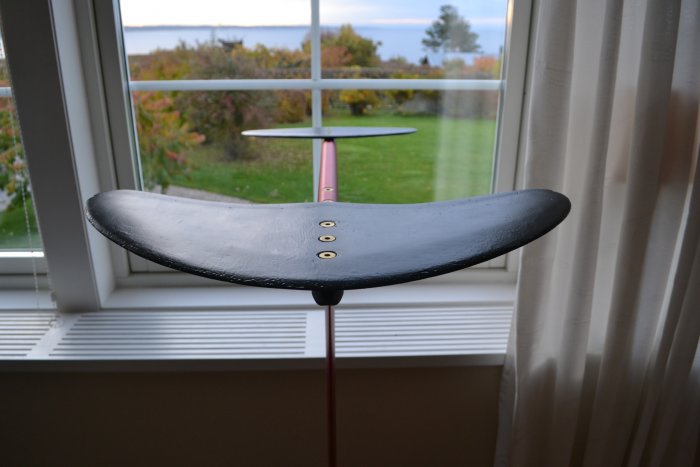
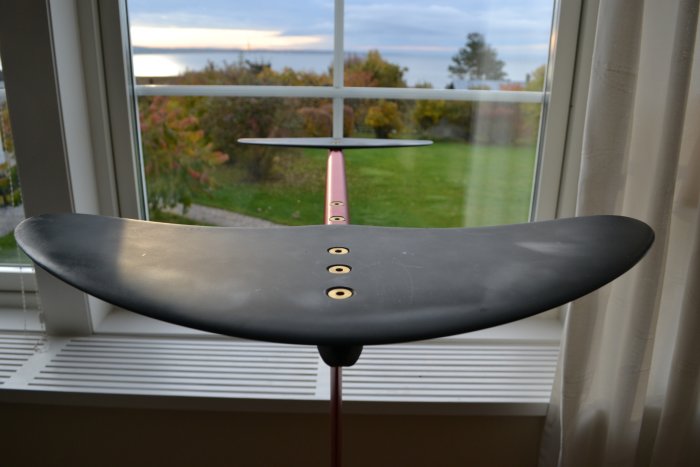
To protect the original, you can cover it with thin tape, such as regular brown packing tape. On it, apply your release agent. Another tip is to have access to compressed air when the mold is being released, it usually works wonders when it doesn't quite want to release, better than trying to pry the mold loose.
I took a look at that wing you want to copy. As I see it, the problem is not making a mold but how you will then make the actual copy in the mold. If you have two mold halves, the casting technique would have to be something like starting to laminate in one mold half, filling up with fabric and a little too much polyester, placing the other mold half on top and then forcing the halves together, thereby squeezing out excess polyester at the seam? I think it will be really difficult to balance the build-up of fabric and the amount of polyester to fill up the other mold half fairly optimally. To achieve maximum strength in the finished wing, you should basically have as much fiberglass as possible and as little polyester as possible since the polyester itself is brittle if it is not reinforced with fabric. Above all, the outer layer should be polyester-soaked fabric and not a layer of unreinforced polyester. That particular detail can be difficult to achieve with that technique.
If I were doing this, I would apply an appropriate layer of fabric and polyester in one mold half. Then place a spacer material/core in the form of the wing but naturally scaled down. On that, lay additional fabric and polyester and then compress everything together. I would also expect to do this a few times before getting the right amount of fabric and polyester.
Next question mark: Will the wing be strong enough? Is polyester resin the right material? The wing is 15mm thick you write, it should be about half a meter wide or so, right? I'm honestly a bit skeptical that the fiberglass construction will hold up to what I assume are fairly large stresses. But it's just a guess based on my little experience with boat laminating... Carbon fiber, is it an option? There, I am completely clueless...
With the thicknesses you are talking about (2 mm), polyester and fiberglass won't hold. You need to use epoxy and carbon fiber instead.
Now, I don't know exactly how large the parts are, but they don’t seem terribly large, so I'm pretty sure that epoxy/carbon fiber is what's been used, and with the help of a mold and so-called vacuum infusion, the wing has been built.
Here is an example of this, and as you can see, it's not particularly difficult and can be done with fairly simple tools. This is a common way to make things in the car and boat industries.
How will you get the right profile and shape on the wing with the craft technique? Johannes Carlssom suggested that method earlier in the thread. If you're going to laminate on a core, it becomes easier to shape if you use balsa or PU foam instead of plywood.
Ahh, I guess I didn't fully understand Johannes's tip in the earlier post. PU foam does seem easier to work with. I would appreciate if someone could link to where you can buy PU foam that works and withstands Polyester, possibly Epoxy.
There is something called Divinycell, which is a PVC foam, works well (biltema has 20x600x1000). Or Balsa wood, take what you find. Boat shops usually have a good selection.
Well, 3-7000 kr I think is quite a lot of money, an overprice. It also doesn't hold up very well. I think it could be a fun project to try to copy it, but it seems quite tricky.
3-7000 kr you'll see as quite reasonable after you've poured money and time into trying to make molds in concrete or other stuff to end up with a terribly lousy final result.
Casting stuff in glass/carbon fiber requires a lot of skill, tools, and the right materials, which require practice to get right.
Attempting to copy a cast item that is available for purchase without any prior experience, just because you think it's expensive, will very rarely yield a satisfactory result.
However, it's a whole different thing to do it because you find the manufacturing technique exciting and fun, but then it's no longer about making cheap copies, because it won't be cheap.
Been there, done that.
But of course, we all have different opinions on what is good enough.
Just like the previous writer mentions, it's Divinycell you should use if you want to have a core to laminate on.
But your problem will be that you can't get down to 2 mm using the method of building over a core, i.e., a type of sandwich construction, because you need epoxy/polyester and fabric on both sides with the core in the middle, and that will be much more than 2 mm. And using polyester and fiberglass fabric alone in these thin layers will most likely not hold up, so as I previously mentioned, you'll need to start using carbon fiber.
But to get the epoxy to fill in the carbon fiber fabric, you need to vacuum bag the whole thing, i.e., "vacuum bagging."
Ha ha, thanks for all the answers. It seems like most people are doubtful that polyester will last and it's epoxy and carbon fiber that should be used instead.
Since I'm ignorant in this area but at the same time curious to try to solve things and problems that arise, forums like this are really great, as I can ask those of you who can, know, and have the experience. So far, I haven't spent a penny, trying instead to get an idea of whether it's even feasible for me, in terms of time and cost, before I do anything. If I am to do it properly and use carbon fiber, epoxy, and vacuum, it will probably require a lot of time, cost, and experience. I lack the experience and risk losing both a lot of time and money on a final result that may not be good. Maybe I'll try to do a polyester lamination on a core, which doesn't cost much and isn't a disaster if it fails. Thanks for all the answers
Pre-impregnated carbon fiber (prepreg) is probably the smartest option if performance is what you're after, then you can think about which core to use. It all easily becomes quite advanced :/
Well, it's true that it's a type of fin on which you can plane, but you can see the whole thing more as a "plan" for a hobby project than a first world problem I've started my little project now and if it becomes something usable, I might come back with a picture. Maybe I'll become a pro at this, who knows
Well, correct in that it's a type of fin on which one can plane, but the whole thing can be seen more as a "plan" for a hobby project than a first-world problem I have started my little project now and if it turns into something usable, I might come back with a picture. Maybe I'll become a fin at this, who knows
A very good thing that we don't have a planned economy yet.
Under such systems, nothing phenomenal is usually created
Can't you mill out a profile in divinycell or balsa and then cover with polyester and fiberglass fabric? Fill, sand, and lacquer for a fine surface.
Shouldn't this provide all the interesting properties?
Alternatively, 3D print if you have a sufficiently large 3D printer (a carrot to build one perhaps?)?
Can one not mill out a profile in divinycell or balsa and then cover with polyester and fiberglass cloth? Putty, sand, varnish for a nice surface. Should get all the properties that are interesting? Alternatively 3D print if you have a sufficiently large 3D printer (a carrot to build one perhaps?)?
I would probably want to say no to the question.....
If you look at one of the first posts from the OP, it is a very thin wing profile that the OP wants to make, and as the OP writes, it is about 2 mm at the outer edges. The divinycell core would be so thin that it would not even hold together, and then applying cloth and plastic on both sides would create a much thicker construction that is not sufficiently durable.
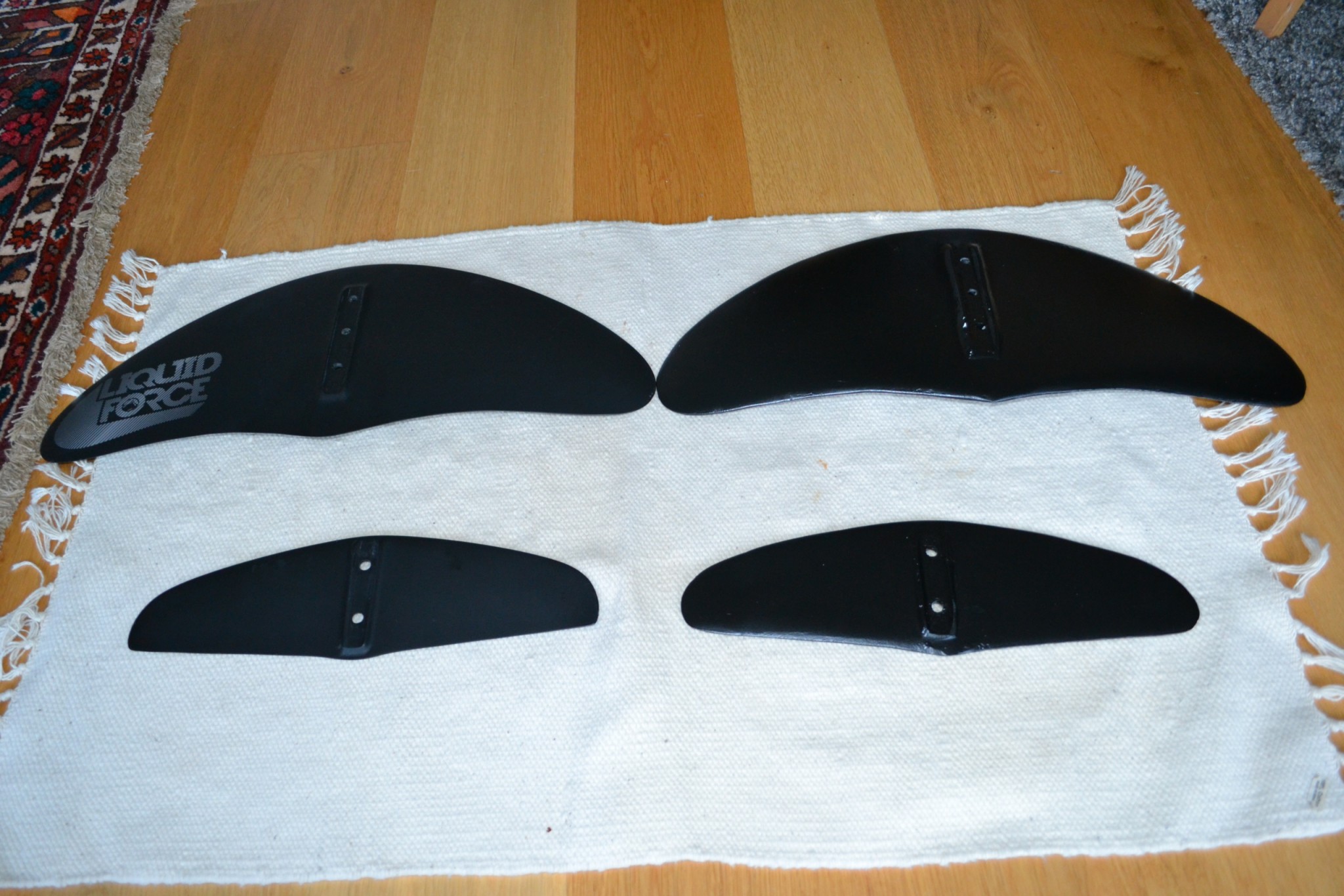
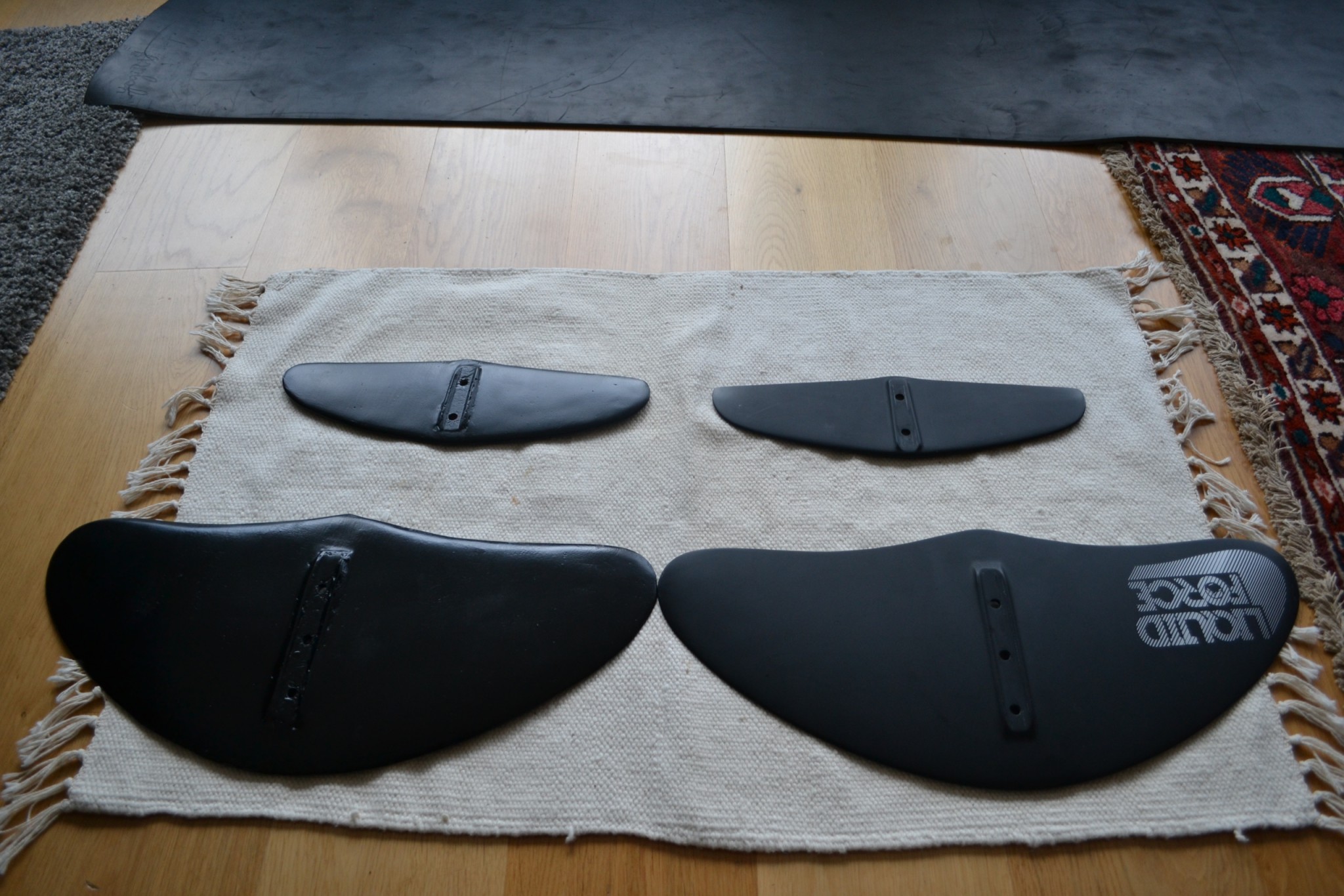
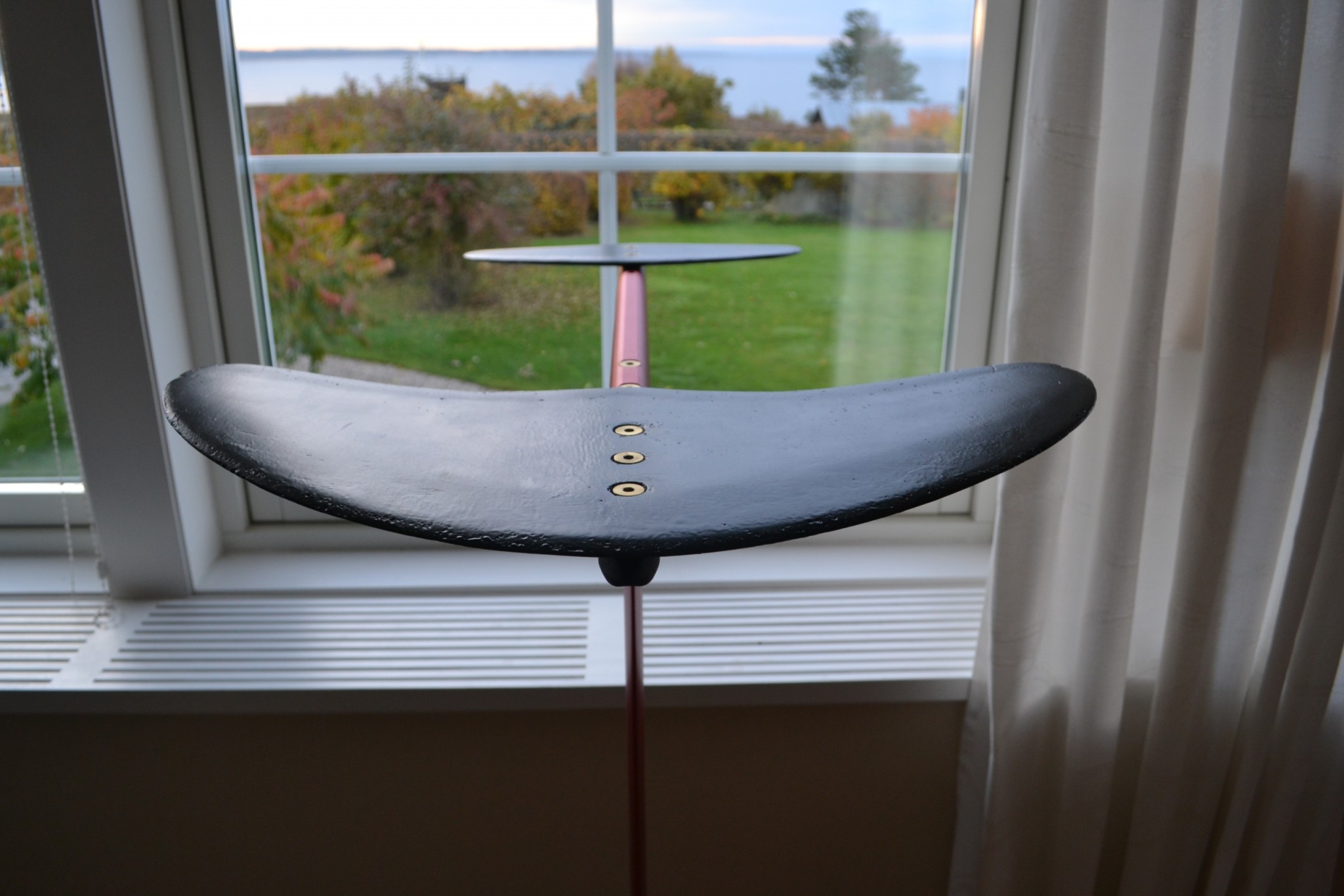
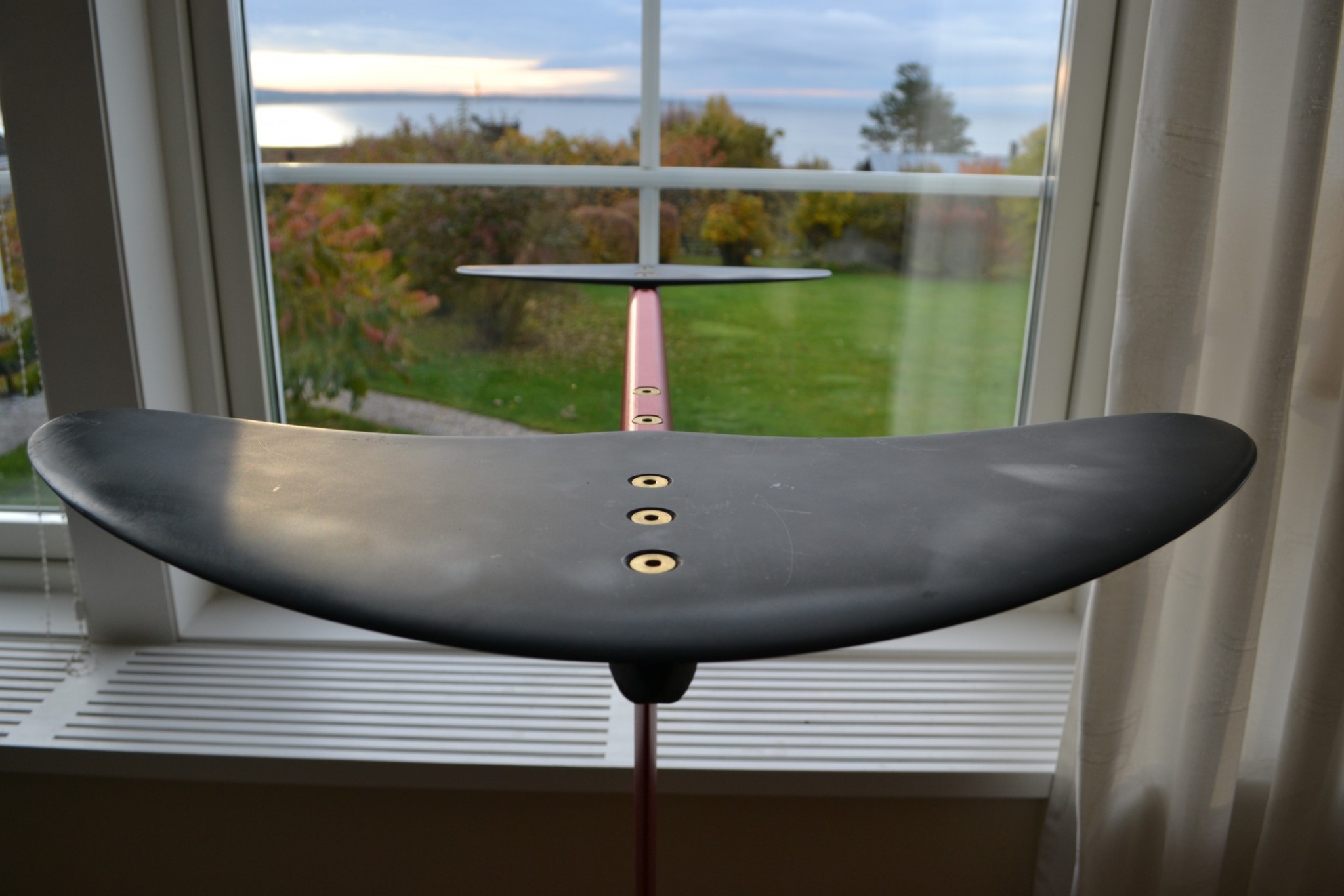
Now I've played around a bit with wood core, fiberglass, and polyester. The result wasn't perfect, of course, but still significantly better than I dared to hope for, and I actually think it might work. Got the contour and profile right, the curvature ended up about 5mm more than the original but that's probably okay. Here are some pictures attached
Vi vill skicka notiser för ämnen du bevakar och händelser som berör dig.