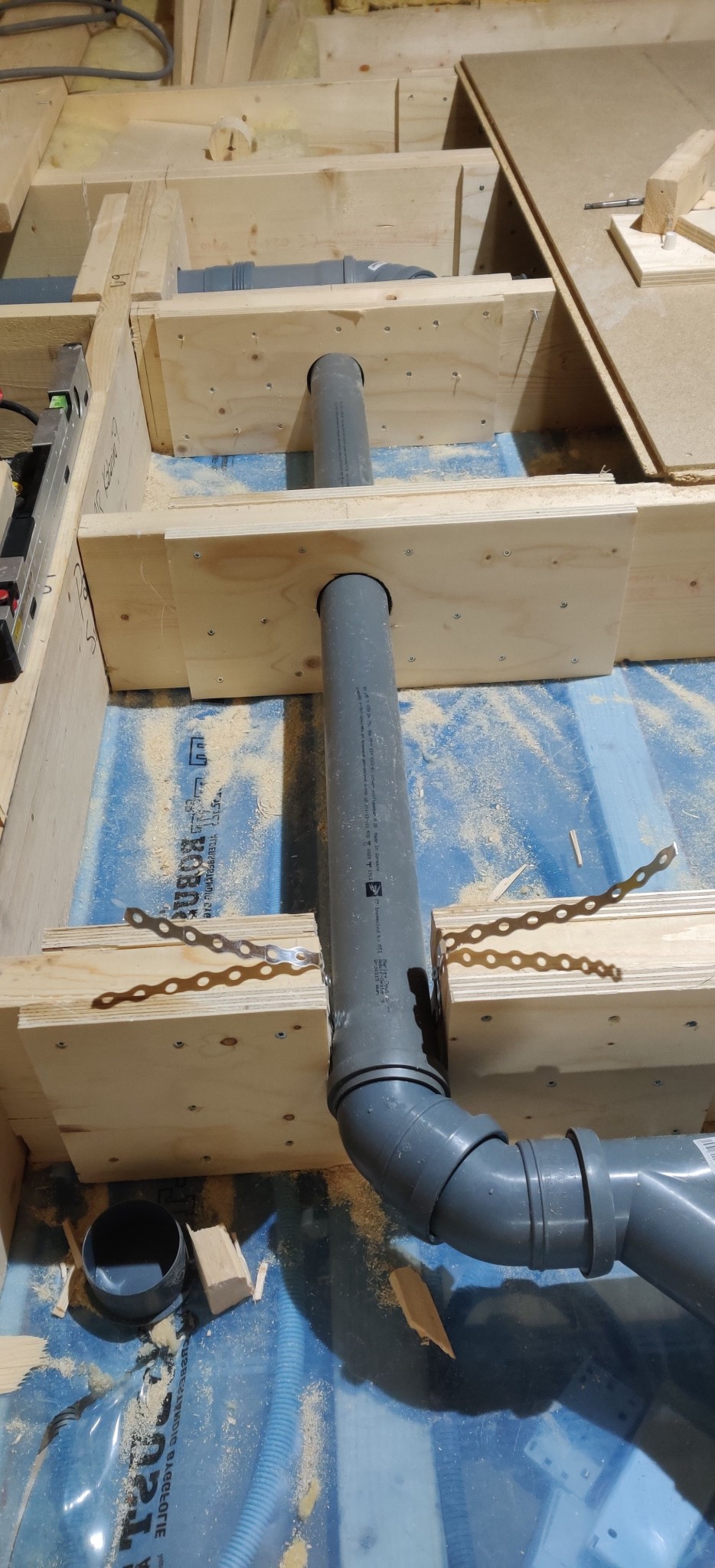
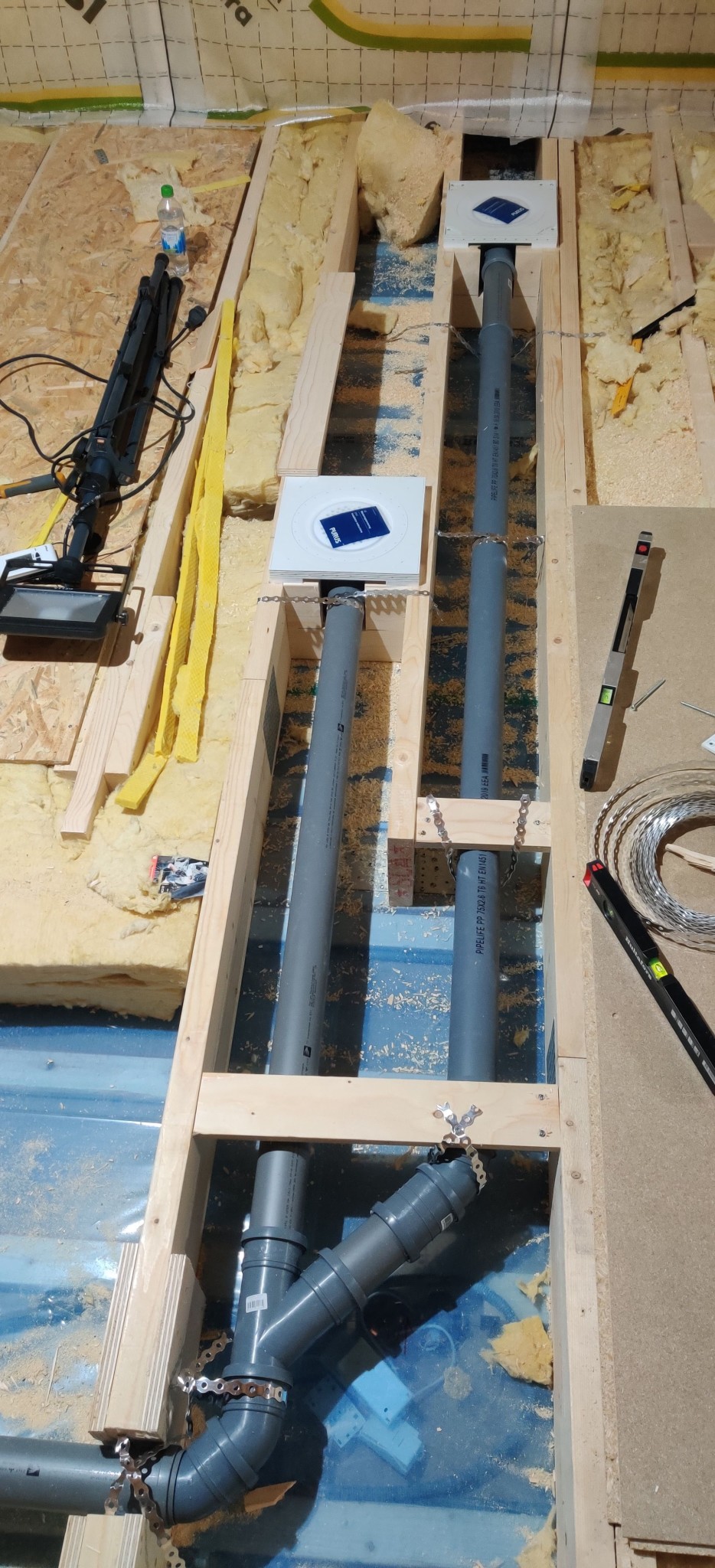
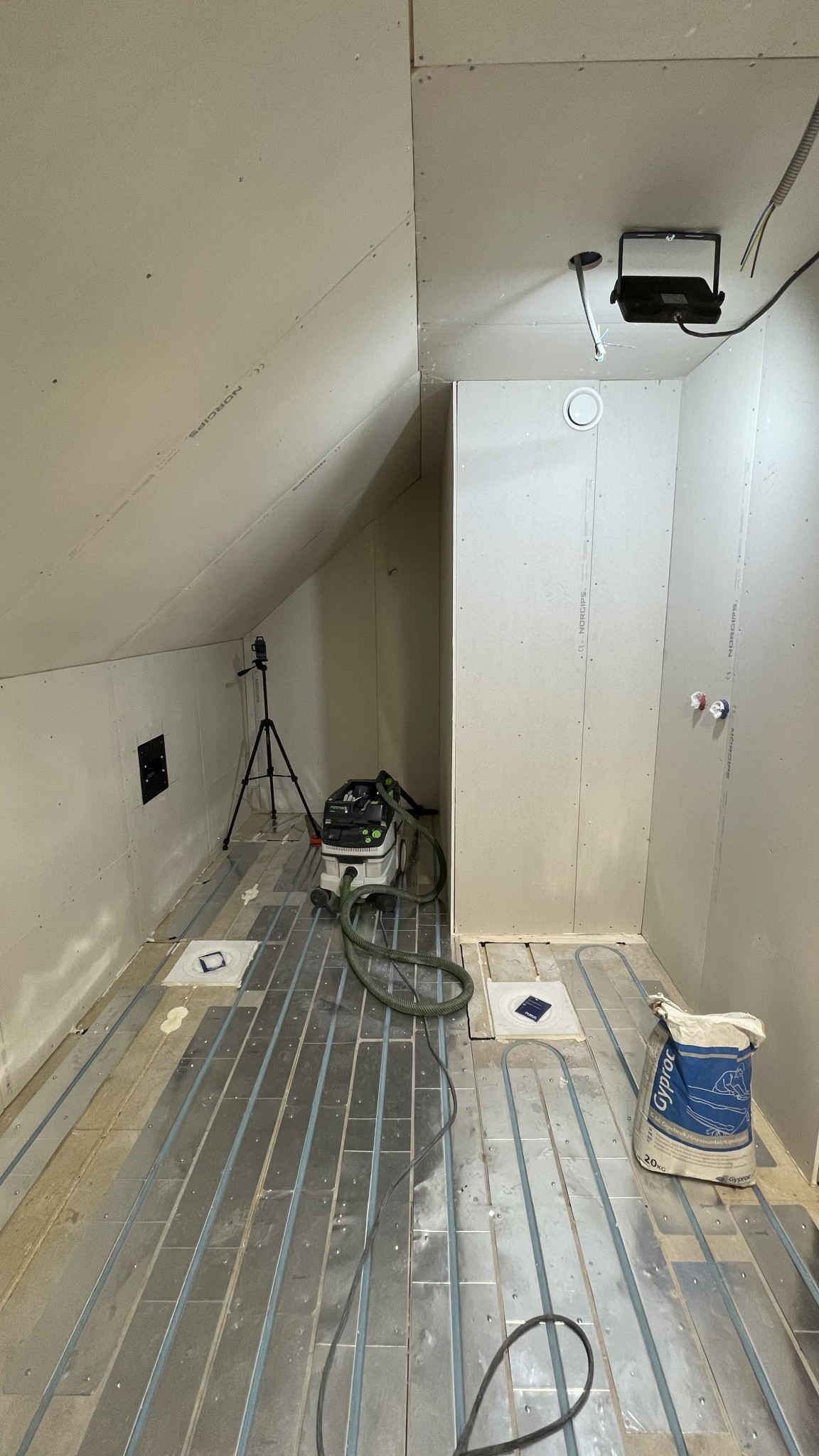
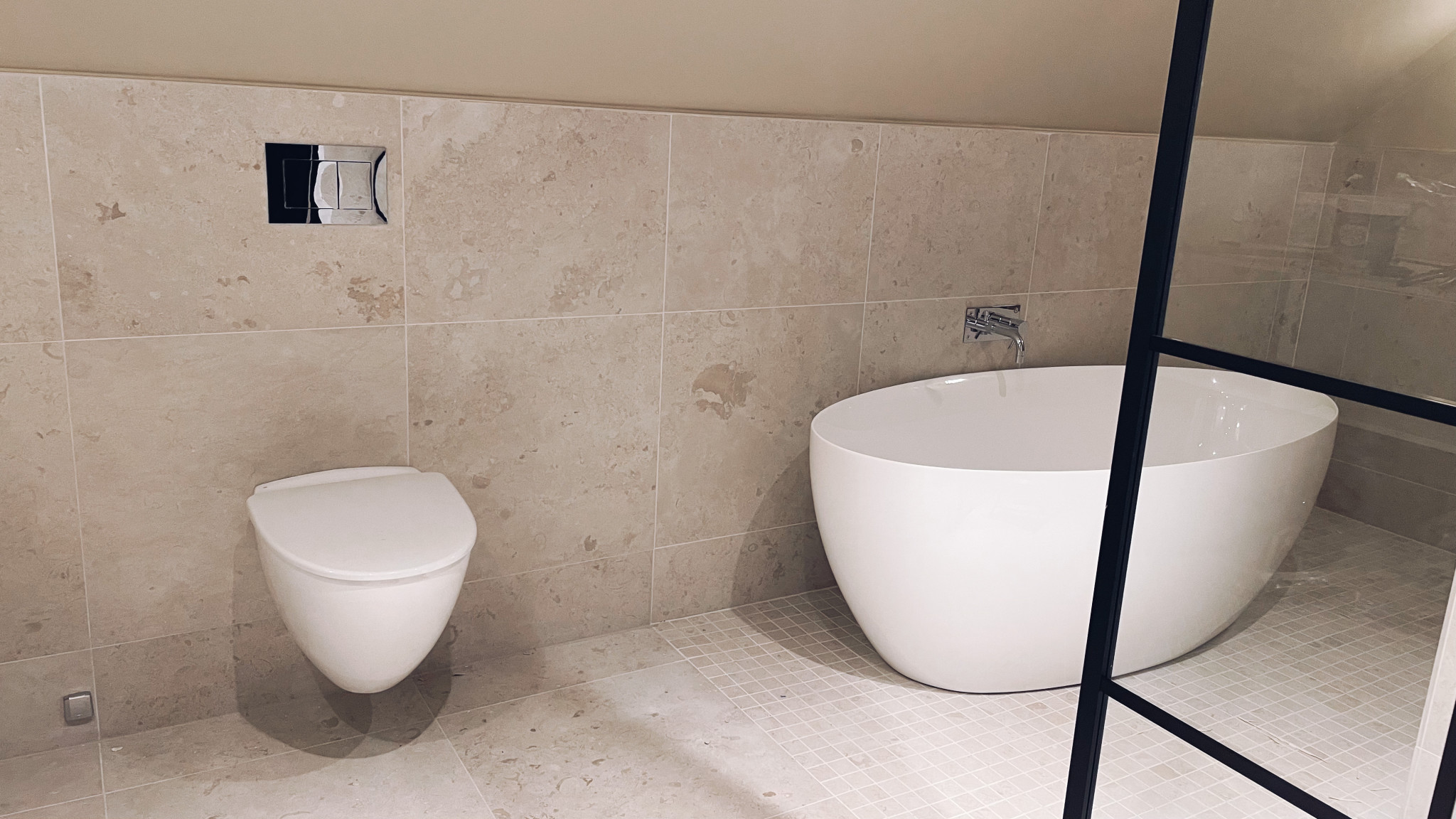
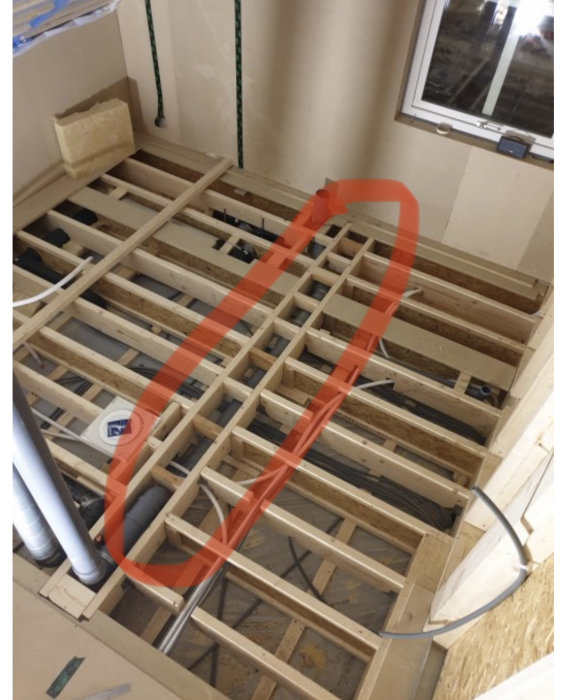
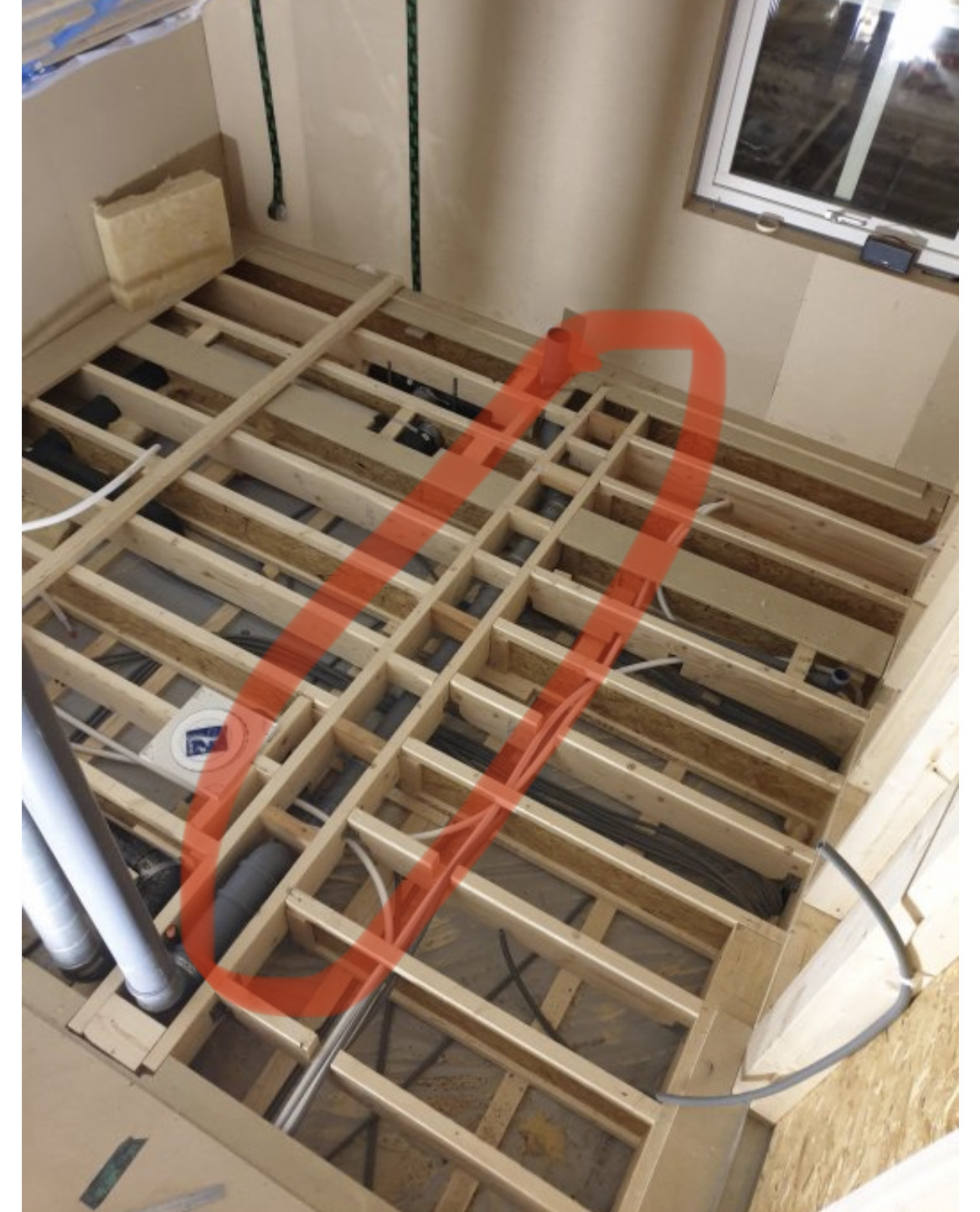
The question about safe water was about not having hidden joints on water pipes in walls and floors. So it's not a question of the CC distance between the studs. Therefore, check the picture again. It's 60cc between the Masonite I-beams and then reinforced with 45x195 so there is now 30cc between the studs and the Masonite I-beams. Everything is then glued and screwed with floor chipboard. I didn't need to reinforce the floor for it to meet the safe water requirements since it's already an approved substrate from the house supplier.
I reinforced it solely to safely accommodate a larger whirlpool tub on the upper floor.
Regards,
SM
Ah, I see now that you don't have a recessed floor structure. I thought everyone building new today did that to avoid the high threshold.
Safe water also encompasses the construction, not just the pipes.
In the joists of Hjältevadshus there are Masonite beams I-beam.
For those of you who have redone the plumbing and water on the upper floor, how have you reinforced the joists after drilling holes in the beam? I can't quite figure out what the industry standard is?
Waiting eagerly for any response and especially hope that Justusandersson has a good answer.
Hello!
We built a Spira 175 this past summer and I'm working on the upper floor. In our bathroom, I chose to have a center-to-center distance of 30cm in the joists in the bathroom. After drilling in the joists, I cut OSB boards matching the dimension of the joists and glued and screwed them onto both sides of the joists in all areas where I made any alterations. I also blocked between the joists. Whether it's right or wrong, I don't know, but it remains to be seen when the self-leveling compound and tiles are in place.
This is how I did it. CC30 45x220 with about 4m span, screw-glued chipboard, self-leveling compound, and tiles. The holes are strategically placed where there is only about 50 cm span but still reinforced around the holes with 15mm plyfa.
Lifting the thread a bit again as we have some considerations for the future. We bought a plot where we plan to build a summer cottage in a few years. Hjältevadshus looks appealing considering what you get in terms of finishes for the money. But at the same time, I'm pondering a bit about the framework and the roof. My understanding is that the framework on the upper floor can be reinforced on your own as you have done above if you build the upper floor yourself. That feels good! How about the ground floor? Are you completely stuck with them installing vinyl flooring, or can you pay extra to get reinforced framework and tiles there? I'm thinking the same thing for the entrance and utility room.
And what about the roof? Tongue-and-groove boards or some form of panel underneath?
Anything else worth considering?
I'm reinforcing the construction, I hope. From what I see in the picture, you have completely cut the support on 10 beams and replaced it with two beams with about a 6 m span. Or am I misunderstanding?
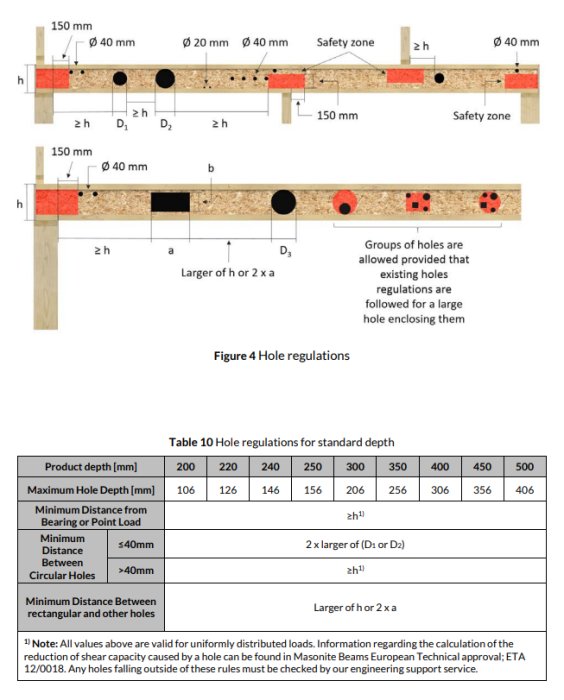
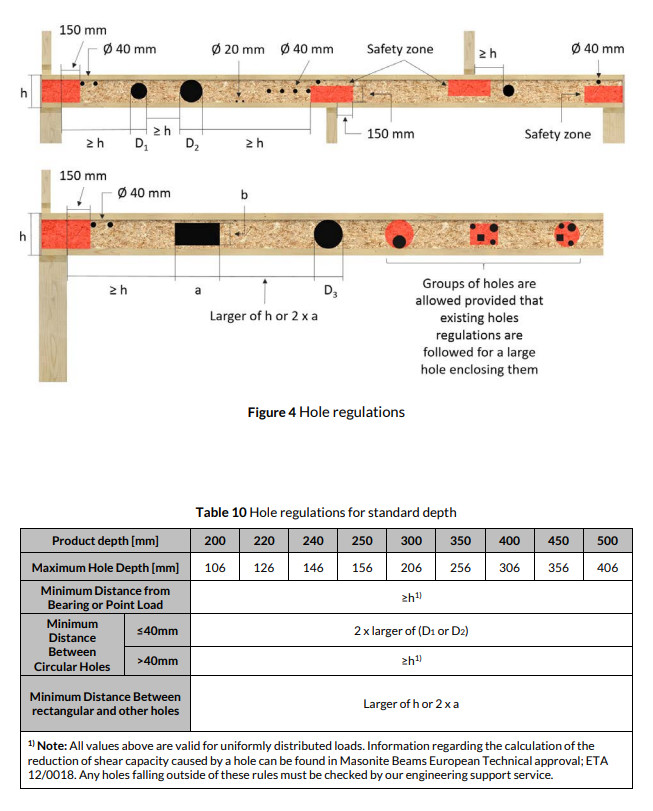
Found this thread and I take the opportunity to link to Masonite Beam's document that regulates how one can make holes in their beams.
On page 12, you find what I consider a rather cryptically formulated table, and to simplify interpretation, I can disclose that "hole depth" apparently refers to diameter, and "Product depth" (h) = beam profile height.
You can make a single hole all the way from flange to flange, i.e., across the entire web surface of the beam, as long as it's at least the beam's height in distance from a support. In my opinion, that's hard to grasp.
I'm currently facing installing drainage in a bathroom now, but there we have placed 250mm beams in a joist system otherwise built with 300 beams. But they have drawn CC600 there which surprises me a bit, and I am now investigating whether I should reinforce with an extra 195 at CC300 instead. My span is 2.5m.
EDIT: Here is the table clipped from the document; I find it hard to believe Masonite would disapprove.
Click here to reply
Vi vill skicka notiser för ämnen du bevakar och händelser som berör dig.