Hello! 👋🏻
I would appreciate some advice on how to proceed with the flooring in the house we have purchased:
We have bought a house built by Faluhus in 1978. It is a 1.5-story house with an uninsulated slab. During the inspection, the inspector noted that the floor construction consists of wooden joists placed on wooden blocks against the slab, and he measured a moisture content of 21% on the wooden blocks. He also checked the sill and impregnated joists/sills were not visually noted at the existing opening in the floor.
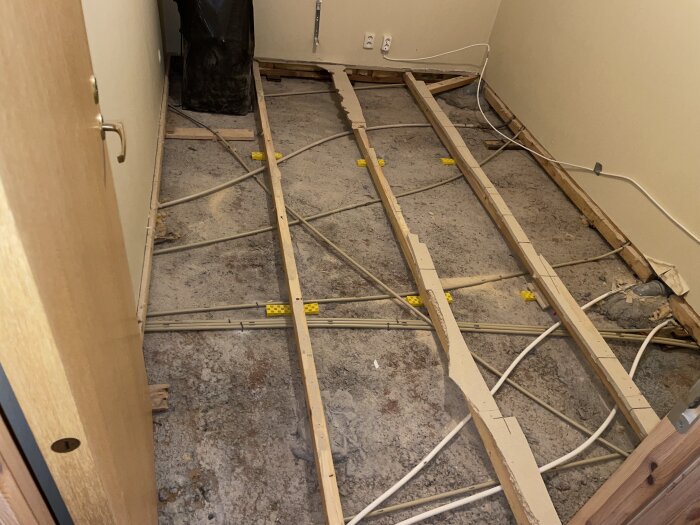
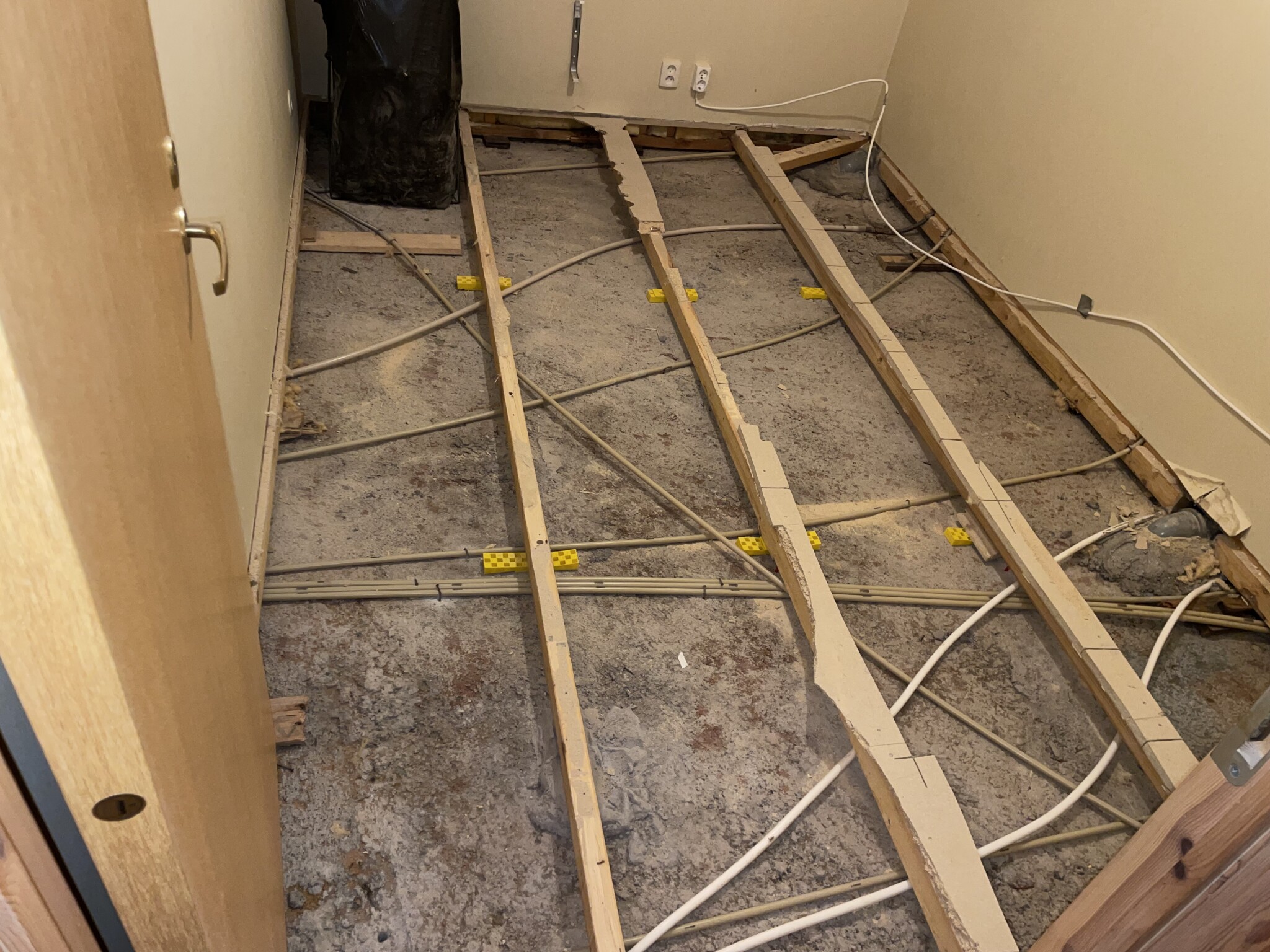
I have torn up the floor in the room where the floor construction inspection was conducted, and it looks as follows:
Three joists are anchored in the slab with screws and plugs. The joists rest on yellow plastic wedges.
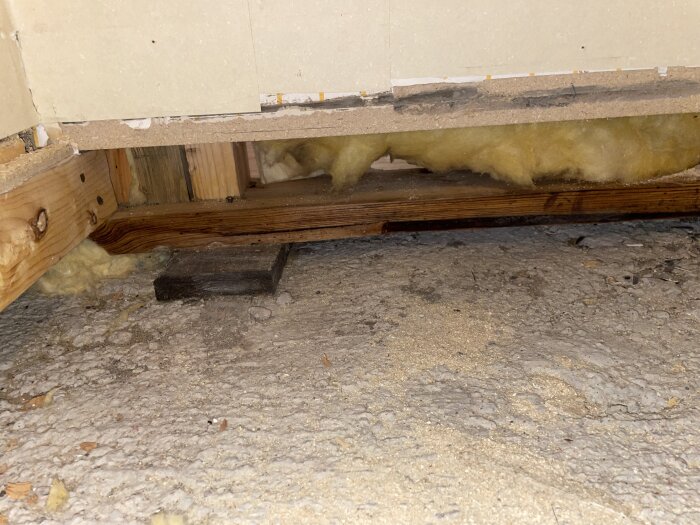
The floor was insulated with mineral wool that lay against the concrete slab. Chipboard was glued/screwed onto the joists.
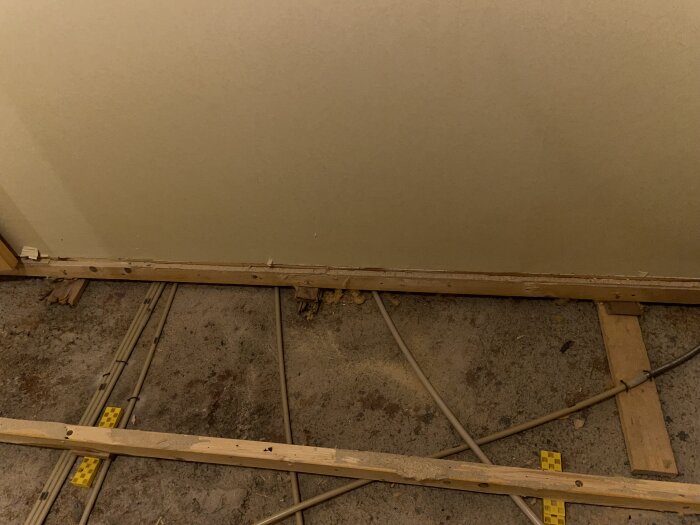
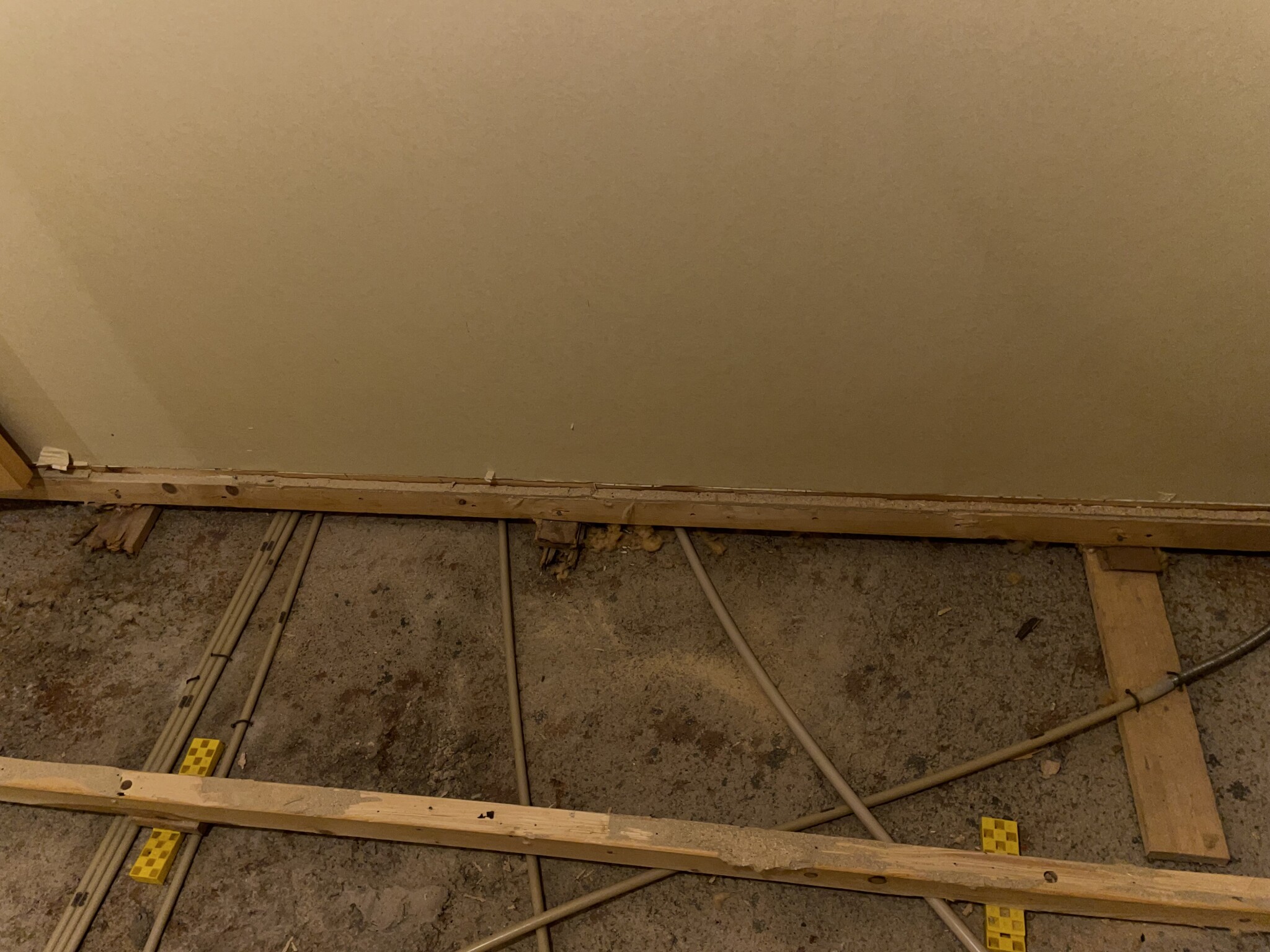
Joists around the room, however, rest on wooden blocks that lie against the concrete slab.
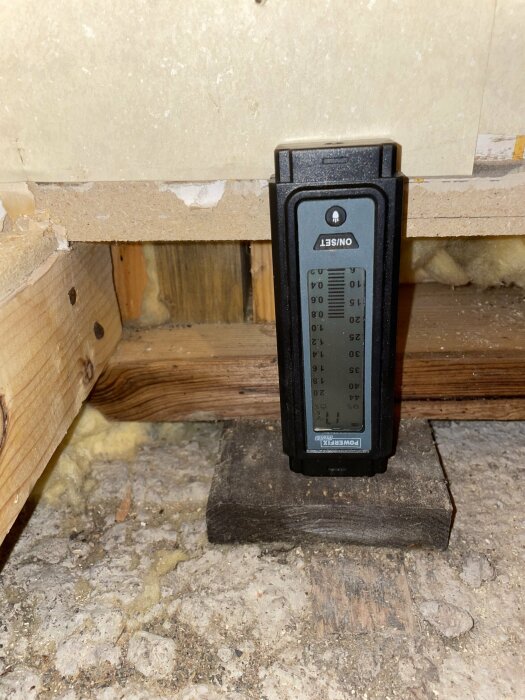
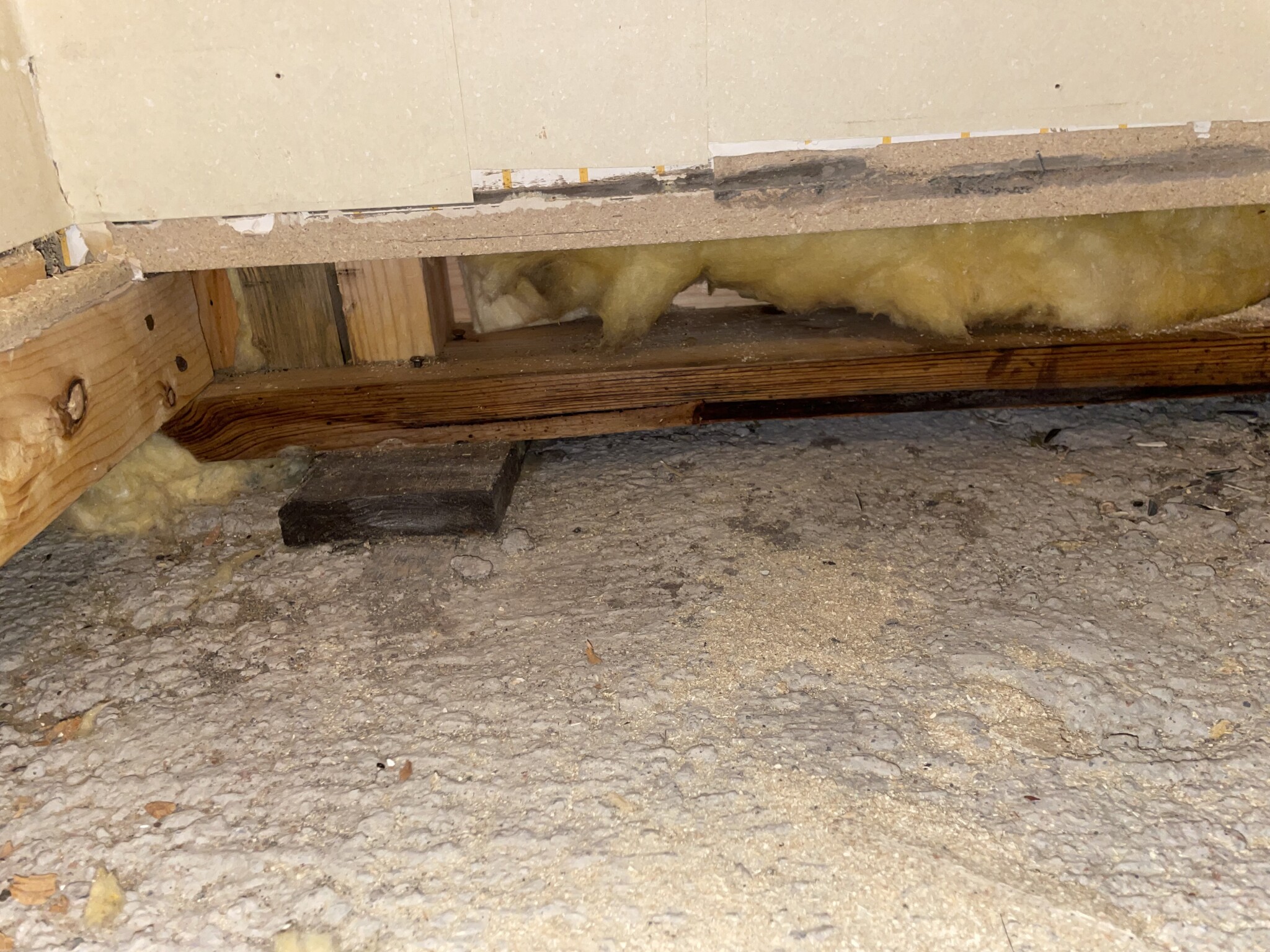
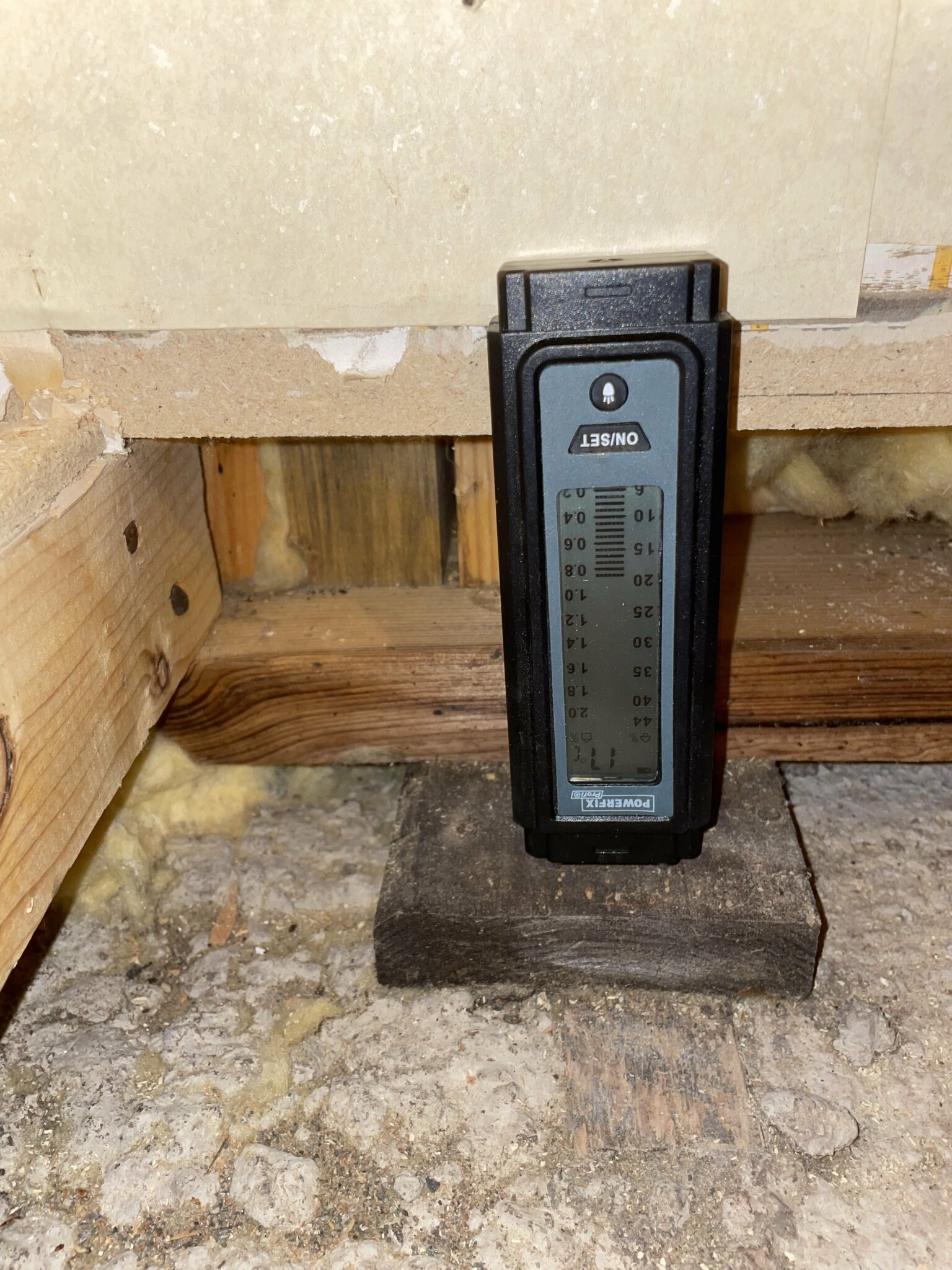
The sill on the exterior wall also rests on wooden blocks. The wooden block has a moisture content of 19% now in December.
How would you proceed with this? All floors were redone in -95 due to a water leak, but it seems they left the wooden blocks under walls/sill in place.
Is it worth tearing up every floor on the entrance level to replace the blocks? We are moving into the house in 3 months, so it's a good time to address this if it needs to be done.
The thing is whether the pressure-treated blocks under the sill can start to smell like pekka over time. If it's the old type of impregnation fluid with pentachlorophenol (?), it can start to smell after prolonged elevated humidity levels. As I recall, the turning point for the old type of impregnation fluid was sometime in the late -70s.
If it's just the blocks under the sill that have a slightly too high moisture level, it should suffice to replace them with plastic ones.
There should be a lab that can determine what type of impregnation fluid they are treated with. If you want to know if it's necessary to tear up all the floors.
Searching for ventilated floors can help and provide solutions
Example: [link]
Or nivell system
So the solution probably lies in ventilating the space underneath
Oldboy said:
The thing is, if the pressure-treated blocks under the sill can start to smell funny over time. If it's the old type of impregnation fluid with pentachlorophenol (?), it can start to smell after prolonged elevated moisture levels. I recall that the breaking point for the old type of impregnation fluid was sometime in the late 70s.
If it's just the blocks under the sill with slightly high moisture levels, it should suffice to replace them with plastic ones.
There should be some lab that can determine what type of impregnation fluid they are treated with. If you want to know whether it's necessary to tear up all the floors.
Yes, I suspect that the blocks under the sill may contain pentachlorophenol, so it's probably best to take samples and analyze. I've been set on tearing up all the floors from the start, so there's probably not much choice.
The question is whether they haven't already lifted the sill and propped it up with blocks. Normally, the sill lies against the slab without blocks and unfortunately without paper as a moisture barrier.
The question is whether they have already lifted the sill and propped it up with blocks. Normally, the sill rests on the slab without blocks and unfortunately without paper as a moisture barrier.
That could be the case! I was a bit surprised by this solution. I expected the sill to rest on the slab.
Hello! 👋🏻
I would appreciate some tips on how to proceed with the flooring in the house we bought:
We purchased a house built by Faluhus in 1978. It is a 1.5-story house with an uninsulated slab. During the inspection, the inspector noted that the floor structure consists of wooden beams resting on wooden blocks against the slab, and he measured a moisture content of 21% on the wooden block. He also checked the sill and impregnated beams/sills were not visually noted at the existing opening in the floor.
I have torn up the floor in the room where the inspection of the floor structure was performed, and it looks like this:
[image]
Three beams are anchored to the slab with screws and plugs. The beams rest on yellow plastic wedges.
The floor was insulated with mineral wool that was against the concrete slab. Chipboards were glued/screwed onto the beams.
Beams around the room rest, however, on wooden blocks that are against the concrete slab.
[image]
Even the sill on the outer wall is on wooden blocks. The wooden block has a moisture content of 19% now in December.
[image][image]
How would you proceed with this? All the floors were redone in '95 due to a water leak, but it seems that the wooden blocks under walls/sills were left in place.
Is it worth tearing up every floor on the entrance level to replace the blocks? We move into the house in 3 months so it's a good time to address it now if it should be done.
It's probably the embedded impregnated wooden piece under the block you're measuring that is the culprit.
Click here to reply
Vi vill skicka notiser för ämnen du bevakar och händelser som berör dig.

Oldboy said:
The thing is, if the pressure-treated blocks under the sill can start to smell funny over time. If it's the old type of impregnation fluid with pentachlorophenol (?), it can start to smell after prolonged elevated moisture levels. I recall that the breaking point for the old type of impregnation fluid was sometime in the late 70s.Tommytommytommy said:
Hello! 👋🏻