3,978 views ·
19 replies
4k views
19 replies
FIRE CELL / FIRE RATING APARTMENT
Hello! I recently moved into a newly built apartment. The apartments themselves consist of gypsum walls and a gypsum ceiling.
Since the ceiling is "lowered," I'm very eager to install recessed spotlights in the kitchen and living room. However, I started thinking about whether there would be any issues with the fire protection if you make holes in the gypsum.
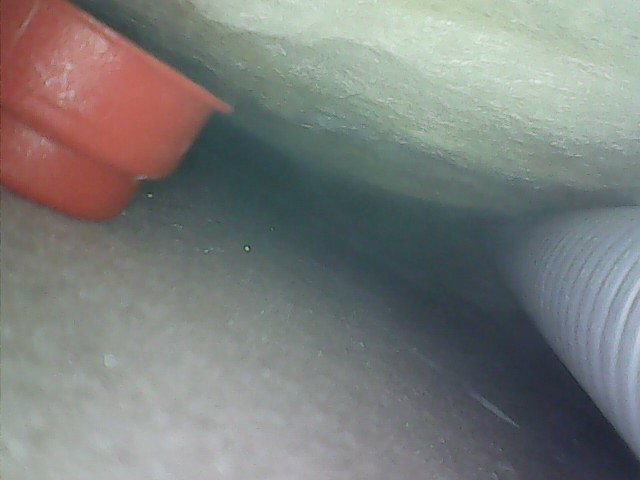
I've taken down one recessed lamp outlet, and the ceiling box is fire-rated with a fire seal at the bottom. I managed to get my inspection camera in to get a view above the ceiling and saw that there is a wooden framework that the gypsum ceiling is attached to, as well as insulation lying on top of the framework. I had two representatives from the construction company on site during the final inspection, but neither of them could answer my question.
I spoke with a friend who is a structural engineer who thought that if there is insulation above the gypsum, it should be fine, and there should be another "layer" before the floor structure up to the neighbor's floor.
Therefore, I thought I would check with the experts here on the forum if anyone knows anything.
Is it okay to make holes in the ceiling, or could there be issues if the board finds out about this in the future, or could it complicate a potential sale?
P.S. I am a certified electrician, so I don't need any advice or moral lectures regarding the choice of fixtures.
Since the ceiling is "lowered," I'm very eager to install recessed spotlights in the kitchen and living room. However, I started thinking about whether there would be any issues with the fire protection if you make holes in the gypsum.
I've taken down one recessed lamp outlet, and the ceiling box is fire-rated with a fire seal at the bottom. I managed to get my inspection camera in to get a view above the ceiling and saw that there is a wooden framework that the gypsum ceiling is attached to, as well as insulation lying on top of the framework. I had two representatives from the construction company on site during the final inspection, but neither of them could answer my question.
I spoke with a friend who is a structural engineer who thought that if there is insulation above the gypsum, it should be fine, and there should be another "layer" before the floor structure up to the neighbor's floor.
Therefore, I thought I would check with the experts here on the forum if anyone knows anything.
Is it okay to make holes in the ceiling, or could there be issues if the board finds out about this in the future, or could it complicate a potential sale?
P.S. I am a certified electrician, so I don't need any advice or moral lectures regarding the choice of fixtures.
The floor structure should reasonably be classified as REI60 if it is a newly produced apartment. The gypsum boards (probably double) then serve as fire protection which you cannot puncture just any way without affecting the classification.


Since they are fire-rated ceiling boxes, the plasterboards are part of the fire protection. There are strict rules for cutting holes in plasterboards when installing fire-rated boxes.
https://search.abb.com/library/Down...LanguageCode=sv&DocumentPartId=&Action=Launch
So, no, you probably won't be allowed to make holes in the plaster ceiling to install downlights.
https://search.abb.com/library/Down...LanguageCode=sv&DocumentPartId=&Action=Launch
So, no, you probably won't be allowed to make holes in the plaster ceiling to install downlights.
Then one might wonder if it was correctly executed from the start if there's nothing I've missed. If there are different apartments on each side of the floor structure, the floor structure should maintain REI60 since it concerns new construction. To meet that requirement, it often requires 15+13 gypsum on the underside. But it could also be that the floor structure is built in a different way than "traditional."
what do you mean?Aron Roger said:
Then you can wonder if it is correctly executed from the beginning or if there is something I missed. If there are different apartments on each side of the floor structure, the floor structure must meet REI60 since it is new construction. To meet this requirement, you often need 15+13 gypsum on the underside. But it could also be that the floor structure is constructed in a different way than "traditional."
you never meet REI 60 with gypsum?
The traditional way to separate apartments in the floor structure is never in the gypsum?
There you are wrong. Gypsum provides fire protection in many different constructions, joists being one of them.
sure, gypsum provides fire protection in several structures, traditionally never in a floor structure in modern apartments. Often, there is no gypsum at all in the floor structure.
There you are wrong again. Apartment-separating floor structures executed with load-bearing wood construction in newly produced residential buildings traditionally always have a board cladding to meet fire safety requirements. And in 9 out of 10 cases, that board cladding is gypsum.
And to meet the acoustic requirements as well.
exactly how often is the floor slab made of wood?
99.9% of all apartments being built have concrete floor slabs, and typically you don't use gypsum at all with filigree, which is the most common, but with HD/f you usually do, but not because of fire.
There are also houses with wooden joists, although concrete is probably more common. But not quite as common as you seem to think.
But now it was a wooden flooring structure that the original poster wrote about in the thread and that we are discussing, so I don't quite understand what concrete flooring structures have to do with this. Moreover, many apartment buildings are built in wood. Most often 2-3 stories, so it's not unusual.A Aunty said:
Incredibly grateful for the response and engagement, very helpful too
In 2015, I moved into another newly built apartment, which also consisted of plasterboard walls + plasterboard ceiling. However, I had 3 layers of plasterboard on the walls and 2 layers on the ceiling.
I will try to contact the contractor so maybe I can get an exploded view/drawing of the entire apartment.
In 2015, I moved into another newly built apartment, which also consisted of plasterboard walls + plasterboard ceiling. However, I had 3 layers of plasterboard on the walls and 2 layers on the ceiling.
I will try to contact the contractor so maybe I can get an exploded view/drawing of the entire apartment.