
10,168 views ·
48 replies
10k views
48 replies
Is there a plug or do I have to fill the holes?
It sounds like there is no simple solution to this, so I have to fill in the hole and drill new ones.
The follow-up question is, what should I use? Huggan said husfix, can you buy it in a tube? I would need some type of syringe to fully fill the hole. And does it work for basements as well?
Sure, you can buy a bag of concrete and mix it yourself, but it becomes very difficult to get full coverage inside the stone.
The follow-up question is, what should I use? Huggan said husfix, can you buy it in a tube? I would need some type of syringe to fully fill the hole. And does it work for basements as well?
Sure, you can buy a bag of concrete and mix it yourself, but it becomes very difficult to get full coverage inside the stone.
Well, that's how I've filled other holes in the basement, but I recently learned that filler in the basement is not good at all as it doesn't breathe. Instead, one should use fix that you buy in a bag. So the question is really whether this is available to buy in a tube? Or how to go about getting it into the wall in a good way.Andy78 said:
I can add that the Beckers coarse filler I've used has shrunk quite a lot, so I've had to apply it 3-4 times before it turned out well. One might then ask how good it really is on the inside. The best is probably to use something that doesn't shrink significantly.
Member
· Västernorrland
· 12 038 posts
Spackel, as mentioned, does not work well as a filler since it sinks and cracks. That's not the case with fix or gypsum that you mix from a bag. These are also available in small consumer packages, like combifiller, gypsum filler, and whatever else they are called.
You don't need to fill the entire hole all the way to the bottom; the most important thing is to cover the hole and make it smooth (if that is important?).
You don't need to fill the entire hole all the way to the bottom; the most important thing is to cover the hole and make it smooth (if that is important?).
Yes, but I would still want to inject it with some form of syringe so I know that it gets filled inside the wall. I will be drilling new holes later and then I don't want to risk it cracking because it wasn't filled sufficiently.

Fishers cement in a tube might be suitable in this case, I haven't tried it myself but it sounds good. https://www.byggmax.se/gjutning-och-husgrund/cement-och-bruk/cement-express-p18165
Well, if I could use the same hole, it would have been excellent, but now I can't, so the old ones have to be filled in again. The new hole can possibly be placed a few centimeters in any direction, but otherwise, it has to be quite close to where the holes already are, unfortunately. This makes it important that the filler used becomes one with the existing concrete block and is at least as hard.Andy78 said:
That sounds really nice but is it okay to use polymer in the basement? Unfortunately, I think the answer is noPeter2400 said:

Otherwise, it would be nice with just such a tube, maybe one you could fill yourself but it doesn't seem to exist. Using a piping bag that you usually use for food might just be messy?
Probably not, but I have already filled some holes and around 2 windows with spackel before I learned that one should only use fix.
It would be nice if I found a solution where I could inject the right type of filler that is as similar to what is already there as possible, including durability and breathability.
As I said, I probably could have bought a coarser type of piping bag for food and then put fix/husfix in it, but the hope was that there are better/simpler alternatives.
It would be nice if I found a solution where I could inject the right type of filler that is as similar to what is already there as possible, including durability and breathability.
As I said, I probably could have bought a coarser type of piping bag for food and then put fix/husfix in it, but the hope was that there are better/simpler alternatives.
This product, then, even looks like your shelf brackets, https://m.youtube.com/watch?v=vIBRsM8Sdec
That looks really convenient, but one wonders how durable it really is. They don't seem to pre-drill, so one assumes it's soft enough to just screw the screw in, but then the question is how good it is if you want to tighten it a bit to make the bracket sit flush with the wall.Peter2400 said:
Apparently, it costs around 200 SEK, so it's not cheap, and I'm a bit unsure of how many holes it really covers.
If you're going to have screws there anyway, it probably doesn't matter if it breathes or not, so in that sense, it shouldn't matter if it breathes. However, if you're going to cover up the holes and drill new ones in a slightly different position, it's probably unnecessarily expensive.
Otherwise, you could buy something like this:
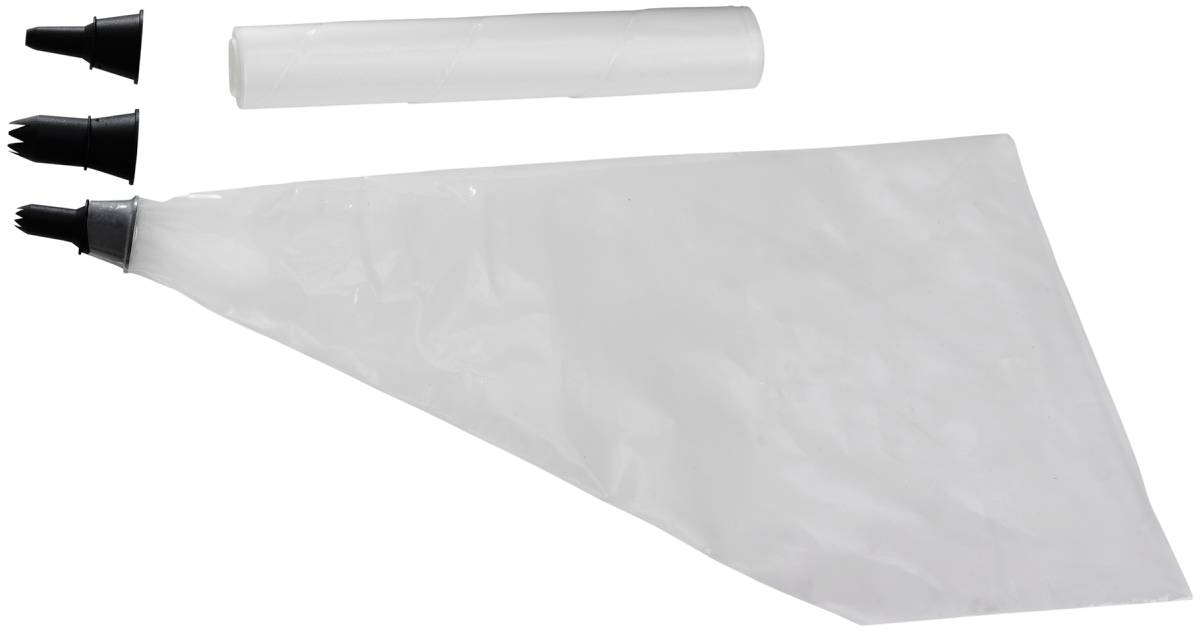
50 SEK there and then plus some type of house fix.


In my basement, they have fixed the door frames to the hollow bricks by drilling a hole and then inserting a wooden plug, before nailing the frames in place. The house was built in 1964 and the door frames are still firmly attached.