
3,622 views ·
21 replies
4k views
21 replies
Filling plasterboard
Hi!
I was trying to set up curtain rods in a drywall, but the hole became too porous after inserting the plug. I ended up using a hammer drill to attach a plug in the brick wall 1-2 cm away from the drywall. Even the brick wall became porous and the plug didn't hold.
How can I fill in the large hole and then attach the two screws and the bracket in the same spot? Gypsum powder? Concrete? Putty?
Attached is a picture of the desired result and one of the hole in the drywall.
Regards
I was trying to set up curtain rods in a drywall, but the hole became too porous after inserting the plug. I ended up using a hammer drill to attach a plug in the brick wall 1-2 cm away from the drywall. Even the brick wall became porous and the plug didn't hold.
How can I fill in the large hole and then attach the two screws and the bracket in the same spot? Gypsum powder? Concrete? Putty?
Attached is a picture of the desired result and one of the hole in the drywall.
Regards
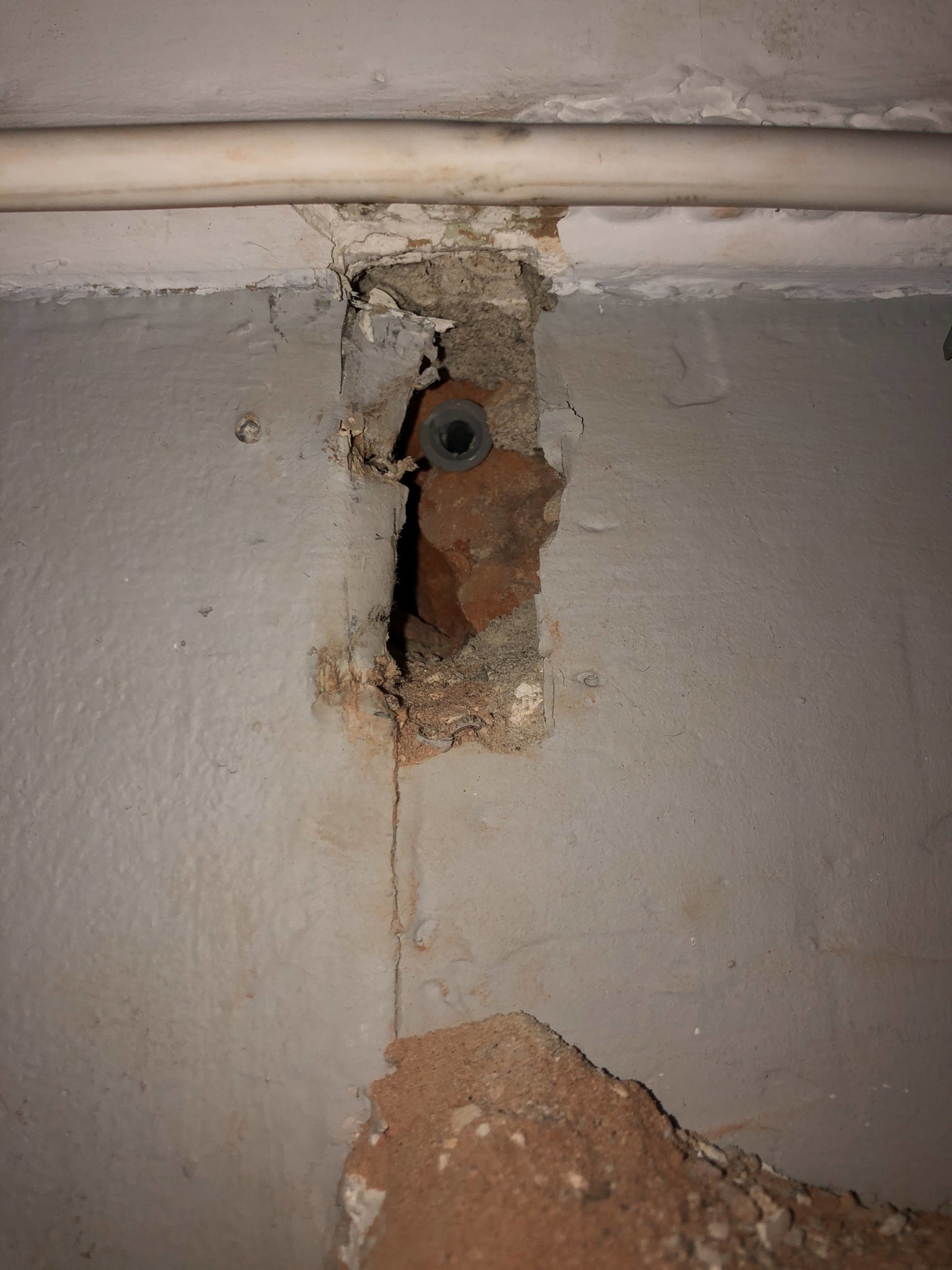
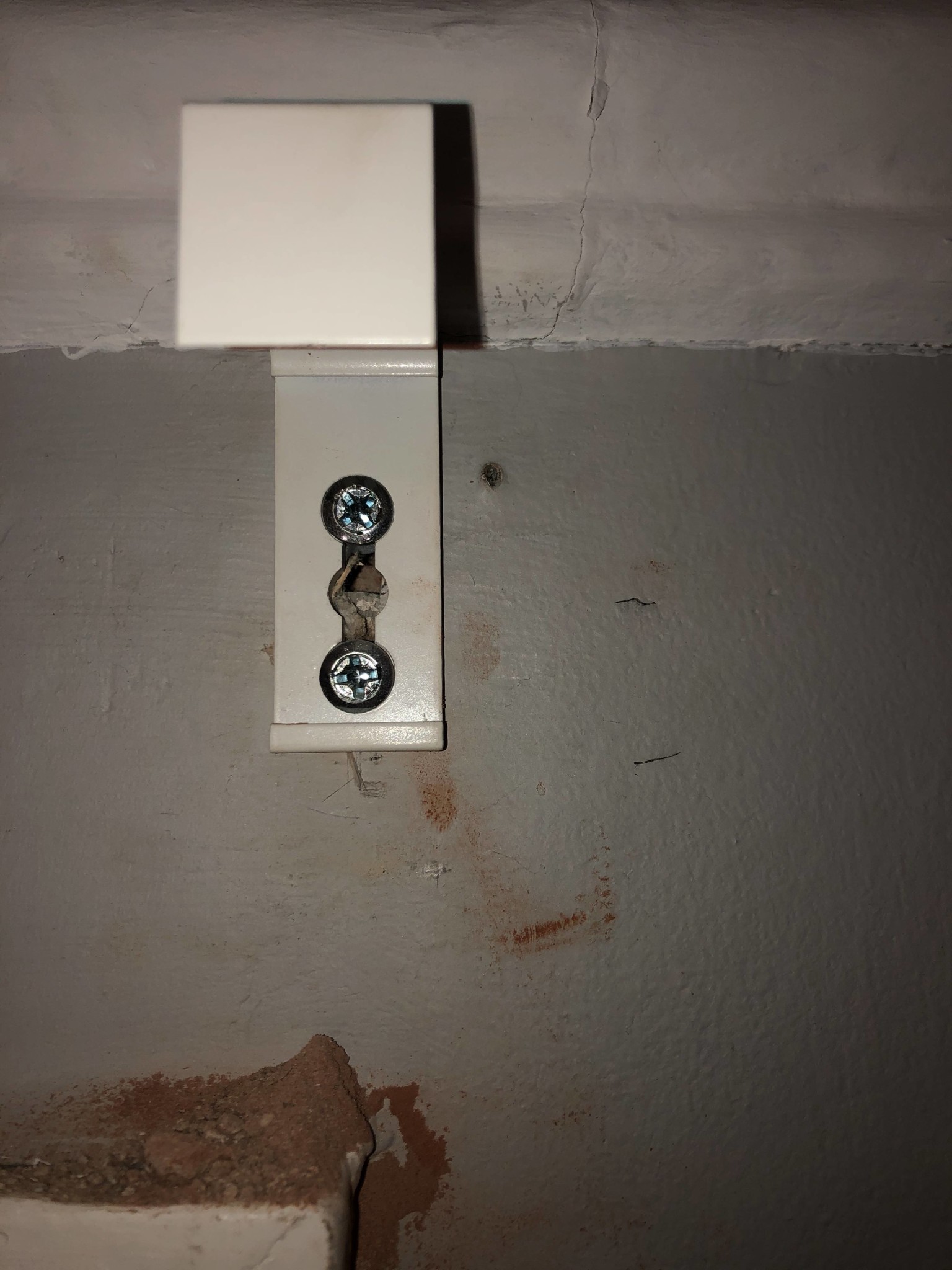
Drill carefully through the mortar once it has hardened without hammer, and then use the hammer setting when in the brick. It's not very easy; it should have cracked by now. You need to apply gypsum mortar 2 times as it shrinks, and then 1-2 times with regular wall filler, such as medium.
But the brick is completely porous on the inside? Can't something be anchored in the gypsum plaster that you fill it with?J Johan456 said:
I would probably have put in a strip of coarser plywood, about 20mm thick. Apply plenty of construction adhesive between the plywood and the brick wall. Then plaster over with gypsum putty and then sanded and painted. Then fasten the screws through the putty and into the plywood.

That doesn't look like plaster on brick. It's probably render on brick.
The easiest way to repair it is with the same type of render mortar that the wall was originally rendered with. Render mortar C usually works. If the house is more than about 100 years old, some variant of kalkbruk might be better. Using the wrong type of render increases the risk of it cracking again in the long run.
Tap on the wall around before repairing to see if more render comes off. There are many old threads with tips on how to repair render.
Then just drill new holes once the render has dried properly. Or push the plugs into the render while it's still soft and let them set as the render dries.
The easiest way to repair it is with the same type of render mortar that the wall was originally rendered with. Render mortar C usually works. If the house is more than about 100 years old, some variant of kalkbruk might be better. Using the wrong type of render increases the risk of it cracking again in the long run.
Tap on the wall around before repairing to see if more render comes off. There are many old threads with tips on how to repair render.
Then just drill new holes once the render has dried properly. Or push the plugs into the render while it's still soft and let them set as the render dries.
Best answer

Something like that is what I was thinking.Claes Sörmland said:
Does this work? https://www.byggmax.se/filler-utomhus-p01204
I can drill with screws once it has hardened, right?
Exactly, the solution for those of us with brick and weak lime plaster. Sometimes I've embedded the plastic plug directly into the filler at the right spot. Then it's just to screw once it's dried.F Frosse said:
It is cement with lightweight filler (small plastic beads). You can drill into it once it's dried, which admittedly takes a little time (a day or two if it's thick). Casco has a quick-curing variant (which I have never tested, Husfix Rapid or something like that).
Exactly, the solution for those of us with bricks with weak lime plaster on. Sometimes I have embedded the plastic plug in the right place straight into the filler. Then it's time to screw in when it has dried.
It's cement with a lightweight filler (small plastic beads). It can be drilled into once it has dried, which admittedly takes its time (a day or two if it's thick). Casco has a quick-setting variant (which I have never tested, Husfix Rapid or something).
Perfect!Exactly, the solution for those of us with bricks with weak lime plaster on. Sometimes I have embedded the plastic plug in the right place straight into the filler. Then it's time to screw in when it has dried.
It's cement with a lightweight filler (small plastic beads). It can be drilled into once it has dried, which admittedly takes its time (a day or two if it's thick). Casco has a quick-setting variant (which I have never tested, Husfix Rapid or something).
So now I'll do like this:
- Removed all loose material
- Vacuum the hole
- Fill up the entire hole with the filler from Byggmax
- Let it dry for 40 hours
- Screw in two regular screws and thus attach the fitting