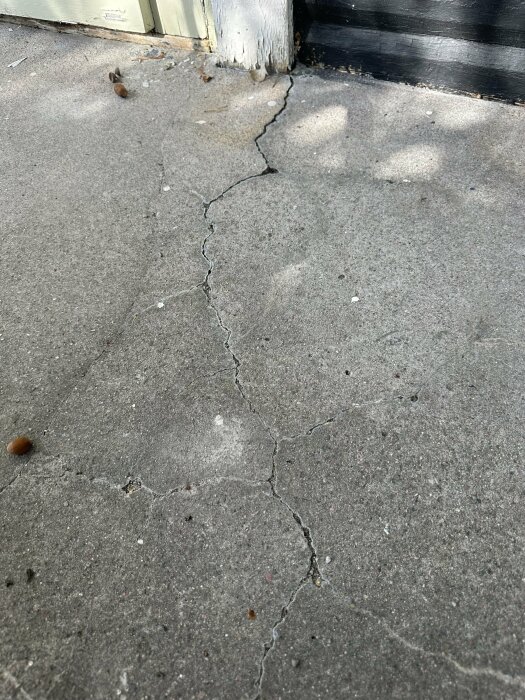
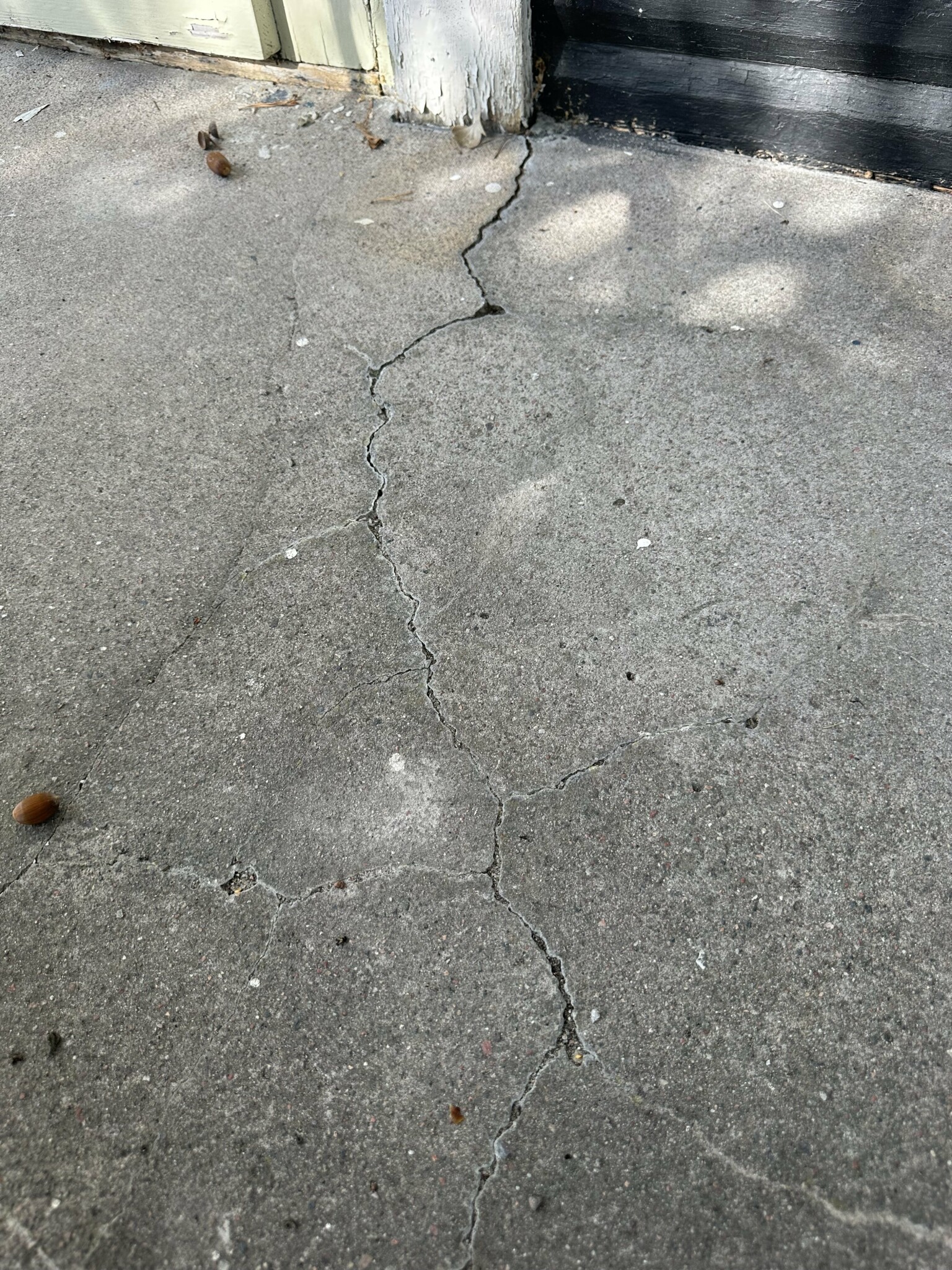
At an old entrance, there is a concrete step at our place. The concrete has cracks in it, see image below. The slope is away from the house and above, there is a small roof over the entrance, but during downpours, especially when the wind blows at the right angle, I suspect that water can be drawn in towards the outer wall by capillary action, so I would like to fill them in.
What is the best way? Some form of hard sealant? Epoxy? It looks like previous owners have filled in other cracks with something, but I don't know how.
I think you should use an elastic joint for stone as there is some movement in the stairs. Available in hardware stores.
An alternative might be to cover with klinker tiles and thus make it tight.
I also see that the door frame goes down towards the stairs and takes a beating in the end wood. I recommend shortening it.
I think you should use an elastic sealant for stone since there are some movements in the stairs. Available in building stores. An alternative might be to cover with tile and in that way make it tight.
Further see that the door casing goes down against the stairs and takes damage in the end grain. I recommend shortening.
Wouldn't covering with tiles make it tight? The only thing you achieve then is hiding the cracks where water will still find its way?
I think you should use an elastic joint for stone because there is a bit of movement in the stairs. Available in building supply stores.
An alternative might be to cover with tiles and thus make it tight.
I also see that the door frame goes down towards the stairs and takes damage in the end wood. I recommend trimming it.
When you say elastic joint, do you mean a so-called flexible hard joint used in stone paving?
Putting tiles won't make it waterproof, will it? It will only hide the cracks where water will still find its way in?
Concrete is an absorbent material. Covering it with tiles and tile grout creates a sealed surface. Any small cracks underneath make no difference. Water gets in capillarily, but to a small extent, regardless of the cracks shown in the photo. It is assumed that the stairs rest on a solid base.
Laying clinker won't make it watertight, will it? All that will be achieved is hiding the cracks where water will still find its way.
Theoretically, you could do it like a balcony, i.e., put a waterproof layer underneath. The only problem I see with that is that there's not much clearance between the concrete, threshold, and door. Such a construction probably adds some height, doesn't it?
I ran house fix that I painted, the result turned out well from the perspective that it held up well over the winter and it doesn't absorb water like before. But I didn't manage to keep it within the cracks that I knocked open so it looks a bit muppat. Over time it will surely get better.

thomarv said:
I think you should use an elastic sealant for stone since there are some movements in the stairs. Available in building stores.