
Hello. I found these nice beams in a root cellar that no one wanted, so I thought I would take them home and install them as visible beams in the vaulted ceiling of my new build, but soon it's time to mount them, and I read that old sleepers are not good at all and could be carcinogenic.
How do you know if they are toxic?
Can't you just coat them with a blocking paint?
How do you know if they are toxic?
Can't you just coat them with a blocking paint?
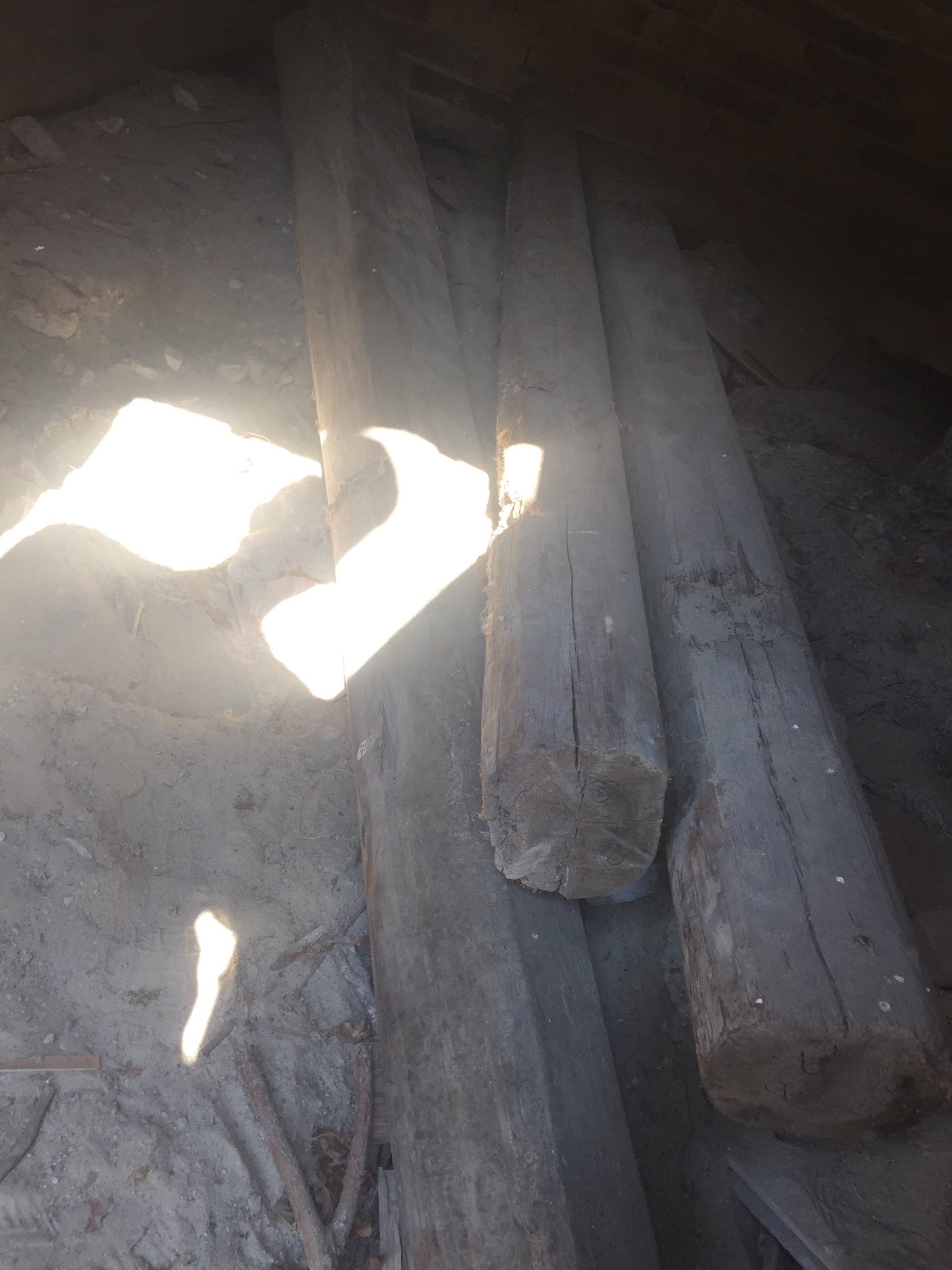

But is it old sleepers then? If they are "dangerous" there is probably quite clear impregnation.
No one knows what they are or have been used for. They don't look like they have any tar on them, but they smell a bit strange, which isn't surprising since they've been lying directly on the sand in a root cellar for many years. How can you tell if it's an impregnated sleeper?H hempularen said:

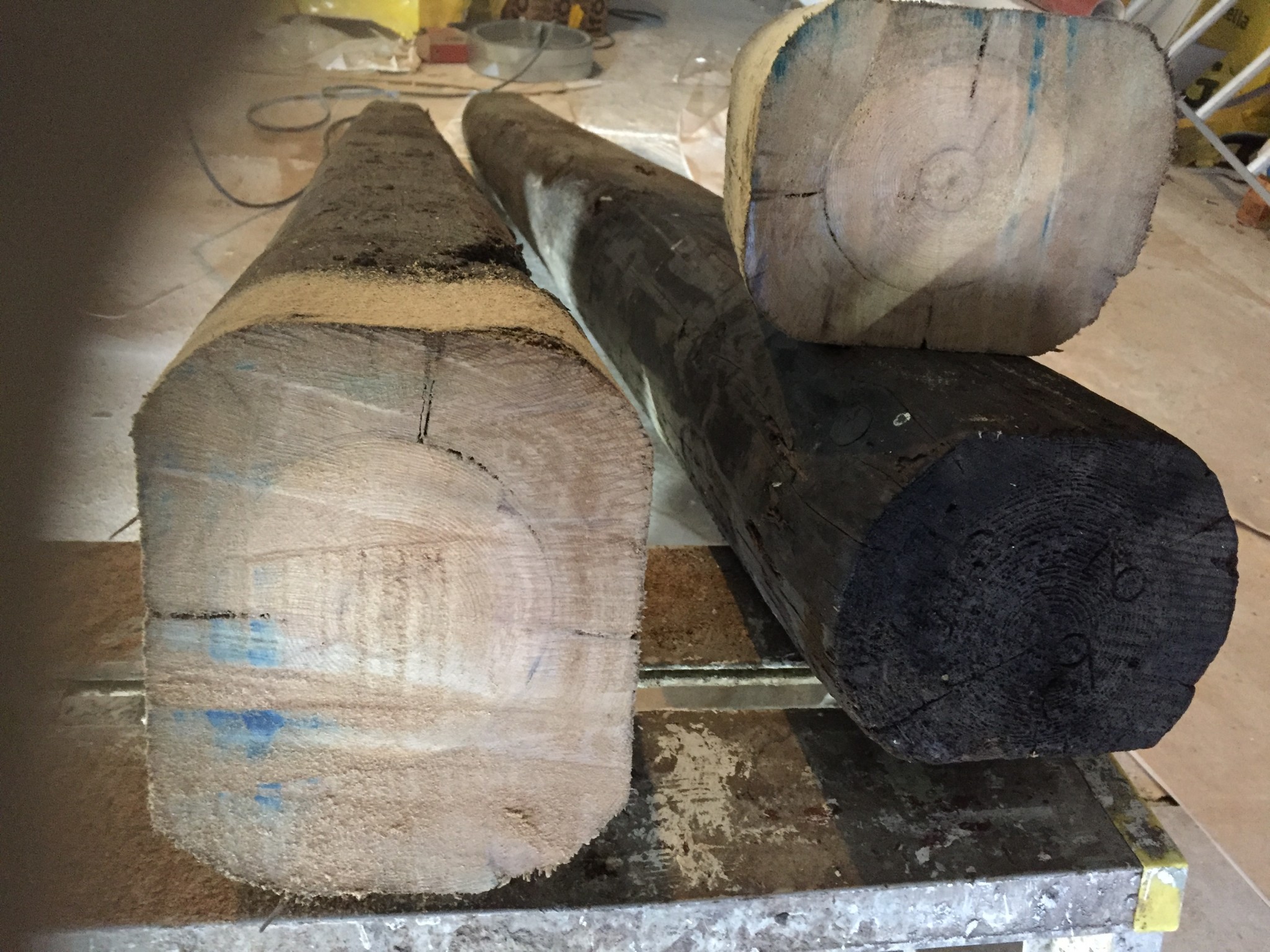
If they are sleepers, it is very likely that they are impregnated with arsenic or creosote. Not something I would want inside my home precisely. One of the logs seems to bear traces of rail, so it is probably a railway sleeper.

Think now.
Why would you want to install something that is potentially useless and also smells bad in a new construction...?
What do you do if they are admittedly not impregnated but the smell emerges after they are installed?
Throw the crap away!
/M
Why would you want to install something that is potentially useless and also smells bad in a new construction...?
What do you do if they are admittedly not impregnated but the smell emerges after they are installed?
Throw the crap away!
/M



Maybe the numbering at the end can provide some clue about what they were used for previously?


In the top picture, one of the beams appears to have two indentations with a gap that can be interpreted as clear marks from rails laid without a base plate and therefore worn into the beam. But it could also be something else.Staffan2000 said:
In the top image, you can see indentations in the beam on the far right; if these are placed equally far from the edge and have a measurement between them of approximately 1435, 1093, 1067, 891, 802, 750, or 600 mm, then it is definitely a railway sleeper. If there are also square holes on either side of the indentation, it is even more confirmed.T Toddep said: