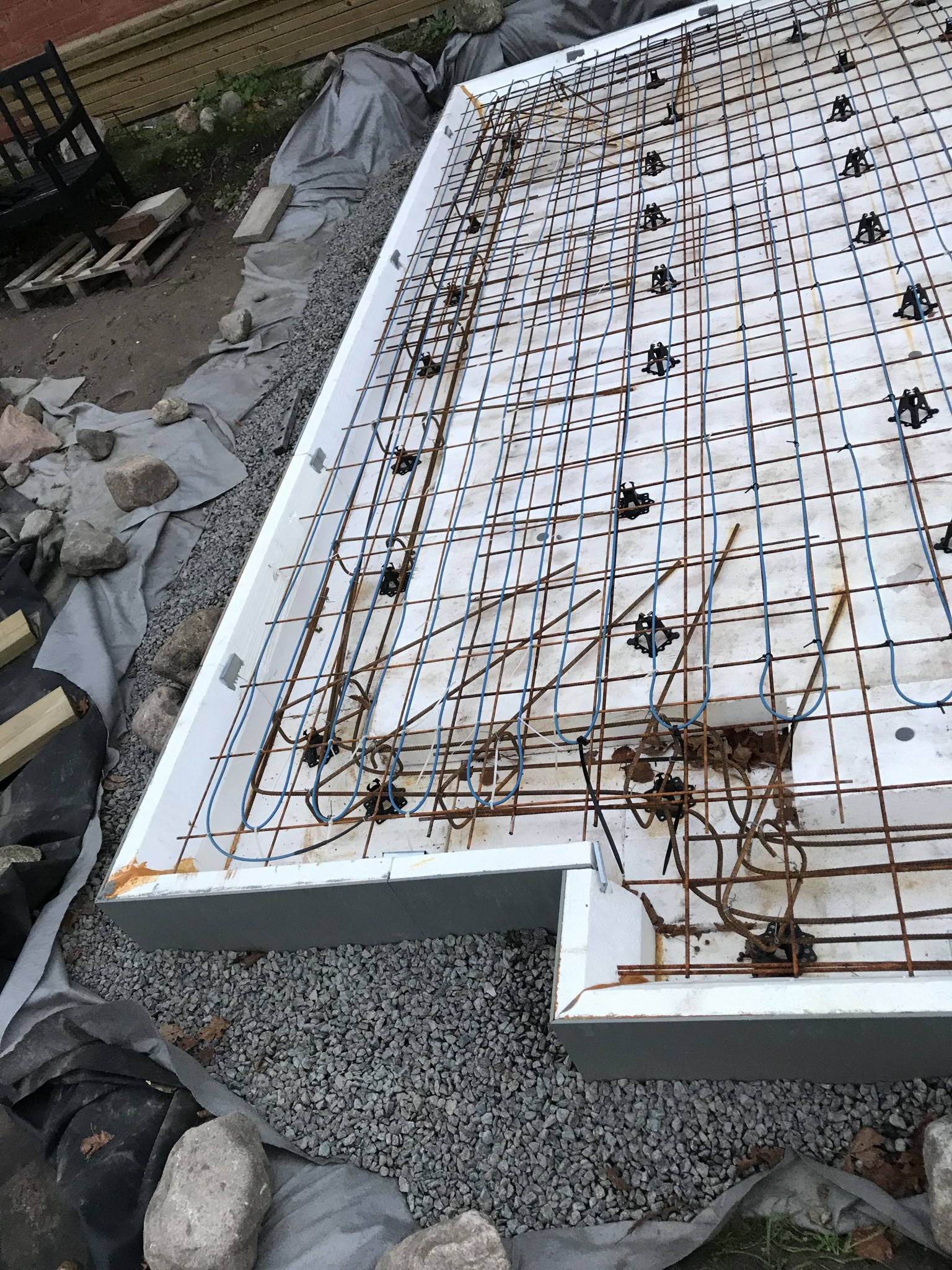
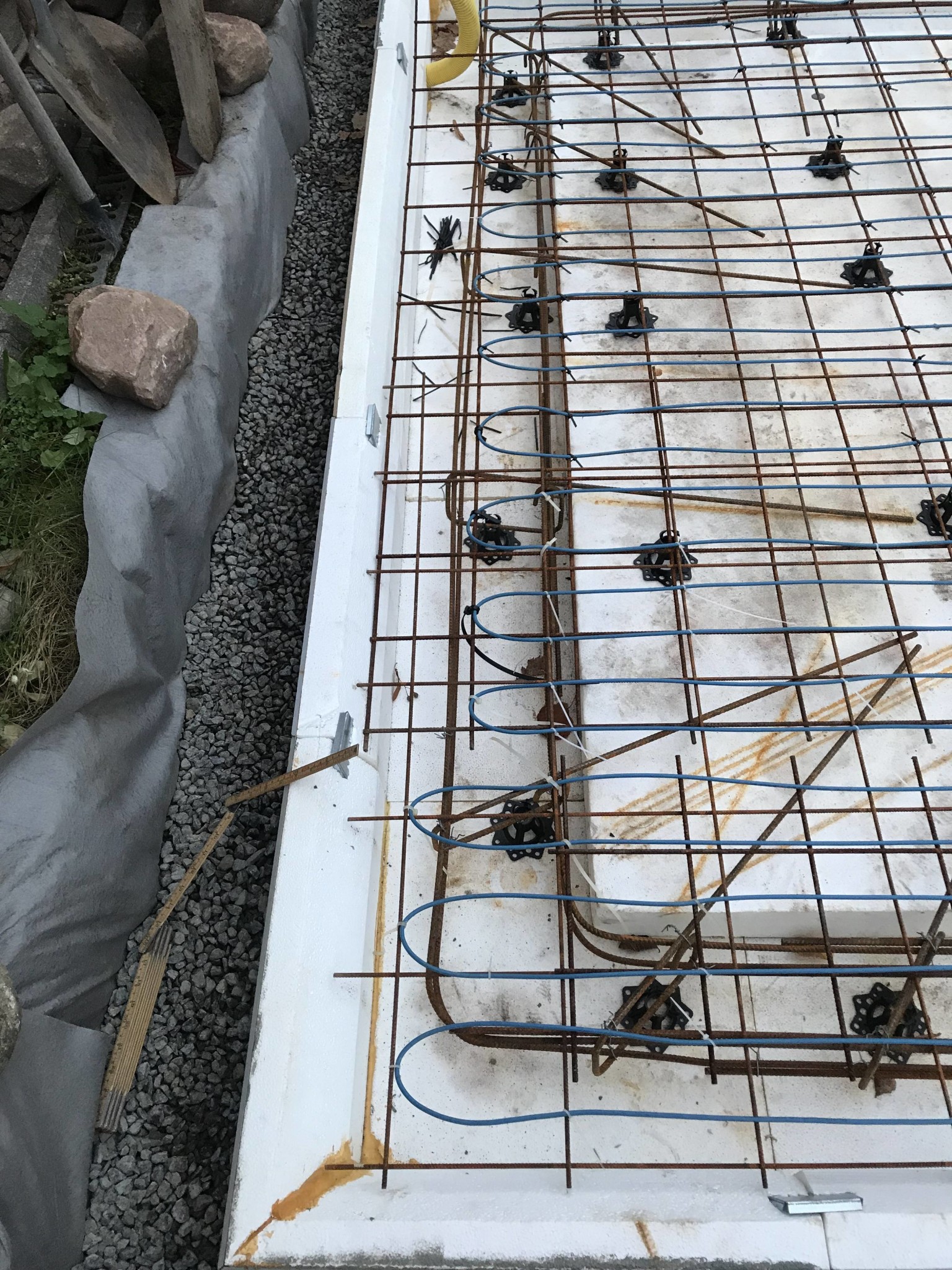
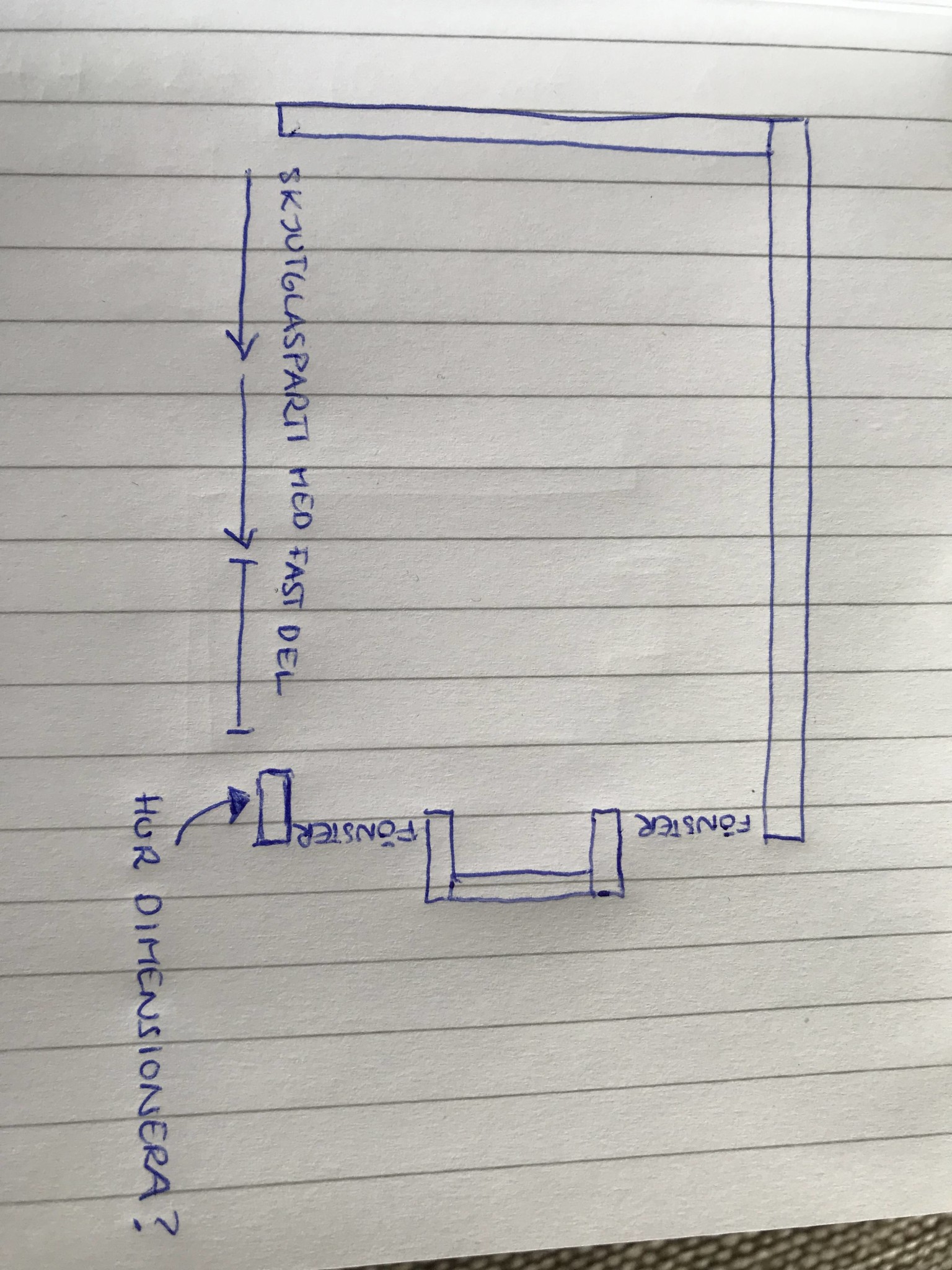
We are going to build a shed out of lightweight concrete in the spring and intend to have large operable sliding glass sections on as much of one long side as possible, with the fixed part at the corner I am asking about. We will also have tall windows on one short side.
I wonder how the corner where there will be windows on both the short and long sides needs to be dimensioned? We plan to use 175mm Siporex which can handle 2.8N/mm3 (28.55kg/cm2).
I can't just build a corner that's 175mmx175mm, right? That sounds very flimsy. I need to place a u-beam of Y-tong that weighs about 100kg and embed a steel beam (unknown weight) in it. Additionally, the u-beam must have a certain bearing surface, I assume?
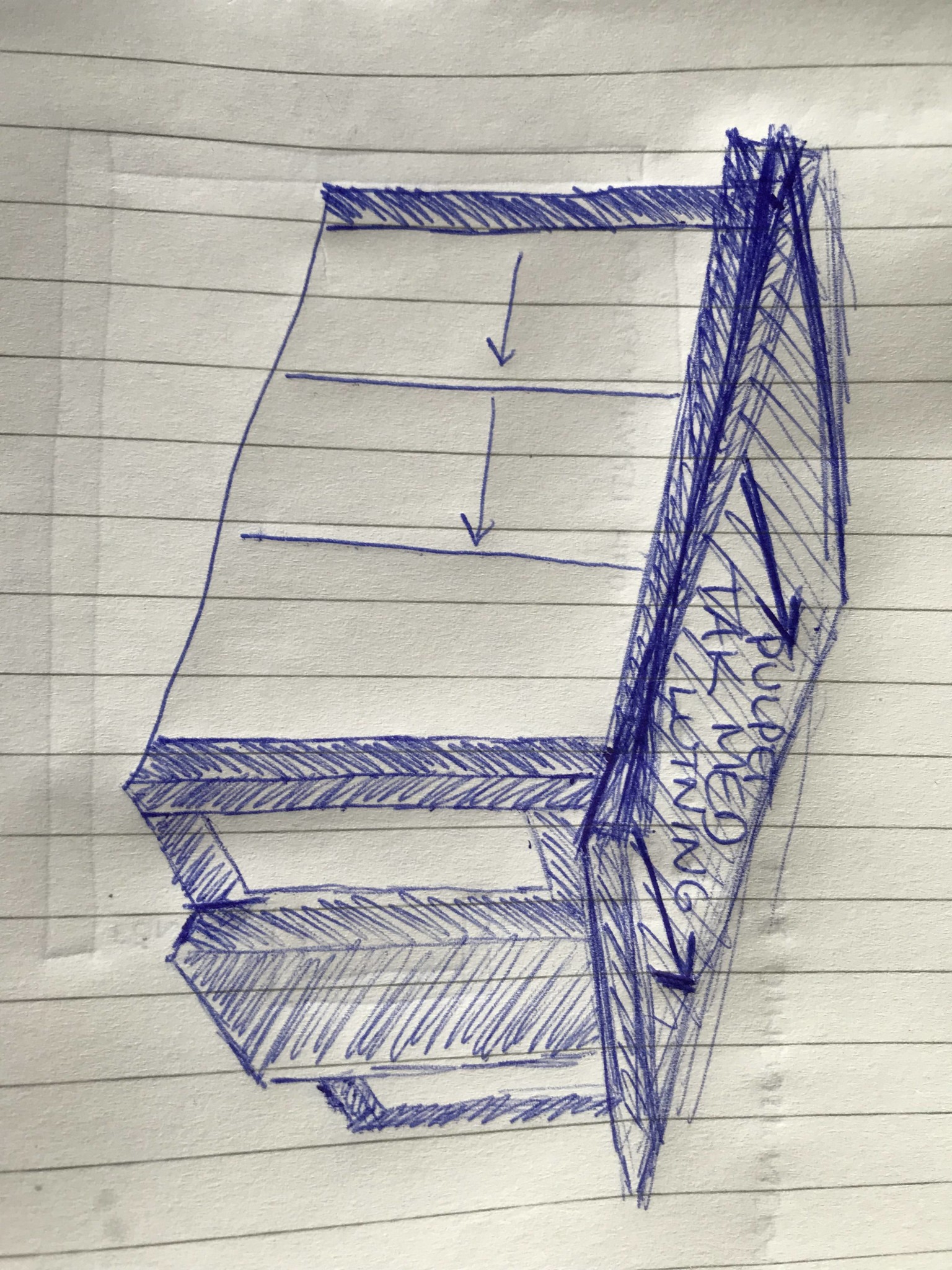
See image.
Does anyone have knowledge of structural integrity and can answer how I should dimension the corner?
The vertical roof load that may be relevant must be supported by 175x175 lättbetong. It is more of a stability problem that you have. It would help if you could make facade sketches on the sides with windows. Then one can better assess the possibilities available.
There must be some stress on the sliding glass partition on the small pillar, I think. Feels like you say it might become unstable. Just the way I'm thinking anyway.
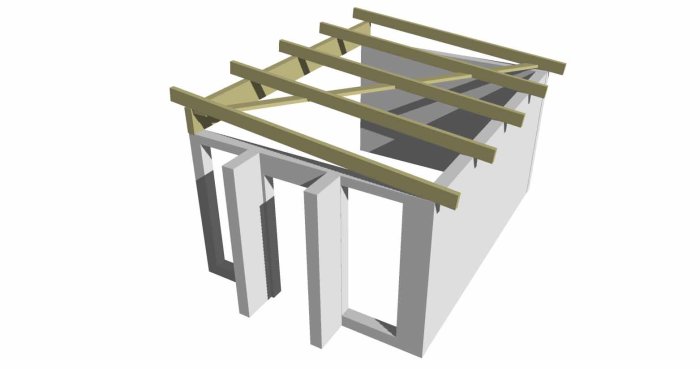
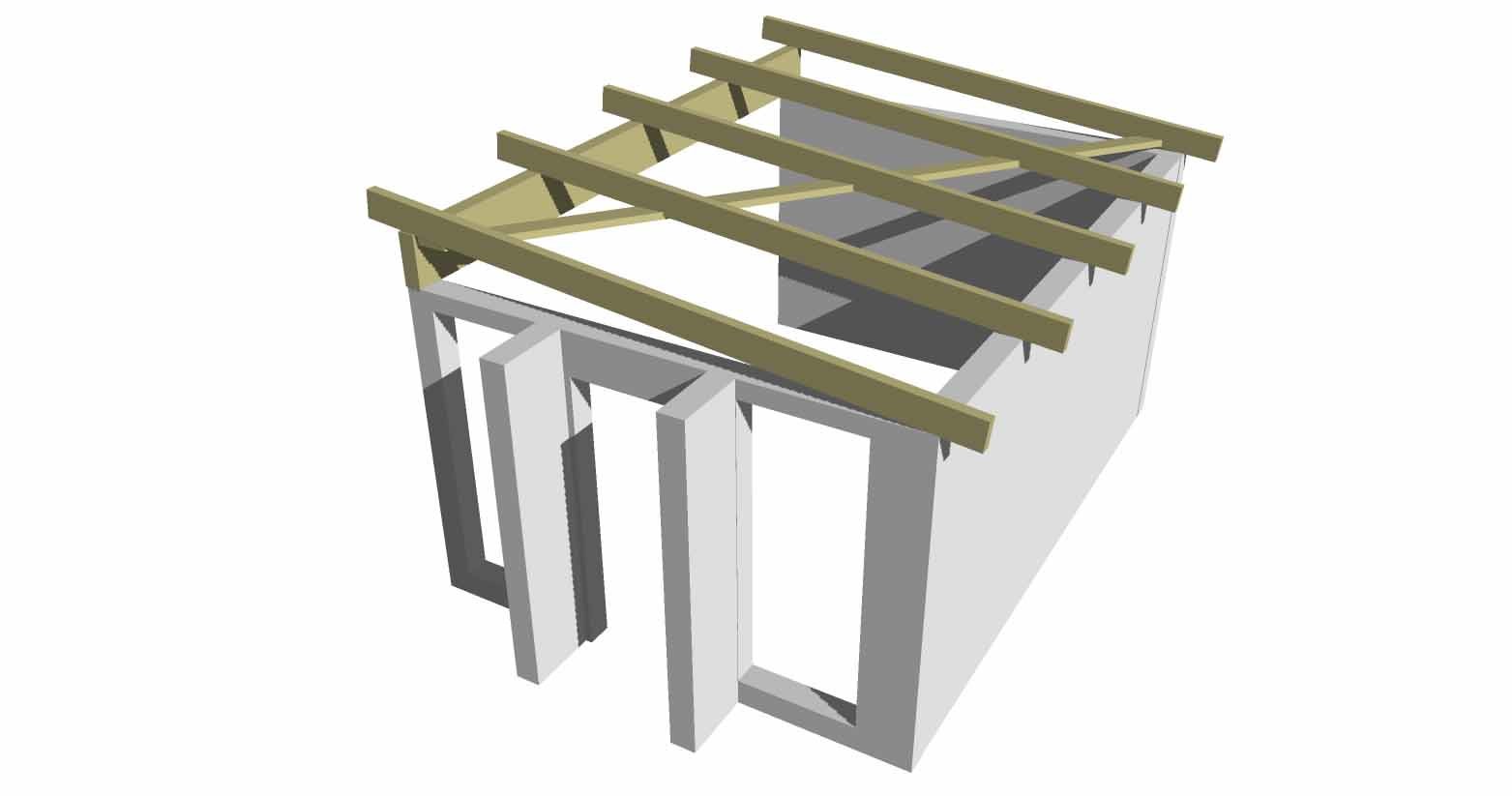
There must of course be an (oversized) beam above the sliding door sections on which the roof beams rest. The same applies over the gable windows, but it can also be made of lightweight concrete and embedded. The best solution to the stability problem is a diagonal in the plane of the roof that lands on the sensitive corner. With the help of such a diagonal, the corner becomes completely fixed laterally both at the top and bottom.
The U-beam I plan to embed is 200mm wide, 250mm high, and about 4400mm long. I intend to embed a steel beam in it (I don't know what type). Of course, it should rest on the pillar. Then I thought that one of the rafters should go over the pillar and be fastened there. Is that what you mean by diagonally? That's not quite how I interpret it, but I find it difficult to see what should go diagonally (as I understand it, slanting across the roof).
Could you possibly draw it?
Thank you for taking the time to answer.
Aha.. That was how I interpreted it actually but I've never seen anything built that way.
Very nice drawing
Thank you so much for taking the time to answer me
I forgot to mention that an alternative to a diagonal is to cover one side of the roof beams with a sheet material, preferably plywood.
Yeah... so you're basically thinking about it being torsionally rigid. Thanks for the answer Maybe you can answer another question I have? You seem to have quite a bit of experience and knowledge.
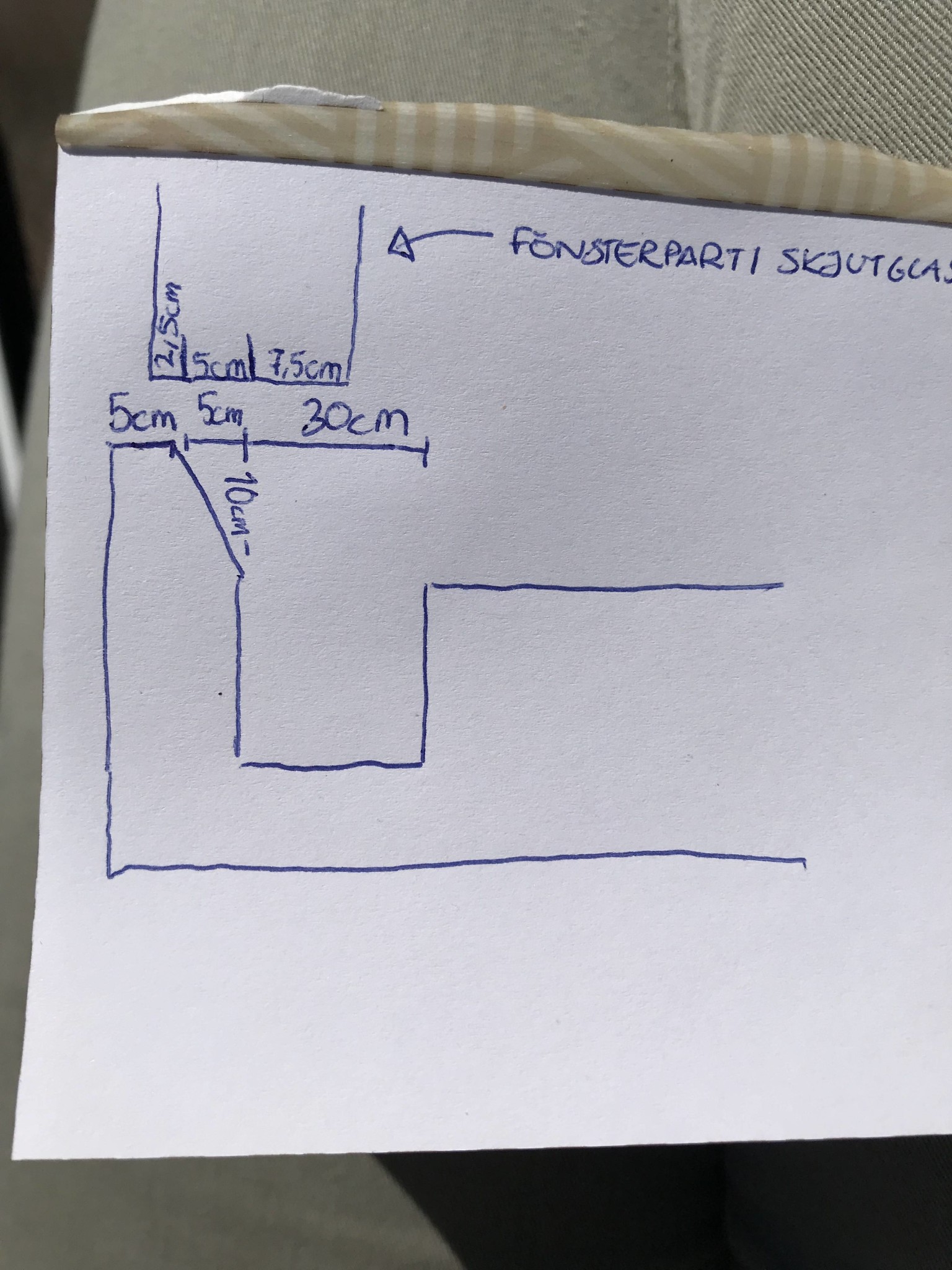
The thing is, when I cast the slab last fall, I forgot to consider that I might have needed to cut off 100mm from the height of the edge insulation where I will have a sliding glass section of either 3600mm or 3900mm width to increase the load-bearing capacity for the section and to have enough concrete to screw into (because you should screw the section into the floor, right? I'm waiting for the installation instructions).
I guess the frame for the sliding glass section is 148mm deep. The walls, which will be lightweight concrete, should be 175mm deep. If I align the section with the inner wall, 75mm of the section's depth will rest on the part of the concrete that's 200mm thick, 50mm will rest on concrete tapering from 100mm to 0mm, and the remaining 25mm or so will rest on the edge insulation visible along the perimeter of the footing. My thought was to, after realizing I might have needed to cut away some of the edge insulation to get a thicker footing there, chisel away some concrete and insulation and recast with reinforcement embedded in the existing slab for tensile strength as well as longitudinal reinforcement. Preferably, I'd avoid redoing it, but if it's necessary for the slab to bear the weight of the section, I’ll do it. I don't know what the section weighs, but it's PVC and will be double-glazed.
You can answer my question if you feel like it, of course Grateful for all the help I get <3
It would help if you could draw a simple sketch in the form of a cross-section of the relevant part. I'm not entirely sure I understand your reasoning otherwise.
It would help if you could draw a simple sketch in the form of a cross-section of the relevant part. I'm not entirely sure I understand your reasoning otherwise.
Aaah I've solved it celery yes, not me, but it resolves Karmen which is mounted is actually just 74mm. I finally found a picture of how it looks. I align the partition with the inner wall so it ends up on the base which is 200mm reinforced concrete. Thanks anyway
Click here to reply
Vi vill skicka notiser för ämnen du bevakar och händelser som berör dig.


 Maybe you can answer another question I have? You seem to have quite a bit of experience and knowledge.