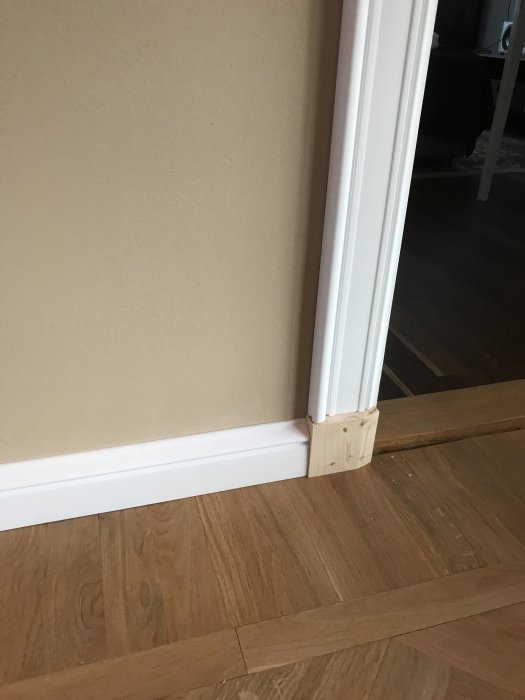
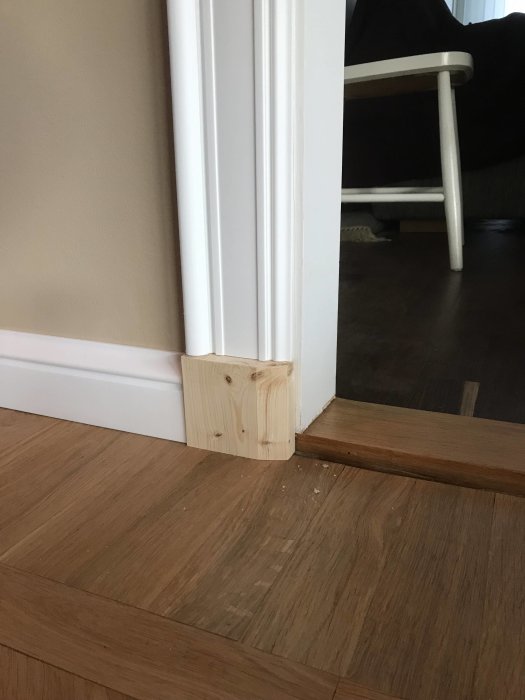
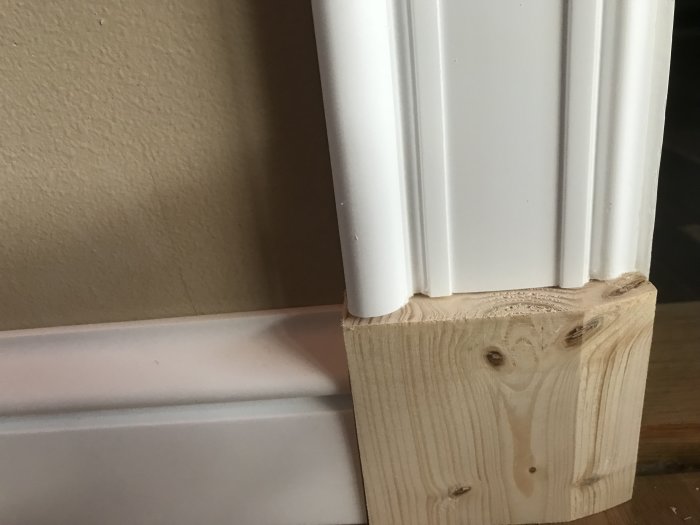
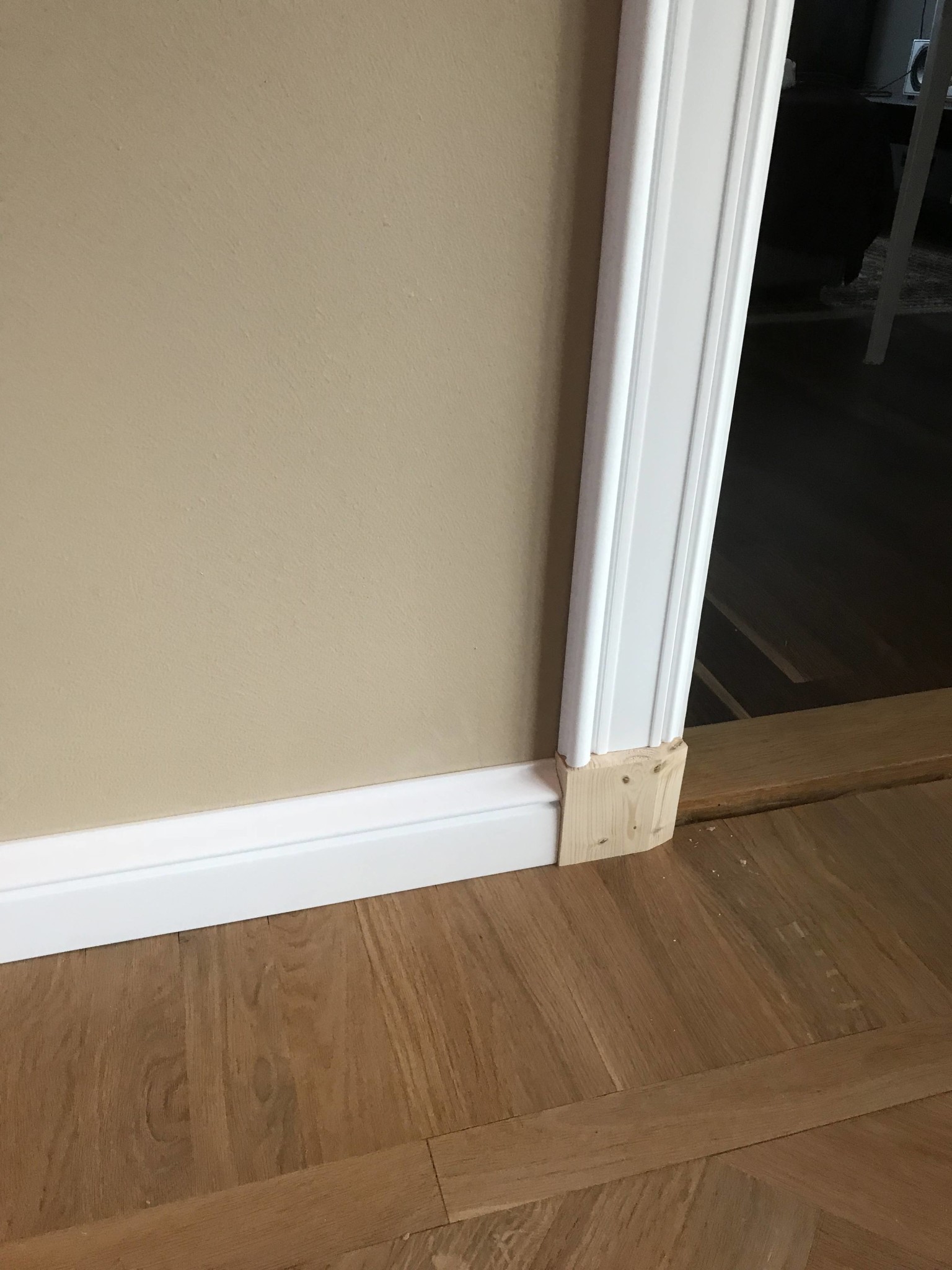
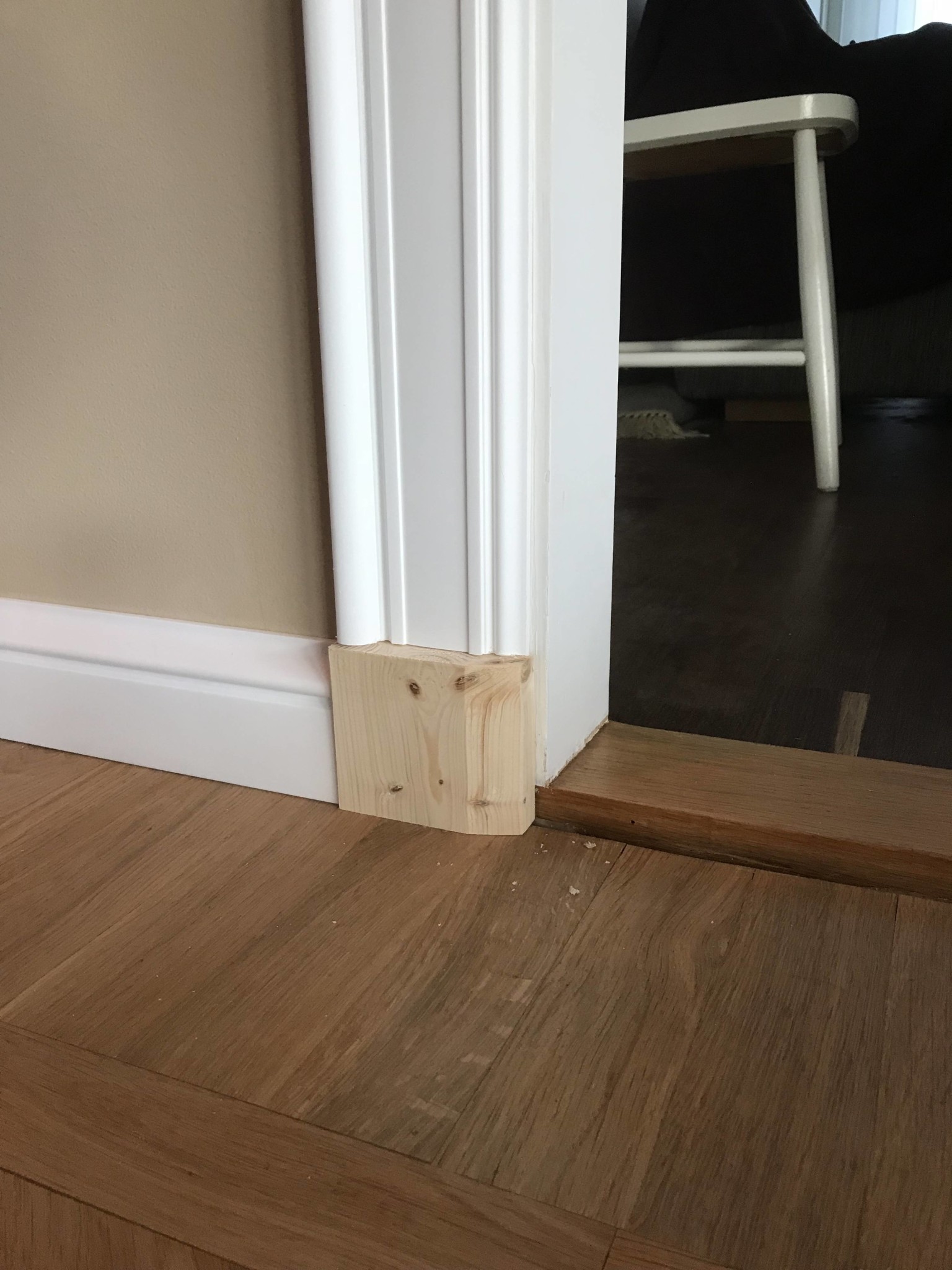
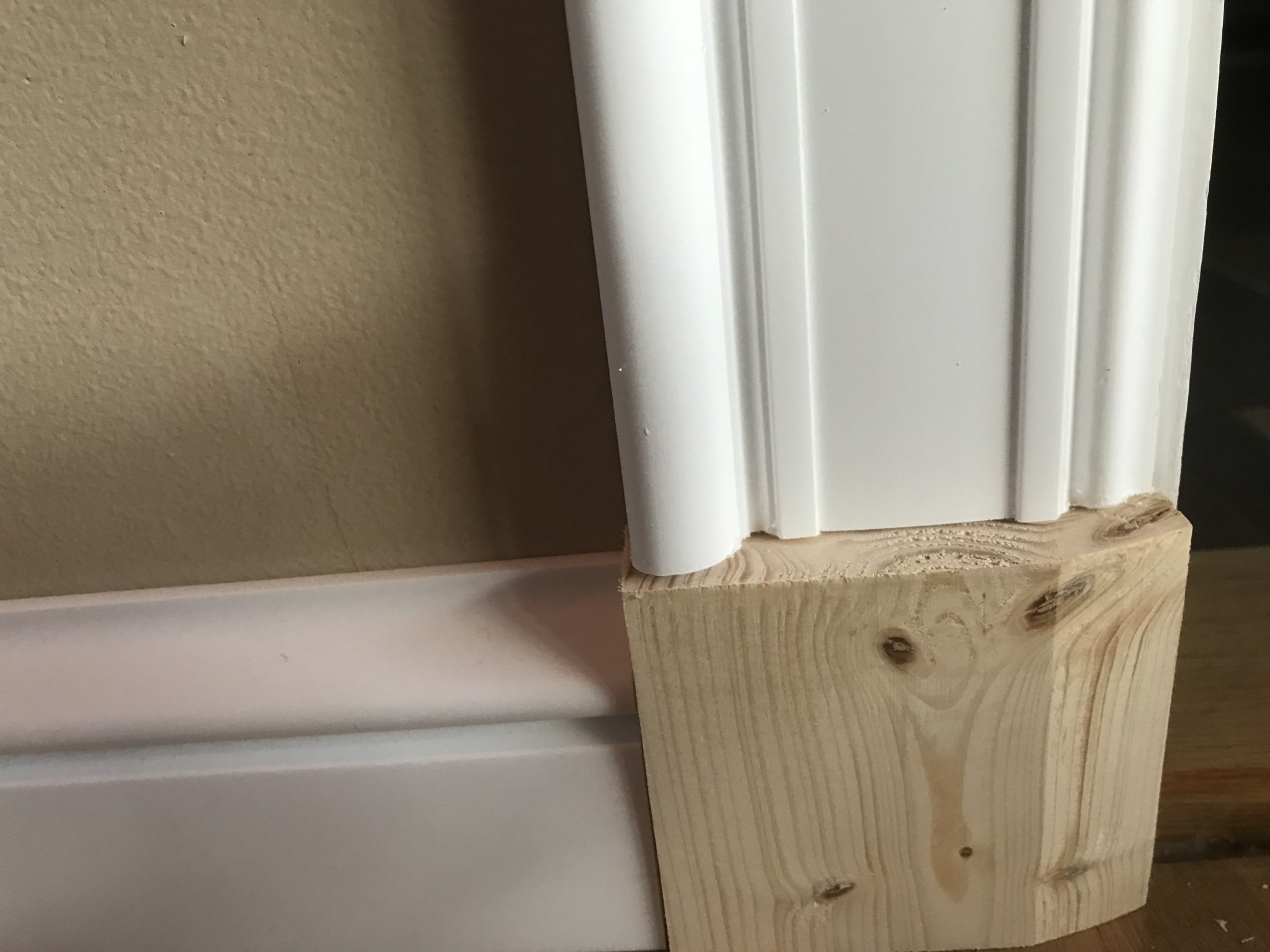
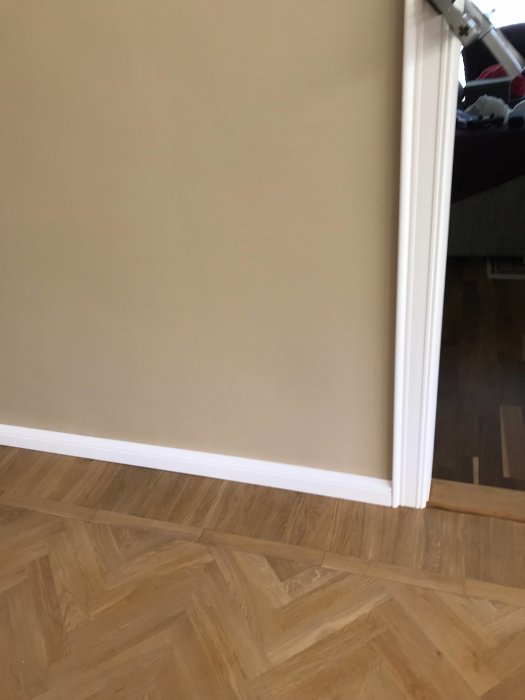
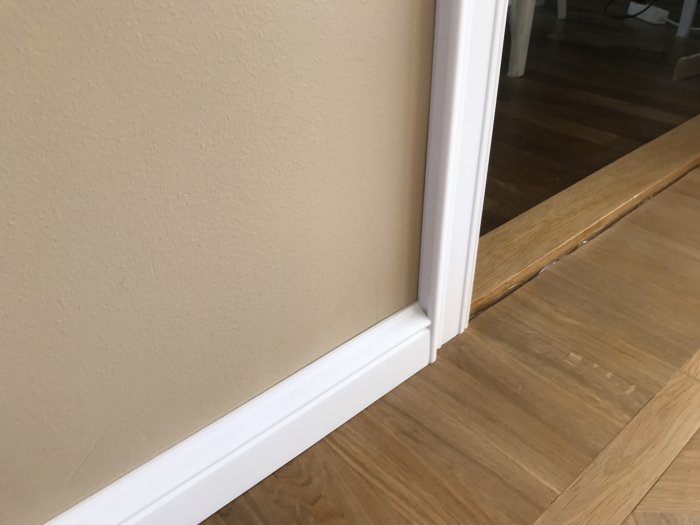
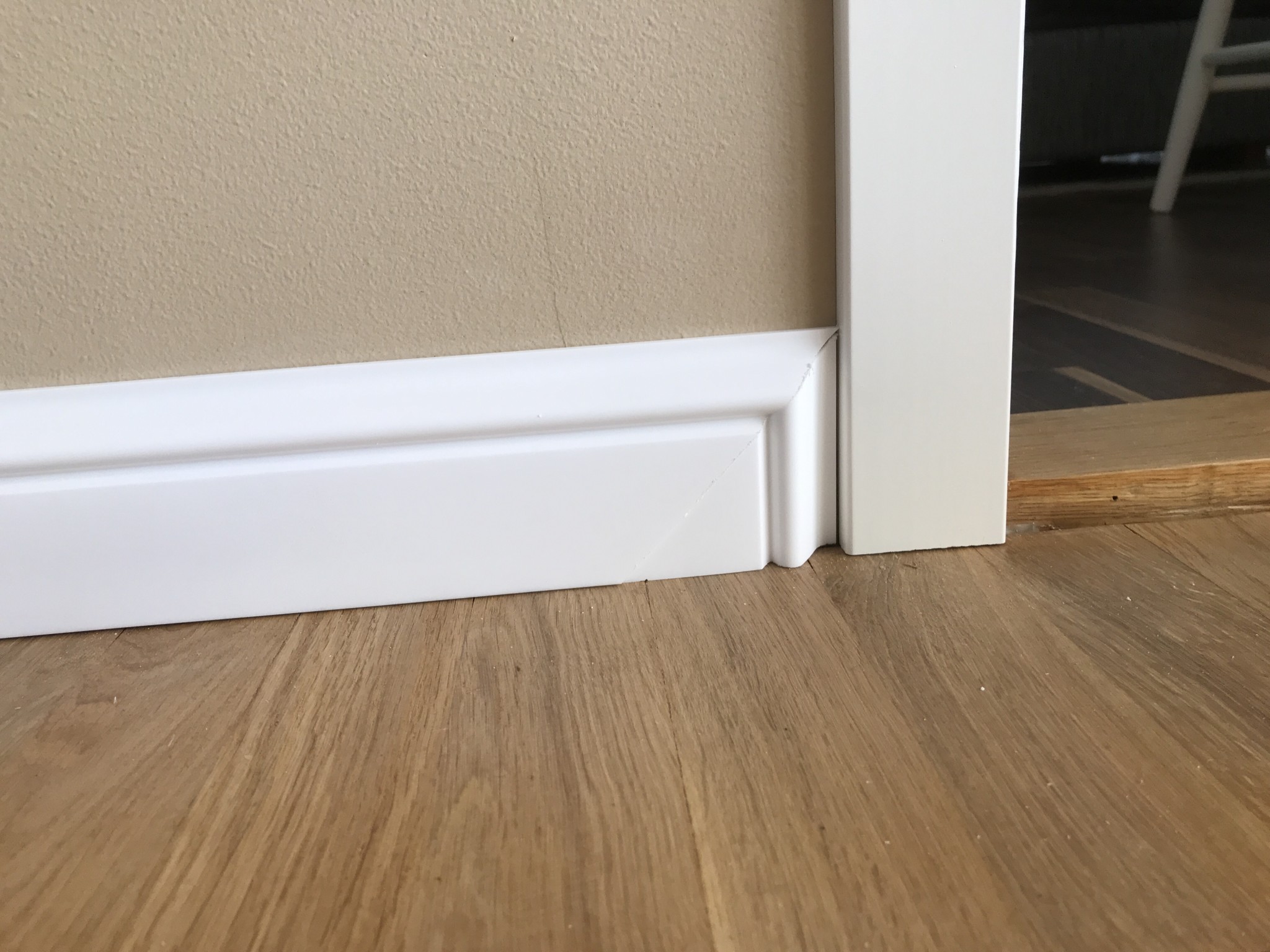
Hi, I can't decide how to put together my moldings and baseboards in the dining room.
How would you do it here?
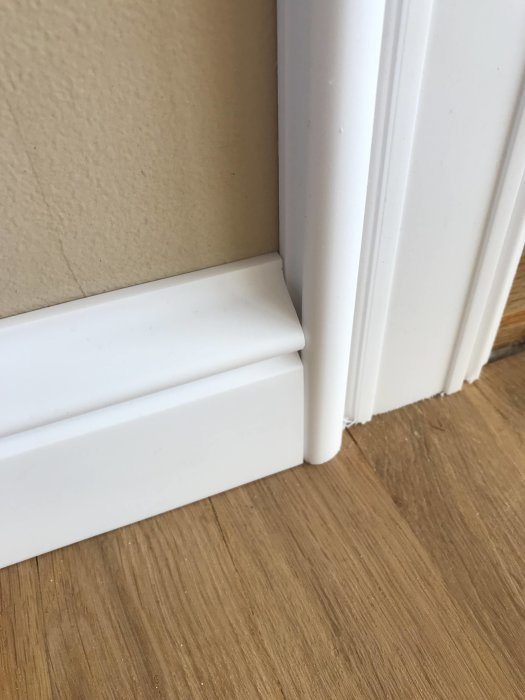
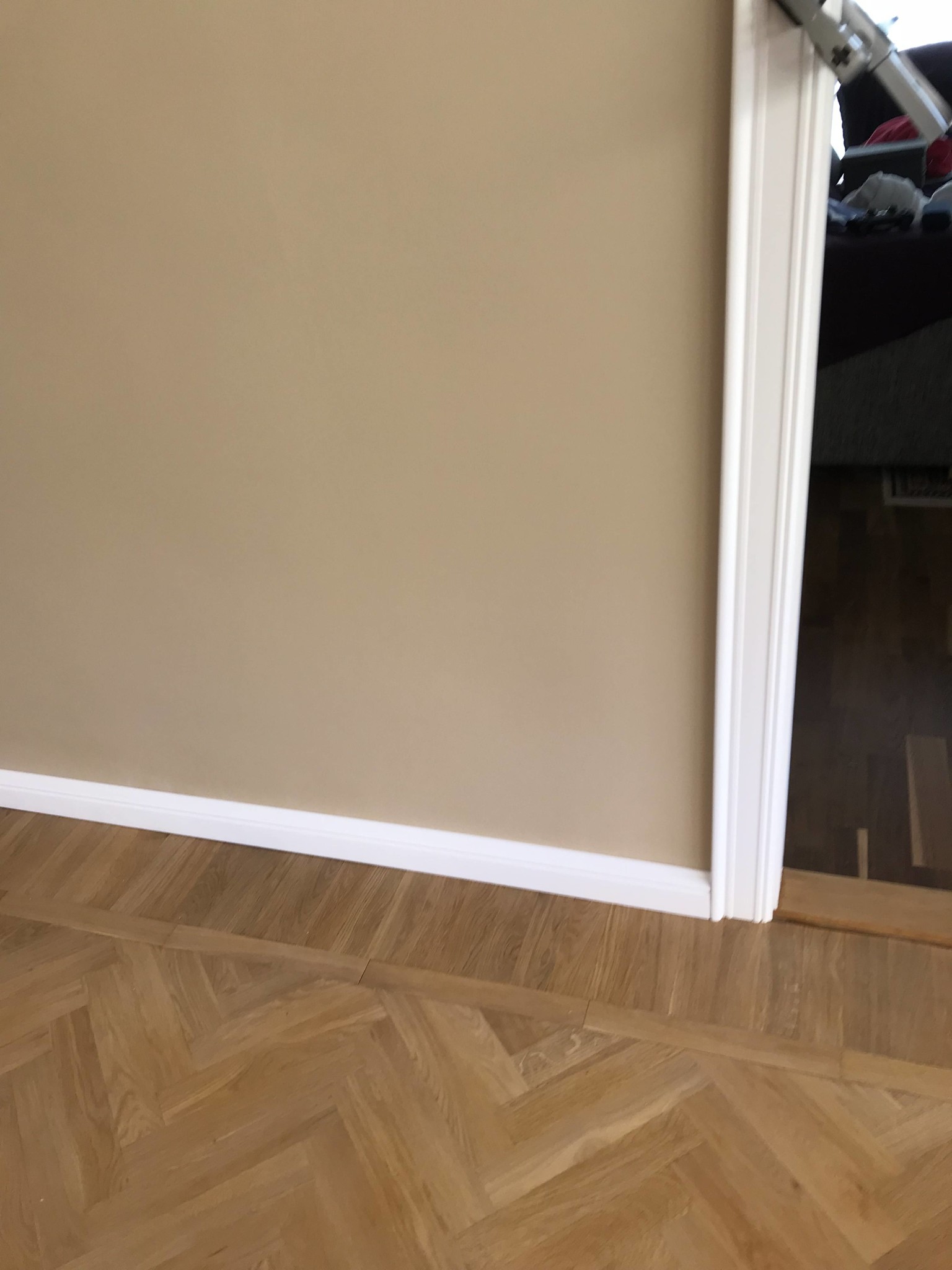
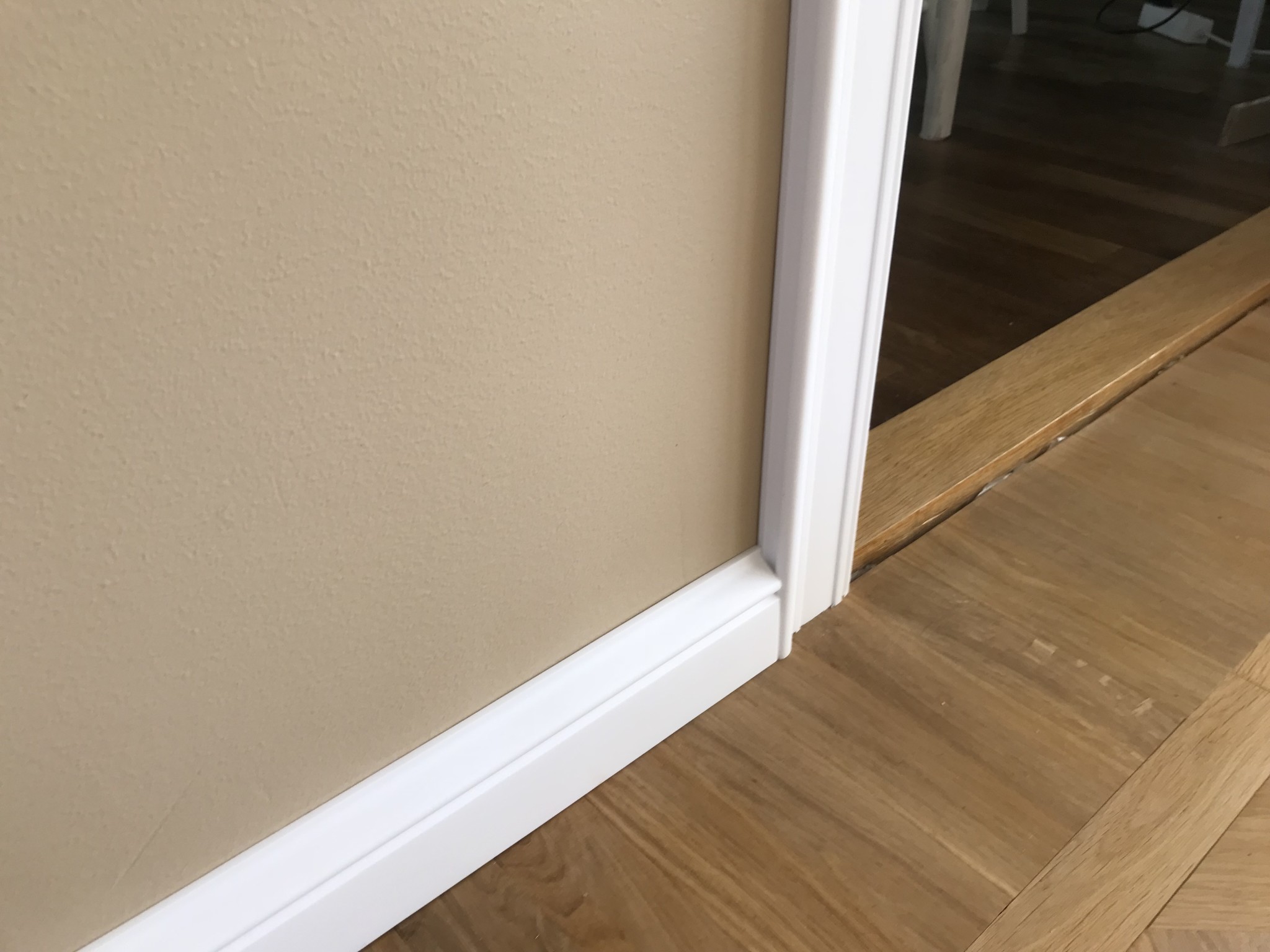
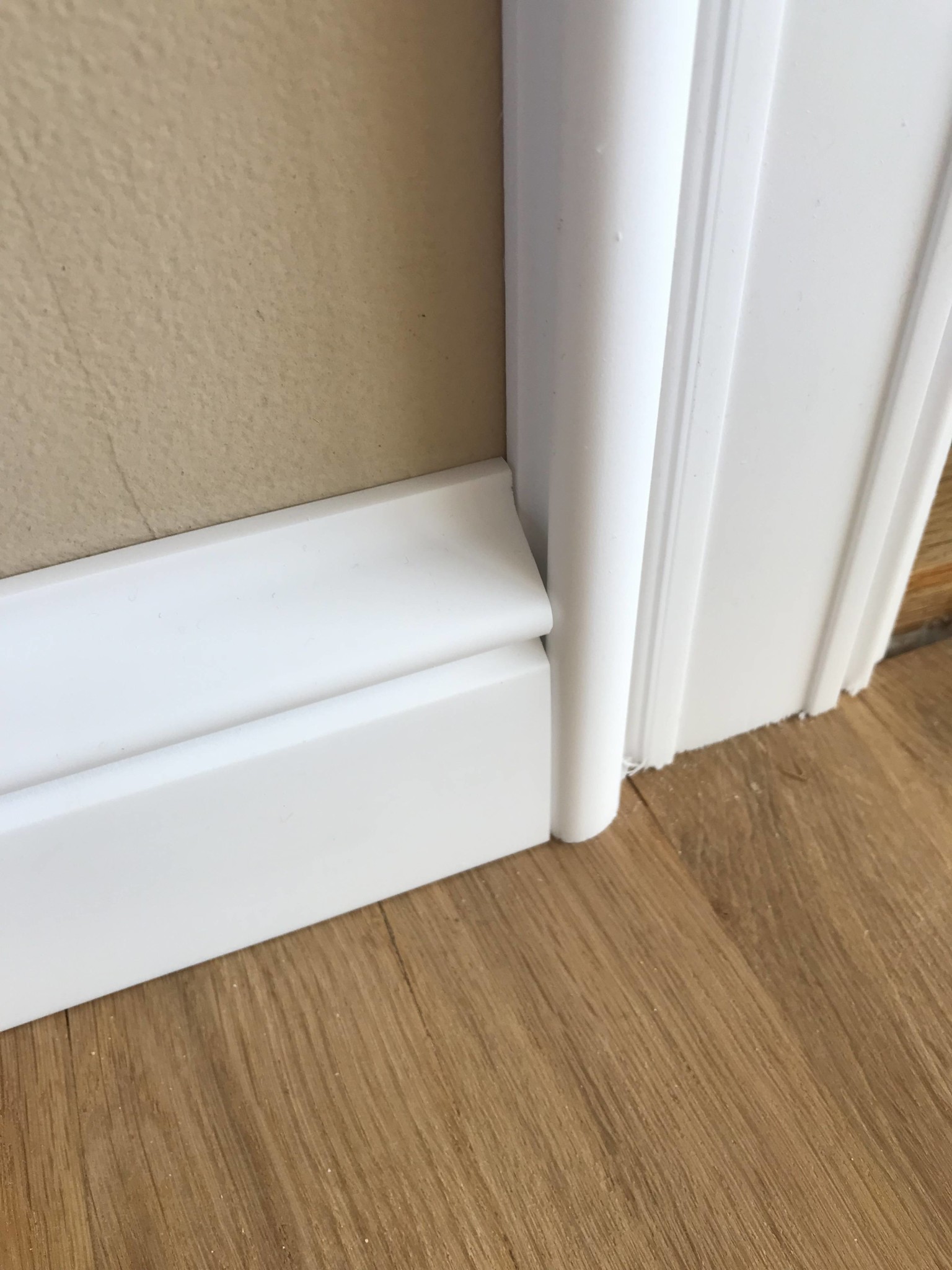
1. Place them like in the picture and tidy up the gap with caulk or wood filler before painting.
2. Use a plinth block/base block between the baseboard and molding.
Originally, I had actually planned to make blocks, but since I can't get any planed wood in the right format, I need to have them made by a joinery.
(There is a block that fits, but it costs 200 pix, I need about 20 in total, I'm way too stingy to spend 4 grand on some ***** blocks)
It depends a bit on the style of the rest of the house. Are there plinth blocks in more rooms?
Well, if we go by the rest of the house, there are actually three bedrooms that don't have it. But they haven't been renovated yet either. So the answer is probably no, they don't. But they might be there in the future.
I haven't really decided yet, but for now, I've only bought this molding for the "arches," and I might go with a simpler molding for the doors. However, I'll probably encounter the same transition problem anyway. So there might be plinth blocks in all living areas if I just decide on it.
Of course, these can probably be put together fairly nicely with putty. You could end the baseboard with a 45-degree turn straight down into the floor on the standard doors where I might possibly add a simpler trim.
You can make it easy for yourself by finding a dimension by the meter that works as a skurkloss.
Not the best example here but you might understand what I mean:
[bild]
Yes, that's what I've been thinking from the start. But I would need something that's about 25-28mm thick and 95-100mm wide. And haven't found it at the local hardware stores. The closest I can find is type gles which is 28x95. They have rounded edges, so I would then need to plane the backside on them, which I have access to borrow. If I had found something that was a couple of millimeters too thick, I can chamfer them with a router if needed.
Unusual moldings you have! I don't think I've ever seen anything like it. If you want a "traditional" baseboard and have access to a planer and are thrifty, you can buy a 45x120 plank, plane it down to 28, and bevel one side so it leans against the doorway.
Unusual moldings you have! I have probably never seen anything like them. If you want a "regular" corner block and have access to a jointer and are frugal, you can buy 45x120 timber which you plane down to 28 and bevel one side so it leans towards the door opening
Yep, that's how it will be.
I can easily get 40 blocks from two 45x120 timber pieces. For a few hundred in total.
Yes, that's what I've been thinking from the start. But I would need something that is about 25-28mm thick and 95-100mm wide. And I haven't found that in the local hardware stores. The closest I can find is type gles which is 28x95. They have rounded edges, so I need to plane the backside of them, which I have access to borrow. Had I found something a couple of millimeters too thick, I can bevel them with a router if needed.
Moelven has planed pine 27x95.
Should fit perfectly.
Moelven has planed pine 27x95.
Should fit perfectly.
[link]
Thanks, I also see 27x118. I know that none of those who sell Moelven's moldings have them in stock locally. But I'll probably go to K-rauta to buy the rule. Can check if they order from Moelven, as they sell a lot from their range otherwise.
Have an hour to Kungsbacka, but have now planed everything in a friend's workshop. Both the planer and jointer are from the 1920s. And I'm a rather inexperienced fine carpenter. But it turned out okay.
Total cost: 105kr for 6m (enough for at least 40 blocks)
Work effort: 3h including some running around

bax said:


leby said:
kimf said:
Yes, that's what I've been thinking from the start. But I would need something that is about 25-28mm thick and 95-100mm wide. And I haven't found that in the local hardware stores. The closest I can find is type gles which is 28x95. They have rounded edges, so I need to plane the backside of them, which I have access to borrow. Had I found something a couple of millimeters too thick, I can bevel them with a router if needed.