The only thing you can adjust on regular interior door hinges is the “tongue” that is “pressed into the door leaf” up/down by screwing two screws up/down on each hinge, meaning if the door leaf should come closer to/farther from the threshold/header.
All other adjustments are made with a hinge adjuster.
At the same time, you’ve heard that you absolutely should not adjust these hinges with a hinge adjuster?
The only thing you can adjust on regular indoor door hinges is adjusting the "tongue" that "pushes into the door leaf" up/down by screwing two screws up/down on each hinge, meaning if the door leaf should come closer/farther away from the threshold/overhead.
All other adjustments are made with a hinge adjuster.
You are my hero!
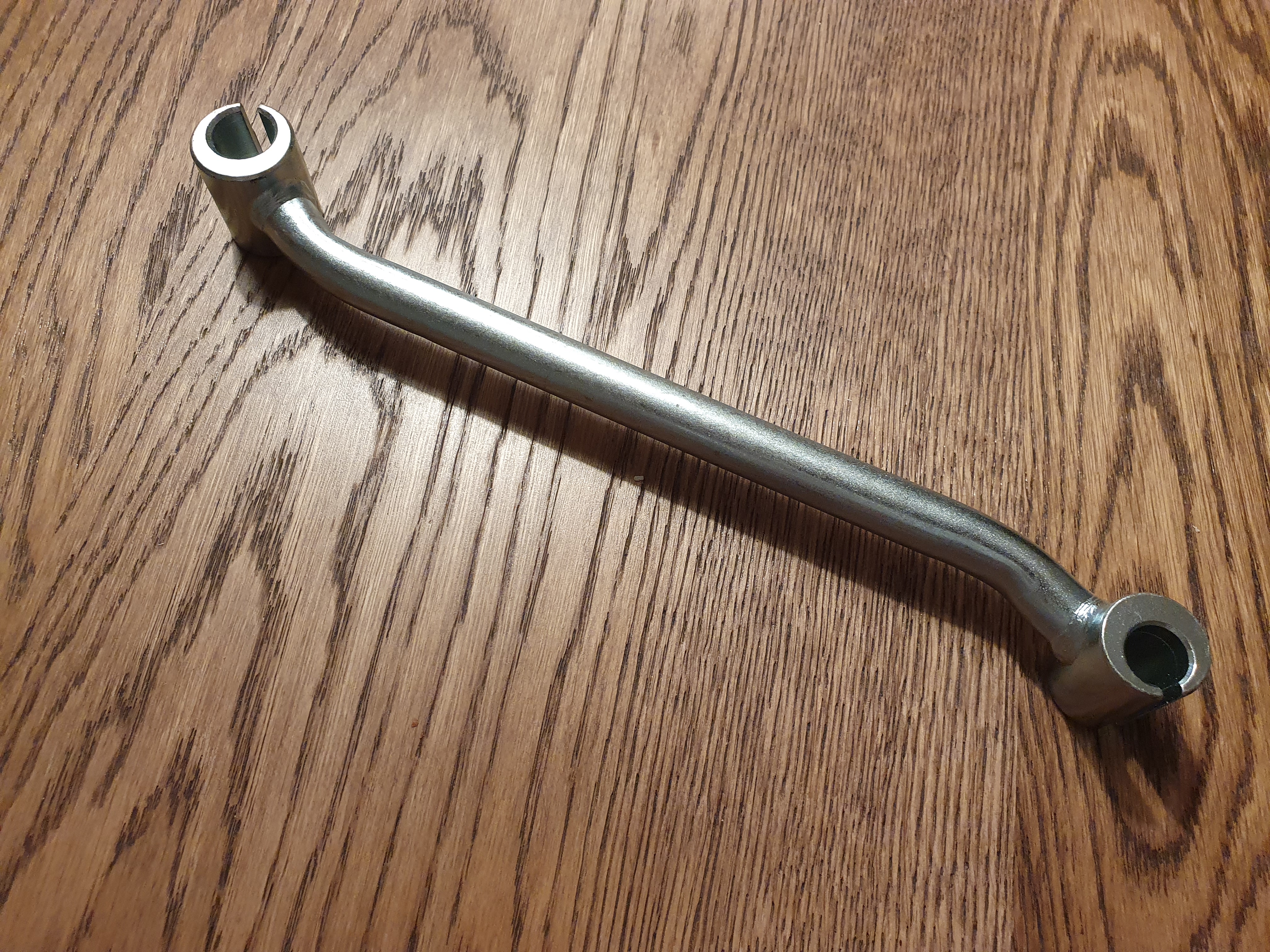
Of course, I had to bring out and test that key that I've tried so many times without fitting and that looks like this:
The small part actually fit this time if you pressed a little by hand. A few seconds later, the door now hangs straight and no longer hits. It did, of course, scratch the hinge a bit, but that's bearable, better than what someone else suggested—taking everything down and then putting it back up again.
So what do I do now with that screw that doesn't quite grip? It's in the middle, so it's probably not very critical. Moreover, Tec7 has proven to hold a solid grip on the frame, sturdier than the screw. But if you want to be sure, I guess you can stick in the gun and spray Tec7 into the hole and then drive the screw in as far as it goes; it's not completely loose.
The smaller director seems to be a bit large, it would have been better with the right size.
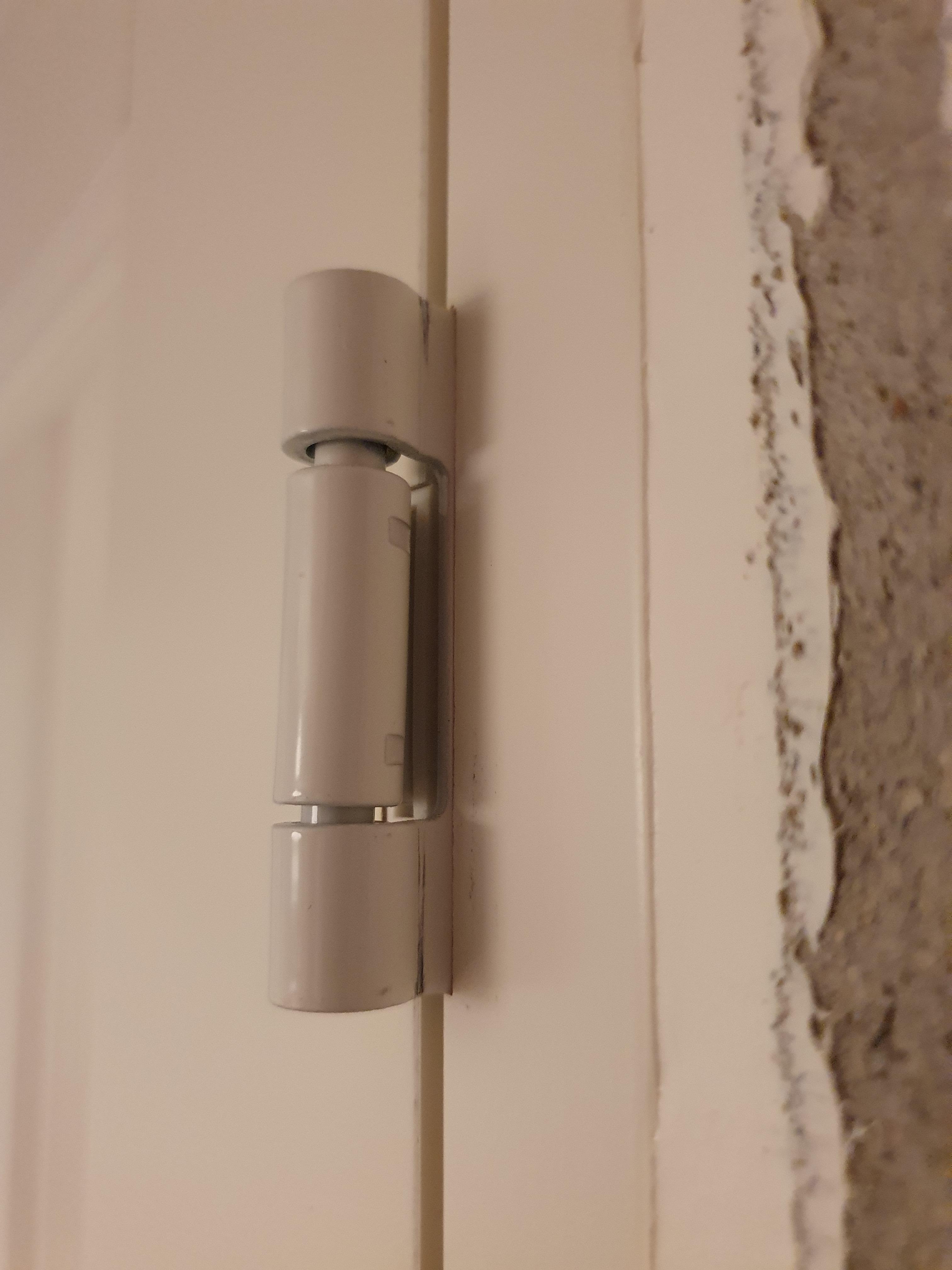
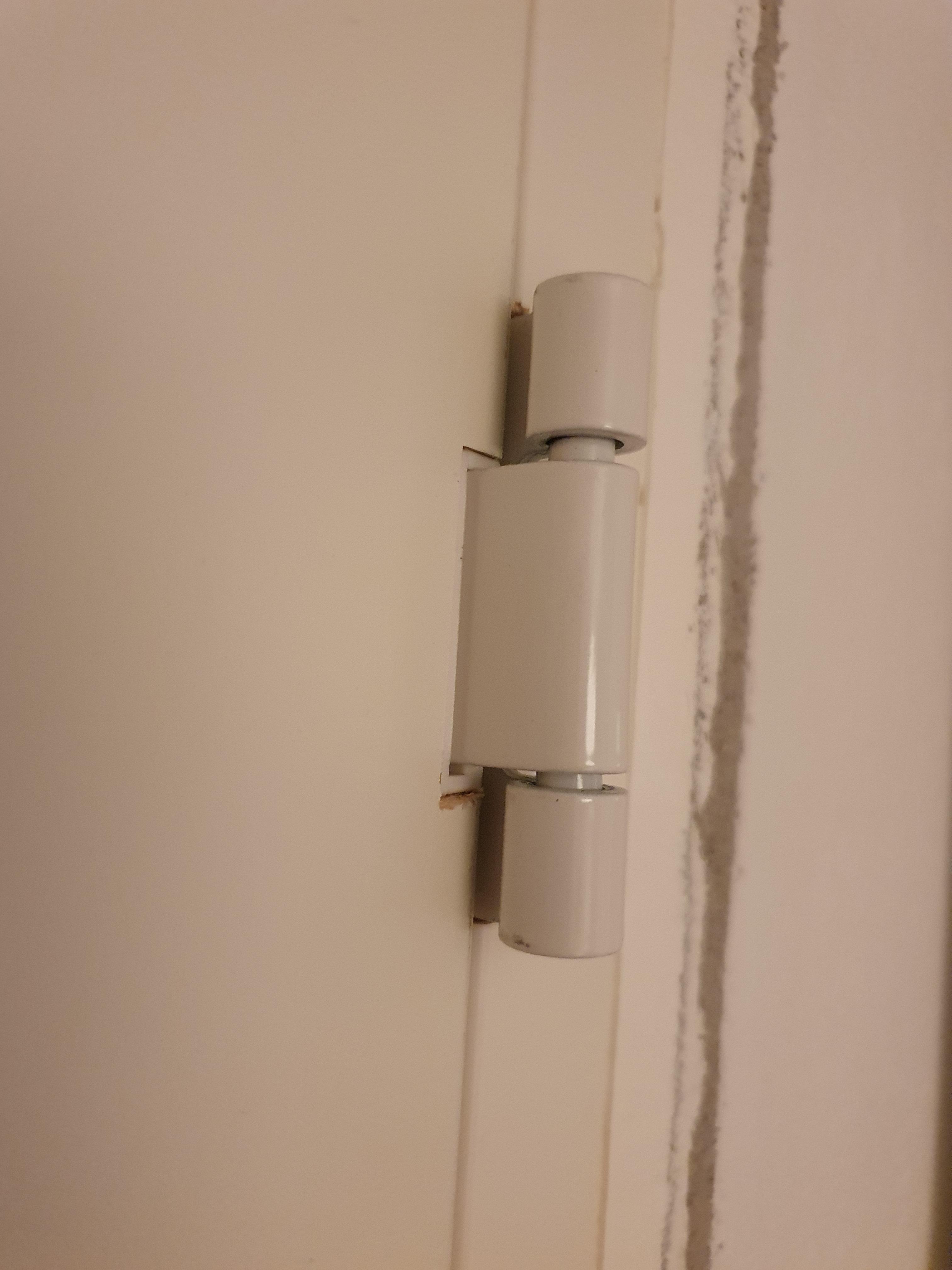
In the second picture, it looks like the lower part of the hinge is slightly more to the left than the upper part. This might be due to the angle of the photo.
Just be aware if it starts to squeak when the door is opened/closed, especially when it's done slowly. This indicates that the hinge is a bit crooked.
better that than as someone else suggested to disassemble and then reassemble everything anew.
It was me who suggested that, because I got the impression that several of the screws were no longer holding the frame properly. At the same time, I wrote that adjustment would have been the right way to go from the start.
IIronside said:
So what do I do now with the screw that doesn't quite grip? It's right in the middle so it's probably not very critical. Also, Tec7 has proven to hold the frame steady, steadier than the screw. But if you want to be sure, I guess you could stick in the gun and spray tec7 into the hole and then drive the screw in as far as it goes; it's not completely loose.
I would let it be when it's just one screw. If it turns out to loosen over time, I would address it then.
I suggested that because I got the impression that several of the screws weren't holding the frame properly anymore. At the same time, I wrote that adjusting would have been the right way to go from the start.
I would leave it as it is when it's just one screw. If it turns out it loosens over time, I would address it then.
Aha, missed that, apparently reading poorly or short memory
I will double-check to make sure the hinge is straight, and it seems reasonable to leave the screw alone; it seems to be holding tight anyway.
Once again, big thanks, I learned something new here. I previously haven't managed to adjust these hinges with the key, but apparently it should work just fine. And if the hinge becomes faulty, they aren't particularly expensive to buy new.
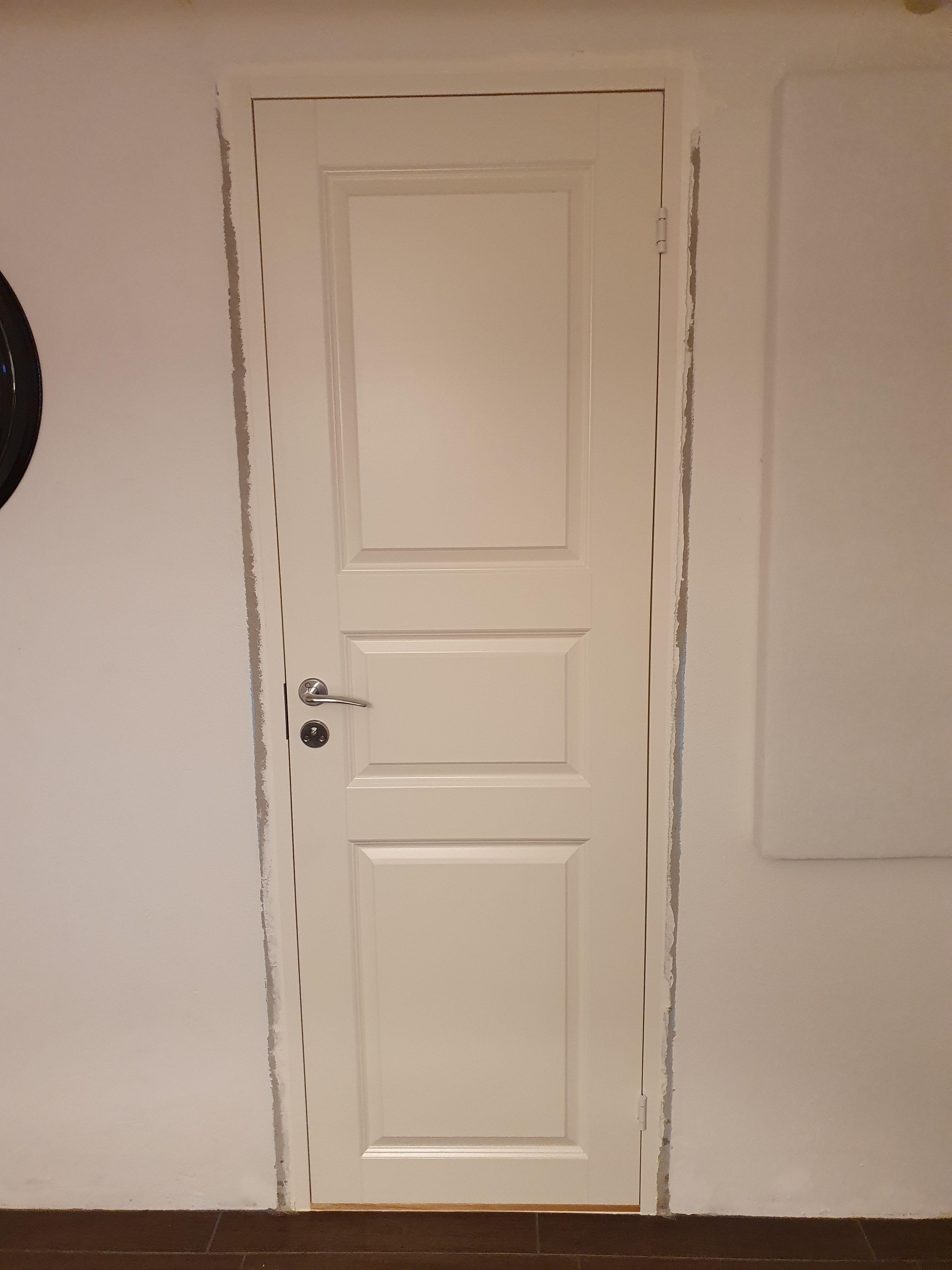
For a couple of days, it was really warm and humid in the basement, so the frame expanded again enough to hit again, but it only lasted a couple of days. Now that the weather has calmed down a bit, it's calm again. Ideally, one would want to pull the frame in a bit, but it's a lot of work; maybe one has to accept that the door might scrape a little when it's really extreme weather.
The part that sits in the door leaf, is it plastic? There are ones available in metal that might hold better under the weight of the leaf. If you want to fix the one that is loose, it might be tricky with adjufix. But if you find an expansion plug that works in hollow brick or buy anchor mass, you can drill a 14mm hole in the frame above or below the loose one, then drill a hole in the hollow brick in a suitable size for the plug, and then plug and/or inject for a regular frame screw. Then just drive in the frame screw.
The part that is in the door leaf, is it plastic? There are metal ones available to buy which might hold better for the weight of the leaf. If you want to fix the one that spins empty, it can become troublesome with adjufix. But if you find an expansion plug that works in hollow brick or buy anchor adhesive, you can drill a 14mm hole in the frame above or below the one that spins empty, then drill a hole in the hollow brick to a suitable size for the plug, then plug and/or inject for a regular frame screw. Then just drive in the frame screw.
It is metal and it looks like the door actually hangs straight.
Now it's failing again even though the weather isn't extreme, so a solution needs to be applied here. My current thought is to remove Tec7 with the multi-tool, unscrew the screw that has lost its grip, inject some type of glue, reinsert the screw, wait for the glue to dry, and then adjust the adjufix. This should work, right? The question is what to inject into the hole for glue? Another thought was to insert a longer plug; I know adjufix has long slim plugs, but there's a big risk that the screw will mess these up.
The advantage of adjufix is that they sit very well in the frame compared to regular frame screws.
My plan is to adjust the entire frame so there's plenty of room for it to expand.
Okay then, that's not the issue at least. But a frame screw sits just as well as an adjufix in the hole. Pushing glue into the hole and then screwing is probably pointless; the screw won't grip well enough, in my opinion. Possibly it could work with anchor compound, but it becomes rock hard so you'll have to drill and plug. Unless you screw in before the compound hardens, that is. But it will likely be difficult to fit an appropriate plug through the hole in the adjufix, given that it needs to be larger than the screw is thick, and the screw just fits through the hole in the adjufix. If you drill into the frame for a frame screw, you have at least a 14mm hole to fit a plug into.
Okay, then it's not that at fault, at least. But a frame screw holds just as well as an adjufix in the hole. Pushing glue into the hole and then driving in the screw is probably pointless; the screw won't grip well enough, in my opinion. Possibly it could work with anchor compound, but it becomes rock hard, so you'd need to drill and plug. Unless you drive in the screw before the compound hardens, that is. But it might be difficult to insert a suitable plug through the hole in the adjufix because it would need to be larger than the thickness of the screw, and the screw just fits through the adjufix hole. If you drill into the frame for a frame screw, you have a 14mm hole to fit a plug into, at least.
Yes, exactly, I've used frame screws from the outside before, which works surprisingly well.
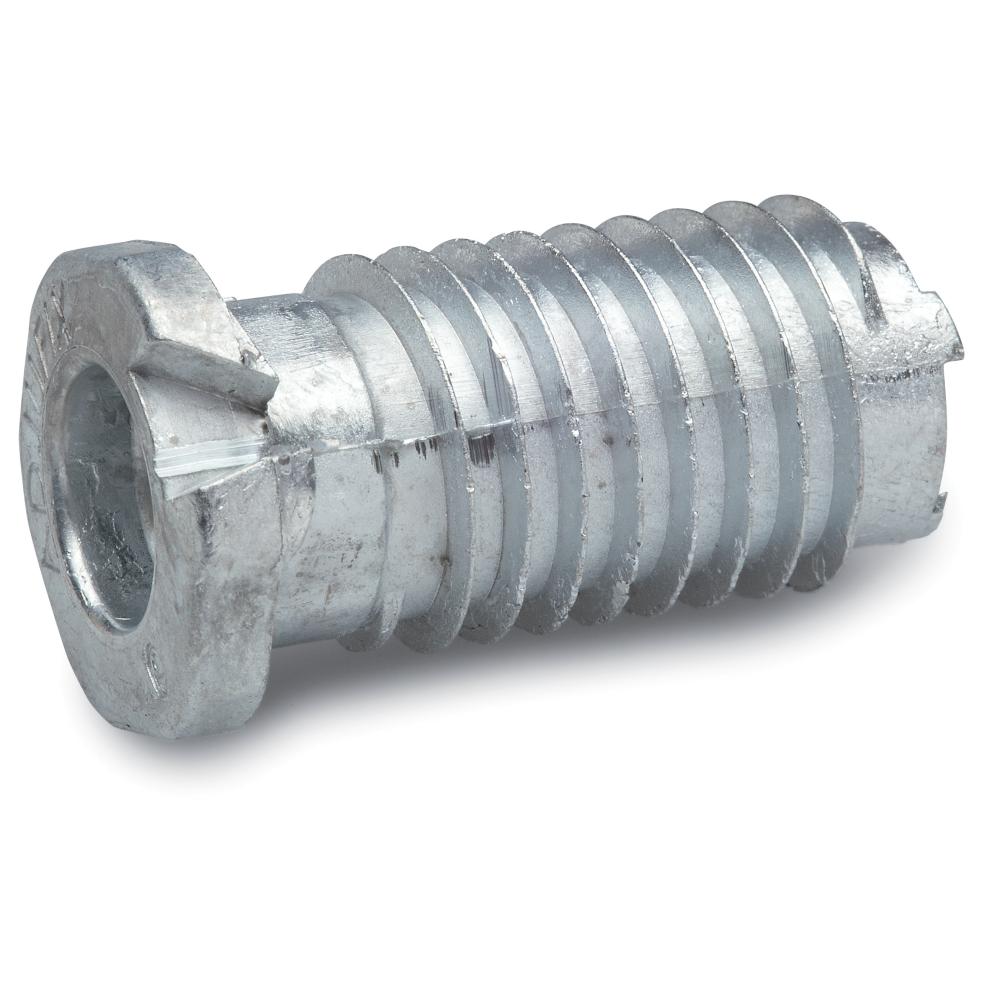
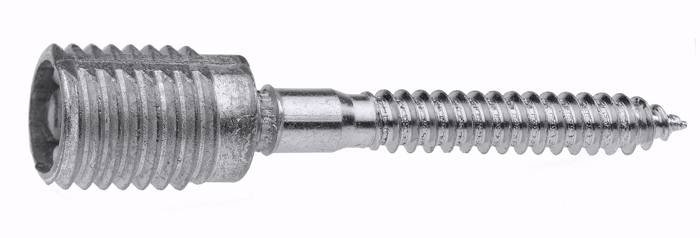
An adjufix sleeve looks like this:
A frame screw looks like this:
The adjufix can drill into the frame so nothing sticks out; it has an incredible grip, and so far I haven't had anything come loose from the frame piece. However, I've had some frame screws come loose from the frame even though they should generally hold the grip.
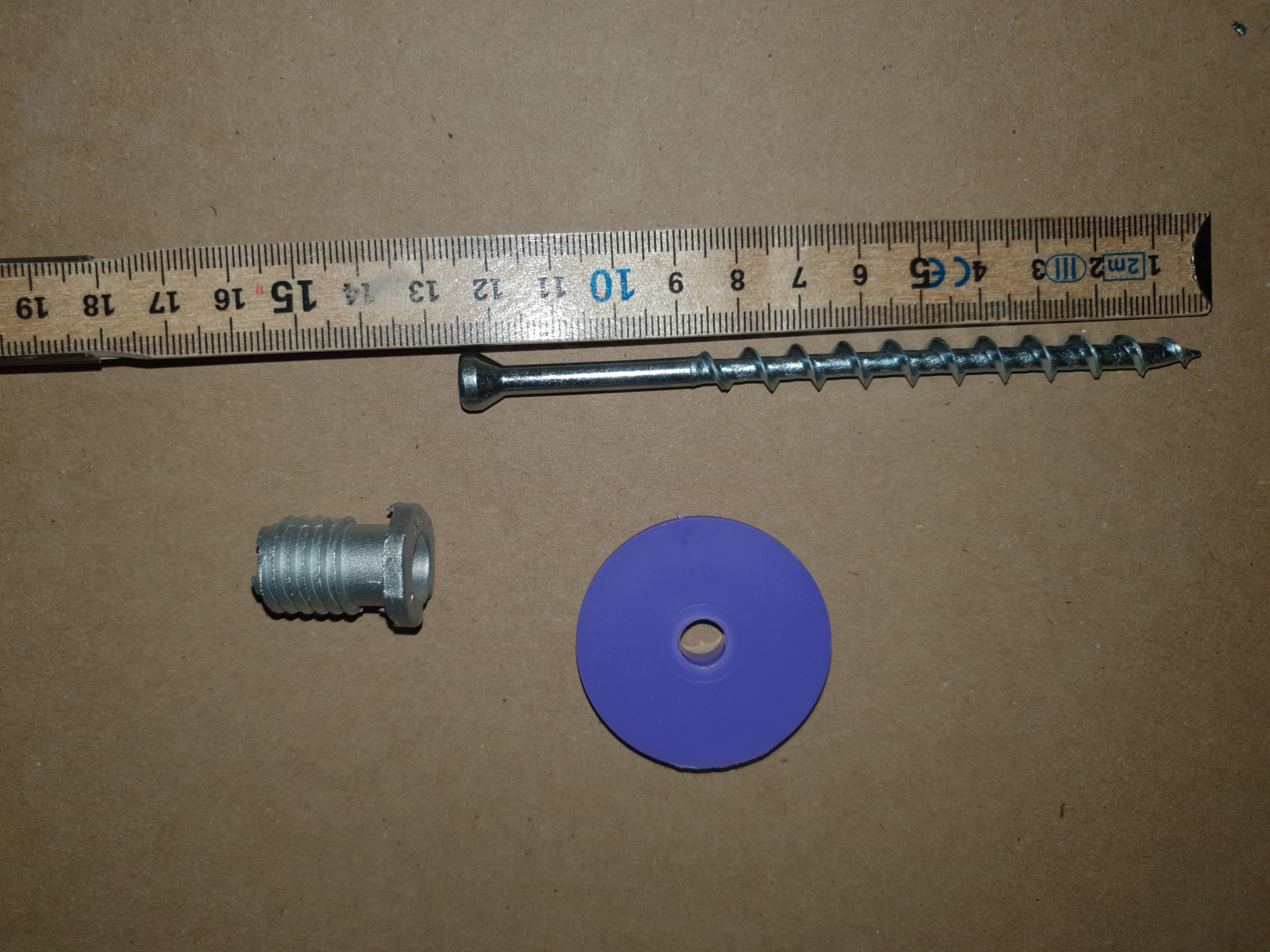
The screws I use look like this:
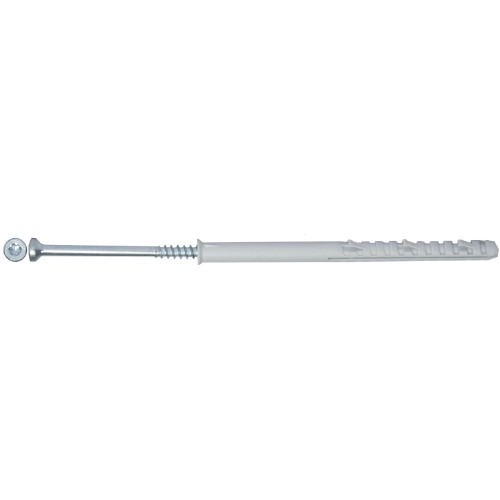
In other words, they are very sturdy screws. There is a version with a plug, but the screw isn't quite as thick:
Otherwise, my thought was to use these plugs, but the screw will probably eat up that plug.
Maybe I should still use a regular frame screw here? It would be nice to use the same hole, but then you'd need to inject some kind of anchor compound, as you said, so you can drill a new hole.
Do you think it might be enough to poke a piece of wood in the hole? That's what they did before so that screws and nails would hold well in concrete. I'm thinking of screwing in the adjufix screw.
Yes, exactly, but for example, if you have a rebate depth of 15mm and the length of the adjufix is 25mm, then there's only 10mm left in the frame, but with a frame screw, you can adjust it so that the entire "sleeve" sits in the frame. However, I actually prefer adjufix over frame screws. Nevertheless, I've never experienced a frame screw coming loose from the frame.
You could try pressing anchor mass into the hole and then insert the screw and let it cure, but I can't say for sure if it will work or not.
It probably works to plug them; the problem is just getting the plug through the hole on the adjufix.
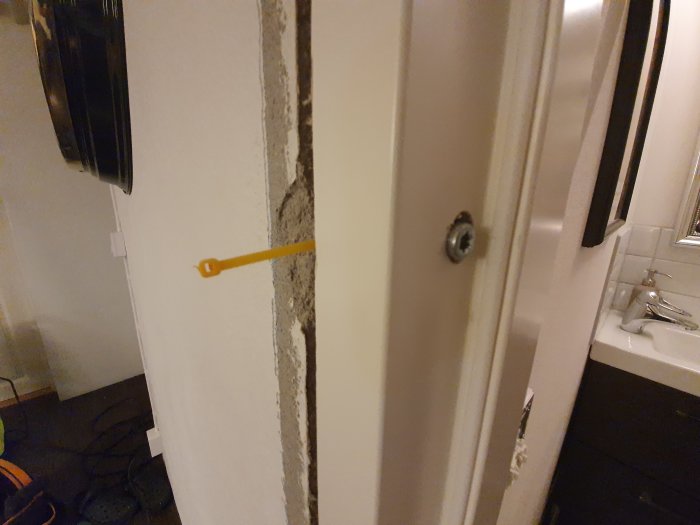
Yes, you can try, if you're lucky, it might just work. I once fiddled a cable tie through the hole on an adjufix and into the hole in a lightweight concrete wall and then inserted the screw, and it held well. It's worth a try.
If none of the above works, you just have to remove the frame and plug the hole or drill a new hole in the frame and plug it, then use a frame screw.
Removed Tec7 with a multi-tool on both sides, removed the insulation, and started adjusting. Quickly noticed that the problematic screw could no longer be unscrewed. Tried several possible solutions to get it out before I thought of the zip ties you mentioned earlier. Took a smaller variant and inserted it into the hole as far as possible, which actually made the screw grip and could be unscrewed:
To get the screw to hold after this, I inserted 2 cut zip ties of a slightly larger model, which made the screw grip well.
Adjusted all screws on the left side to get more space. However, I'm not sure how much is needed here. When I started the job, it was hitting a bit, now there is about 3 mm from the edge of the door to the frame, i.e., in the most critical position. Surely that should be enough?
Vi vill skicka notiser för ämnen du bevakar och händelser som berör dig.

Demmpa said:
The only thing you can adjust on regular interior door hinges is the “tongue” that is “pressed into the door leaf” up/down by screwing two screws up/down on each hinge, meaning if the door leaf should come closer to/farther from the threshold/header.