
3,219 views ·
19 replies
3k views
19 replies
Does this need support?
Renovating the basement and have created an opening in a load-bearing wall that runs through the middle of the house, along the entire house.
The wall is 11 meters long and 22 cm wide. The opening I made is 1 meter in width and is almost in the middle of the wall, i.e., about 5 meters from the opening to each side of the wall.
I haven't supported it with anything, but I'm wondering if it's best to do so, what do you think?
I would prefer not to, but I'm worried it might cause problems over time (snow, etc.)?
If support is needed, is it smartest to have a vertical beam on each side of the opening and a horizontal beam that goes between them?
Or skip the beams on the sides and instead use a horizontal beam resting on the existing wall (would need to make openings for the beam, which is not very easy).
I would gratefully accept your thoughts!
The wall is 11 meters long and 22 cm wide. The opening I made is 1 meter in width and is almost in the middle of the wall, i.e., about 5 meters from the opening to each side of the wall.
I haven't supported it with anything, but I'm wondering if it's best to do so, what do you think?
I would prefer not to, but I'm worried it might cause problems over time (snow, etc.)?
If support is needed, is it smartest to have a vertical beam on each side of the opening and a horizontal beam that goes between them?
Or skip the beams on the sides and instead use a horizontal beam resting on the existing wall (would need to make openings for the beam, which is not very easy).
I would gratefully accept your thoughts!
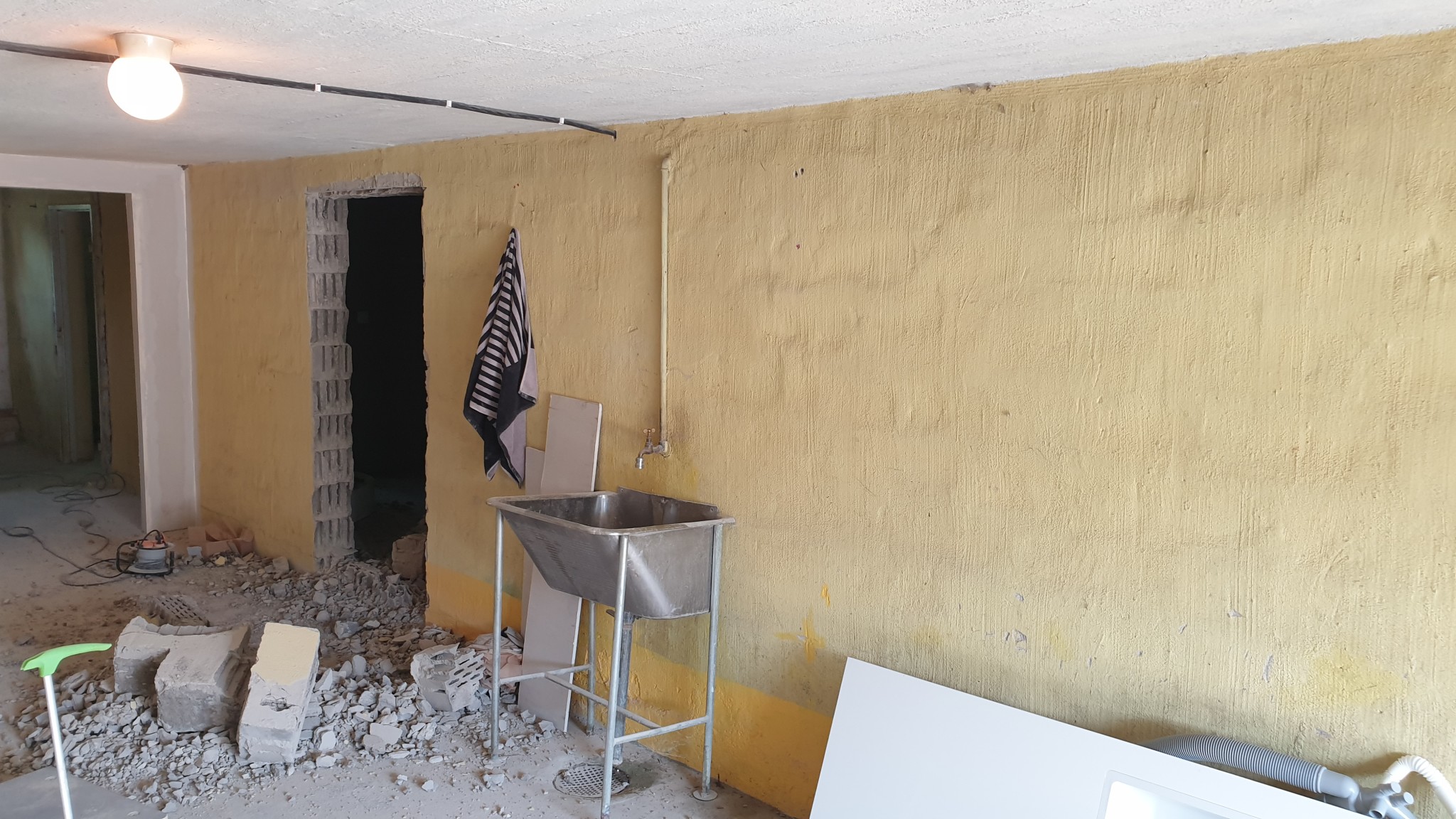
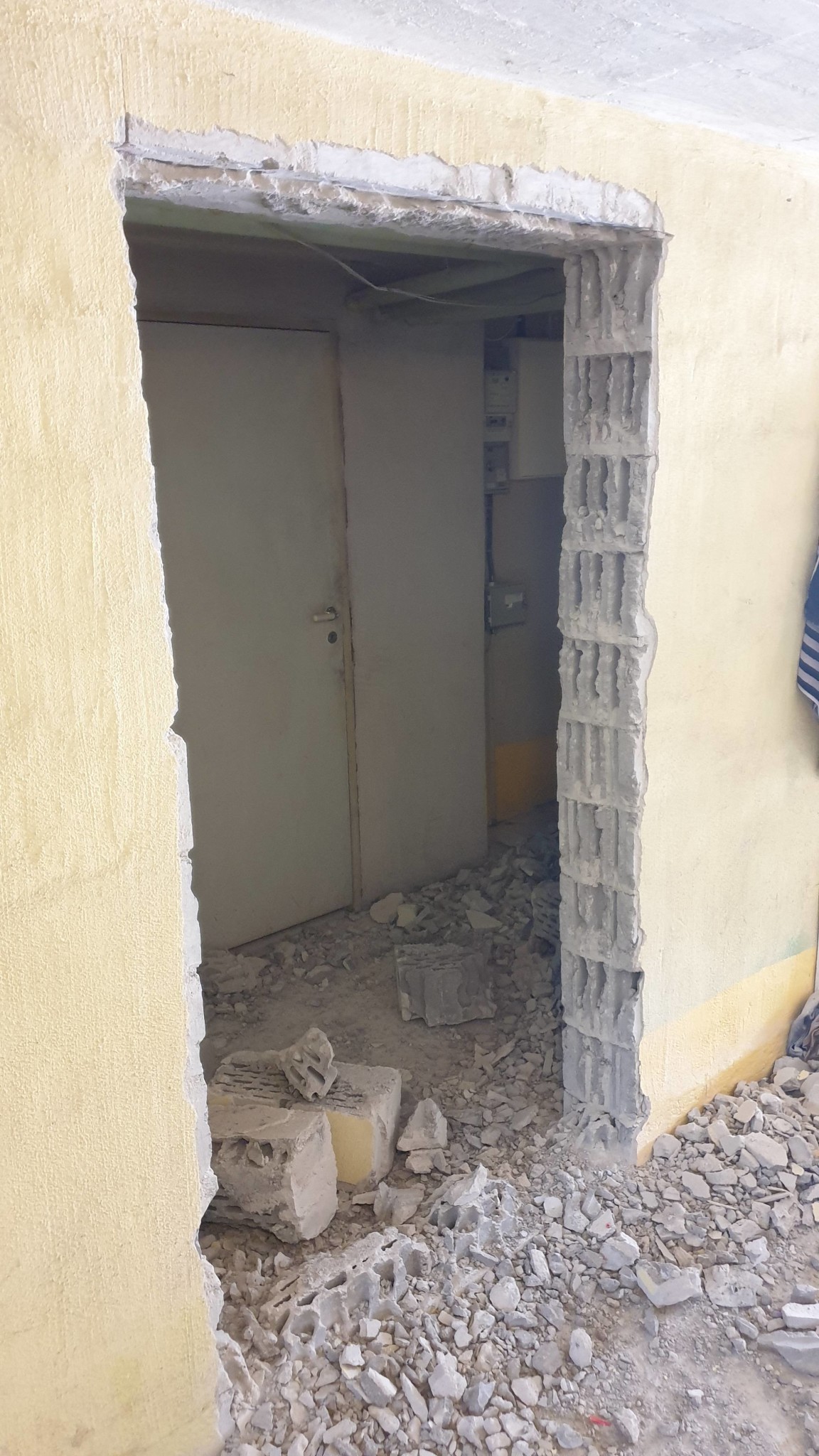
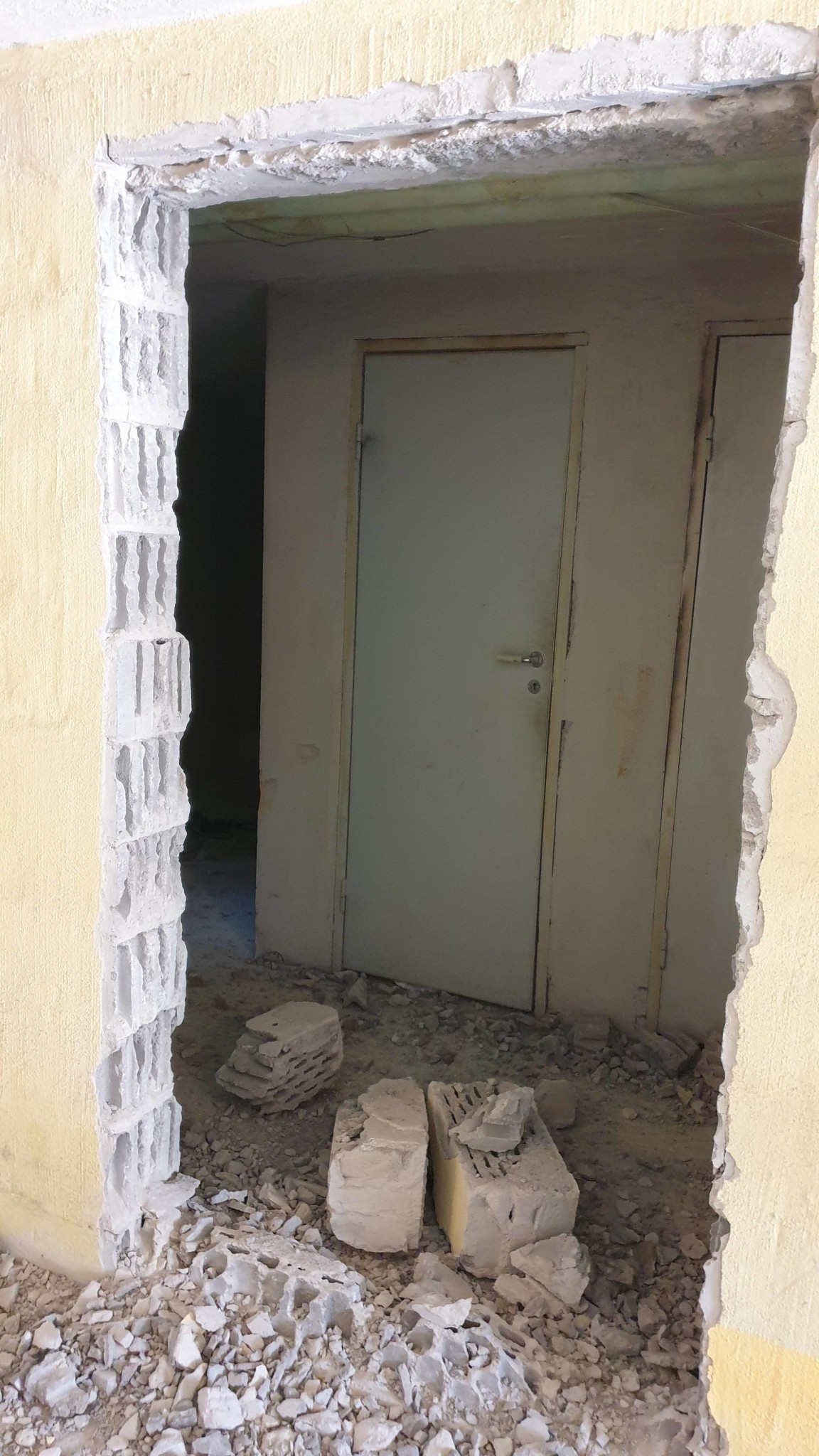

Is it a cast floor slab on top?
If so, it probably won't be needed with such a small hole.
What's on top? Villa?
A common method is to use angle iron and place it in the cut-out, around the corner on both sides.
The irons should be about 20 cm longer than the hole and it's common to chip out the joint a bit so that it creates a support there.
If so, it probably won't be needed with such a small hole.
What's on top? Villa?
A common method is to use angle iron and place it in the cut-out, around the corner on both sides.
The irons should be about 20 cm longer than the hole and it's common to chip out the joint a bit so that it creates a support there.
@larsbj thanks for the response!
Yes, it is a cast joist, not entirely sure but it does look cast though
I prefer to be safe rather than sorry, but I didn't quite understand your description with the angle iron. Feel free to explain more
Do you mean that you skip the vertical beams and only have a horizontal one, which is somehow supported by angle iron?
Yes, it is a cast joist, not entirely sure but it does look cast though
I prefer to be safe rather than sorry, but I didn't quite understand your description with the angle iron. Feel free to explain more
Do you mean that you skip the vertical beams and only have a horizontal one, which is somehow supported by angle iron?

Such things should ideally be considered before taking out the angle grinder... It can be seen in the first image that it's a cast arch. Judging by the details, I guess the house was built in the 50s. It's probably mostly about securing the remainder of the masonry wall. You can reinforce the opening with angle steel, for example. If the opening had been there from the beginning, there would have been rebar between the top courses of the concrete block.
Place angle iron so that the stones stand on one part and the other part goes up on the side/wall. So it goes around the corner of the stones that remain.R ravve007 said:@larsbj thanks for the answer!
Yes, it is a cast floor, not completely sure but it looks cast at least
I'd rather be safe than sorry, but I didn't quite understand your description with the angle iron. Please explain more
Do you mean skipping the vertical beams and only having a horizontal one, which is somehow held up by angle iron?
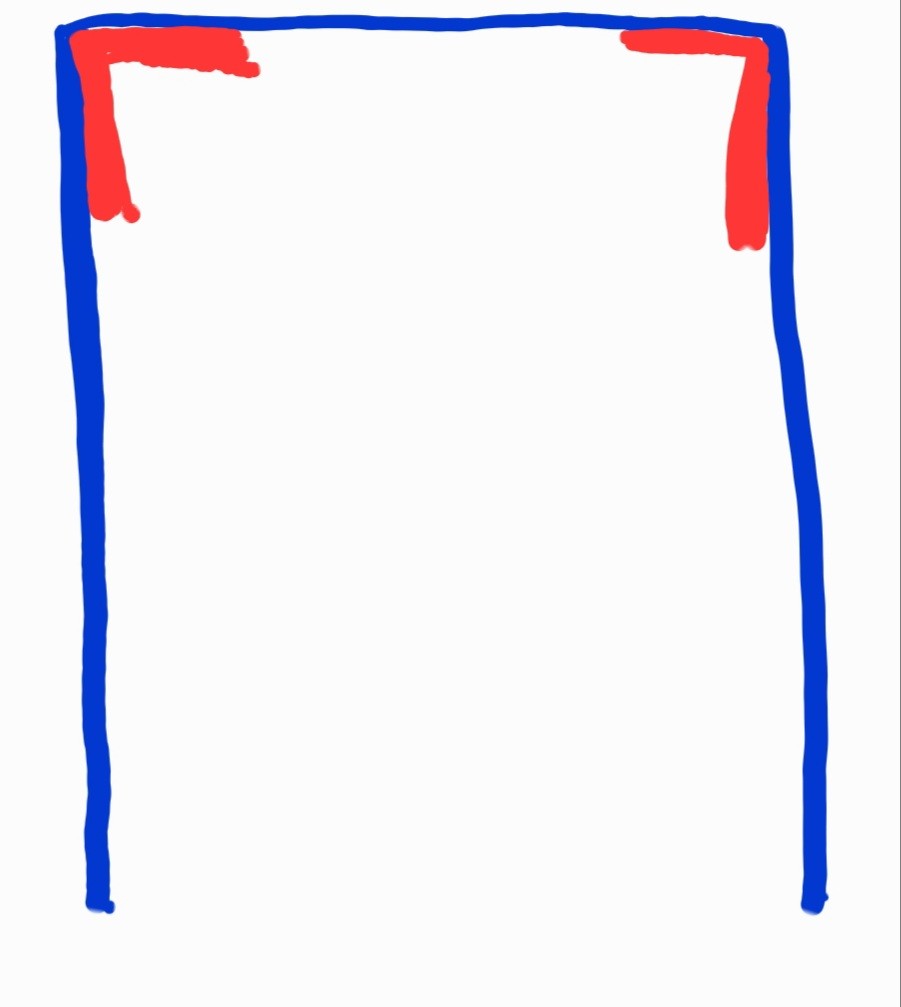
Or poorly described....R ravve007 said:
Got some help from Revit.
The ends of the angle iron are therefore notched into the joint so that it bears on that surface. Doesn't need to be much, about 70 mm.
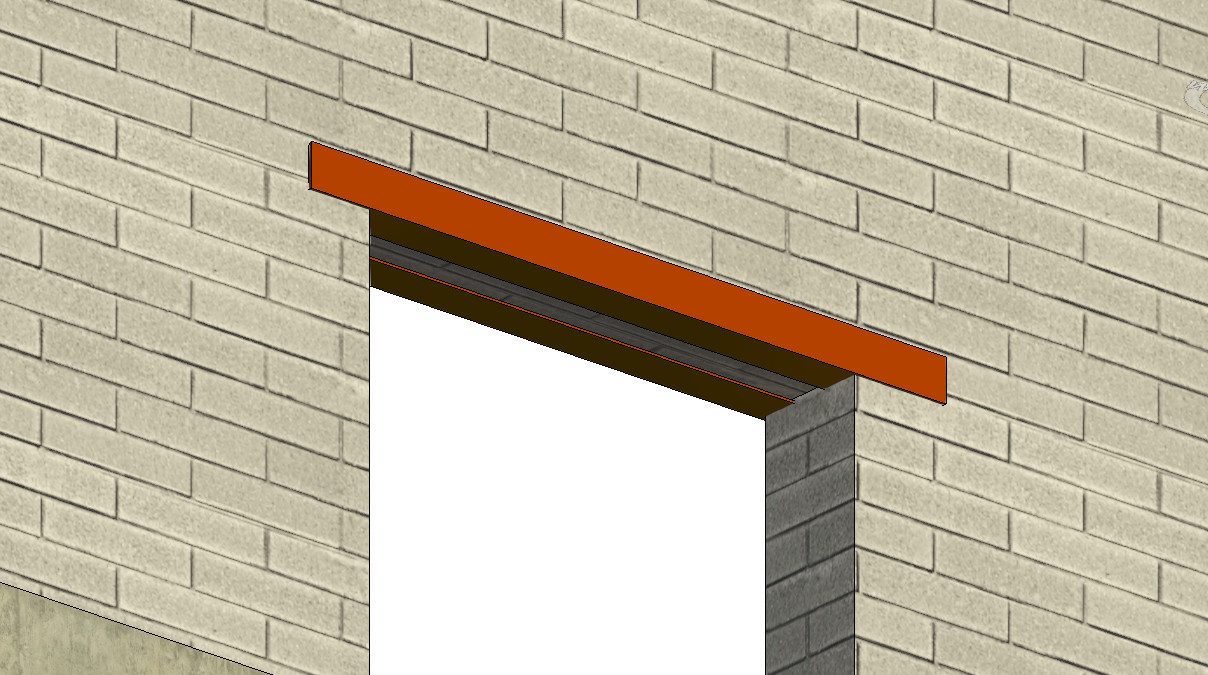
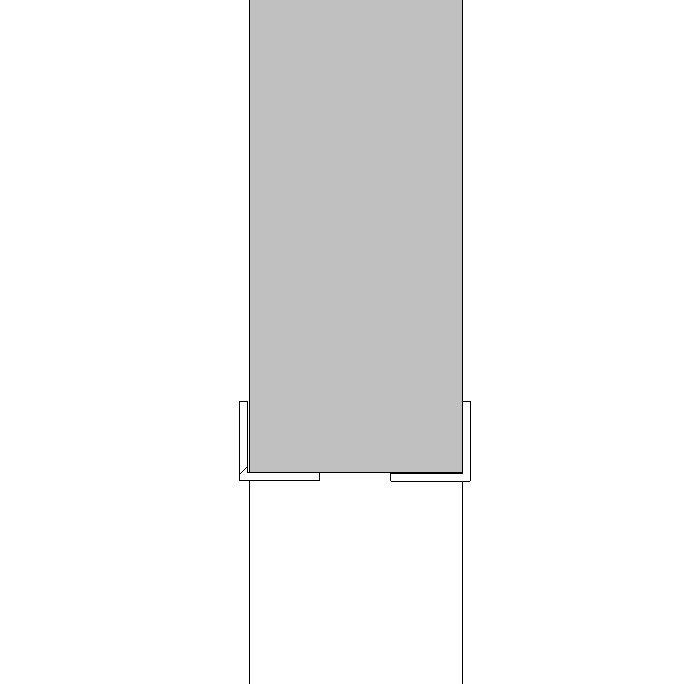
Above is a section through the hole.
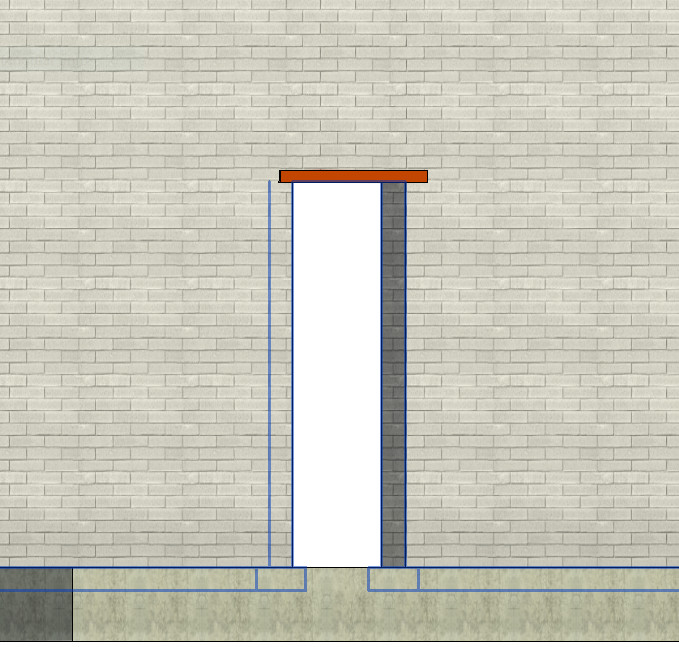
Last edited:
Hi, thanks for the masterful description, and all the other answers of course
I had to pause but will tackle this tomorrow
So it will be a hunt for an angle iron, thickness around 10mm if it's going to fit into the joint, right?
Thanks once again!
I had to pause but will tackle this tomorrow
So it will be a hunt for an angle iron, thickness around 10mm if it's going to fit into the joint, right?
Thanks once again!
Angle iron 70x70 seems hard to find in the major local chains. Is it a hardware store you need to visit?
Biltema had 40x40 if I remember correctly, probably too weak.
Is it otherwise an option to use flat bar, i.e., not angled, maybe it will do anyway?
Biltema had 40x40 if I remember correctly, probably too weak.
Is it otherwise an option to use flat bar, i.e., not angled, maybe it will do anyway?

Ok thanks, then I will continue my search!
Despite being an engineer, I find it hard to understand how the height can play any role. I thought that the height (= the part that goes vertically) ensures that it doesn't collapse "forward" or "backward", and the flat part (= the part that goes horizontally) is the one that bears the weight "downwards".
But is that not the case?
Hope you understand what I mean?
Despite being an engineer, I find it hard to understand how the height can play any role. I thought that the height (= the part that goes vertically) ensures that it doesn't collapse "forward" or "backward", and the flat part (= the part that goes horizontally) is the one that bears the weight "downwards".
But is that not the case?
Hope you understand what I mean?
It's not easy to remember everything. Maybe you missed the course on structural mechanics? Here’s something to refresh your knowledge with: https://abrahamssonsjarn.se/app/uploads/2019/09/Tibnor_Konstruktionstabeller-2018.pdfR ravve007 said:Ok thank you, I will continue my search!
Even though I am an engineer, I find it difficult to understand how height can play a role. I thought the height (= the vertical part) ensures it doesn't collapse "forward" or "backward," and the flat part (= the horizontal part) is the one that bears the weight "downward."
But that's not the case?
I hope you understand what I mean?