
Hello!!
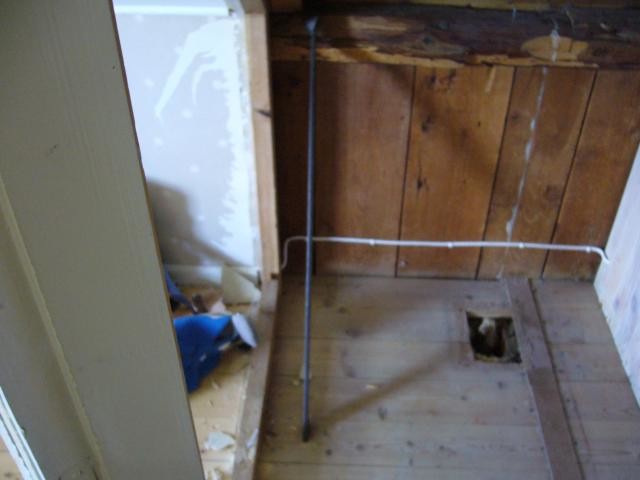
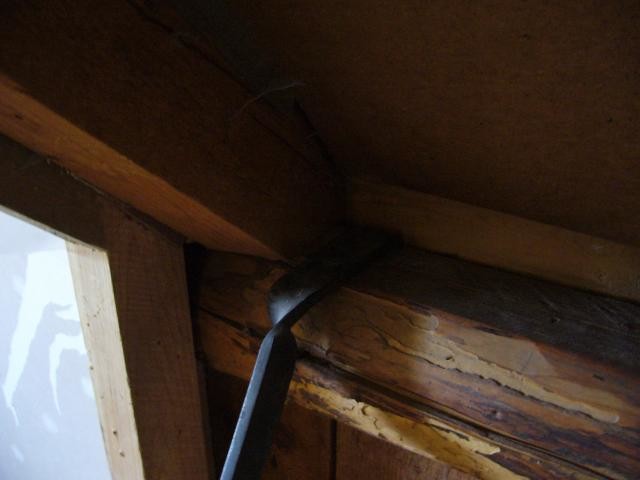
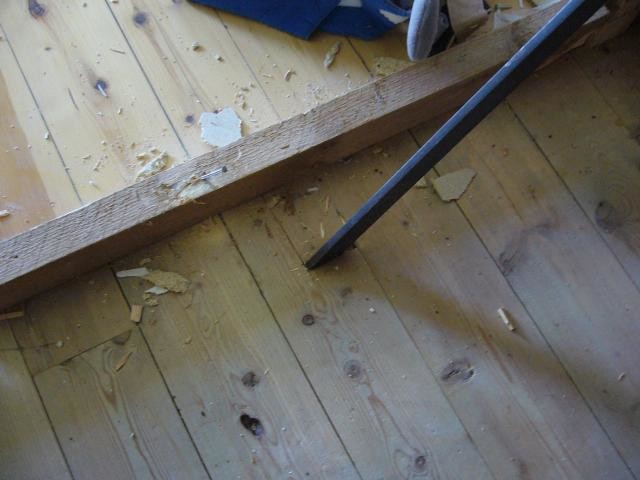
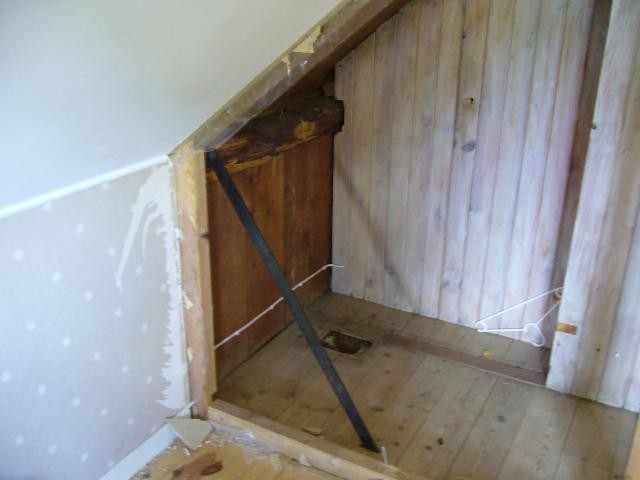
I am tearing down a closet on the upper floor of my house, which was built around 1910. Inside the closet, there is a flat bar attached to the floor and the wall. (approximately 45-degree inclination.) In the wall, it is fastened to the beam on which the rafters rest. There was a similar flat bar on the opposite side of the house, but it was sawed off at the floor and removed from the wall before I bought the house. The question now is whether I dare to remove the other one as well to create more space in the room.
What might happen if I remove it?? Are there any alternatives to the flat bar? Can it be moved about 50 centimeters??
I am tearing down a closet on the upper floor of my house, which was built around 1910. Inside the closet, there is a flat bar attached to the floor and the wall. (approximately 45-degree inclination.) In the wall, it is fastened to the beam on which the rafters rest. There was a similar flat bar on the opposite side of the house, but it was sawed off at the floor and removed from the wall before I bought the house. The question now is whether I dare to remove the other one as well to create more space in the room.
What might happen if I remove it?? Are there any alternatives to the flat bar? Can it be moved about 50 centimeters??

Will try to fix a picture. Had a carpenter (foreman actually) who looked at it and he thought it would be enough to put a new flat bar with coach screws a bit further away. He said it was there mostly so that if there is pressure from above, the wall won't move outward. Could that be true?? Anyway, will fix a picture anyhow.
Sounds like a logical explanation. The pressure from the roof, especially if there's snow, can be enormous. The result is that the walls get pushed outward if nothing holds them in place. A picture is probably still needed.Riccie said:I'll try to fix a picture. I had a carpenter (foreman actually) who looked at it, and he thought it would be sufficient to place a new flat bar with lag bolts a bit further away. He said it was mainly there so that if there is pressure from above, the wall won't move outward. Could that be true?? Anyway, I'll fix a picture.

Common from 1850 to 1910 approximately.
Some dare to remove them, others do not, wonder what the insurance company would say if something happened...
Maybe one could saw it off and weld on a more favorable angle since it's the attachment that is the most critical part.
Some dare to remove them, others do not, wonder what the insurance company would say if something happened...
Maybe one could saw it off and weld on a more favorable angle since it's the attachment that is the most critical part.
What I would like to do is move the iron closer to the wall that is behind it in picture 4. In my imagination, it should be possible to take an oversized flat iron, bend it so that it has the same inclination as the existing iron. Then mount it with a couple of sturdy lag screws in the floor and in the wall stud. Then cut off the existing iron. I'm probably not daring enough to remove it without compensating for it in some way.
Is there anyone who has another solution or is it simply stupid to attempt this at all??
Is there anyone who has another solution or is it simply stupid to attempt this at all??

Quite frankly, I think they look like they're keeping the truss from "slipping out" under heavy load. Personally, I wouldn't hesitate to remove it now during the summer but finding another solution to prevent them from slipping when it’s windy or snowing is something I would do.
There are millions of ways to keep things in place, but the simplest is to move the iron closer to the wall. However, I definitely wouldn't remove it completely and would probably check over the other side as well...
Nothing else really holds the truss "outward" otherwise...
There are millions of ways to keep things in place, but the simplest is to move the iron closer to the wall. However, I definitely wouldn't remove it completely and would probably check over the other side as well...
Nothing else really holds the truss "outward" otherwise...
Well, the iron is not in the actual roof truss but in the batten/log under the roof truss. Regarding the other side, we have made an extension there now, so it is solved in a different way there. The iron was cut off when we moved in and the extension did not exist then.

I think the iron seems to be absolutely necessary for the truss together with the raised wall to function. It seems to be the iron's task to prevent the beam under the truss from bulging out when the roof load increases (from snow and wind).
I would really not dare to remove the iron before someone I knew has 100% understanding of this construction promises that it works.
I would really not dare to remove the iron before someone I knew has 100% understanding of this construction promises that it works.
exactly what I meant.
the upper part of the road becomes part of the truss as it is attached to the chair itself and the floor joists are lower than the truss itself, making it so that there is nothing to resist from the roof if there are large loads.
you can remove it, but you must reinforce it in another way
for it to really work as intended...
sure, it might work out but just as easily not...
the upper part of the road becomes part of the truss as it is attached to the chair itself and the floor joists are lower than the truss itself, making it so that there is nothing to resist from the roof if there are large loads.
you can remove it, but you must reinforce it in another way
for it to really work as intended...
sure, it might work out but just as easily not...
Click here to reply