Hi, now I'm going to ask the same question that has probably been asked 100 times before.
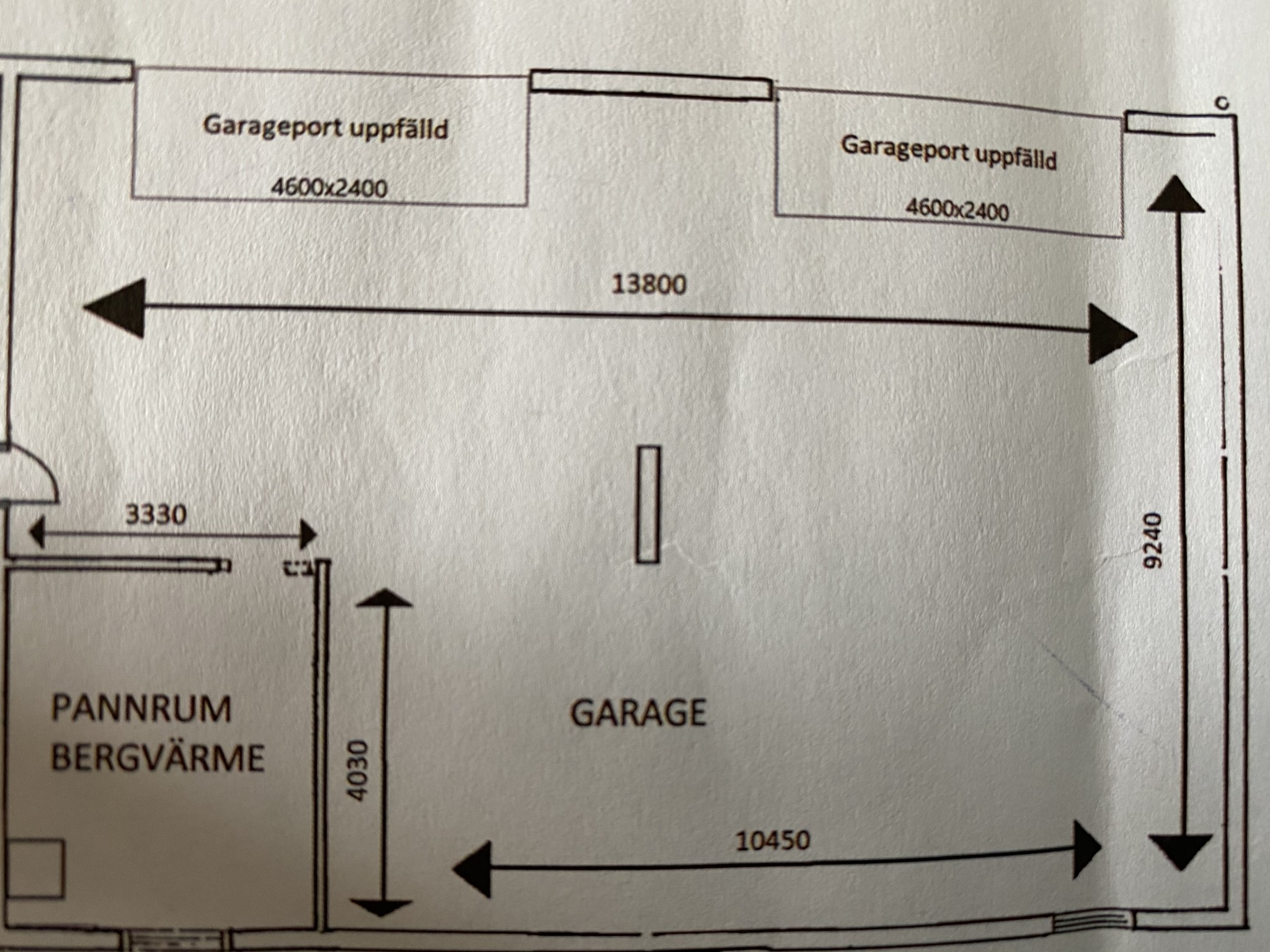
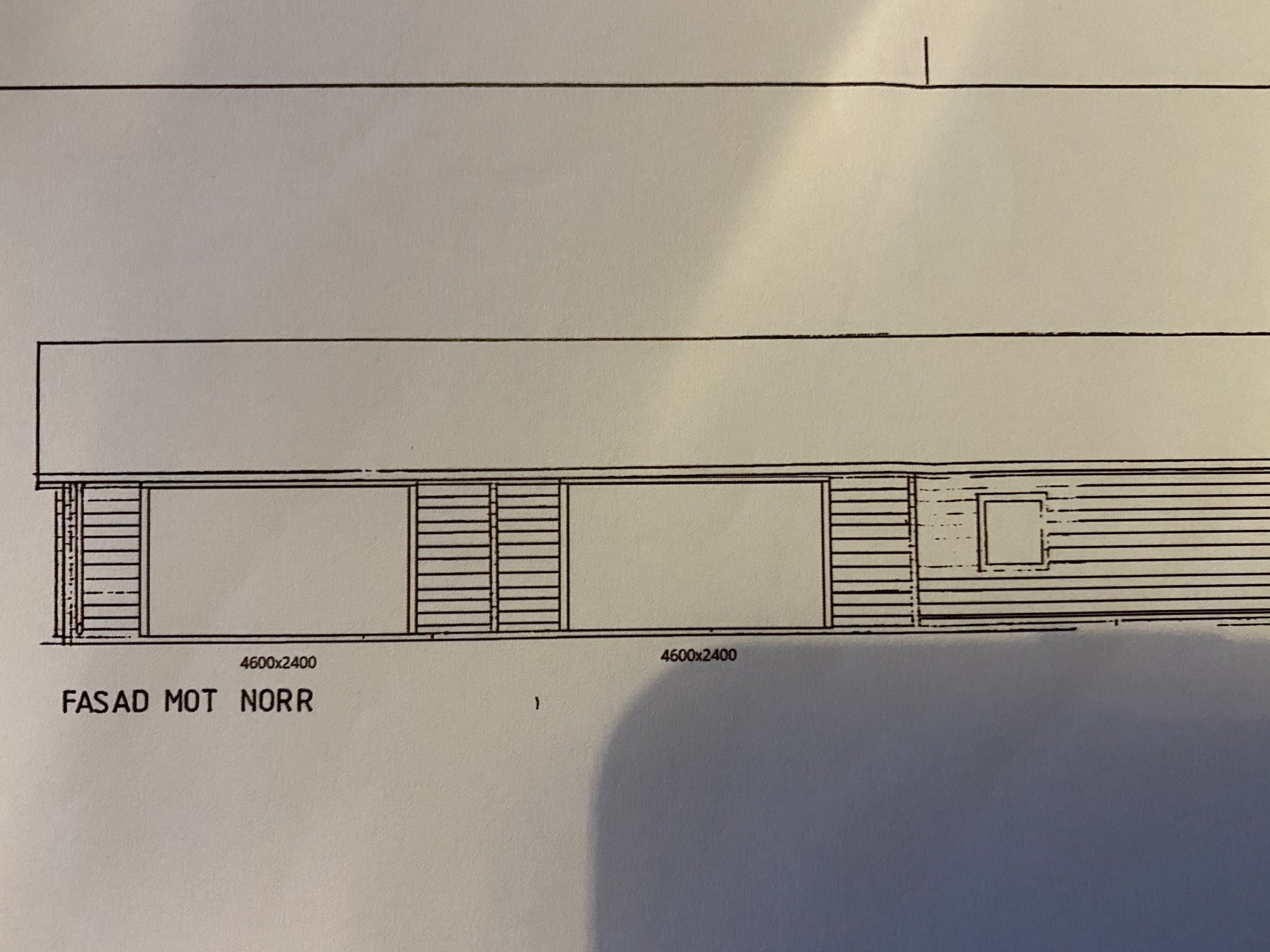
I'm going to build a garage in an existing house and open up for 2 garage doors in the exterior wall and need to unload, now to the question, what dimension do I need for the beam?
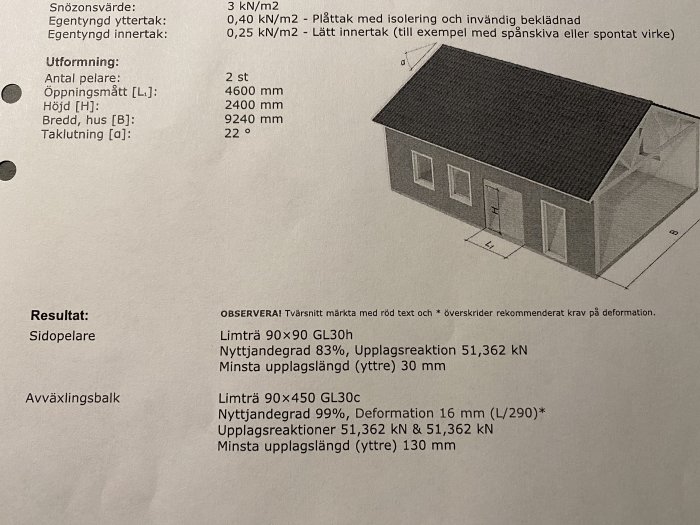
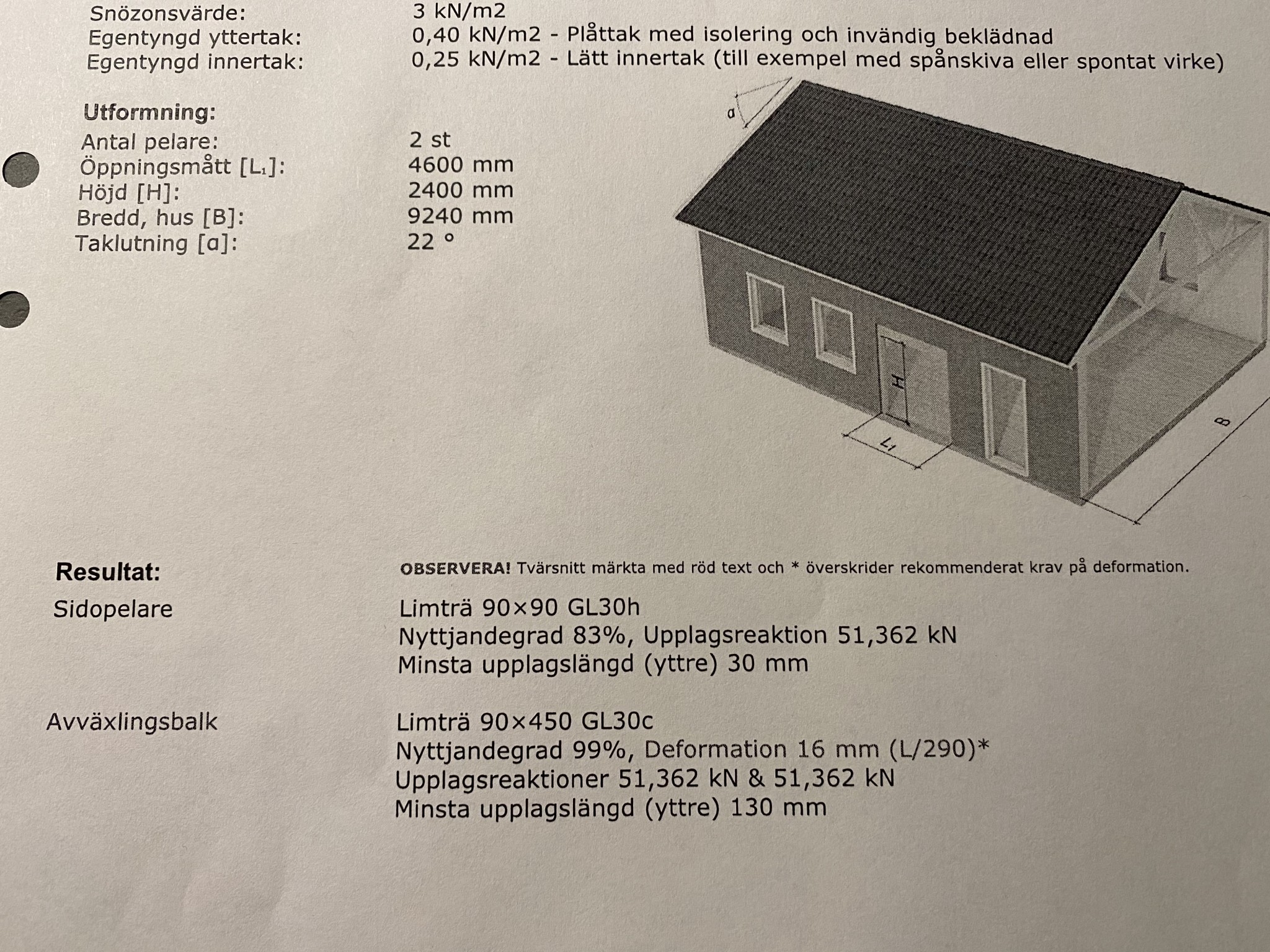
I talked to k-bygg and they calculated that I would need a 405x90 for each door which of course doesn't work as it builds too much.
In the middle of the drawing, there's a small wall where laminated beams 6 rep 7 meters will lie for unloading.
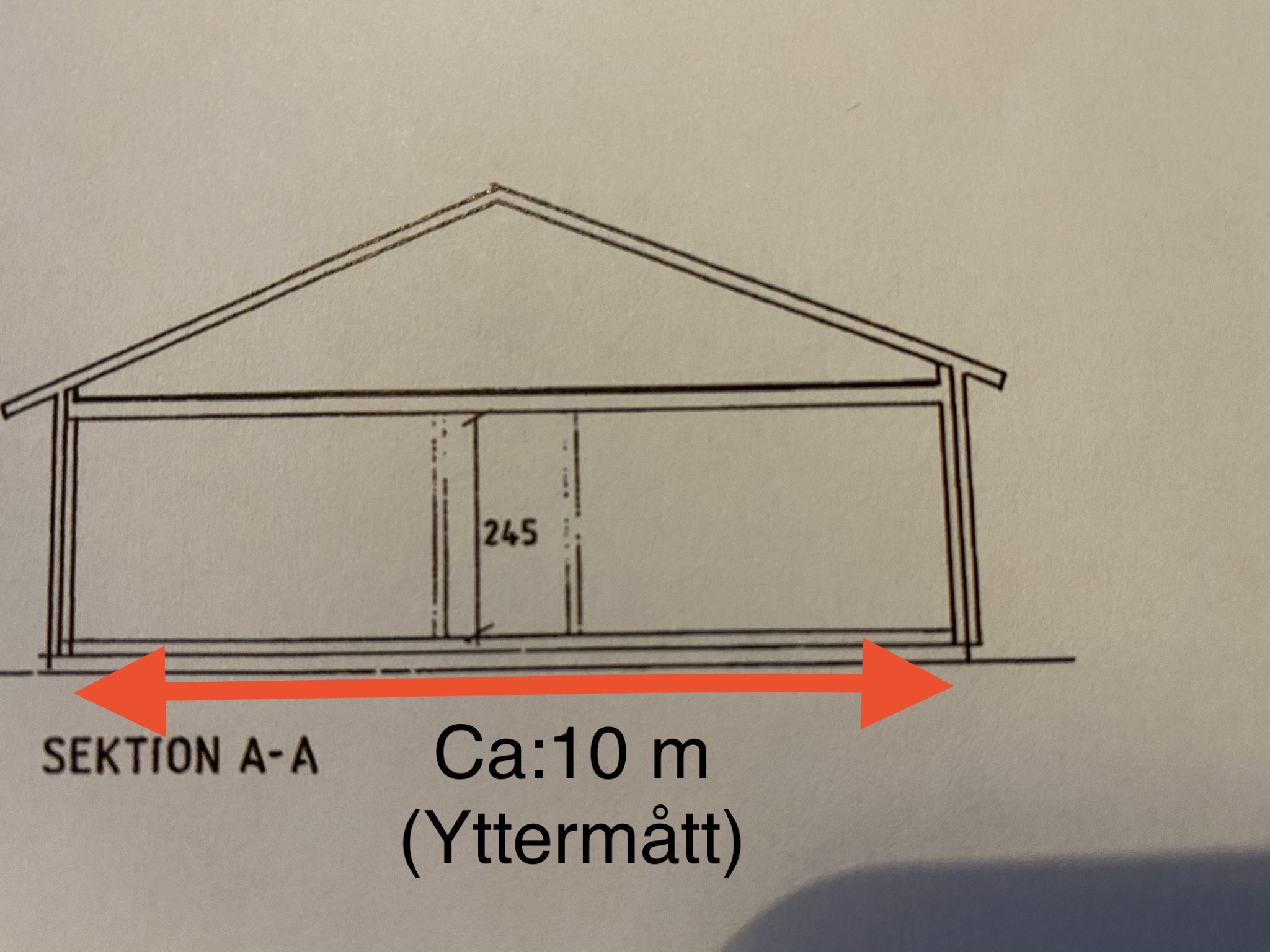
The roof slope is 22 degrees, insulated metal roof with tongue and groove boards on the inside, tongue and groove ceiling with plasterboard. Snow zone 3.
Is there anyone who can help me and is good at these kinds of calculations?
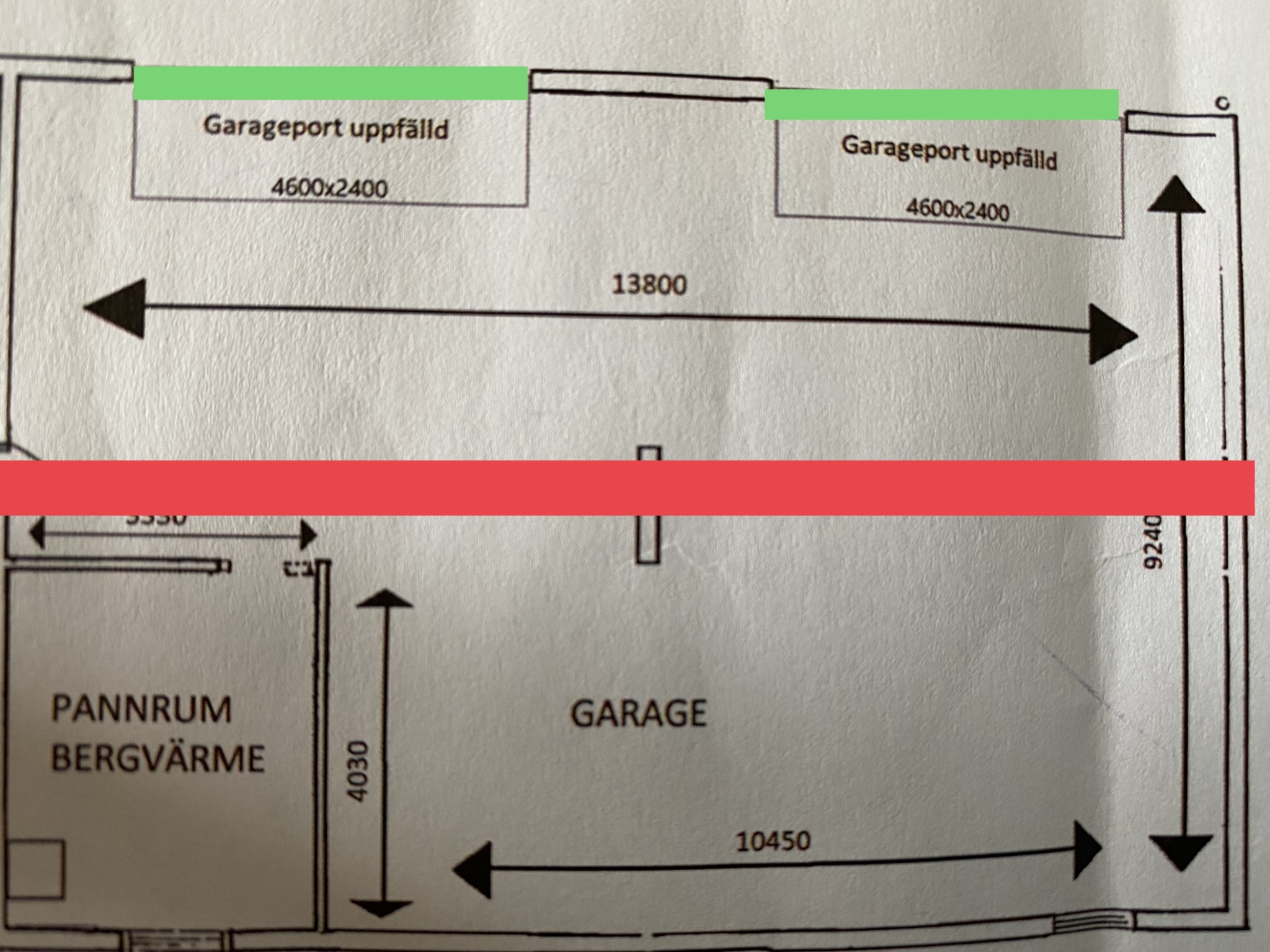
The red-marked line will be glue-laminated timber, where there is no problem as the beam lies on top of the rafters. It's the green lines I am wondering about, there I must have a steel beam so that the ceiling height doesn't become too low at the doors. I forgot to mention that it's cc1200 on the rafters.
It is not entirely without problems to place steel beams in a facade due to differences in thermal expansion. A glulam beam 90x405 can be replaced with one that is 190x315. k-bygg should have informed you of this. It corresponds to HEA 180 in steel. The choice of dimensions suggests a distributed load of just under 15 kN/m, which doesn't sound entirely unrealistic. The question is whether you dare to trust k-bygg.
Thanks for the response, but a 190x315 is too high anyway. And k-byggs calculations are based on the trusses being self-supporting, which they are not, so when the glulam beam is in place in the attic it should take up some of the roof load/snow load, which should relieve the beam at the garage door somewhat.
By the way, k-bygg uses the Dimensionsprogrammet available on, for example, Bejers bygg's website.
Which HEA or HEB could I use to replace 450x90 with?
If you unload the ridge with the glulam beam, the load over the gates is almost halved compared to the calculation. Will there be any storage on the subframe?
If you assemble the garage doors so that they are only separated by a pillar and place a single beam over both openings, you can further reduce the beam dimension by achieving a continuity effect. If you had utilized a competent designer from the start, you would have arrived at an optimal solution more quickly. Future contractors should not be used as consultants. As indicated in @bossespecials' post, a more thorough calculation can lead to more refined solutions.
If you place the garage doors so that they are only separated by a pillar and put a single beam over both openings, you can further reduce the beam dimension due to gaining a continuity effect. Had you employed a competent designer from the beginning, you would have reached an optimal solution more quickly. One should avoid using future contractors as consultants. As @bossespecials' post indicates, a more thorough calculation can lead to more streamlined solutions.
I understand that now, I'm quite new to this.
Putting the doors next to each other is not an option as the reason the doors are positioned where they are is that I need to remove 2 windows and 2 doors.
What deformation can I expect with something like HEB 180?
If you unload the ridge with the laminated beam, the load over the doors is almost halved compared to the calculation. Will there be any storage on the underframe?
Nope, no storage, I was just thinking of placing the laminated beam on top of the lower arms and attaching them to the beam and securing the beam to the outer wall and the pillar in the middle.
About placing the gates next to each other is not an option
I don't quite understand that? Looking at the floor plan, the right gate seems to be placed too far to the right.
When I write HEB 180, it's just a conversion based on your information. One should have an accurate understanding of the loads before calculating the deformation.
No warning, I was just planning to place the glulam beam on top of the underarms and attach them to the beam and attach the beam to the outer wall and the pillar in the middle.
If the glulam beam is to have any load-bearing function for the roof, the ridge must be connected to the beam. Simply attaching the underframe won't work as intended and just risks breaking the underframe.
Vi vill skicka notiser för ämnen du bevakar och händelser som berör dig.