Hi!
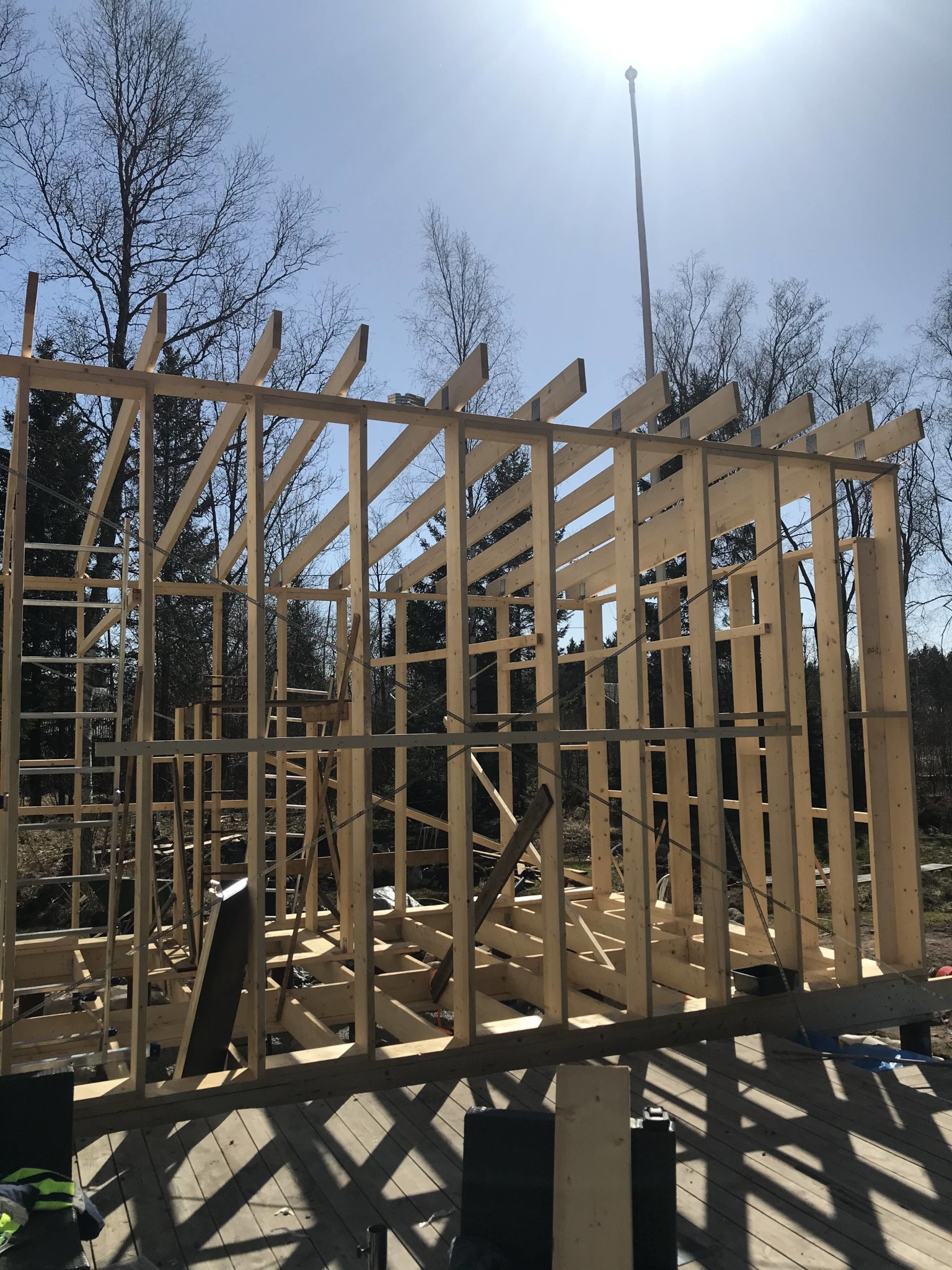
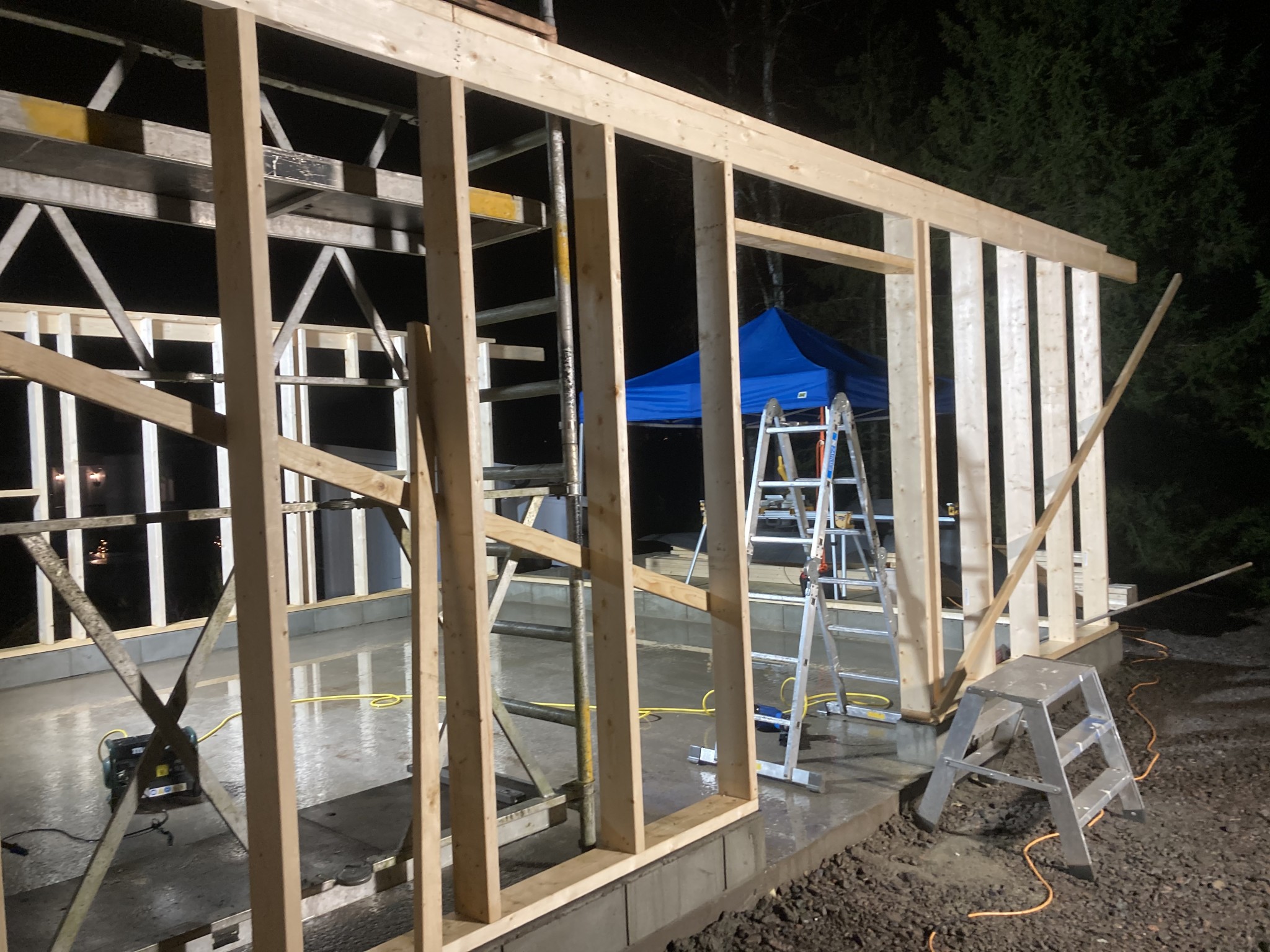
Building an extension of 50sqm.
Had a plan that felt right and stable.
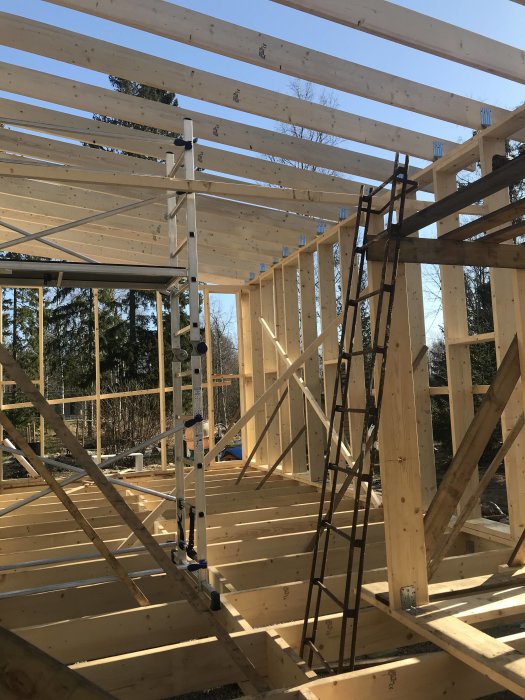
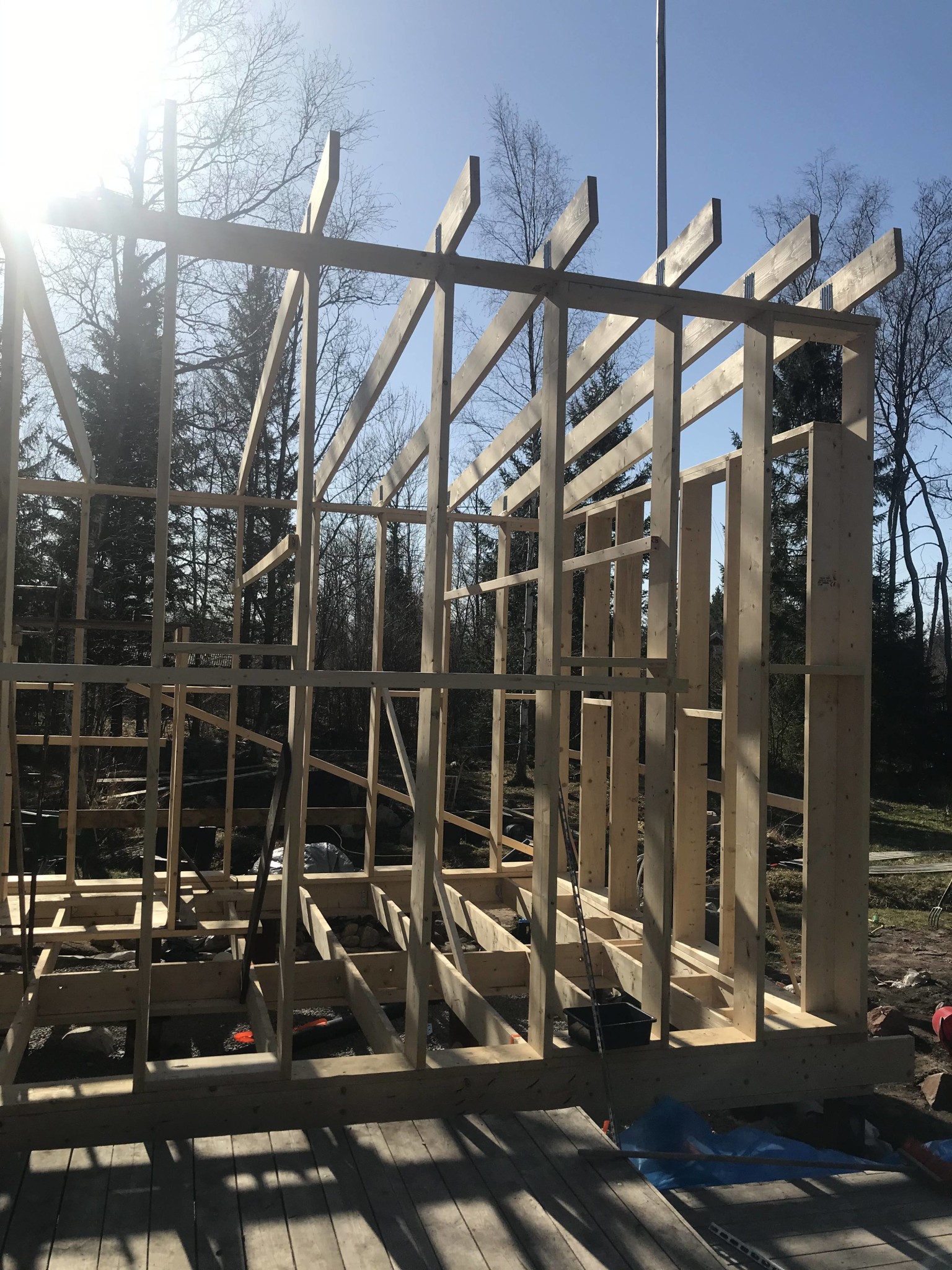
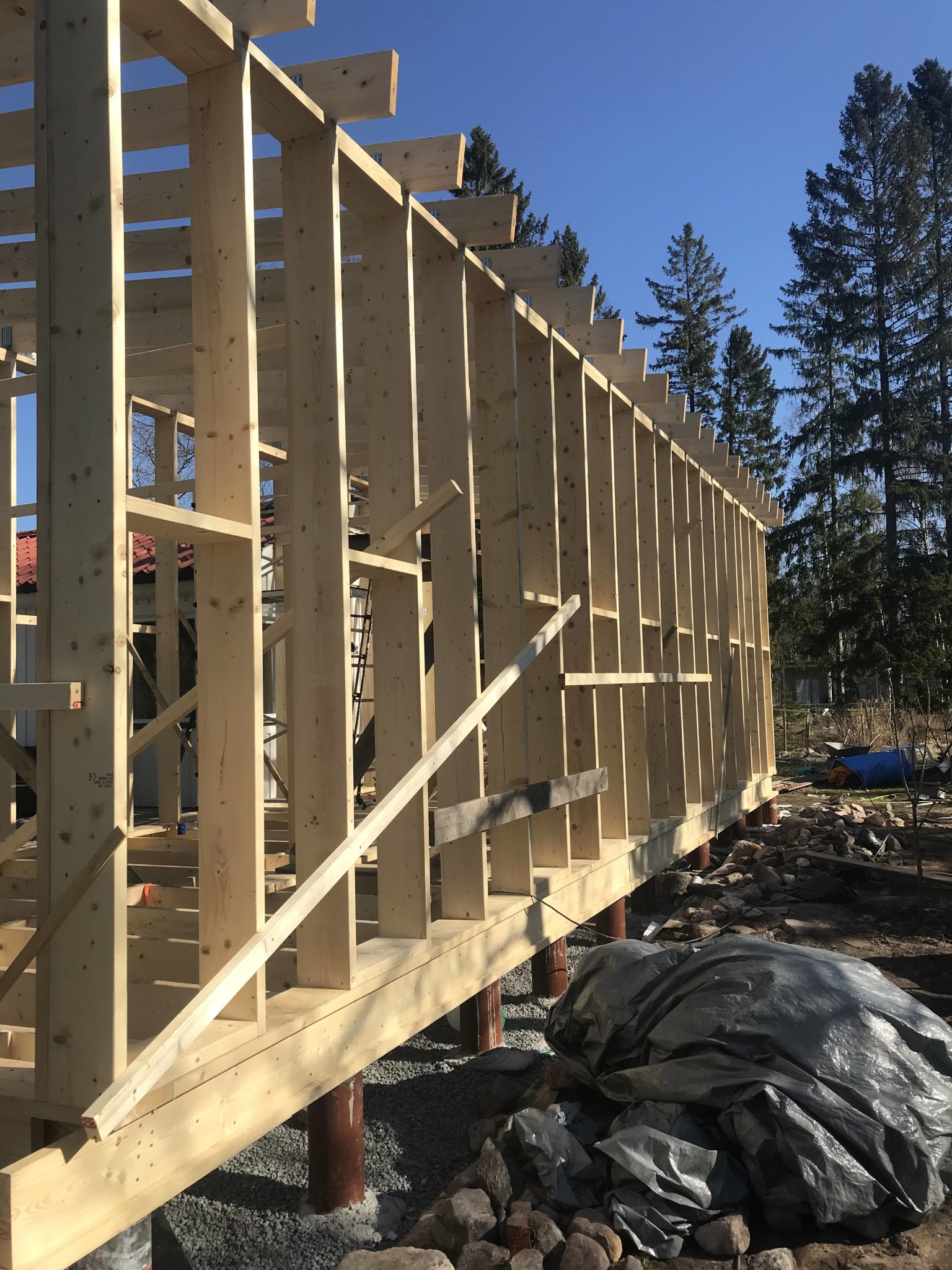
But now that I've erected the frame and see the reality and feel the weight and height, the worry came that I've made some fatal construction error.
So before I continue, I'm asking the question here.
The conditions for the frame are as follows.
11.8m x 4.44m all timber in 45x220.
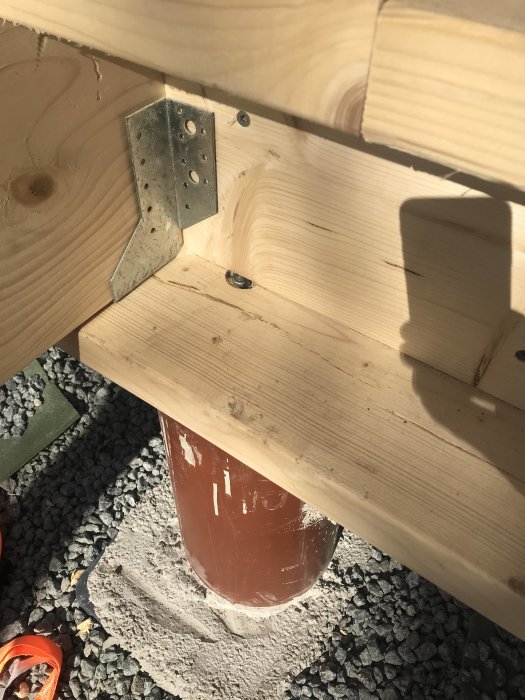
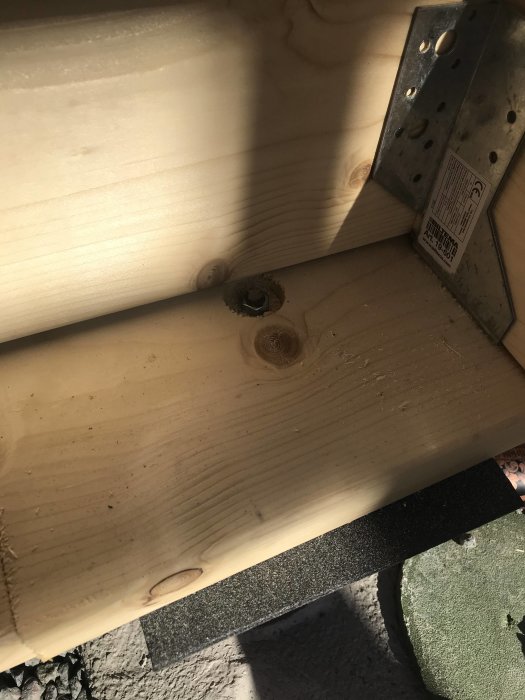
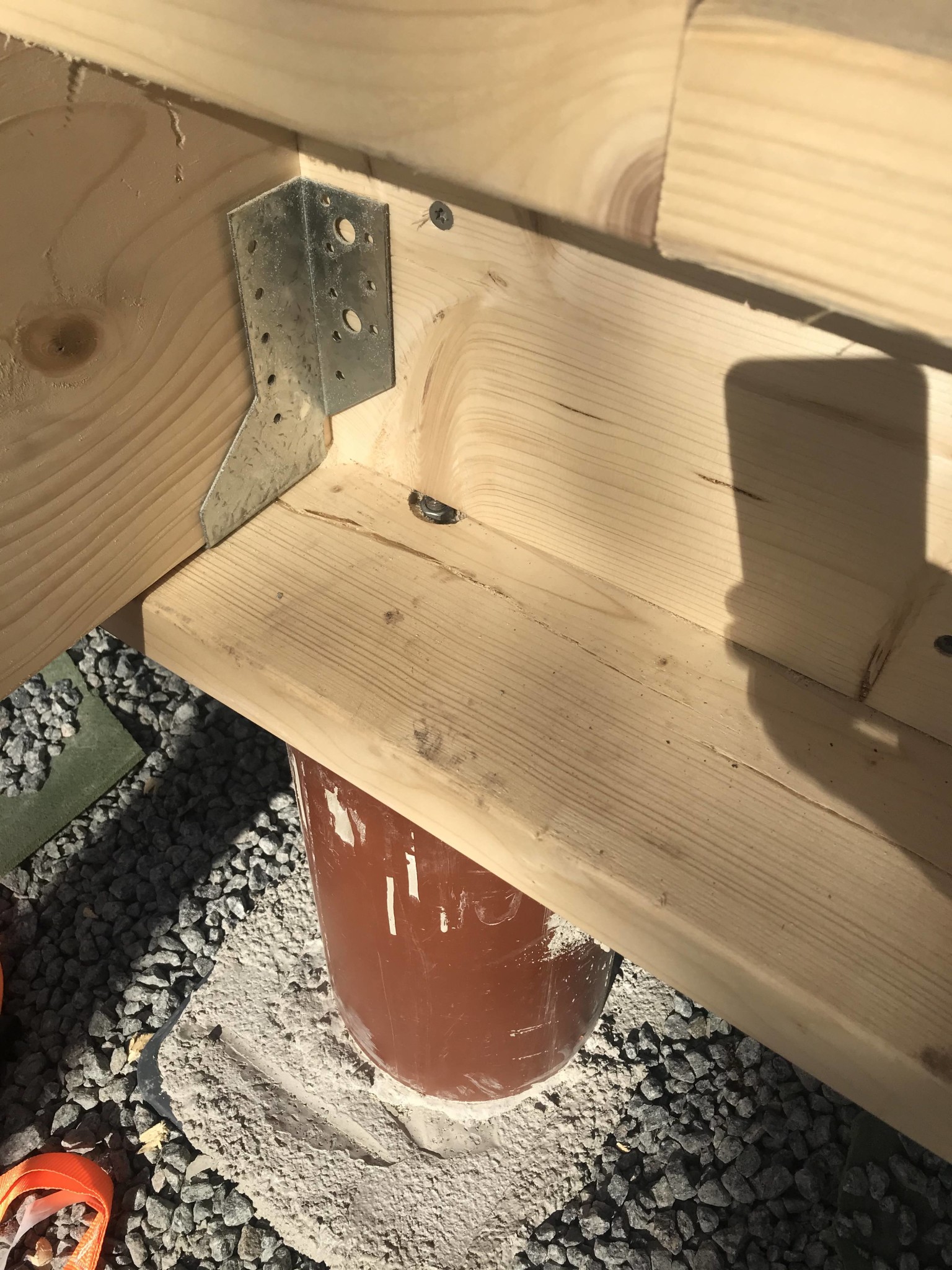
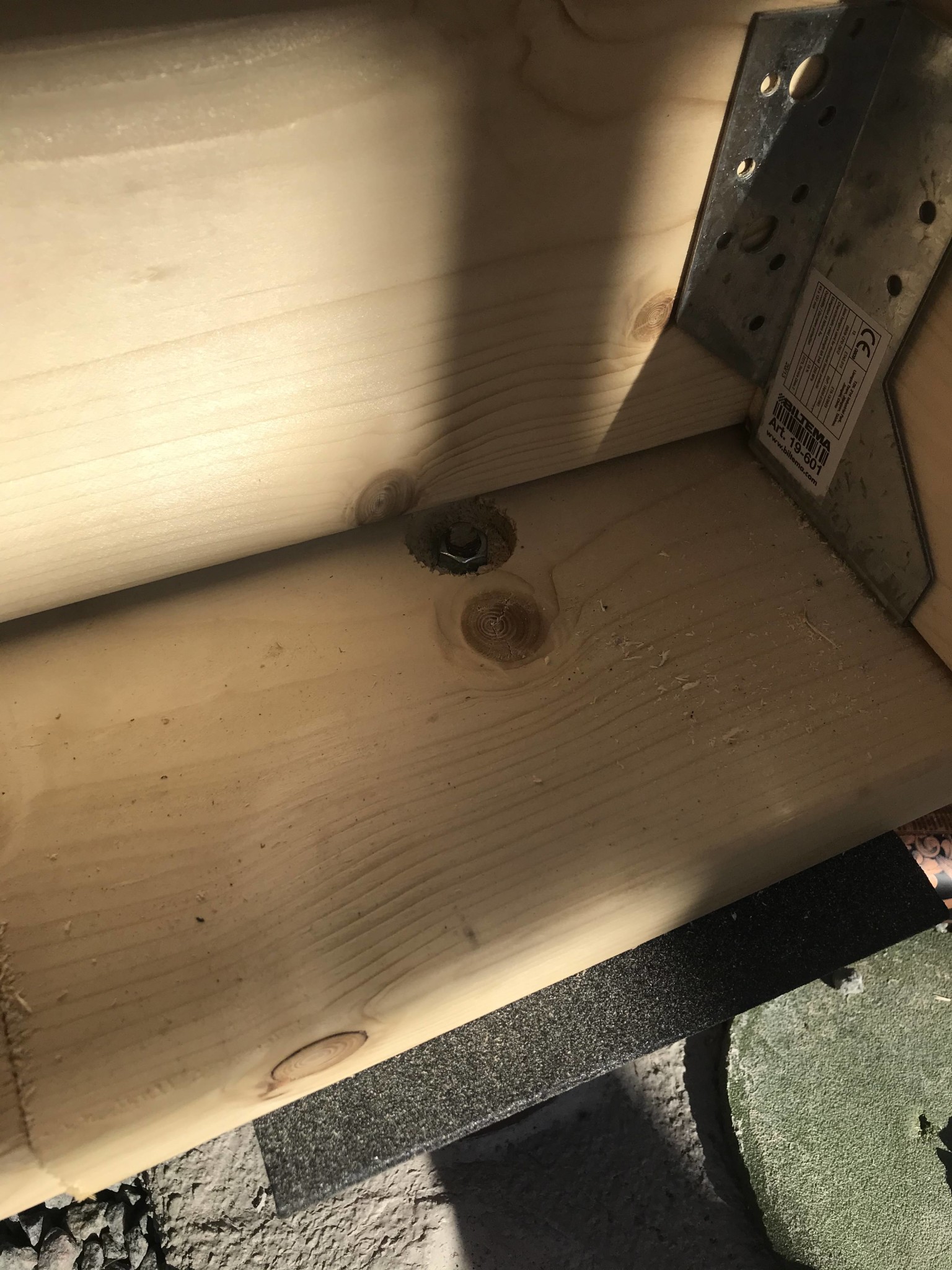
Sill anchored in plinth with M10 rod, embedded.
Plinth every meter.
CC60 on everything (floor, wall, roof).
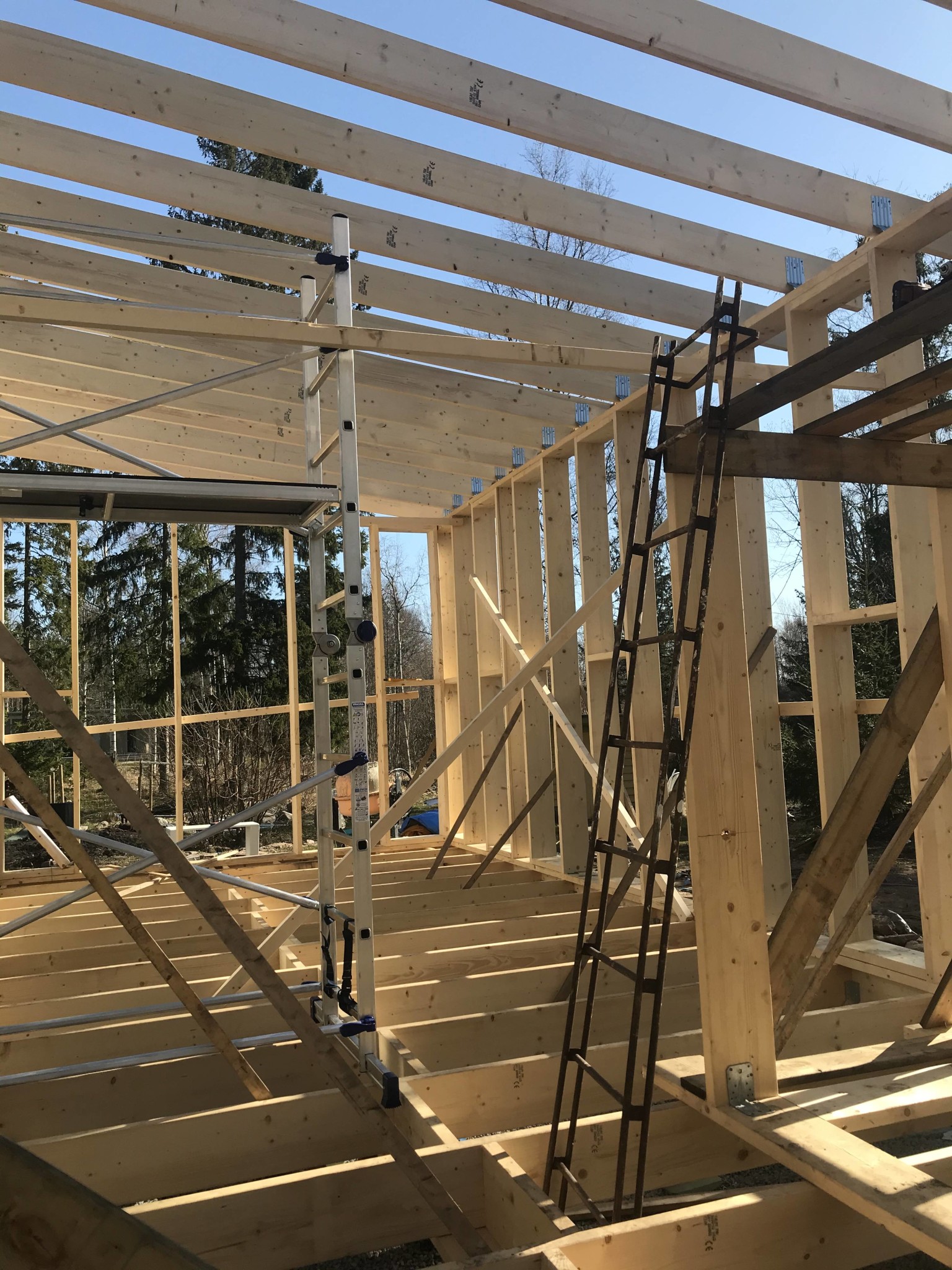
In the sill, there are 2 load-bearing beams laid with joints staggered. Then wall sections.
The walls are 3.1m and 3.5m.
Then the roof beams on them.
Everything is screwed with 6x120.
Now I will cross-tie with perforated strap to achieve rigidity.
Does this feel right?
Have I made any major mistake regarding safety?
Now I should probably not speak on things I am not trained in but from pure life experience...
It looks stable. I assume you have calculated that the roof rafters can handle what they need to.
What kind of roof covering will it have?
I don't see any direct mistakes, though the beam ends feel a bit unnecessary.
If you place boards on and/or inside it will become stable.
If you place råspont inside, place it diagonally.
The roof will also brace the construction.
Hålband is a bit tricky, it must be stretched properly and then you pull the house a bit askew and then the other band should straighten it again.
Now I surely shouldn't comment on things I'm not educated on but from pure life experience ...
I think it looks stable. I assume you've calculated that the rafters can handle what they're supposed to.
What kind of roofing is it going to be?
I don't see any obvious mistakes, though the beam shoes seem a bit unnecessary.
What's it going to be used for - living space or storage?
Thanks for the response. The roof is a tar paper roof with a 7-degree slope. Råspontsluckor.
4-meter span. It should work according to the tables.
The floor joists are on a sill and screwed into the support beams. The beam shoes were a last-minute thing, I was worried the other solutions would be too weak. It's an extension for living space.
Looks like when I built a storage shed for my father some years ago.
It should be stable when you "cover" it.
One thing I see is you don't have a hammarband (top plate), I didn't have one either when I made the shed because I had to save on height.
If you install boards inside and/or outside, it will become stable. If you install tongue and groove boards inside, place them diagonally.
The roof will also help to stiffen the structure. Tension straps are a bit tricky; they need to be stretched properly, which might pull the house slightly askew, and then the other strap should correct it.
Thanks for the reply. The tension straps are now in place (on certain walls). I think it stabilizes a bit. But when I stand up and rock on the walls, there is a slight sway. Maybe I'm expecting too much stability at this stage? As it might be evident, the wind stability of the long walls is my biggest concern. Should it be really rigid now?
Looks like when I built a shed for my father a few years ago. It should be stable when you "dress" it. One thing I see is you don't have a wall plate (beam on top), I didn't have one either when I made the shed because I had to save on height.
Thank you for the answer. What a fail, I thought the horizontal beam, on top of the wall beams was the wall plate? Should it be a vertical one as well?
Thanks for the reply. What a fail, I thought the lying rule, on top of the walls' studs, was the "hammarband"? Should there also be a standing one there?
I also thought it was called "hammarband"... it will be interesting to see their answer. They might be thinking about support under the "hammarband"
It's probably called a support beam for the wall plate.
I've always said wall plate, and in my world, it consists of a support beam and the wall plate.
The wall will probably be stiffer with the support beam, plus it takes up a lot of load.
You could build without it if the trusses stand over the wall studs.
But if you put in a wide door or window, the weight from the trusses would go there.
But I'm not going to say whether it works or not for you, it probably depends on the snow zone, etc.
He has a hammarband, not an inset support beam. However, it does seem like there are wall studs under each roof rafter, and in that case, no support beam is needed.


Bronken said:
Now I surely shouldn't comment on things I'm not educated on but from pure life experience ...