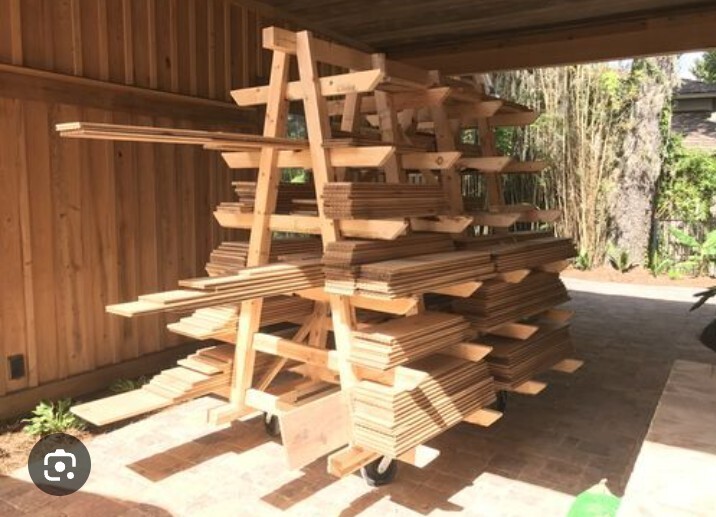
Since there are starting to be too many piles of mixed lumber, it's time to build a lumber rack to get everything organized.
Like many other things, a lumber rack can be built simply and quickly as well as advanced and expensive. Mine will mostly be the former since lumber from a demolished deck will be used.
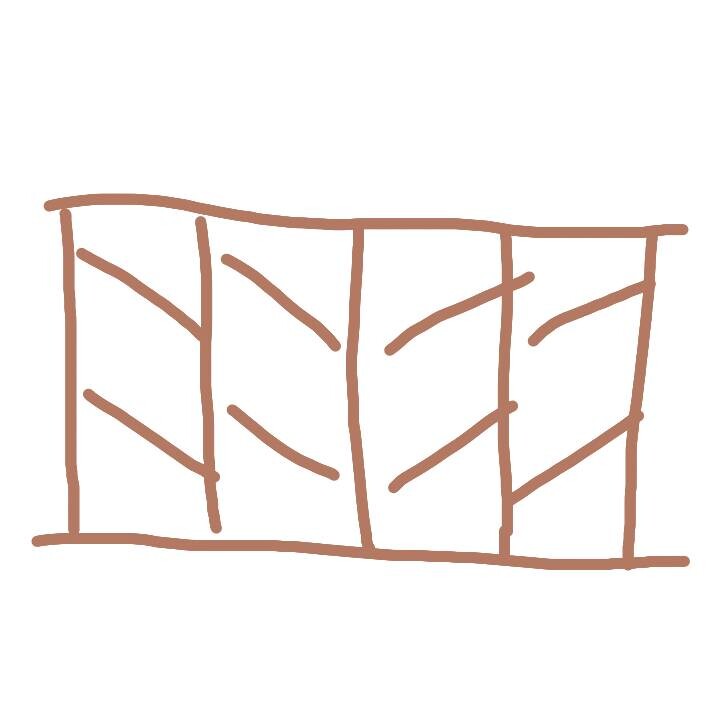
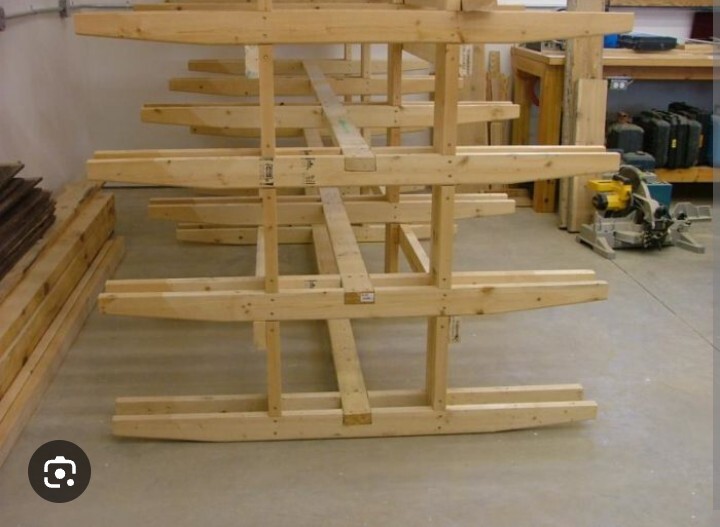
The plan is for it to be 5 meters long and about 2 meters wide and consist of 5 vertical sections held together with diagonal braces and the beams that the roof will be attached to.
What I'm considering is how to design the sections.
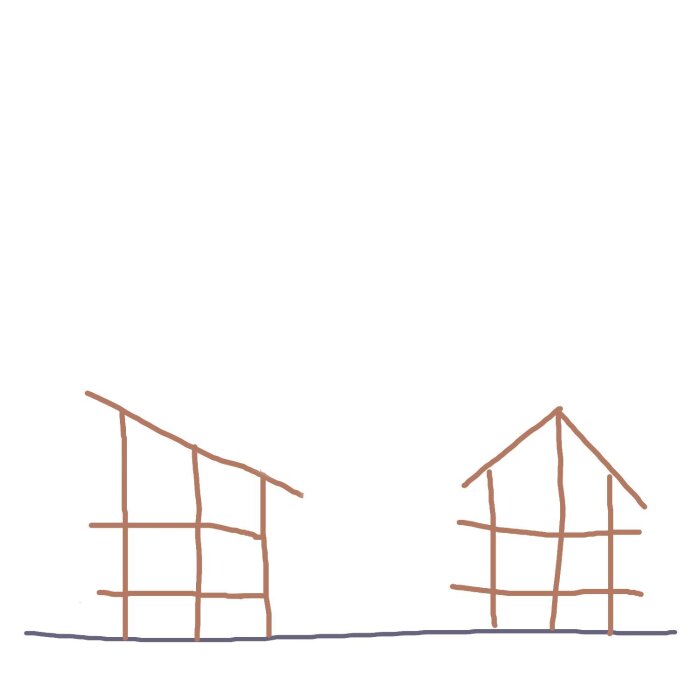
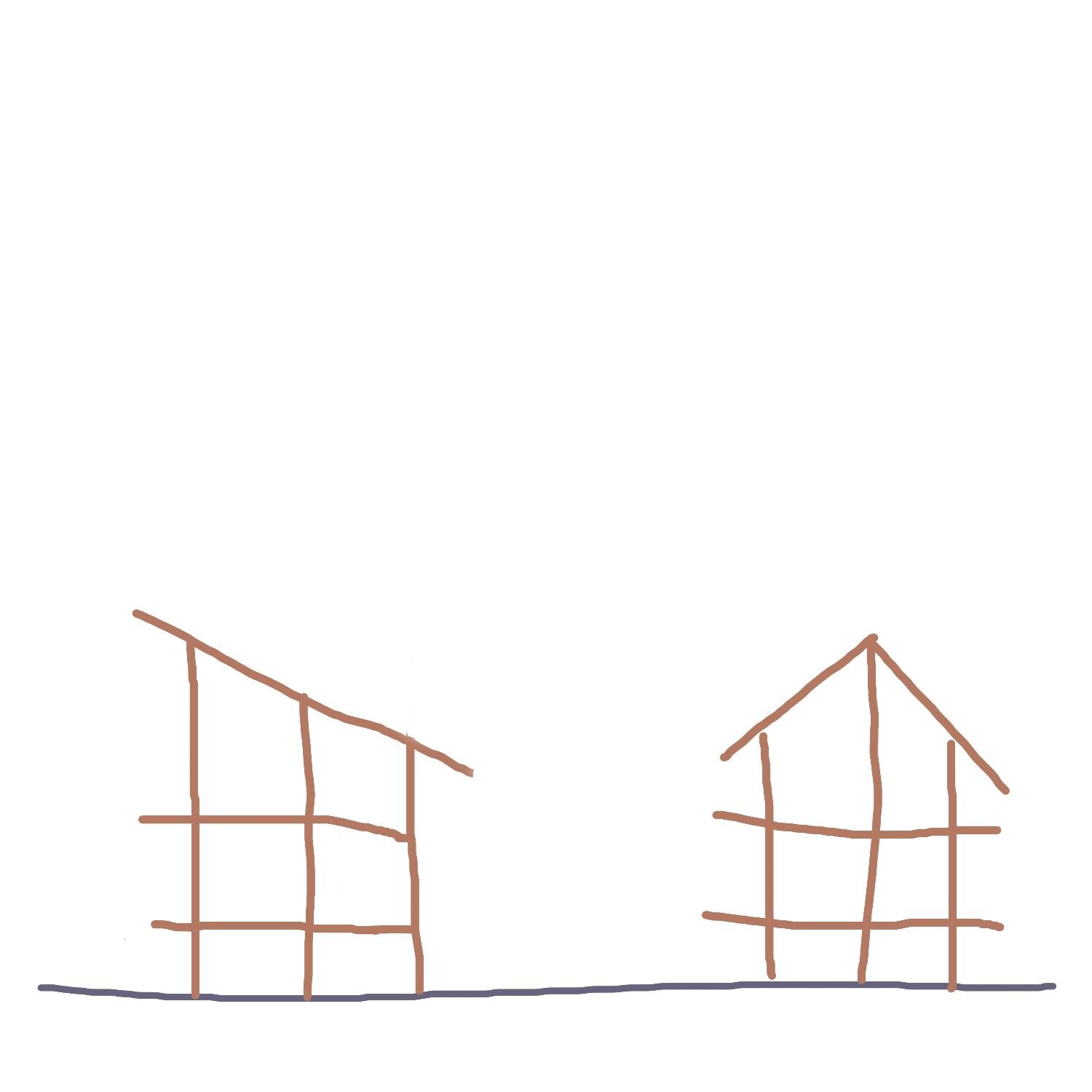
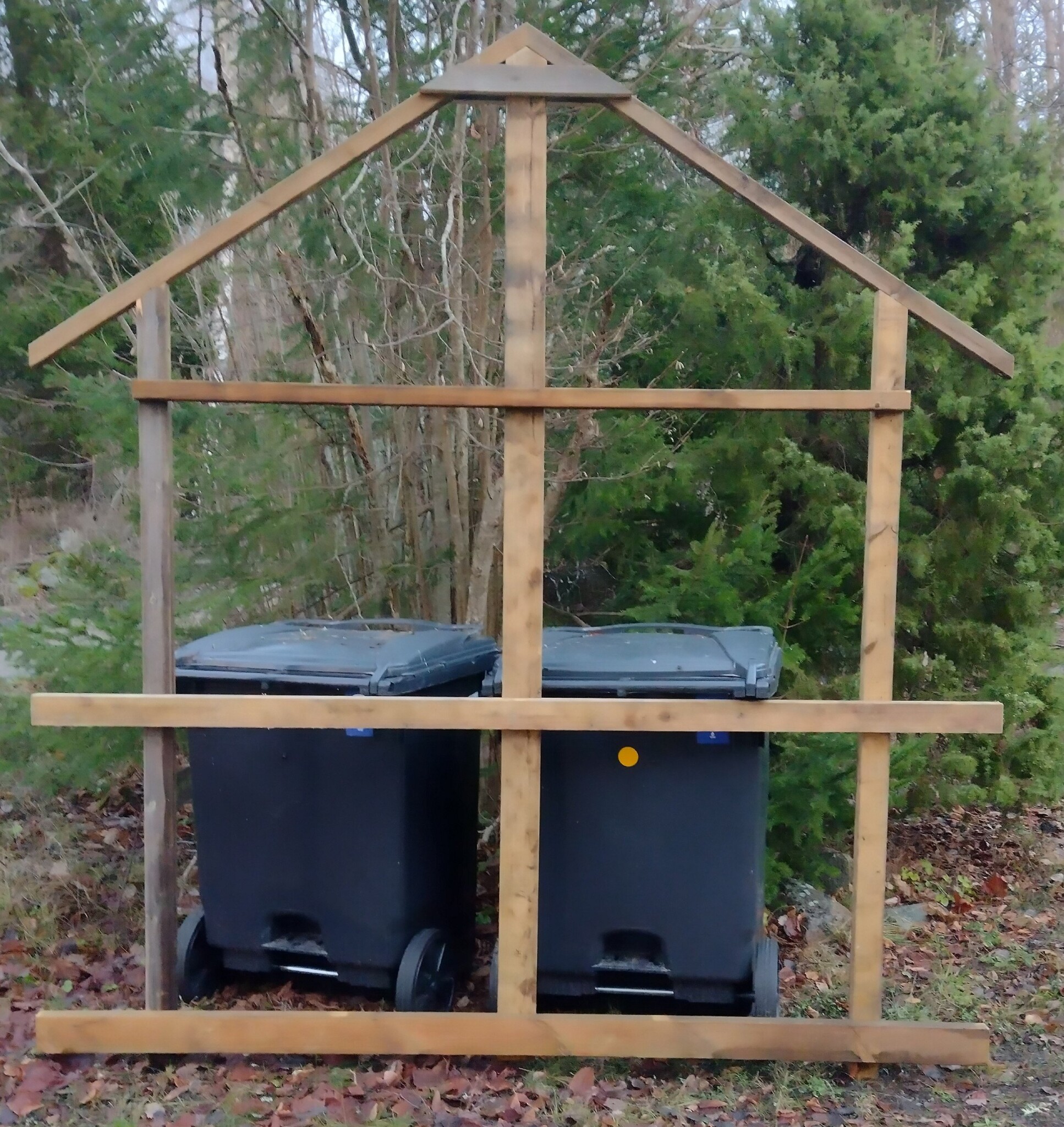
The options I'm considering are shown in the image below.
A - sloped roof with short overhangs on the shelves under the high side
B - gabled roof with short overhangs on the shelves on both sides.
So my question is whether either option is better or worse in any way?
Should it be anchored to a wall? Against the wall, the pent roof is the obvious option.
I have seen that many otherwise build "A" frames to prevent it from becoming shaky, considering that you don't want any diagonal braces through the compartments. And that in turn argues for a gable roof.
Exactly, yes. I've never built one myself, so I don't have a concrete idea of what it could mean for stability, but it's clear that "wobbliness" is a challenge with a freestanding rack.
You can insert horizontal braces between the supports for the wood so it doesn't take up any space. The roof and the space at the bottom also work for diagonal braces.
I have to decide on a sort of profile and then write up a section and then rock and twist it in all directions to see how strong it seems to be.
I was thinking of screwing boards into the top compartments so that shorter pieces can be placed somewhere without falling down. This might give more stability to the whole structure so that no diagonal braces are needed.
I have a stand without the extra supports and it holds despite leaning due to the ground sinking. If I had aimed for long-term storage, I would have spent more time to be sure. Now I've emptied it over the summer so the little that remains doesn't bear any load.
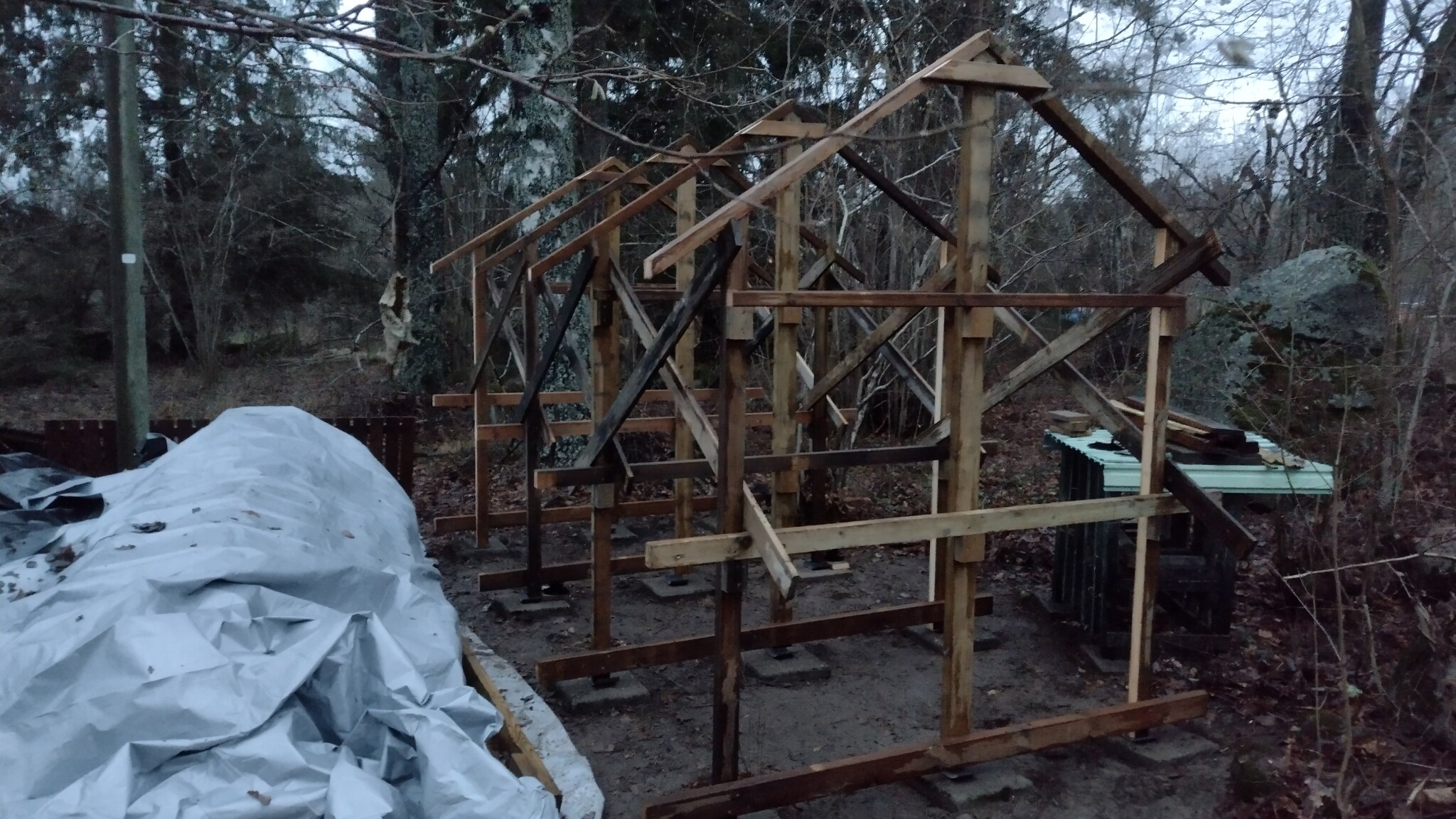
It took a few months, but now I've finally started building the rack.
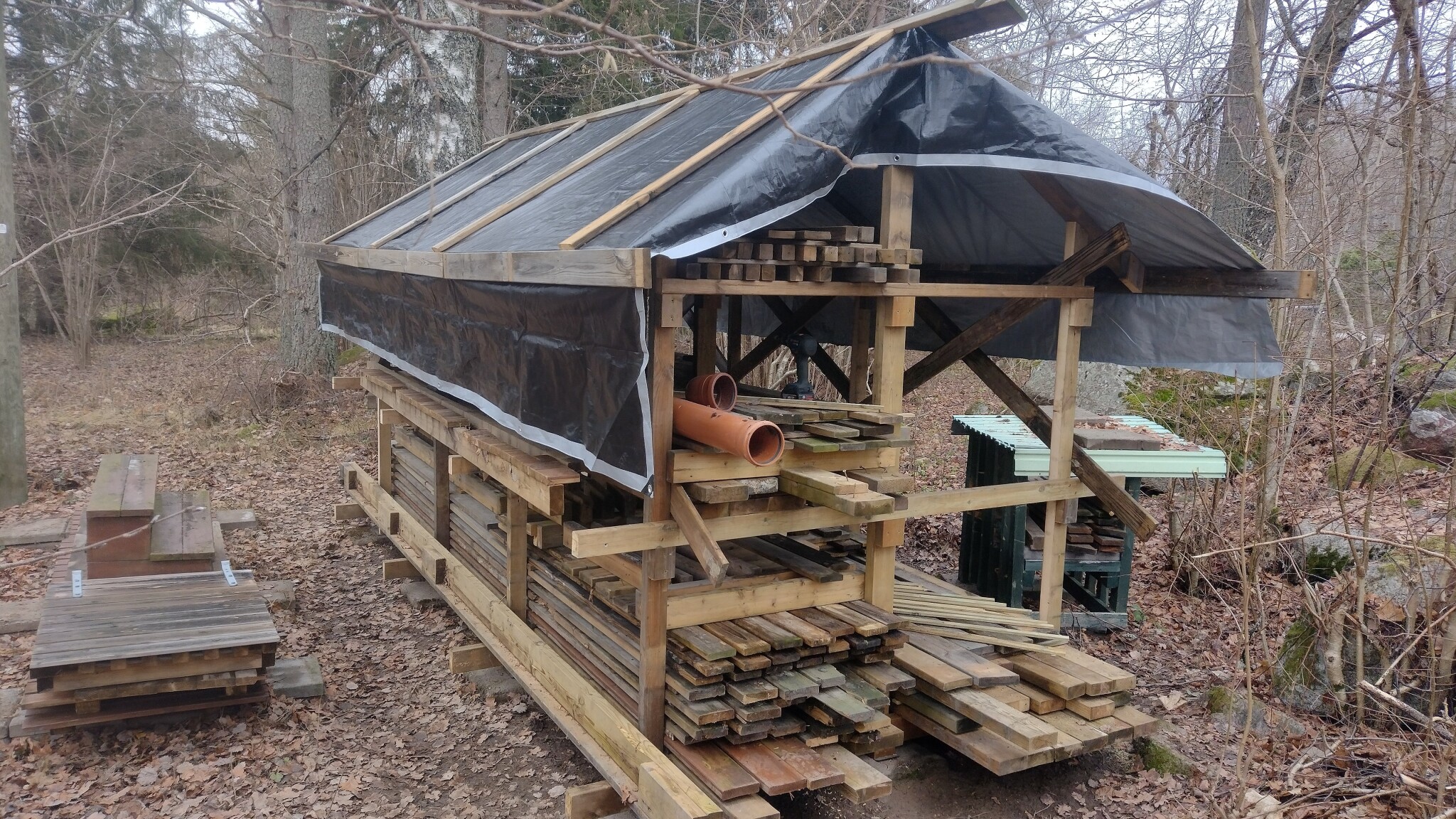
I must admit that my eye-measure was significantly off, which I realized when the first section was set up. I had envisioned something smaller. There will be room for a lot of wood, at least.
Tomorrow, I'll be laying out 12 slabs and trying to get them all level so that the sections are horizontal. How the tarp will be attached on top remains to be figured out. It ended up being a whole 2.5 meters to the ridge.
How the tarpaulin should be attached on top remains to be solved.
I strongly recommend planning for a metal roof from the start. Preferably used.
Tarpaulins for this purpose are the devil's invention and will only lead to trouble.
They tear in the wind, leak, wear out, and it's impossible to avoid sagging where water collects unless you build a complete sub-roof.
A proper rubber tarp lasts longer, but is more expensive than metal.
A 180 gr/m2 tarp that is stretched and screwed in place with decking pieces will suffice for now. When it's time to move the structure to a new location in a year or so, it might become a metal roof.
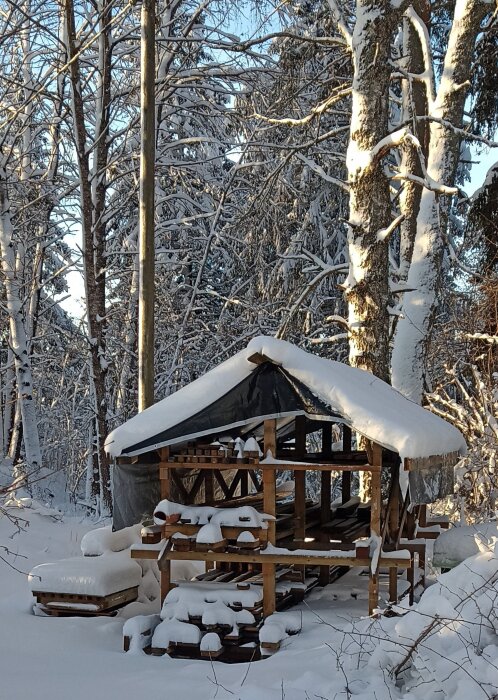
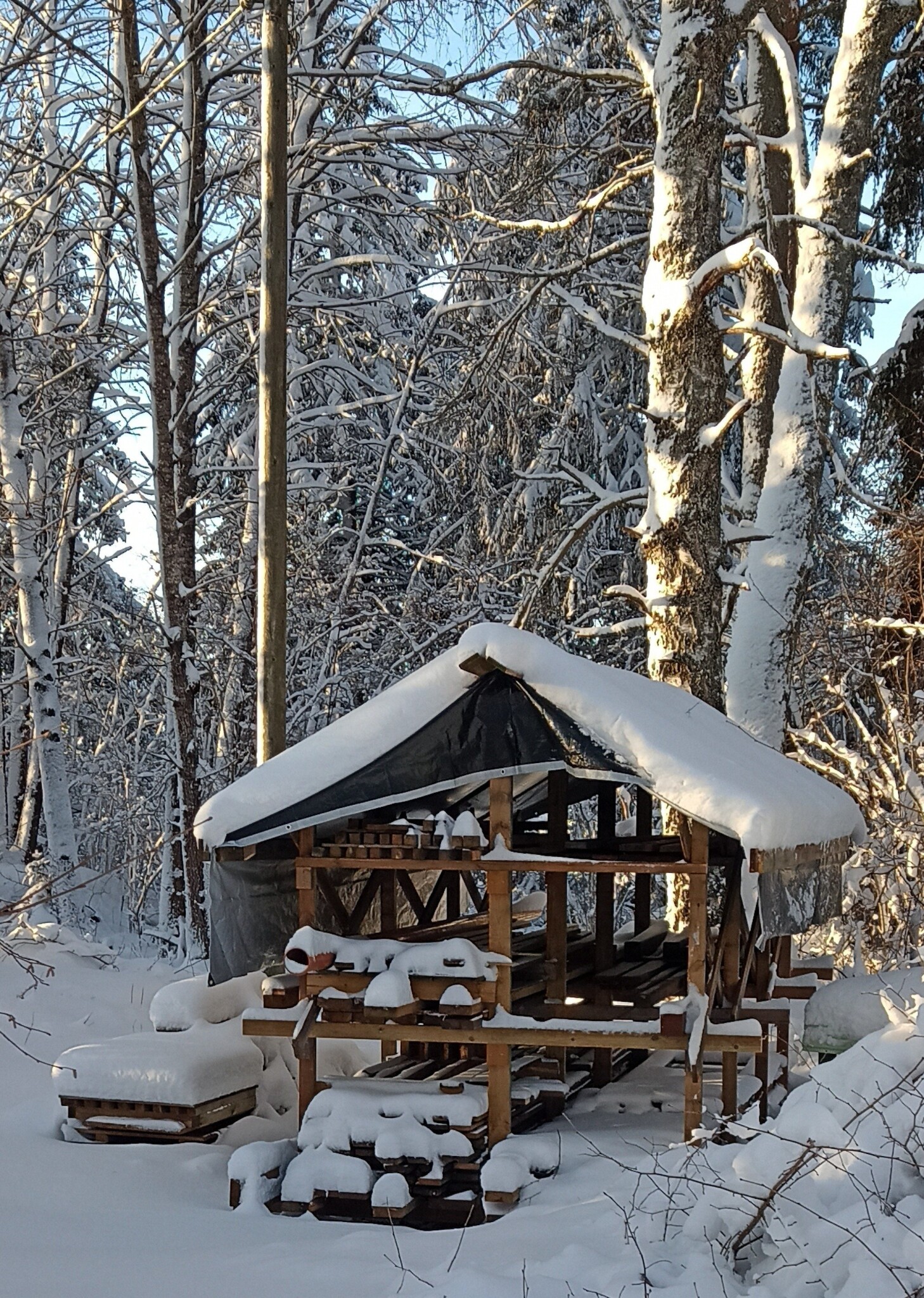
Another update now after storm Johannes and snowfall Anna.
The tarpaulin is still intact, but I had expected the snow to have slid off. The risk is that the tarpaulin might tear if it snows more without everything sliding off.
Vi vill skicka notiser för ämnen du bevakar och händelser som berör dig.



Pjosk75 said: