It is an important piece of information that the house has a mansard roof and that you are working at the very top. This changes the parameters. Then it's important to take accurate measurements when drawings are missing. I have difficulty understanding that your 3-D sketch in post #12 is the same space as the pictures in #15.
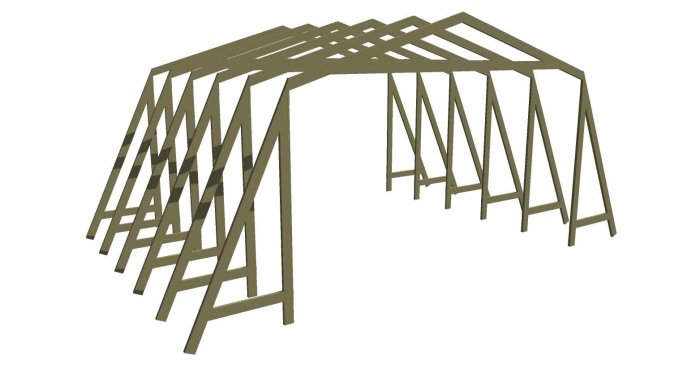
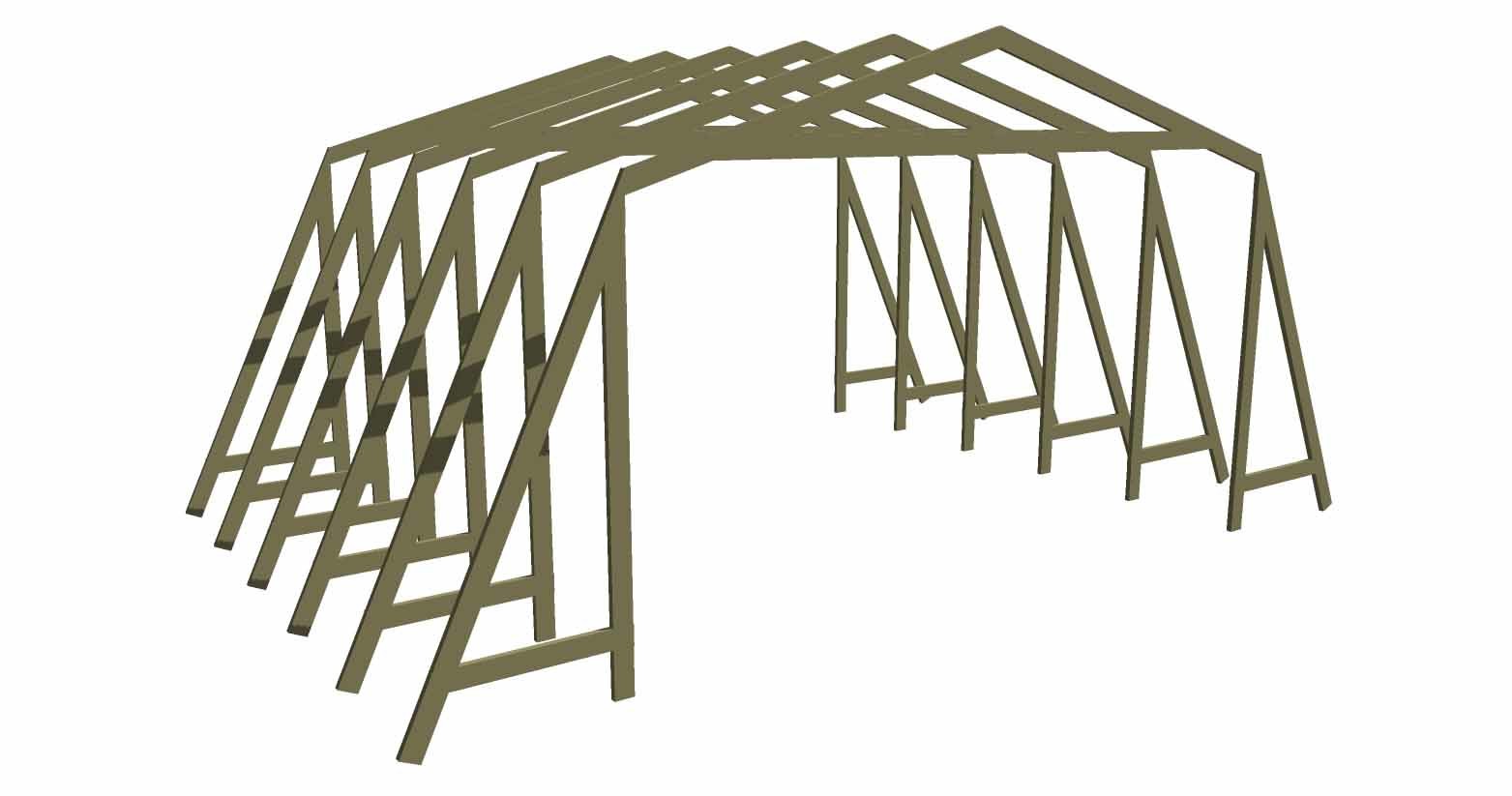
The roof solution for a mansard roof usually looks something like the image below (a bit tricky perspective). The need for support legs in the top triangle usually isn't that great since the dimensions are often quite small. It obviously depends on dimensions, snow zone, roof slope, and the size of the beams. I guess your roof beams are 3x7 inches (75x175 mm), somewhat of a standard dimension for a lot back then.
It is an important note that the house has a broken roof and that you're working at the very top. This changes the conditions. It's also important to make accurate measurements when drawings are missing. I find it hard to believe that your 3-D sketch in post #12 is the same space as the photos in #15.
The roof solution for a broken roof usually looks like the image below (a bit tricky perspective). The need for support legs in the upper triangle is usually not so great as they are often quite small in size. It naturally depends on the measurements, snow zone, roof pitch, and beam dimensions. I guess your roof beams are 3x7 inches (75x175 mm), a somewhat standard dimension for much of that time.
[image]
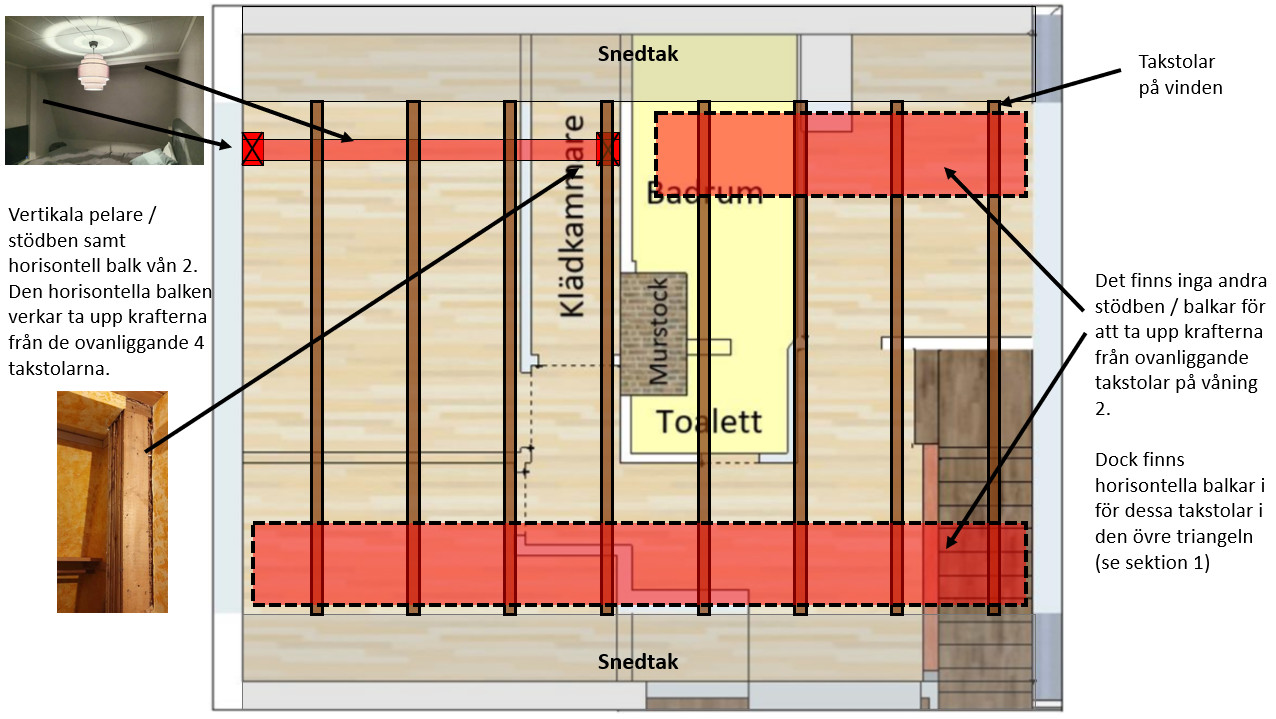
Hmm, I've thought through your post a bit & realized I need to specify a little more clearly what I mean. I've tried to summarize previous posts in 3 images that explain what I want to do, where I'm finding relief for the upper triangle on floor 2 for the broken roof. What I'm still wondering about most is - when you removed the attic knee wall (i.e., support legs on floor 2 to the upper triangle in the attic) - is it enough to relieve in the upper triangle with a horizontal beam? This seems to exist everywhere in my house, except where the support legs remain (in the bedroom & in the closet with a horizontal beam between). I also realize I have to draw everything up and dimension it, but I haven't managed to do this yet.
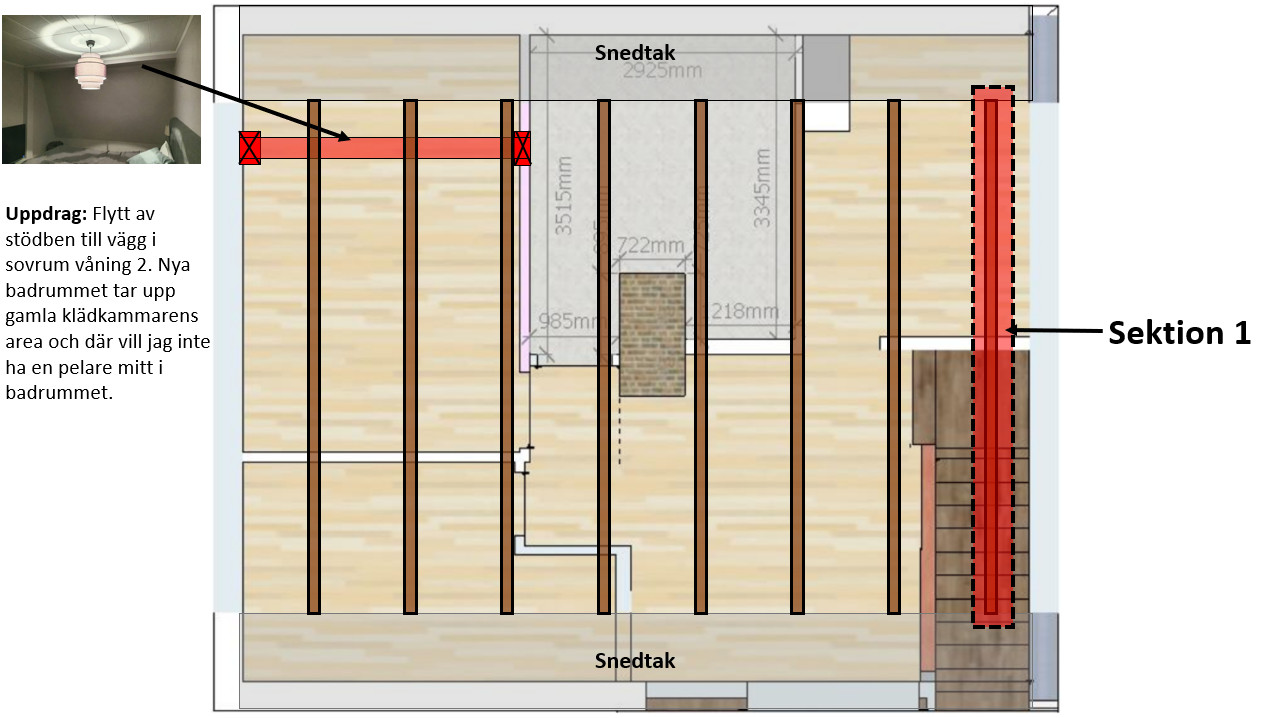
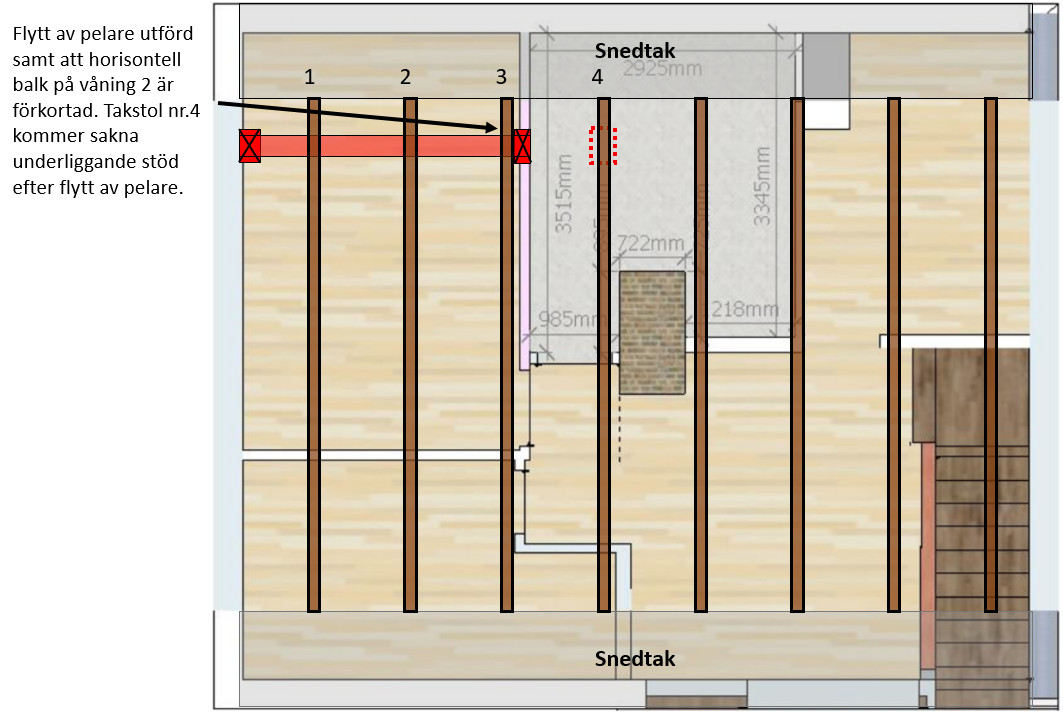
I'm going to expand the bathroom on floor 2 & need to remove the pillar in the old closet, either I simply remove it, like everywhere else in the rest of the house - or I move it according to the image below:
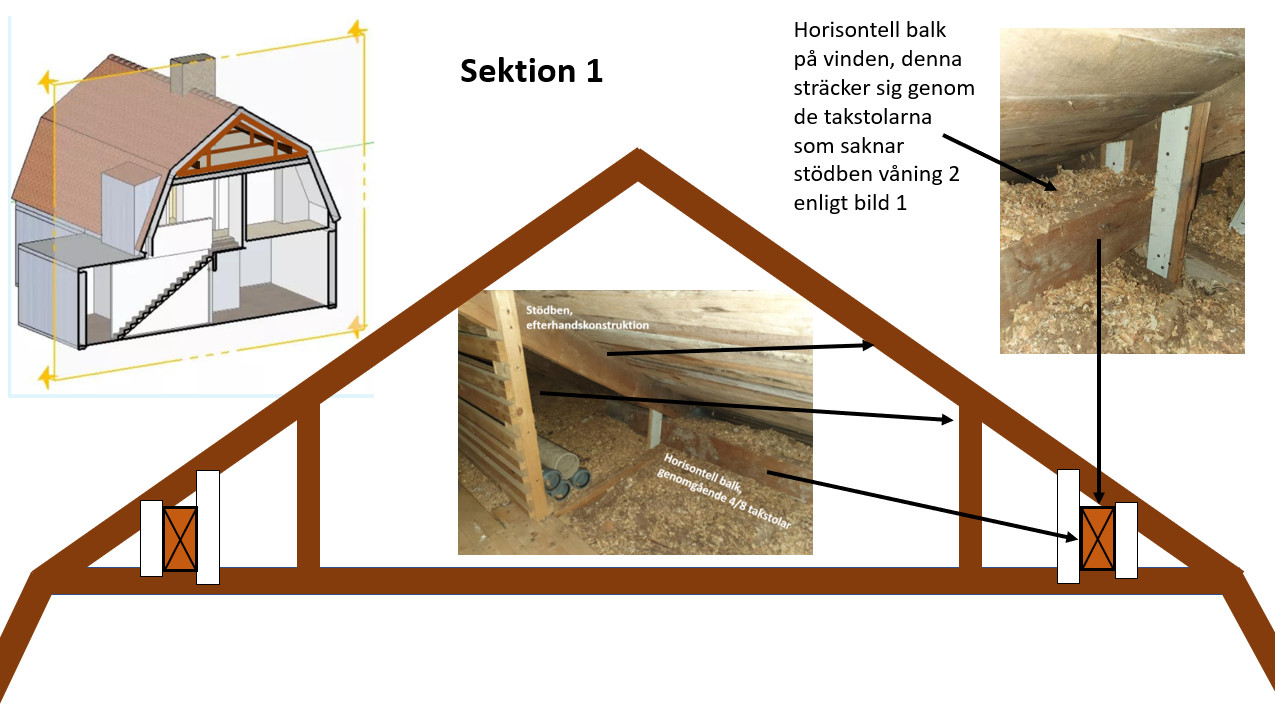
If I move the pillar into the bedroom wall, I will need to relieve the rafter that now has no underlying support? See illustration section 1 to see how load is distributed in the upper triangle where there are no support legs (from former attics) on floor 2 left.
Has anyone seen that you can distribute load between rafters in this way?
The picture is becoming clearer. The addition of support legs and beams in the uppermost triangle should probably be seen as a way to compensate for the removed support legs on the floor below. They are trying to channel parts of the roof loads through other paths. It doesn't appear to be completely incompetent. I'll get back to you tonight.
I have made a decision on how I will do this. I will take a belt and braces approach. The only truss that will be affected is truss 4 in the first image. On the second floor, I will move the column and shorten the beam as described below:
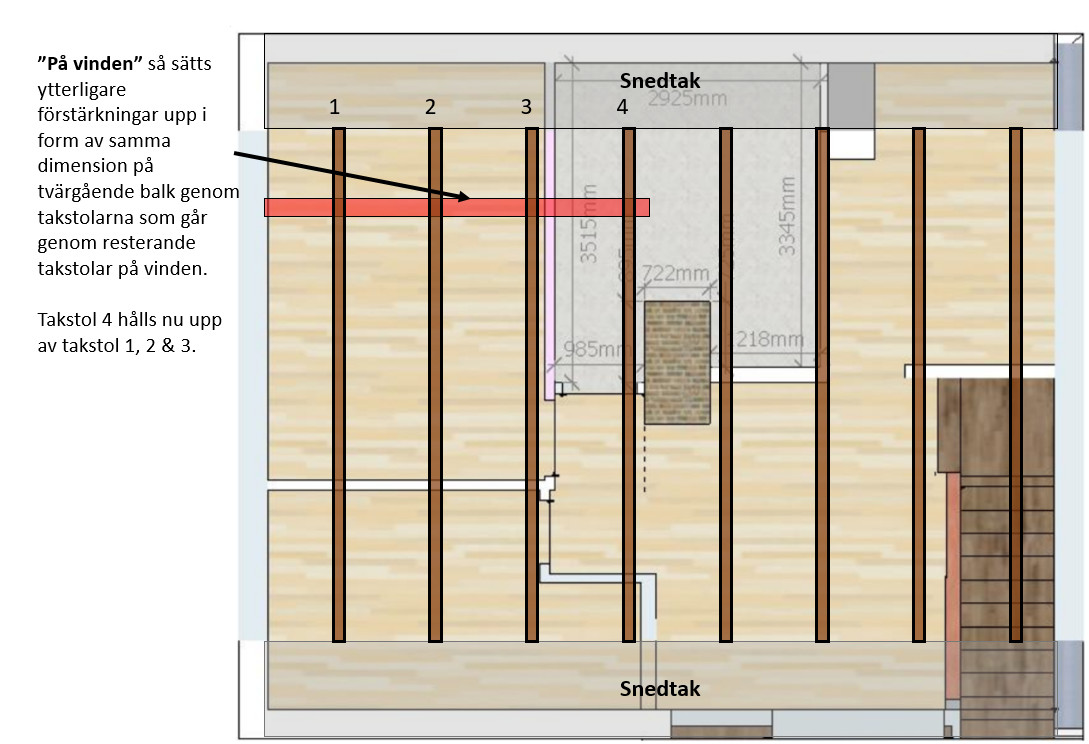
Up in the attic, I plan to reinforce the support for truss 4 by running a beam in the upper triangle of the trusses as was done previously for all other trusses.
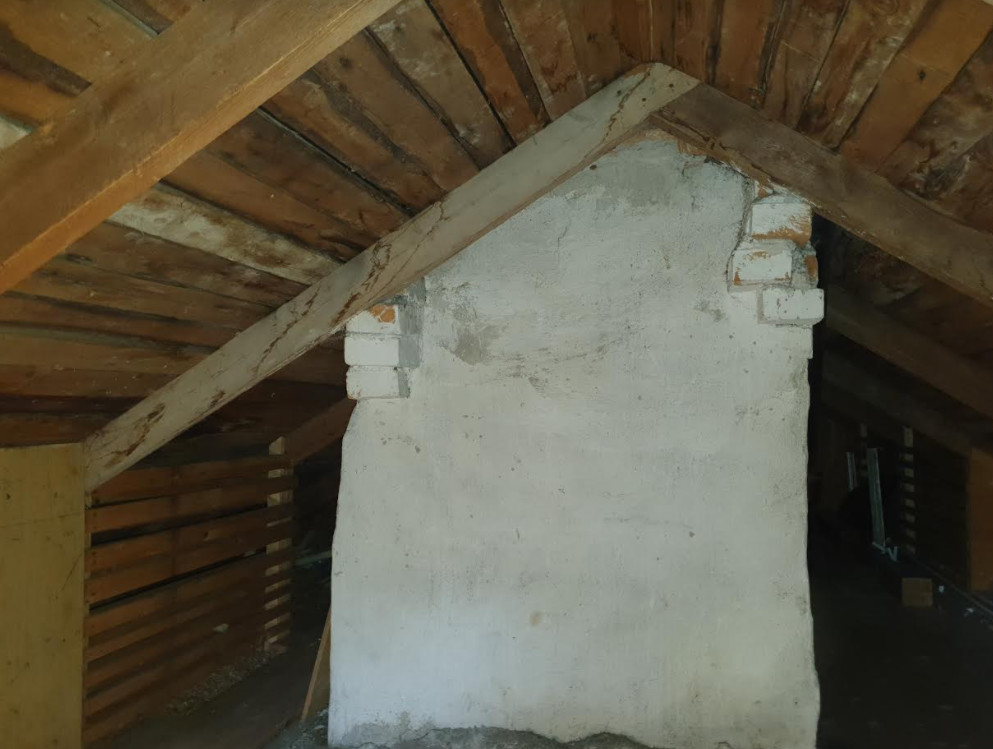
Additionally, I have noted that truss 4 is already reinforced by having built out support from the chimney stack in the attic, which truss 4 rests against according to this image:
All in all, I don't see how moving the column on the second floor will affect the roof/house's stability if I implement the above measures.