Hello!
I have bought a farm and before we move in, I need to create a bathroom and 2 bedrooms, and insulate the upper floor. I want to tear down log walls. Unfortunately, I lack experience in this subject and hope there's help here.
Question 1.
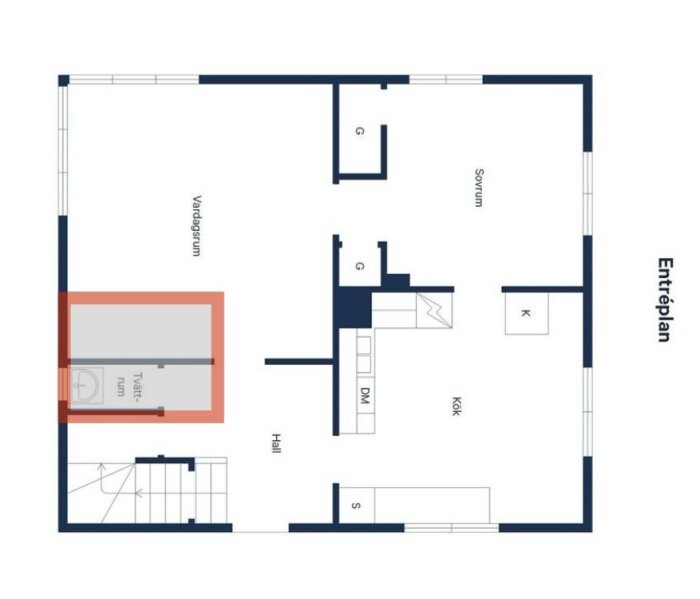
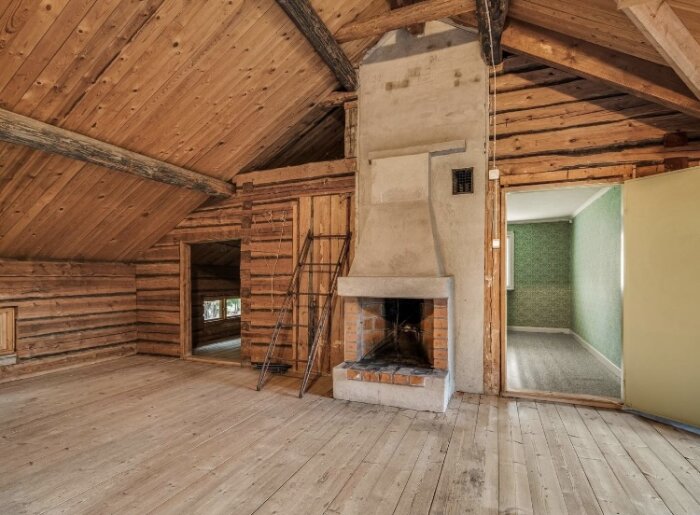
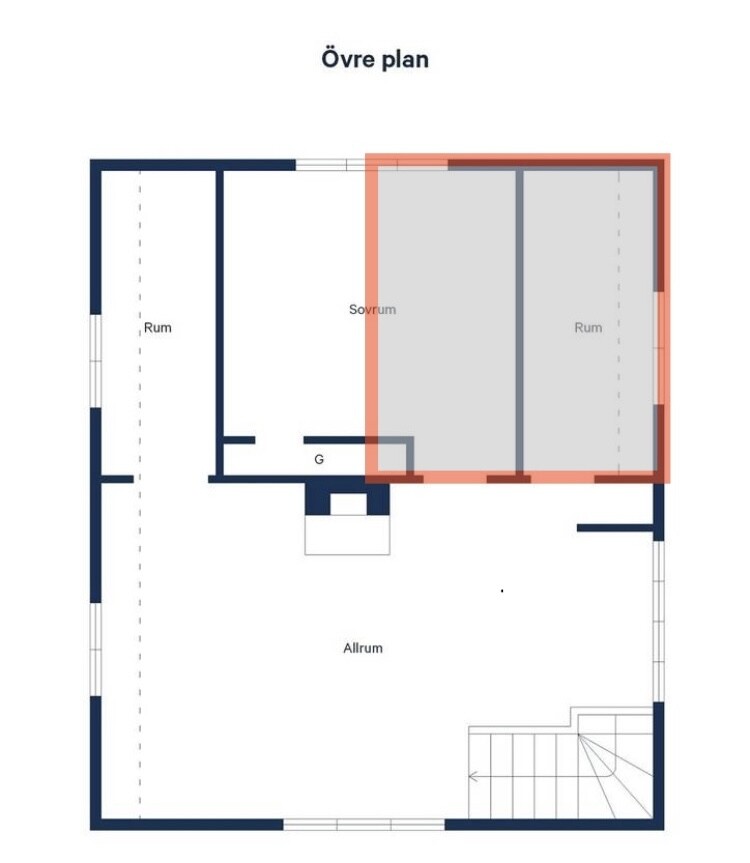
I want to tear down the wall marked in black within the red square and replace it with new walls (framed 95x45 cc45) according to the red lines. This will become a bathroom and I'll need to take some space from the living room and hallway.
Can I do this? Will the new walls be strong enough? Should I keep a log at the top and lower the ceiling in the bathroom?
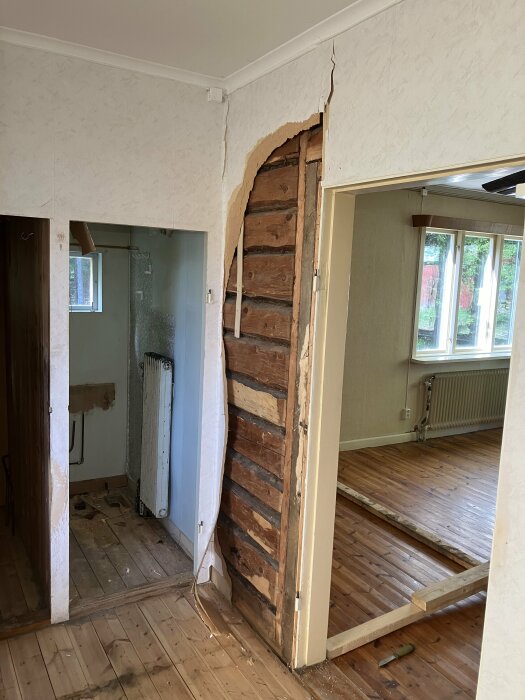
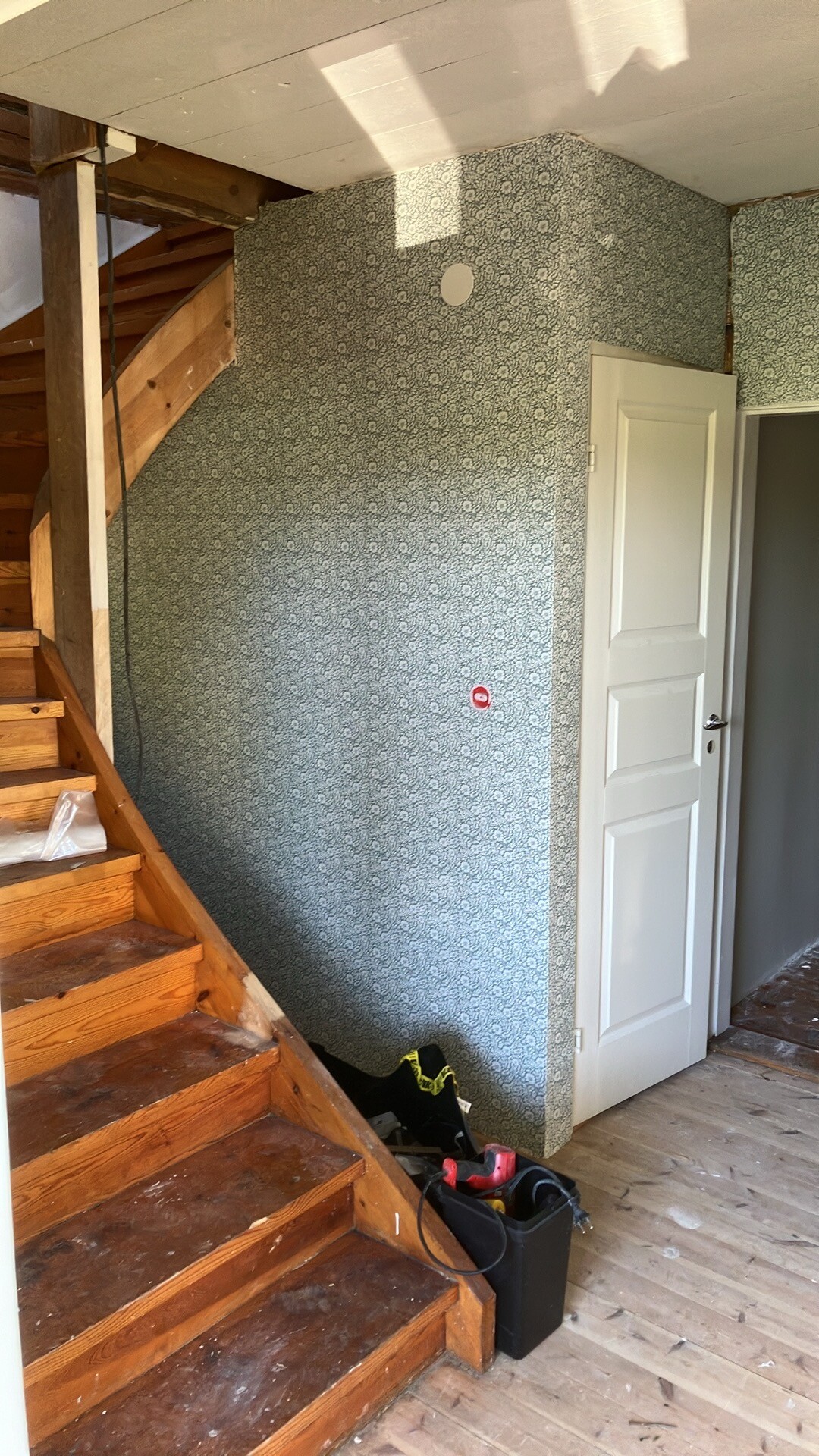
This is how it looks today.
Question two:
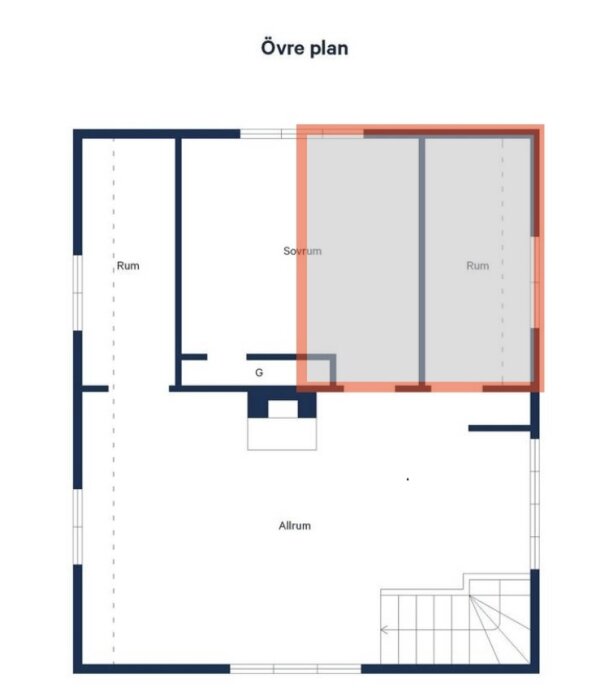
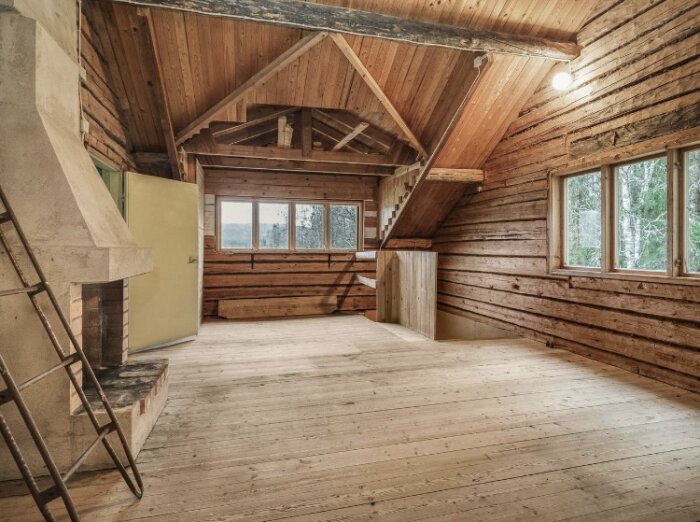
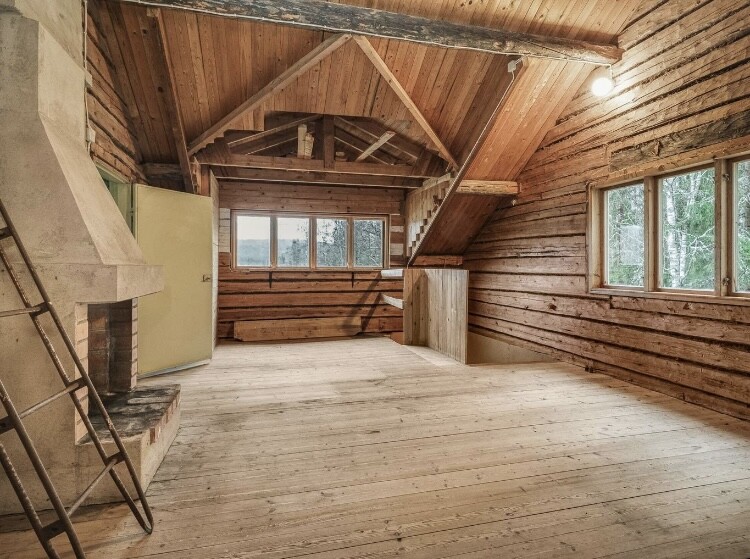
On the upper floor, I want to build two bedrooms for the kids. The previous owner built a room within a room since the upper floor is not insulated (I will insulate the entire upper floor).
What I want to do is divide the existing "bedroom" and widen each room by opening up the attic spaces.
Can I remove the entire wall, or should I keep some logs at the top? Or can I open the entire wall and make a pillar in the middle?
See the picture below (it will be two bedrooms, but only one is marked).
I am thinking of having an entrance on each side of the chimney.
Regarding the knee wall, they are most likely load-bearing.
I wouldn't touch the wall on the ground floor before having a house visit from a carpenter or joiner who is skilled with old houses.
In a log house, the walls are supposed to both take loads from above and hold the house together laterally so the walls don't collapse outward.
Log cabins are special, as the entire log construction is both load-bearing and cohesive so that neither the long sides nor the gables can sag away.
In principle, all walls are therefore load-bearing.
So it is more difficult, sometimes completely impossible, to remove or move walls in a log cabin without endangering the structural integrity of the house. Additionally, log cabins move quite a bit over the seasons, more than houses of other constructions.
This is one of the reasons why modern bathrooms and even boiler rooms for wood boilers with accumulator tanks are often added as extensions in other techniques (often framed on a concrete slab) in a suitable location, often near a kitchen entrance.
My advice is to "work with the house" primarily, without trying to move walls, and try to find solutions for more bedrooms without taking down log walls. And consider building an extension instead of constructing a bathroom inside the house.
The isolated bedroom in what is otherwise an uninsulated attic may well be an original solution from when the house was built. They simply did it that way. Often the rest of the attic has been insulated later.
A variant that provides greater opportunities for creating bedrooms on the upper floor and a bathroom on the ground floor is to see if the staircase to the upper floor can be moved so it is "toward the center" of the house instead of in the corner. However, this is not feasible if there is a staircase going down to a possible basement under the staircase up.
A relocated staircase would make it possible to place a bathroom in the corner where the staircase is now.
This is what we did in the latest log cabin project that we renovated, which allowed for a completely different flexibility for the floor plan both on the lower and upper levels.
There are some here on the forum, e.g. @heimlaga, who really know this in depth, and they will probably get back to you with advice in due course.
Can you take a picture of where the knee wall panels meet the outer gable walls? So you can see how the logs meet each other.
Usually, inner walls are tied into outer walls to prevent them from bending or collapsing. It can be quite tricky, and depending on how the house is timbered, the problems have to be solved in different ways. The best way is to bring in a timberman who can look at it on-site.
Based on how it usually is, considering that the knee walls don't span the entire length of the house, the likelihood that you can remove most of them or replace them with followers on the outside of the house's gables is pretty high. Since you have a ridge roof, the knee walls have no function for the roof; it is supported by the gables and the cross wall.
You will probably need to keep 1-1.5m of the wall on the ground floor to maintain the stability of the outer wall.
Log houses are special, as the entire log construction is both load-bearing and cohesive, preventing the long sides or gables from collapsing.
In principle, all walls are load-bearing.
So it is more difficult, sometimes entirely unfeasible, to remove or move walls in a log house without compromising the structural integrity of the house. Additionally, log houses move quite a bit over the seasons, more than houses of other constructions.
This is one of the reasons why modern bathrooms and boiler rooms for wood-fired boilers with accumulator tanks are often added using a different technique (often framed on a concrete slab) in a suitable place, often next to a kitchen entrance.
My advice is to first "work with the house" without trying to move walls, and try to find solutions for more bedrooms without taking down log walls. And consider building an addition instead of installing a bathroom inside the house.
The insulated bedroom in what is otherwise an unheated attic could very well be an original solution from when the house was built. That's simply how it was done. Often, the rest of the attic is insulated later.
One option that offers more possibilities for creating bedrooms on the upper floor and a bathroom on the lower floor is to see if it's possible to move the staircase to the upper floor so that it ends up towards the "middle" of the house instead of in the corner. However, this is not feasible if there is a staircase leading to a possible basement under the staircase up.
A relocated staircase would make it possible to place a bathroom in the corner where the staircase is now.
We did this in the latest log house project we renovated, and it allowed for a completely different layout flexibility on both the lower and upper floors.
There are some here on the forum, for example, @heimlaga, who have extensive knowledge on this topic, and they will probably get in touch with advice when they have the opportunity.
Thank you very much! Many great tips there!
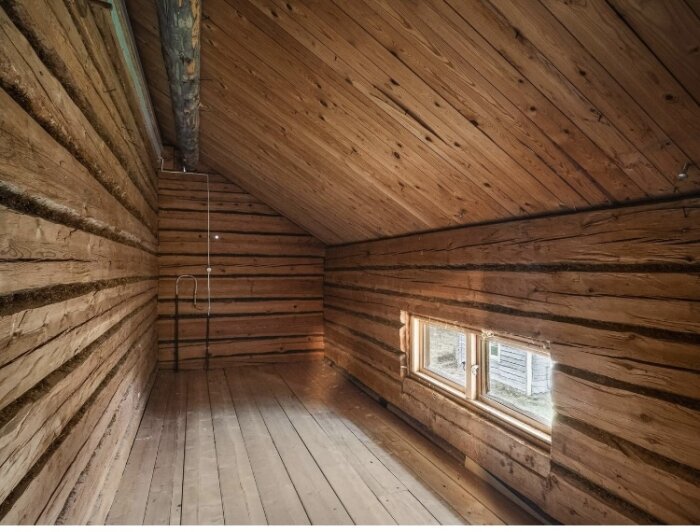
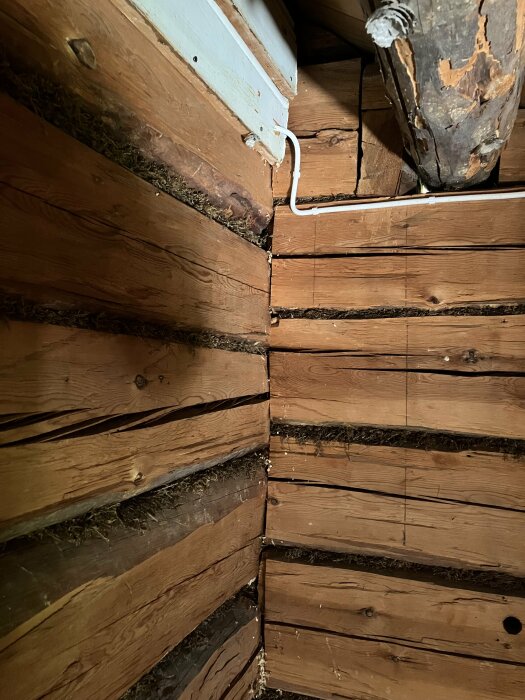
Here's how the cold attic meets the outer wall.
UUtsliten och utdömd said:
Can you take a picture of where the knee wall meets the outer gable walls? So you can see how the logs meet each other.
Typically, interior walls are tied into the exterior walls to prevent them from buckling or collapsing. It can be quite tricky, and depending on how the house is built, you need to solve the problems in different ways. The best way is to bring in a log specialist who can look at it on-site.
Given how it usually is, considering that the knee walls do not span the entire length of the house, the likelihood of removing most of them or replacing them with followers on the outside of the house's gables is quite high. Since you have a ridge roof, the knee walls have no function for the roof, as it is supported by the gables and the cross wall. You will likely need to keep 1-1.5m of the wall on the lower floor to maintain stability in the exterior wall.
Thank you very much for a detailed response!
After doing more demolition today, it looks like this:
I have an experienced carpenter coming tomorrow to make an assessment.
I still think that if I keep 1-2 logs in the ceiling, it should remain stable, right?
Can you take a picture of where the attic walls meet the outer gable walls? So you can see how the logs meet each other.
Usually, it's the case that interior walls are tied into the outer walls to prevent them from buckling or collapsing. It can be quite tricky, and depending on how the house is timbered, you have to solve the problems in different ways. The best way is to bring in a carpenter who can look at it on-site.
Considering how it usually is, given that the attic spaces are not the entire length of the house, there's a good chance that you can remove most of them or replace them with followers on the outside of the house's gables. Since you have a truss roof, the attic spaces have no function for the roof, as it is supported by the gables and cross wall.
You'll likely need to retain 1-1.5m of the wall on the ground floor to maintain the stability of the outer wall.
Here's what the cold attic wall looks like against the outer wall:
Looks good, wise to save a part of the log wall for stability. However, would have liked to see a beam placed in the opening to maintain stability in the logs since you probably cut away some pins.
Looks good, it's wise to save part of the timber wall for stability. However, I would have preferred a riddle placed in the opening to maintain the stability of the timber since you probably cut away some dowels.
Yes, maybe that should have been done. I assessed that it wasn't necessary since I felt that the wall didn't have any direct load on it. (Before I cut the wall, I pushed on it, and it felt "flimsy") I installed three 45/70s that were screwed into each beam and into the ceiling and floor on the wall piece, which is 750mm.
Click here to reply
Vi vill skicka notiser för ämnen du bevakar och händelser som berör dig.