P
Hello!

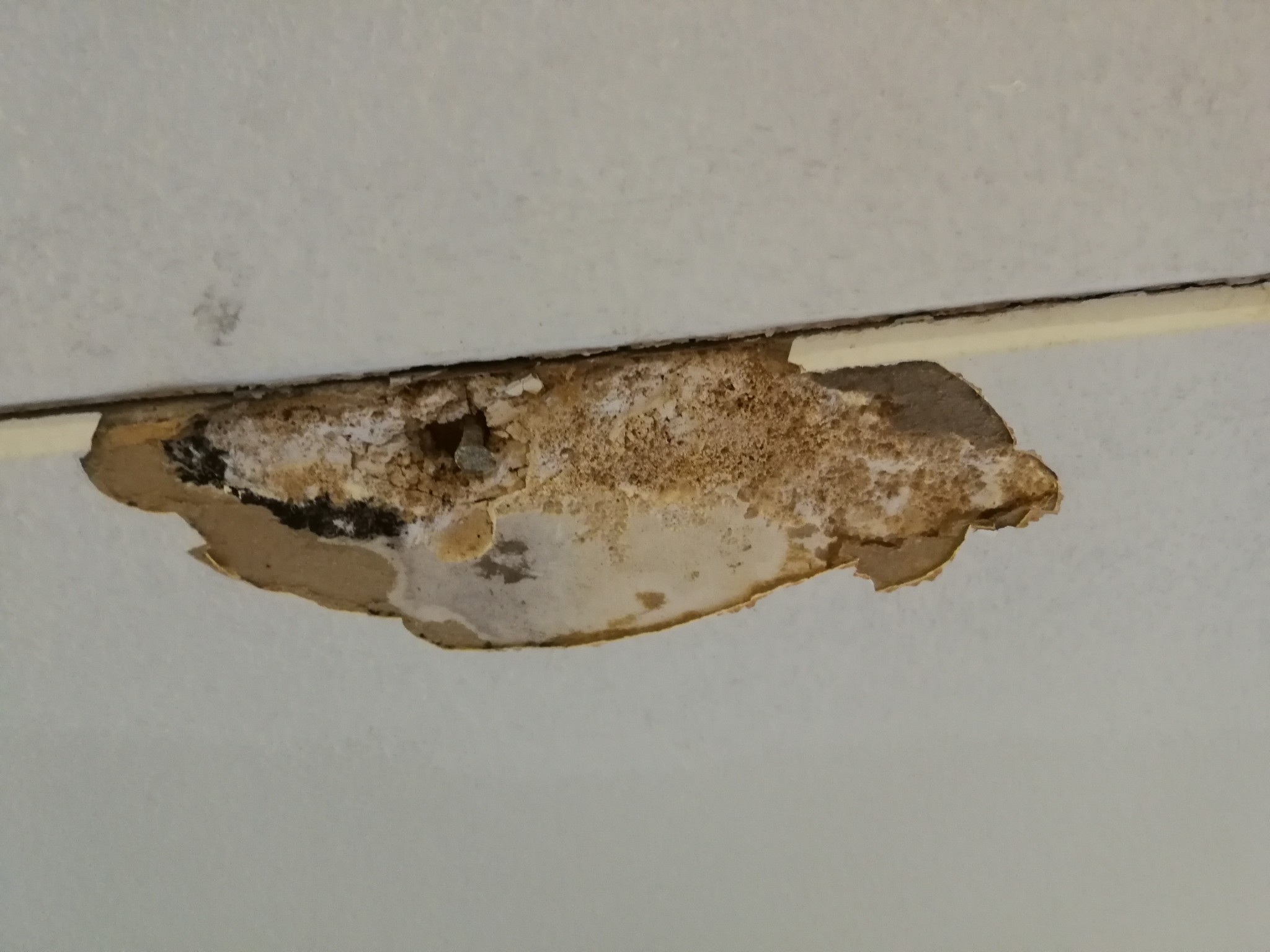
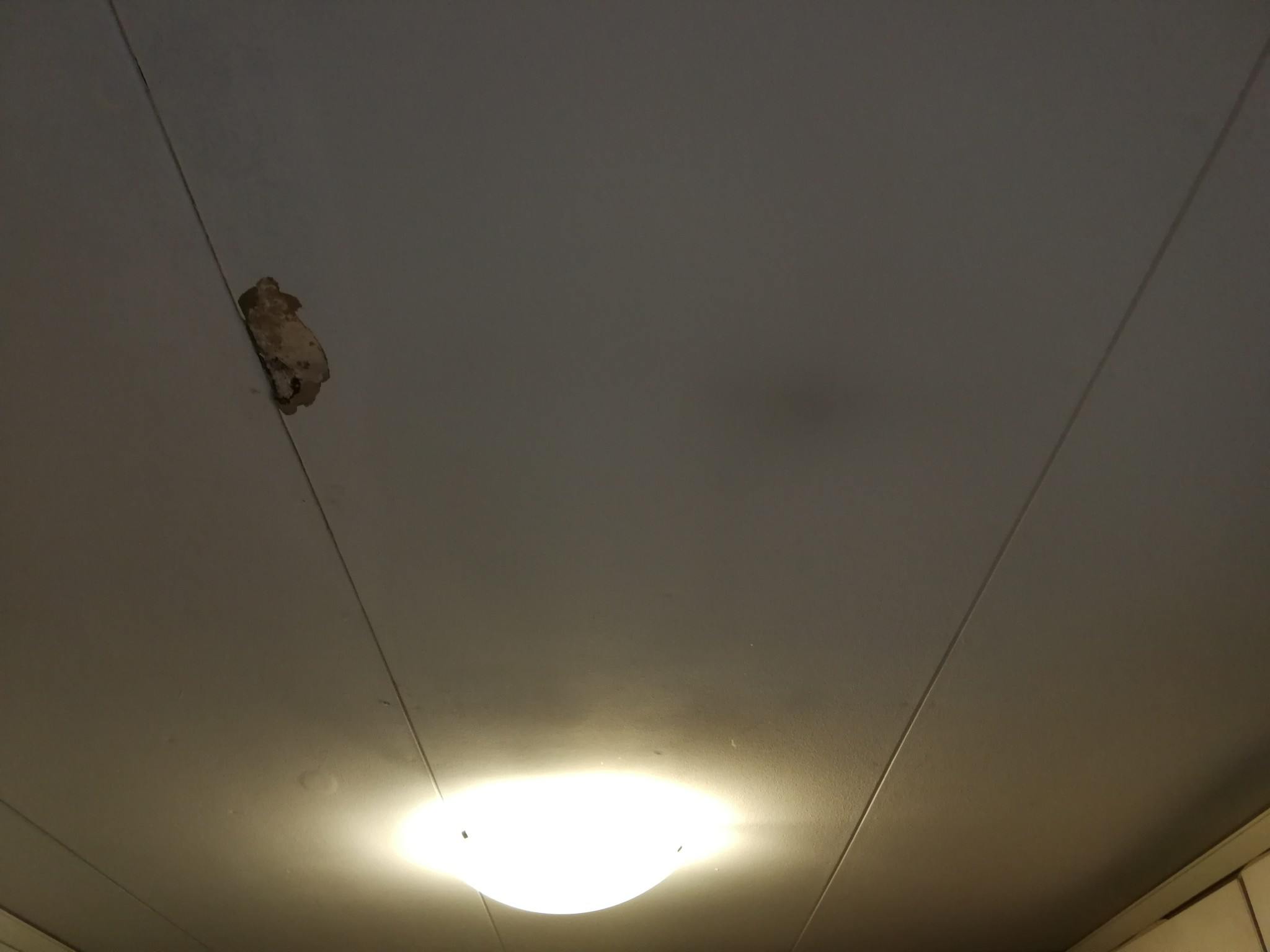
Seventies house, lived in it for a year. We're planning to tackle the hallway soon and among other things, repaint the ceiling as it's stained and such, and started looking a bit closer and poking at the panels. One spot quickly turned out to be porous. Scraped a bit on the surface and took a look. It looks like this:

First of all - what am I looking at? Is it normal or a sign of bigger problems? Above the hallway is the upstairs bathroom. A bit worried about the black and gray.

Then - how should I proceed? I'm thinking I naturally want to replace this panel (and check the condition above), is it a good idea to just replace one or do you have to replace them all? How do you most easily remove a panel without damaging adjacent panels?

Regards,
Ceiling Beginner
 
  • Damaged ceiling panel with peeling surface and black mold spots, showing signs of water damage and deterioration in a 1970s house's hallway.
  • Ceiling with a damaged area near a light fixture, showing a surface defect. The context suggests concerns about potential water damage above.
sandstorm said:
Hi!

Seventies house, lived in it for a year. We are soon planning to tackle the hallway and among other things, paint the ceiling as it is stained and such, and began to take a closer look and poke at the panels. One spot quickly turned out to be porous. Scraped a little on the surface and peeked. It looks like this:

First and foremost - what am I looking at? Is this normal or a sign of bigger problems? Above the hallway is the upstairs bathroom. A bit worried about the black and gray.

Then - how should I proceed appropriately? I think I naturally want to replace this panel (and examine the condition above), is it a good idea to replace just one or do I need to take them all? How do you easily remove a panel without damaging adjacent panels?

Greetings
Ceiling newbie
Check with a moisture meter, or you can call the insurance company to hear what they say.

I would have torn down everything, and if it looks okay, I would have put up a new ceiling, doesn't cost a lot.
If there are moisture damages, your insurance company should take a look at it.
 
Click here to reply
Vi vill skicka notiser för ämnen du bevakar och händelser som berör dig.