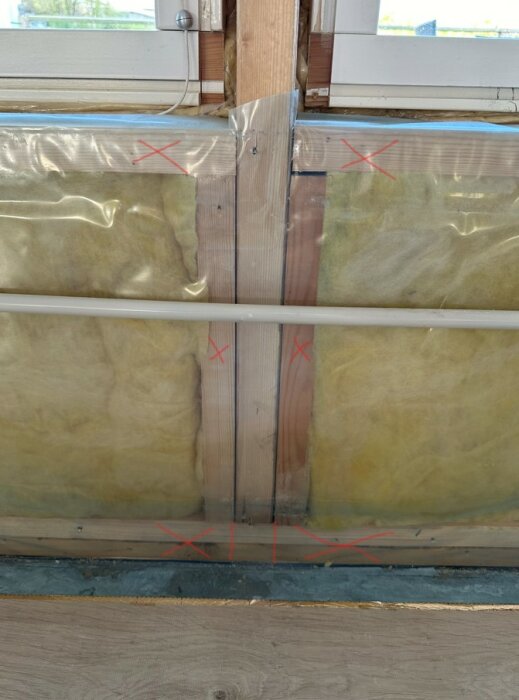
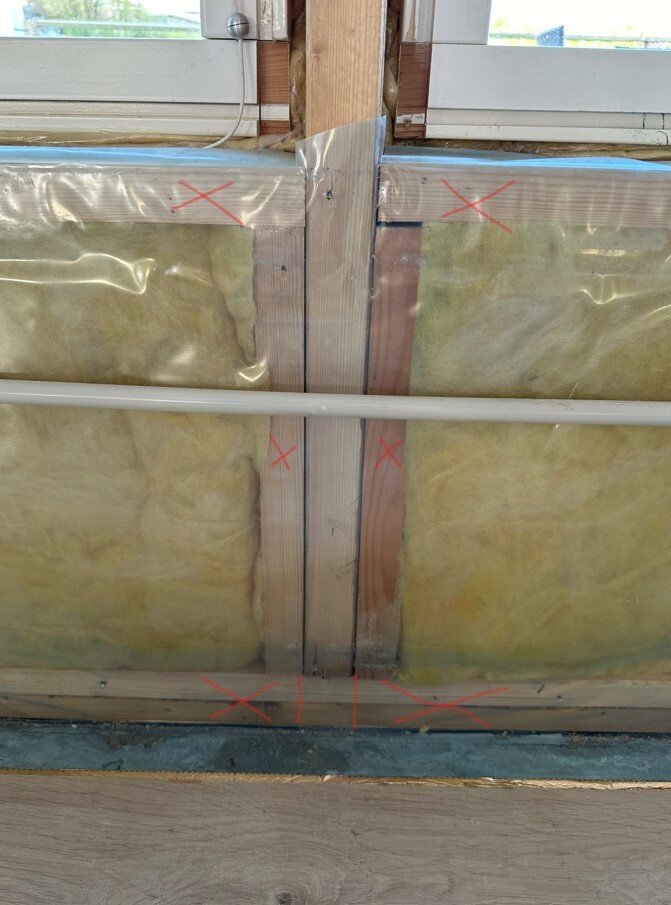
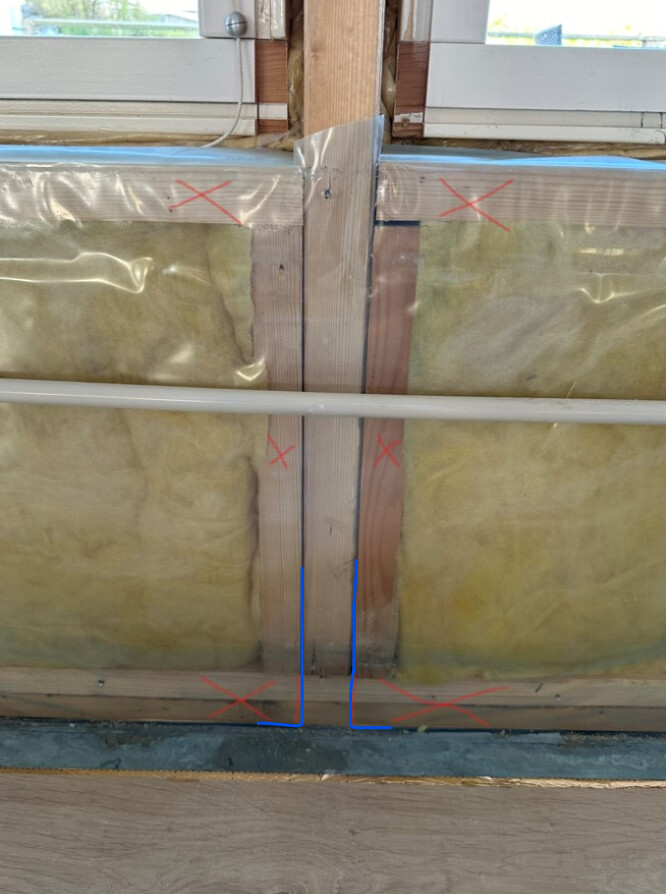
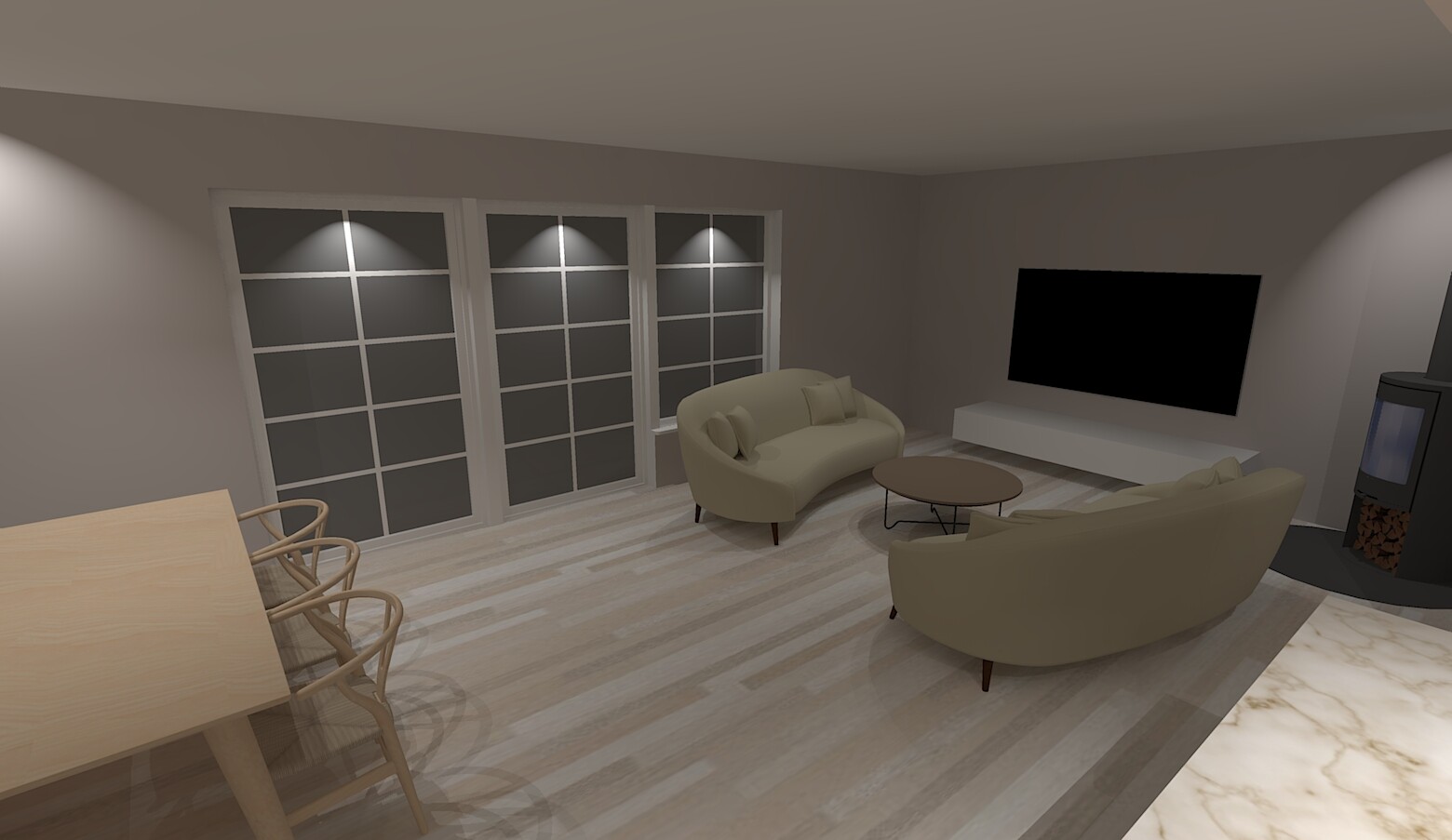
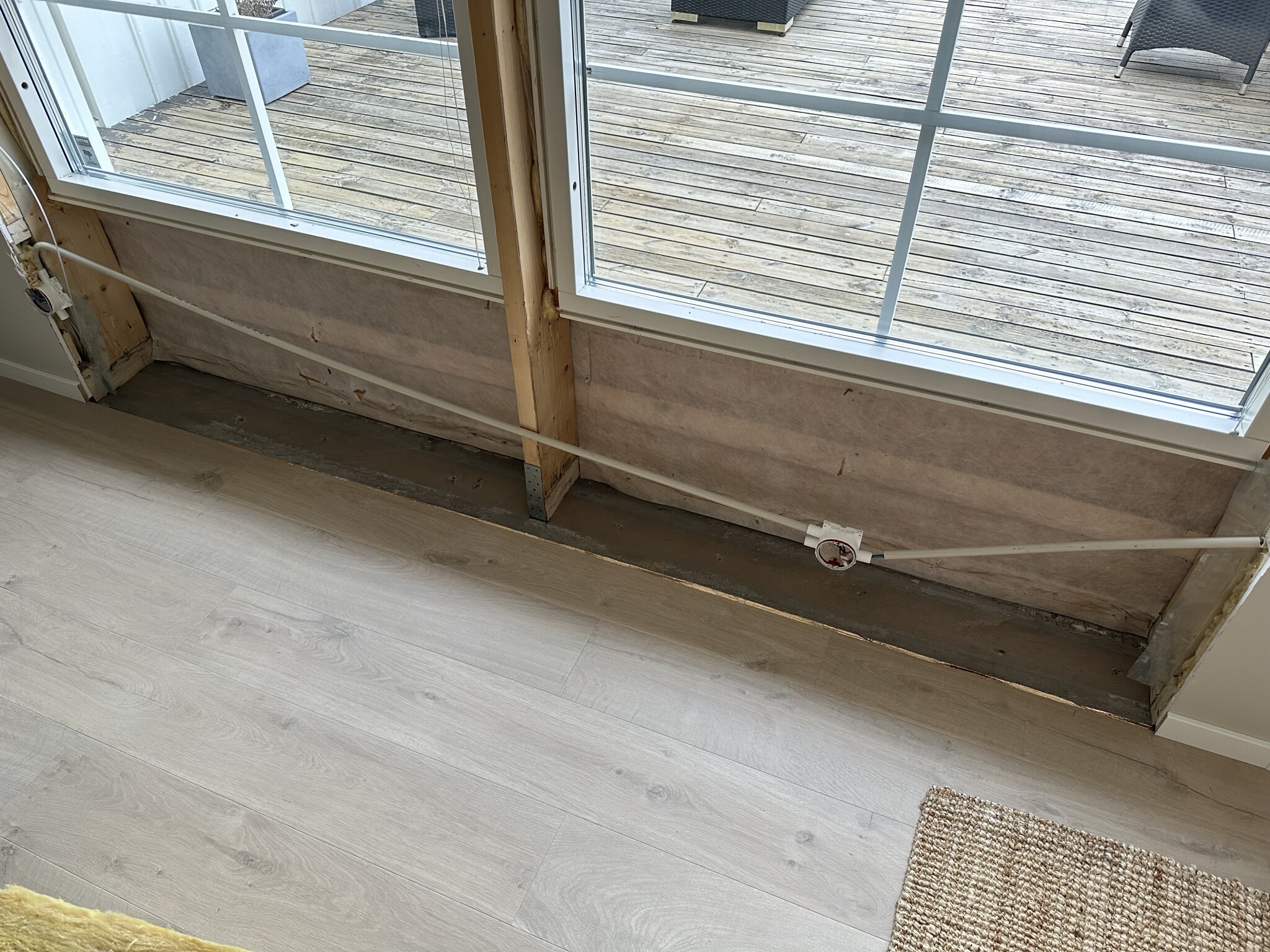
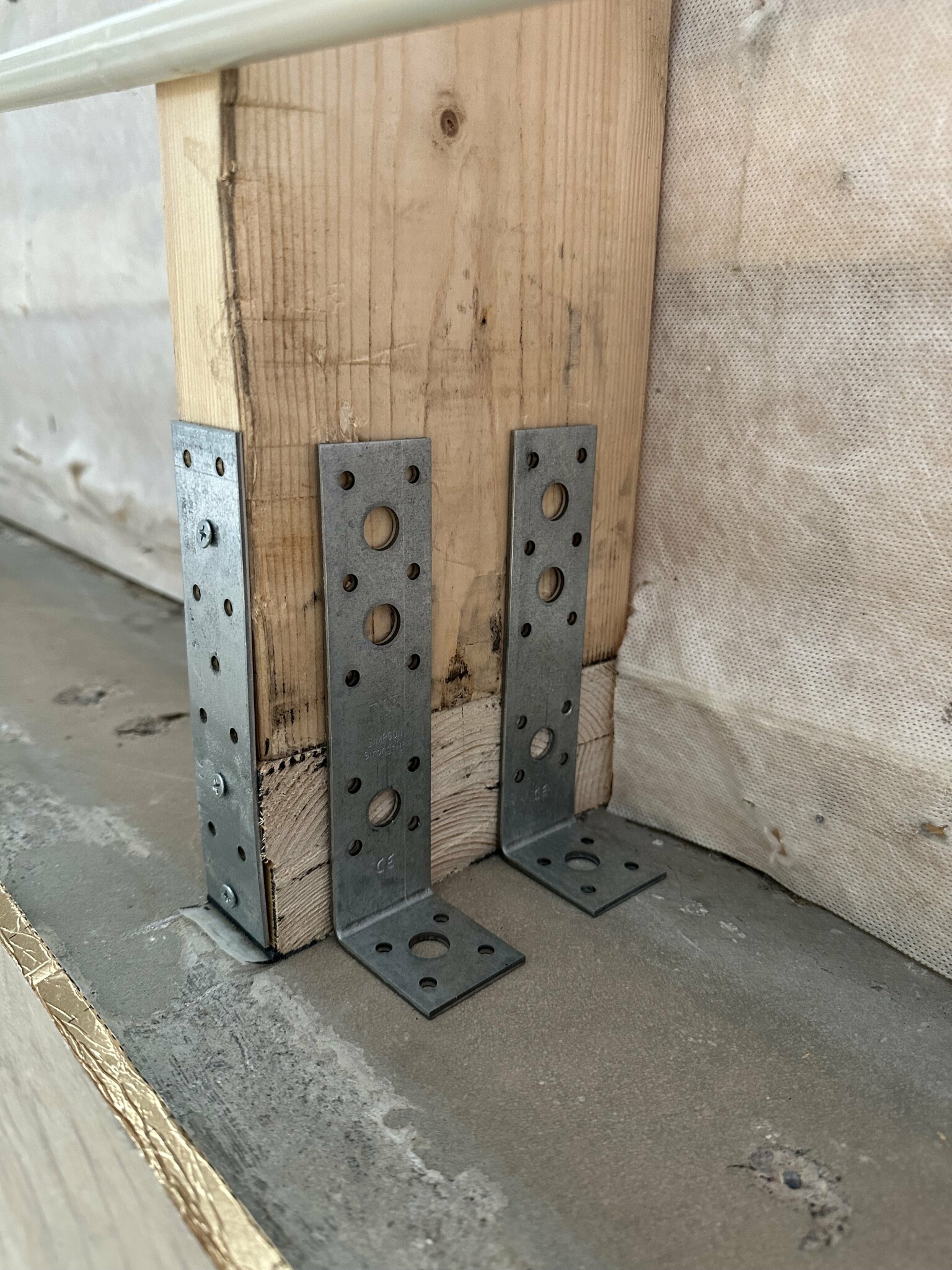
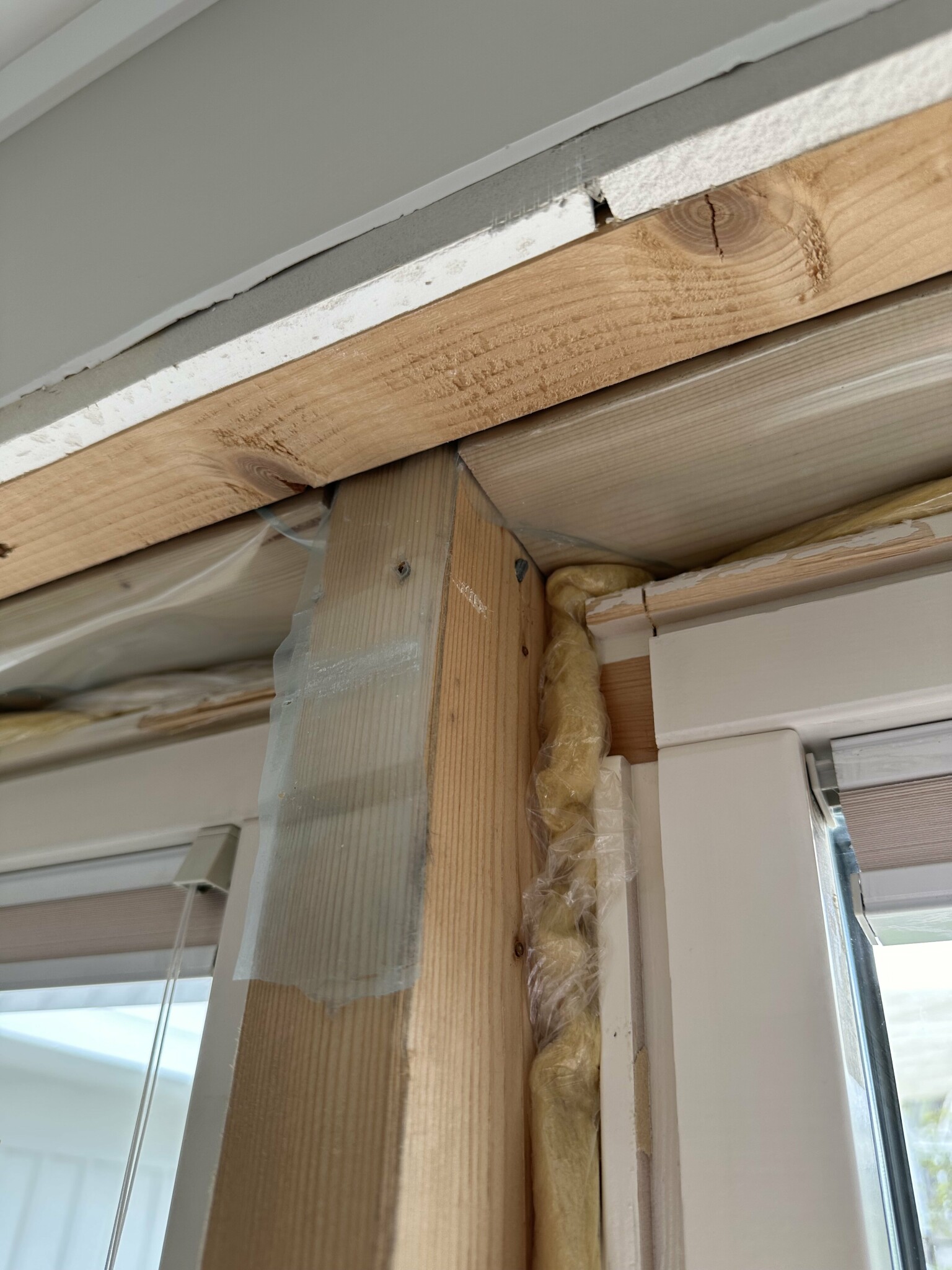
In the picture, you can see a standing stud going up to the ceiling and it is load-bearing (45x170). Currently, there are two windows here, which will be replaced with two patio doors. The middle load-bearing stud will remain, and the patio doors will be installed on each side.
Everything with a cross will be removed, and the stud will remain, but I will have to cut the two horizontal studs it stands on. How do I best do this to minimize the risk of cracking these horizontal studs?
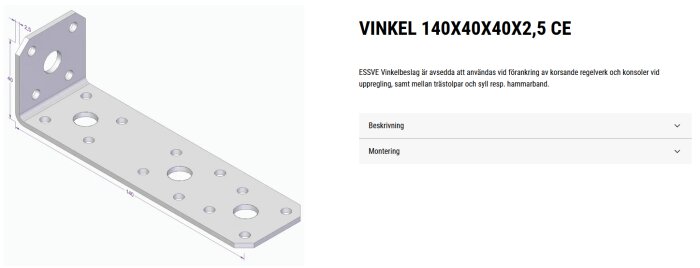
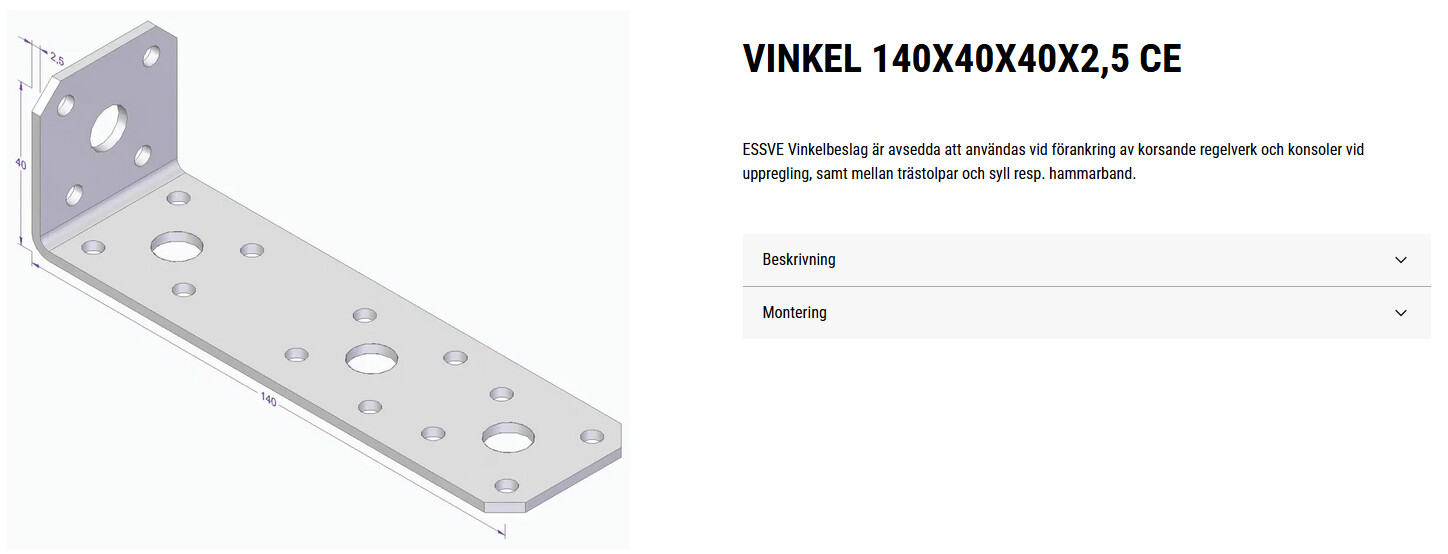
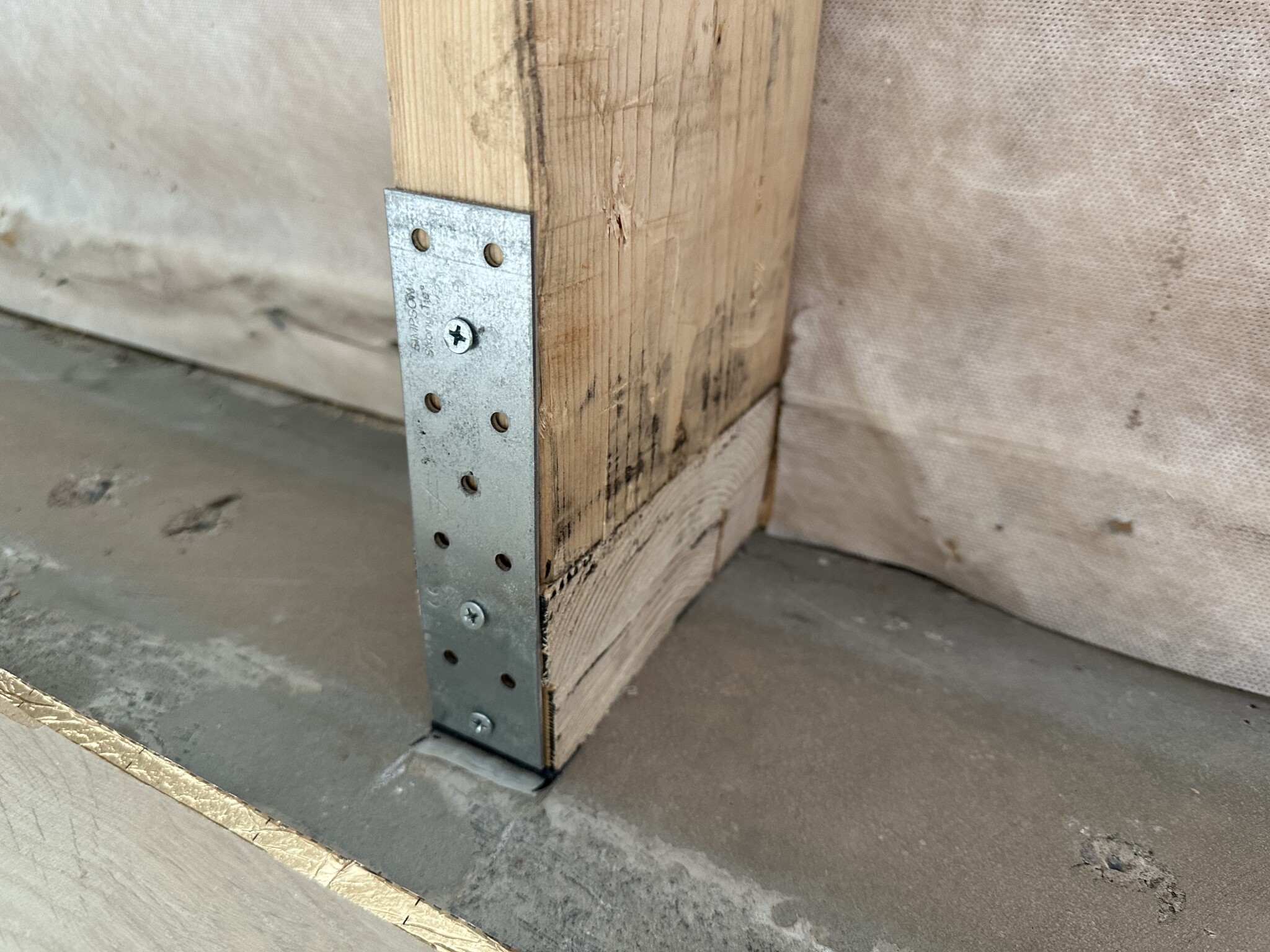
My idea is to place this type of angle bracket on each side of the stud, which will go up to the standing stud, and secured with screw+plug:
On the shorter indoor side, I can also place one of these angle brackets and on the outside a splice plate.
If I am to screw into the cut horizontal studs, it will be in the end grain, pre-drill and screw carefully into these studs, or should I only "clamp" them with angle brackets and screw into the standing one to avoid cracking the horizontal studs?
The ones on the sides can be removed, but there is a sill board at the bottom, measuring about 45 X 145 perhaps, it is not visible now, but press under the insulation so everything is visible. Cutting off may not be the way, the piece that remains can crack and then the upright can sink.
The ones on the sides can be removed, but there's a sill board at the bottom, measuring about 45 x 145 maybe, it's not visible now, but press down the insulation so everything is visible. Cutting off isn't easy there, as the remaining piece might crack and the upright could then sink.
Yes, exactly, and that's what the thread is about.
I need to cut both horizontal sill boards so that they have the same width as the upright stud (45mm). To stabilize everything, I thought I'd attach angle irons that go a bit up the upright stud and hold everything in place.
Angle iron in blue:
This is screwed into the concrete slab.
My plan is to cut one side of the sill board at a time, attach an angle iron, and then cut the next. This way, nothing has a chance to move sideways.
Your thought is good, when you saw off the sill, take it a bit carefully so it doesn't crack, so that piece can remain as support underneath. Then, two angles are enough, one on each side, they should only hold it so it doesn't move. Now it stands firmly on the sill. Starting to screw from all sides might make it want to crack. Use anchor screws that don't break when they grip hard.
Alternatively, support the ceiling, remove the entire beam and replace it with a new one that goes all the way when it's time.
Preferably want to avoid that, as it would require a lot more of the interior wall to be demolished. Also seems quite unnecessary. The beams shouldn't crack on their own, and if they do, they are clamped between angle irons.
Jjonaserik said:
Your idea will work, when you saw off the sill, do it gently so it doesn't crack, and that piece can remain as support underneath. Then two angles are enough, one on each side, they are only there to prevent it from moving anywhere. Now it's firmly standing on the sill. Starting to screw from all angles might make it crack. Use anchor screws that won't break when they grip hard.
Yes exactly, as I mentioned, I plan to saw off one side first, attach the angle iron, and then do the other side. Should I completely skip screwing into the two horizontal sill pieces that remain and only screw into the slab and the standing beam? What do you mean by anchor screws won't break?
No need to screw any stud/sill (you can screw at an angle into the stud and sill, and it will remain steady with the angles on the sides. It won't go anywhere with fastenings in the concrete. Now you're probably going to attach frames to the stud, but it will hold. Anchor screws are what are used in trusses when they are manufactured on site. And extremely strong, regular drywall screws will break if they are tightened too hard, with the slightest movement between what is to be screwed together. You won't need that, but just for your information. You can set the angles a bit diagonally from each other, so that the screws overlap in the stud and aren't directly opposite each other. Continue as you've planned, and it'll turn out well.
What is the point of having two doors if there is still a pole in the middle?
To get the feeling of being very open towards the back, without having to support rafters with a hefty beam and buy extremely expensive sliding doors. It will be 2 pieces of 120cm wide patio doors. And keep one of the three windows that were already there. So the openings will actually be larger than what a sliding door would have been.
No need to screw any studs or sill (you can put a screw at an angle in the stud and sill, and it stays steady with the angles on the sides. It won't go anywhere with the anchors in the concrete. Now you're likely to fasten the frames to the stud, but it holds. Anchor screws are what you use in rafters when they are made on-site. And extremely strong, regular drywall screws break if they are tightened too hard, with the slightest movement between what is being screwed together. Not that you're going to use them, but just for info. You can place the angles a little diagonally from each other so the screws overlap in the stud and not opposite each other. Keep going as you planned and it'll be fine
Cut the studs and sill. Dared to cut everything without anchoring to the concrete. Thought of doing it like this, but maybe one on each side is enough? Temporary screws on flat bar.
In the last photo, have you turned the angle inward or just leveled it so it came underneath? You can do the same on the sides if the irons fit and reinforce further. I was thinking of your suggestion now, from the start. With the frame in the rule, there will be pressure from the right/left at the lower part of the rule, and with the irons you show, it holds up better. It's at the bottom where it strains, when the door is in place. Make sure to reinforce at the ceiling as well, if you can fit two irons on each side, that's not wrong.
In the last photo, have you turned the bracket underneath, or just leveled it so it came underneath? You can do the same on the sides if the irons fit and strengthen further. I imagined it like your suggestion now, from the beginning. With the frame in the rule, there will be pressure from the right/left in the lower part of the rule, and with the irons you're showing, it will hold better. It's at the bottom where it takes the strain when the door is in place. Make sure also to reinforce at the ceiling, if you can fit two irons on each side, it's not wrong.
It is a flat iron on the short side and not an angle. Planning to put angle irons, two on each side, and flat iron on the short sides. But maybe it's just as well to put an extra angle iron on the short side indoors. Might not have space for angle iron at the top, it's starting to take up a lot of space with all the irons and screws, so it might get a bit tight. But can I drive extra construction screws in the scribe?
Aha a flat bar, AJABAJA not good it is screwed in the part under the rule and that piece is loose on the concrete. If the metal is to be of any use, it should be attached to the rule and the concrete. At the top the rule goes between two pieces and one on the inside and is securely against a wall plate that goes around the house, if you can get an inside angle there it's good. Angling does no good.
Aha a flat bar, TSK TSK not good it is screwed into the part under the rule, and that piece is loose on the concrete. If there is to be any benefit with the iron, they should be attached to the rule and the concrete. At the top, the rule goes between two pieces and one on the inside and certainly stands against a hammer beam that goes around the house, if you can get an angle on the inside that's good. To angle does not help.
As mentioned, the flat bar is there to hold it together until I get the angle irons in place. But the flat bar does provide some benefit and holds everything together even when the angle irons are in place on the sides.
Vi vill skicka notiser för ämnen du bevakar och händelser som berör dig.