We are now back home after a long Christmas holiday and have access to the blueprints again.
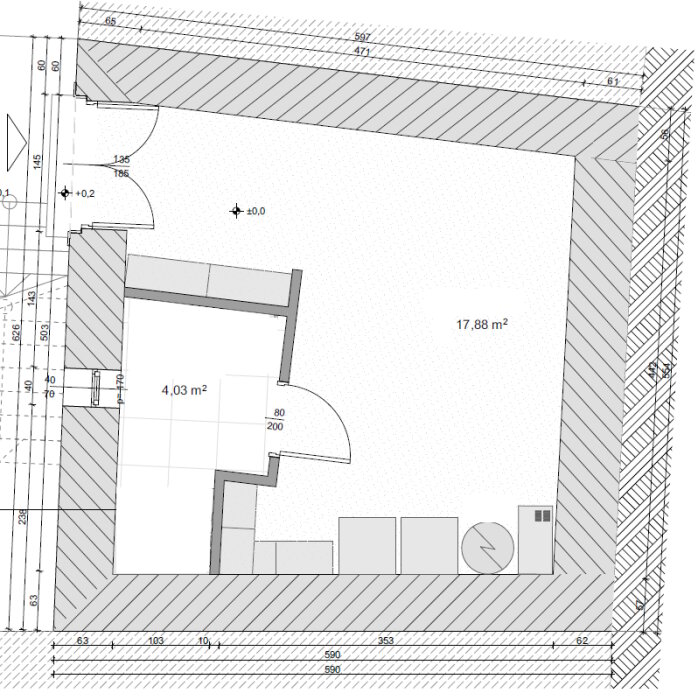
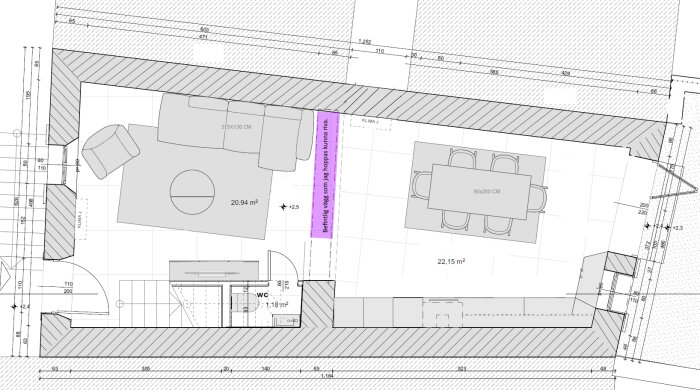
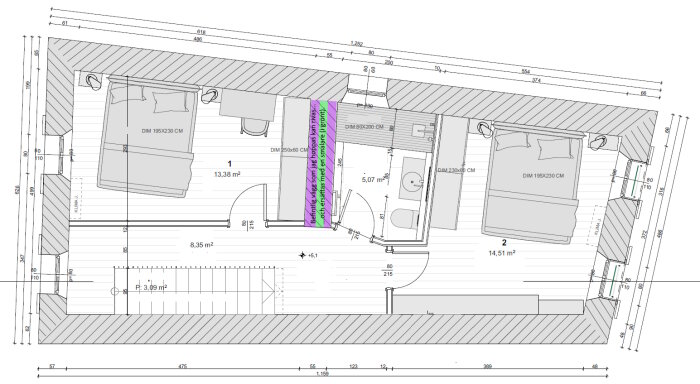
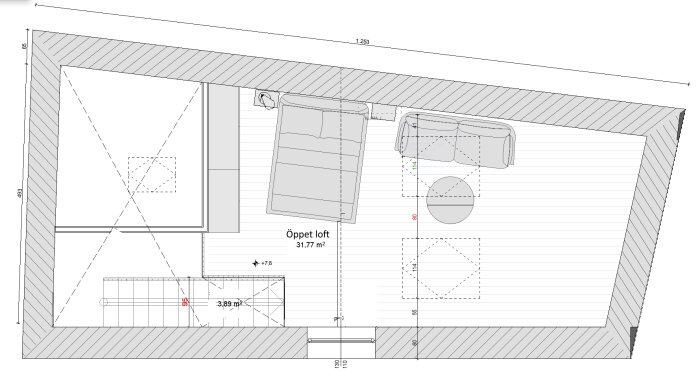
This is how it was intended to look before the structural engineer suggested building a "house within a house," i.e., casting an additional 23cm interior wall inside the existing interior walls.
We would like to keep the layout below, so we are now leaning towards creating a new wooden floor structure instead of casting a concrete floor. The loft already has a thick concrete floor, so I assume we need to convert it to a wooden floor structure; otherwise, we probably cannot remove the thick walls marked in purple on the blueprints.
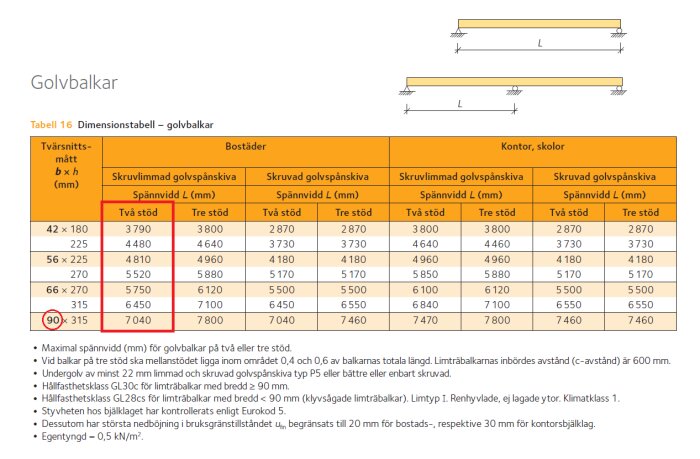
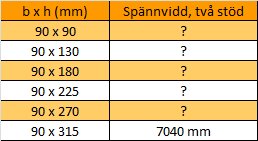
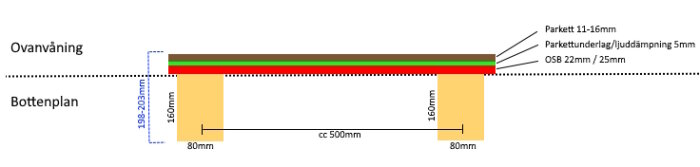
I have now read up as much as possible on the internet and if I understand correctly, the following should provide a stable floor over a span of 5m. We will of course let the structural engineer calculate this more closely, but wanted to hear if any of you have any thoughts/comments before I send this over to the architect.
That will probably turn out nicely, even though traditionally one would lay something coarser like floorboards instead of 22/25 mm OSB.
You should, of course, leave the dimensioning to the architect/civil engineer; it's not really the customer's job, one might think 😀 But in principle, you're probably on the right track with the general size of the dimensions.
Is it that important to have a vapor barrier in an intermediate floor? I'm not sure if the insulation adds much either. Considering that there will be a lot of "through-going" wood, it doesn't seem like there will be much sound insulation either.
If that was the intention? Maybe invest in a step-sound dampening mat under the parquet (I saw that you already wrote that).
Filling the entire space with insulation seems unnecessary. Many advocate not fully insulating (if it's soundproofing you're after), saying it's better for the sound to pass through different materials, but I don't know if that's true...
That will probably look nice, even though traditionally, you'd use slightly thicker floorboards instead of 22/25 mm OSB.
You should, of course, leave the sizing to the architect/building engineer, as it's not really the client's job, one might think 😀 But, in principle, you're probably in the right ballpark with the dimensions.
Thanks. Good to hear I'm not completely off track 😅
I talked to a guy at Bauhaus who seemed knowledgeable. He said that 22mm OSB is quite standard. We installed it in an apartment a few years ago (also wooden joists), and it turned out very stable. I don't remember what cc distance we had there, but I think 500mm cc is still quite narrow...
Is it so crucial to have a vapor barrier in a floor joist space?
I'm also not sure if the insulation will add much value?
Considering that there will be a lot of "continuous" wood, it probably won't offer much in terms of soundproofing either?
Thanks. I actually don't know if a vapor barrier is necessary. When I read up on it, it's consistently mentioned on Swedish sites, but not always on German or English ones. I thought it wouldn't hurt at least and it's fairly easy to install.
Regarding insulation, yes, it is mainly intended for soundproofing. I actually thought it would make quite a difference, but maybe I'm wrong. Perhaps it depends on which insulation you choose?
When I searched online, many advocated for 20mm plasterboard instead of the standard 13mm as the thicker board apparently soundproofs significantly better. I was a bit surprised that 7mm would make such a difference ... still a little skeptical.
Good to know. Thank you very much. Any specific insulation you recommend for achieving maximum soundproofing?
Rock wool is usually what is used in floor insulation, but it's only marginally better than glass wool. You don't need to buy expensive special ones, just check what they have at the builder's store down there...
An insulated floor makes a big difference compared to one that isn't when it comes to soundproofing.
So it is definitely recommended…
Yes, you probably know better than me about that.
But fully insulated or with air in between?
I've read online and built interior walls with 45*70 and then put 45 insulation, but I'm not sure if it's right or wrong, I did the same with the ceiling.
Impact sound will probably go straight down without dampening between the parquet and the floorboard if you attach the ceiling directly to the glulam beams?
Thanks. I'm not actually sure if a vapor barrier is needed. When I read up on it, it is consistently mentioned on Swedish sites, but not always on German or English-speaking ones. I thought it shouldn't hurt at least and it's fairly easy to install.
Regarding insulation, yes it's primarily intended for sound insulation. I actually thought it would make quite a big difference, but maybe I'm wrong. Maybe it depends on the insulation you choose?
When I searched online, many recommended a 20mm gypsum board instead of the standard 13mm since the thicker board apparently soundproofs significantly better. I was a bit surprised that 7mm would make such a difference ... still a bit skeptical.
A 20mm gypsum board is significantly heavier and a bit stiffer than a 13mm gypsum board, which means a lot for soundproofing. A common recommendation is, for example, double gypsum boards on a wall facing the sound source as a good (in terms of price and space) solution. Unfortunately, I don't have a relevant test in mind right now.
Yes, you probably know that better than I do.
But fully insulated or with air in between?
I have read online and built interior walls with 45*70 and then used 45 insulation, but I don't know if it's right or wrong, I did the same with the ceiling.
Impact sound will likely go straight down without damping between parquet and floorboard if the ceiling is attached directly to the glulam beams?
There is probably no right or wrong... Many insulate partition walls as you described.
I would have put in a minimum of 95mm in a floor structure.
Impact sound is slightly dampened with insulation in the floor structure, but if you want to reduce it more, a soundproofing underlay is better.
Gypsum board also has a big impact on the sound between the floors.
I wouldn't have put a vapor barrier there unless it's used consistently throughout the residence...
Vi vill skicka notiser för ämnen du bevakar och händelser som berör dig.








nino said:
