
1,869 views ·
5 replies
2k views
5 replies
Create an opening in transverse basement wall

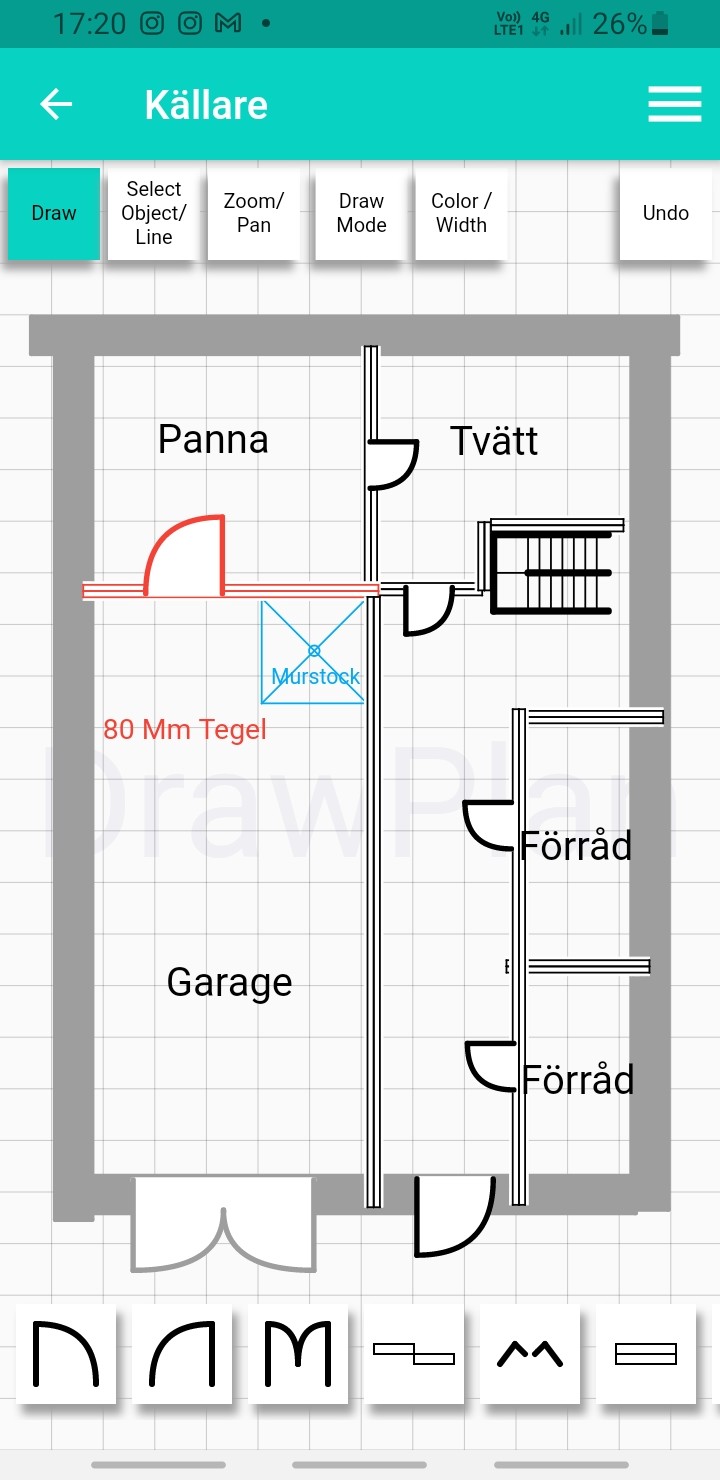
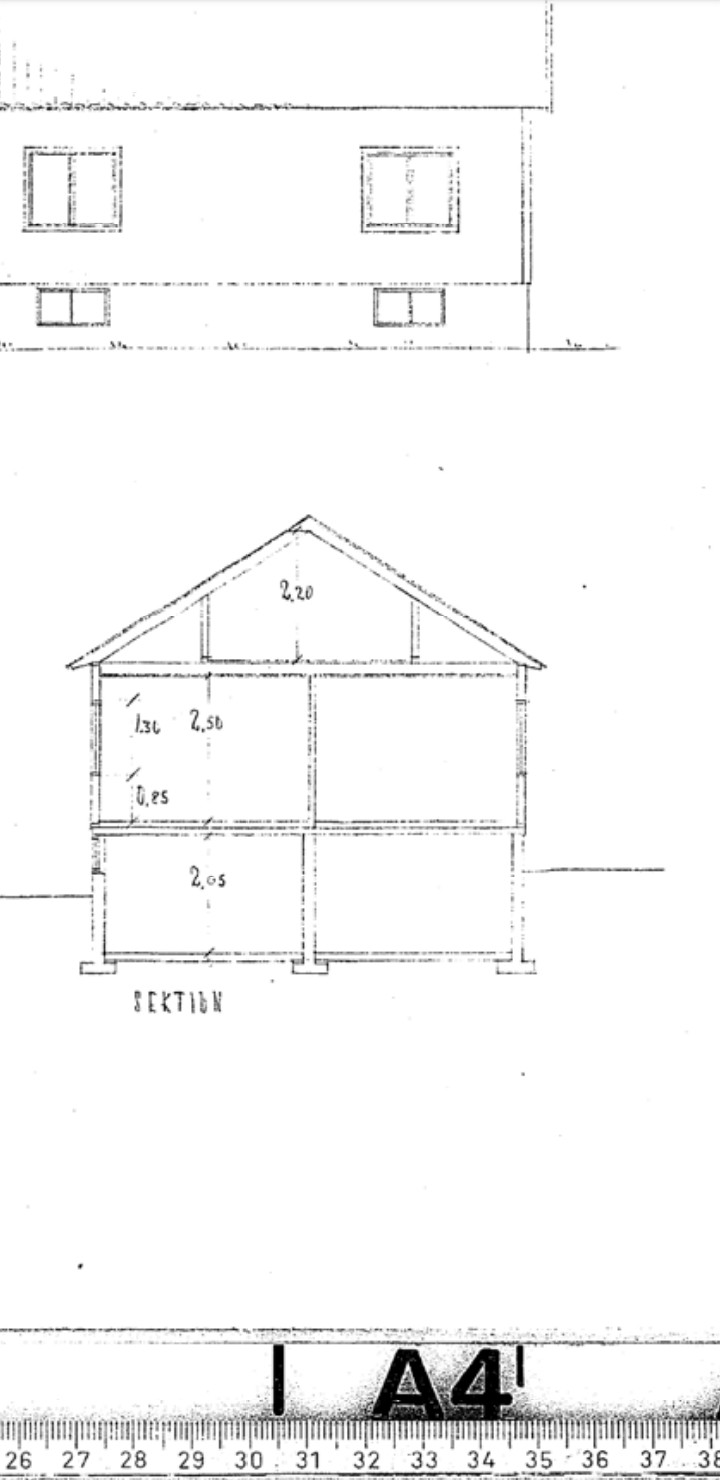
Hi! I would like some input on whether a wall in the basement can be load-bearing or not in a house built in the '50s. As you can see in the attached picture, (sorry about the scale) there is currently a brick wall between the garage and the boiler room. My idea was to possibly make a hole in this, roughly door-sized.
The wall is 80mm including plaster, so how load-bearing can it really be, I wonder...
Those of you who know can gladly analyze my fine provisional drawing and say what you think and feel. Can you make a hole in this one, you think?
The wall is 80mm including plaster, so how load-bearing can it really be, I wonder...
Those of you who know can gladly analyze my fine provisional drawing and say what you think and feel. Can you make a hole in this one, you think?


Even if it is not load-bearing, it can be stabilizing, i.e., it prevents the outer wall from being pushed in by all the earth outside. Therefore, the door should be placed as far as possible from the outer wall, and at least half a meter of wall is probably needed closest to the outer wall.
The longitudinal wall between the boiler room and the laundry is usually load-bearing. How thick is it?
Keep in mind that it is common to have asbestos-containing materials around garages and boiler rooms, and that garages and boiler rooms (if there is still a boiler used for heating) should be a different fire compartment than residential areas, thus requiring fire protection.
The longitudinal wall between the boiler room and the laundry is usually load-bearing. How thick is it?
Keep in mind that it is common to have asbestos-containing materials around garages and boiler rooms, and that garages and boiler rooms (if there is still a boiler used for heating) should be a different fire compartment than residential areas, thus requiring fire protection.
The roof trusses appear to run crosswise according to the section image. I don't know how the floor joists run. Are there any quick ways to find this out without tearing up the floor?Demmpa said:
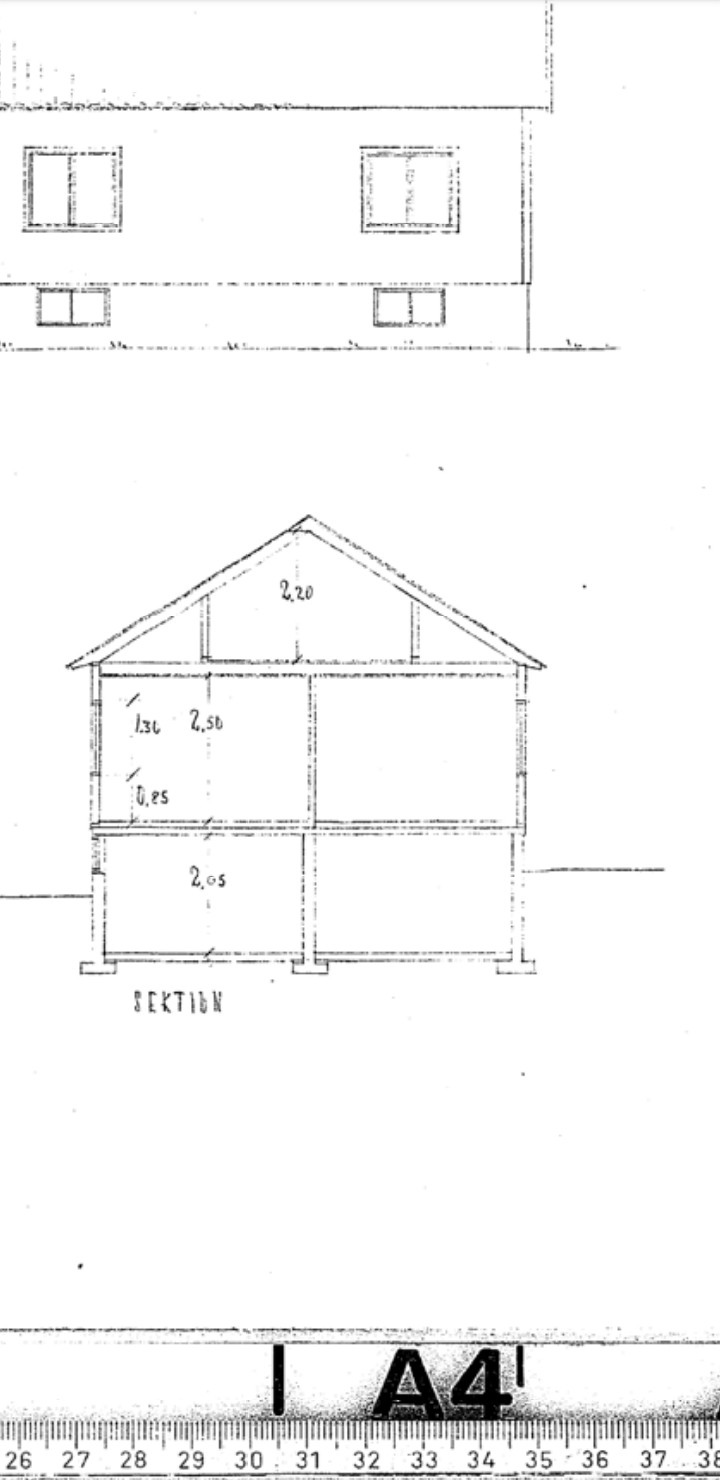
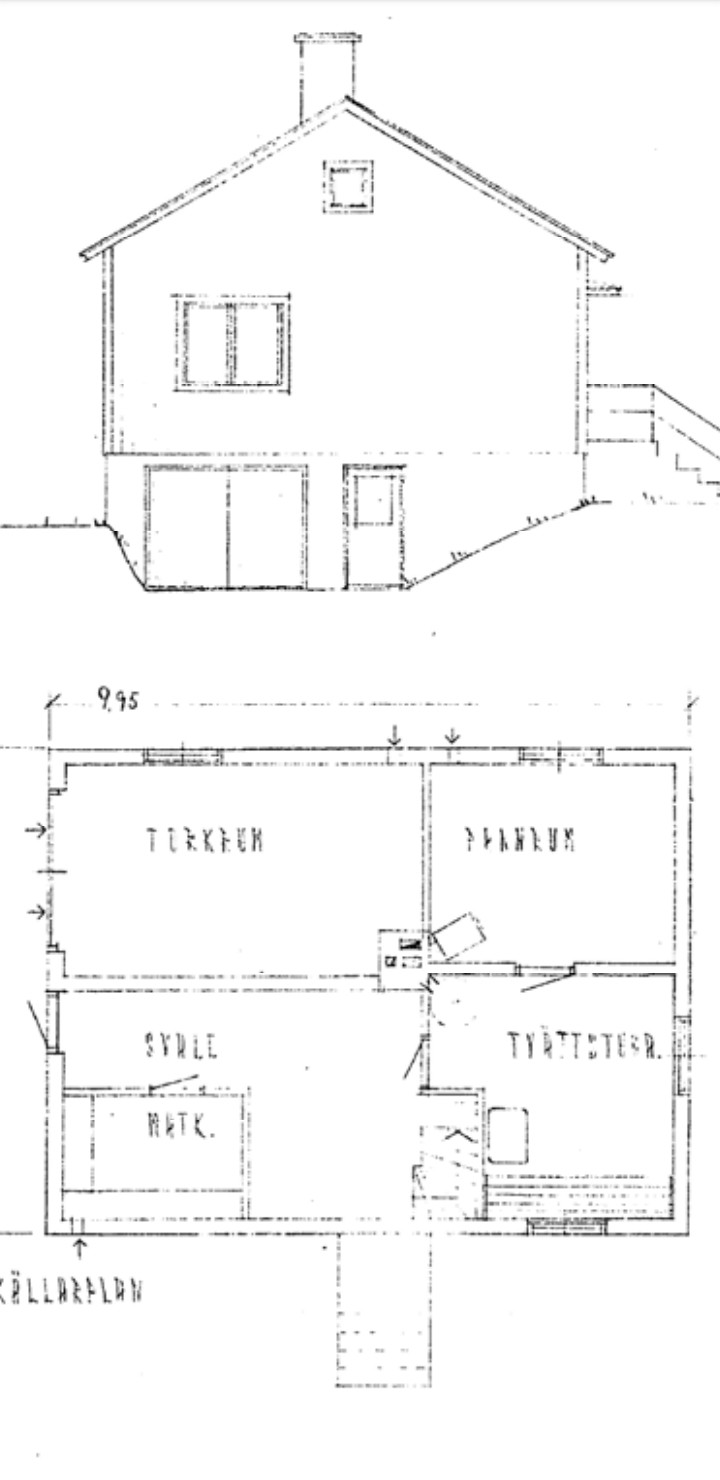
Thank you for the response! I found the building plans from '57, where you can see how high the ground level is at the garage. The ground level might be at chest height. The load-bearing longitudinal wall is 21.5 cm, and the outer wall is 22. But if we play it safe by leaving a meter and opening perhaps 0.9-1 mBirgitS said:
Even if it isn't load-bearing, it can be stabilizing, i.e., preventing the outer wall from being pushed in by all the soil outside. Therefore, the door should be placed as far as possible from the outer wall, and it probably requires at least half a meter of wall closest to the outer wall.
The longitudinal wall between the boiler room and laundry is usually load-bearing. How thick is it?
Keep in mind that it is common to have asbestos-containing material around garages and boiler rooms, and that garages and boiler rooms (if there is still a boiler being used) should be a separate fire compartment from living areas and therefore require fire protection.
Click here to reply
Similar threads
-
Såga upp en dörröppning i en källarvägg av betonghålsten (gråsuggor) utan att det dammar för mycket
Grund & Markarbeten -
How to widen too small door opening for front door in basement wall (Leca)
Building Materials and Construction Technology -
Basement walls made of Leca. Glulam over opening instead of Lecabeam. Questions.
Building Materials and Construction Technology