
3,678 views ·
27 replies
4k views
27 replies
Cracks in newly built wall
Hello
A wall has recently been built on the border between my property and the neighbor's lot so the neighbor could blast away rock for construction.
After my lot was backfilled, I saw today that there are three large cracks in the wall.
1. What could be the cause? Perhaps it didn’t have enough time to set properly before being backfilled?
2. Can it be repaired, or do they need to redo the wall from the start?
Best regards,
Peter
A wall has recently been built on the border between my property and the neighbor's lot so the neighbor could blast away rock for construction.
After my lot was backfilled, I saw today that there are three large cracks in the wall.
1. What could be the cause? Perhaps it didn’t have enough time to set properly before being backfilled?
2. Can it be repaired, or do they need to redo the wall from the start?
Best regards,
Peter
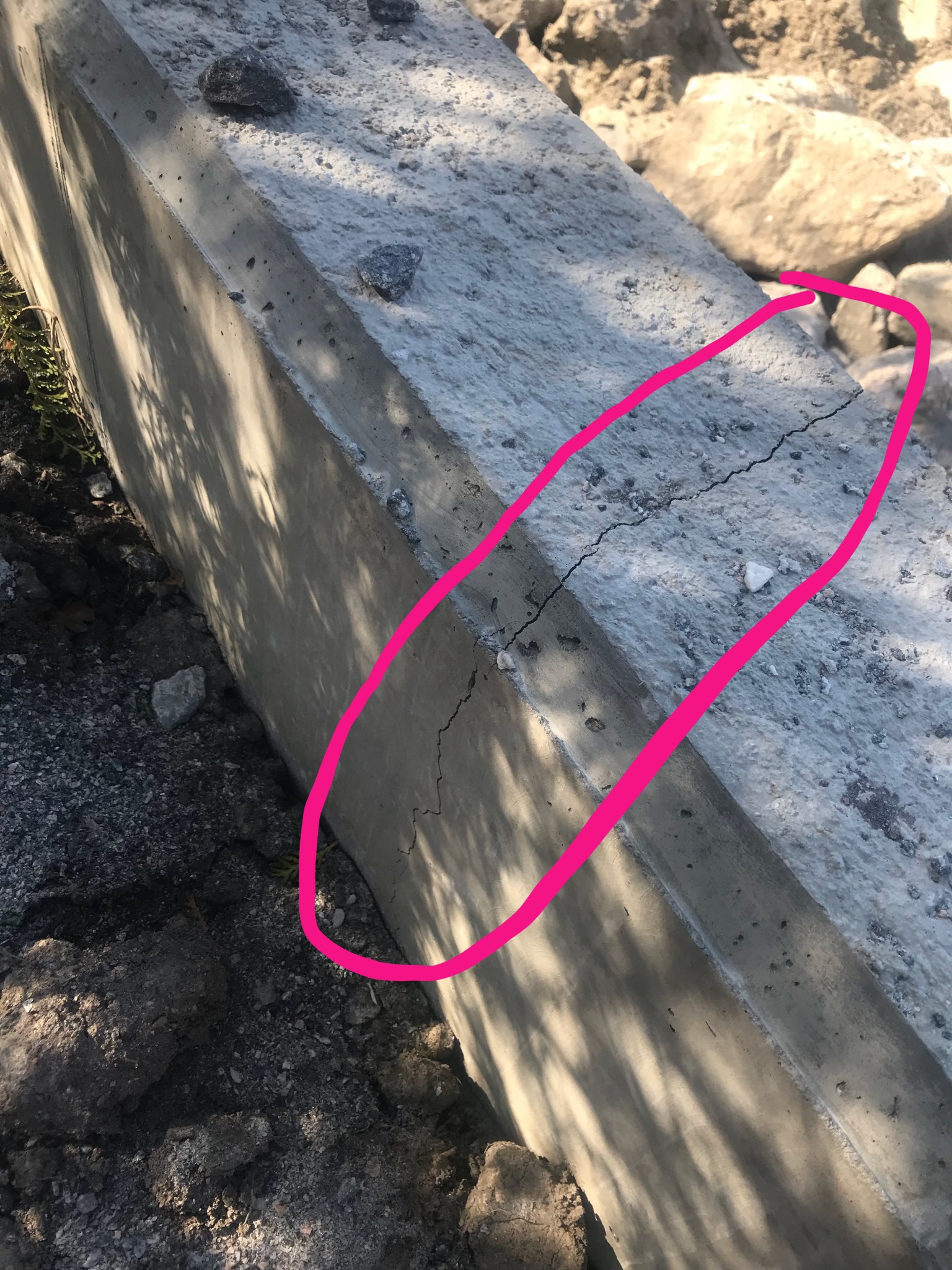
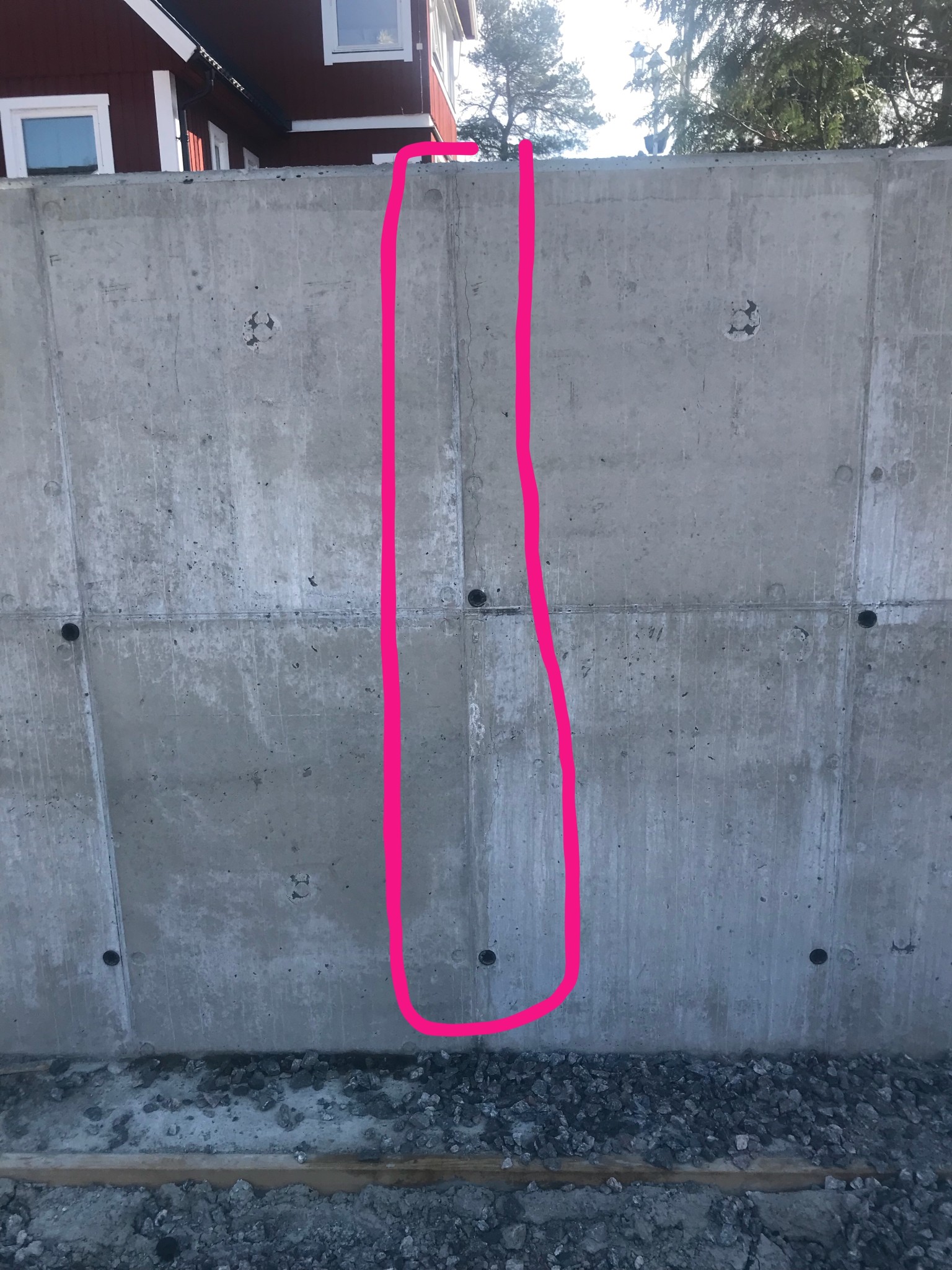
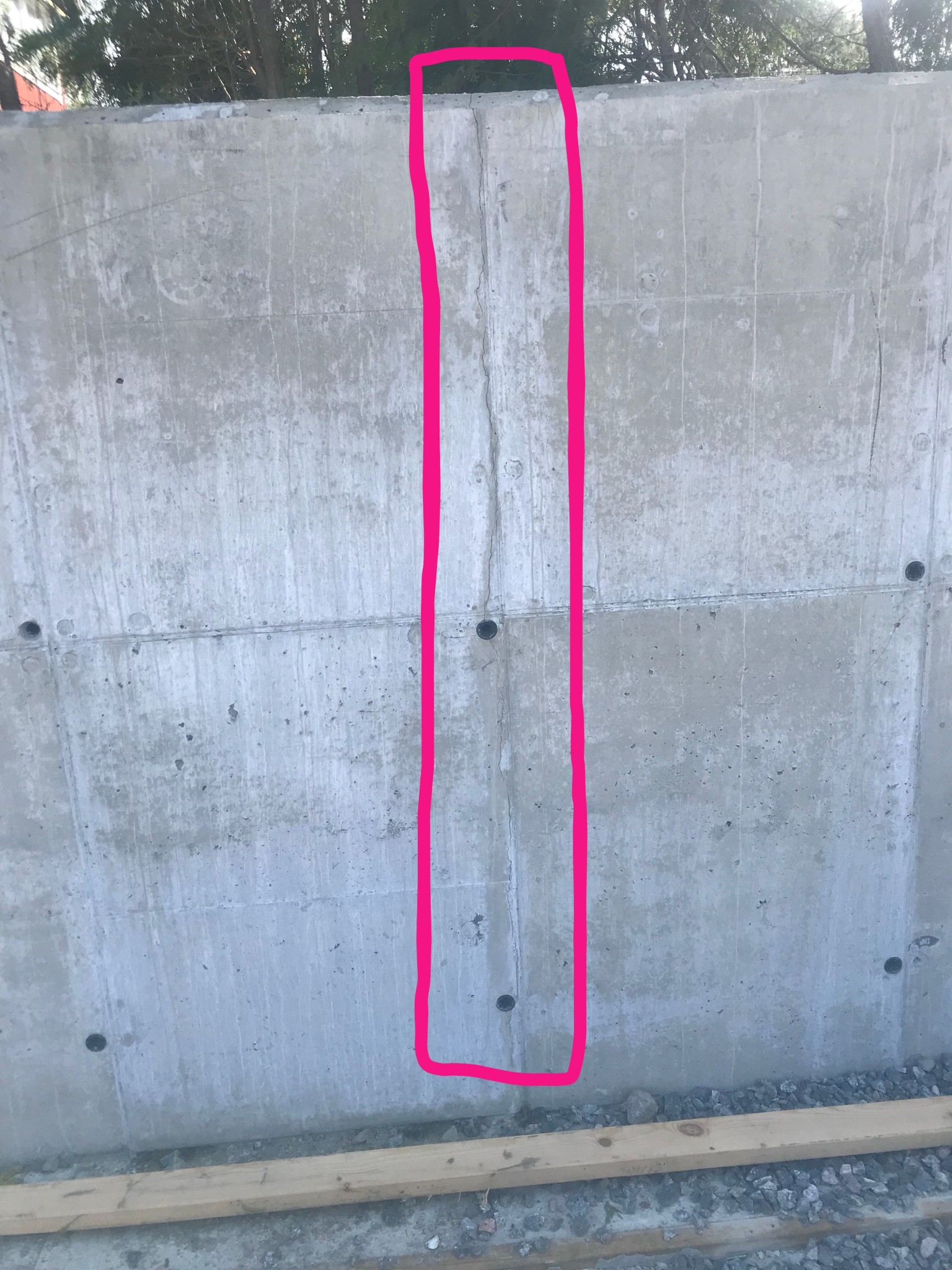
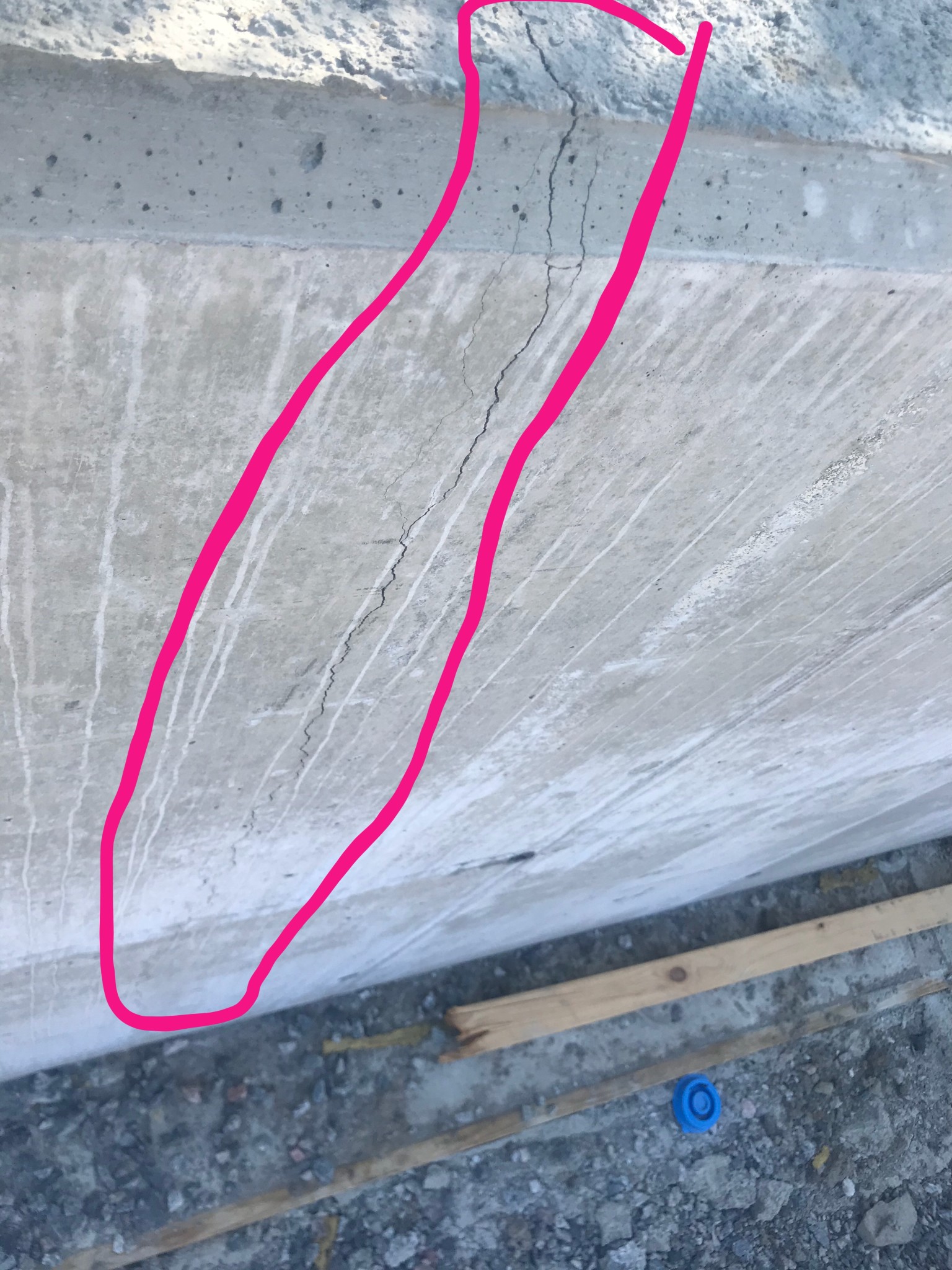
It cannot be fixed, but on the other hand, it is likely only of aesthetic significance. It looks like a cast-in-place wall. Cracking like that doesn't necessarily mean something is wrong. With such a tall wall, it's almost unavoidable for the ground to settle a little afterward. If you don't use pre-stressed reinforcement, small cracks can occur in that way. However, the reinforcement should keep it together even going forward.
It is custom-built but with a solid base plate in cement so then the settling of the ground should not affect it much?
They refilled 3-4 weeks after casting. Could that have affected it? Maybe it requires a longer time to cure?
They refilled 3-4 weeks after casting. Could that have affected it? Maybe it requires a longer time to cure?
What is prestressed reinforcement?V vectrex said:It cannot be remedied, but on the other hand, it is probably only of aesthetic significance. It looks like a cast-in-place wall. That it cracks like that does not necessarily mean something is wrong. With such a high wall, it is almost unavoidable for the ground to settle a little afterward. If prestressed reinforcement is not used, small cracks can occur in that way. However, the reinforcement should hold it together even in the future.
How long is the wall? In long constructions, expansion joints are usually added to accommodate settlements and the shrinkage of the concrete. Prestressed reinforcement means that the reinforcement is in tension until the concrete has cured, which can be compared to tightening a cylinder head bolt to a specific torque to stretch the steel.
35-40 metersM Mats Lj said:How long is the wall? For long structures, expansion joints are usually included to accommodate settling and the concrete's shrinkage. Prestressed reinforcement means that the reinforcement is under tension until the concrete has hardened; it can be compared to tightening a cylinder head bolt to a certain torque to stretch the steel.
If you have no joints on a 35-40m wall, it's completely inevitable to have cracks of that nature. It's enough for the ground to sink a few tenths of a mm at the ends to get significantly larger cracking in the middle at the top of the wall.
Concrete is good at withstanding compressive forces but bad at tensile forces. Additionally, it's very brittle.
Concrete is good at withstanding compressive forces but bad at tensile forces. Additionally, it's very brittle.
These are not settlement cracks but shrinkage cracks due to too long casting stages and perhaps insufficient longitudinal reinforcement to balance the shrinkage forces.
In this case, there is no danger according to my assessment, it should be sufficient to fill with repair mortar.
In this case, there is no danger according to my assessment, it should be sufficient to fill with repair mortar.
What is a pouring stage?W witten said:
Okay, the important thing for me is that the wall holds together for the next 20 years. What do you think about its durability given that there are already cracks?
How long does it take for the concrete to finish shrinking and for all the cracks that will occur to appear?