
Hello,
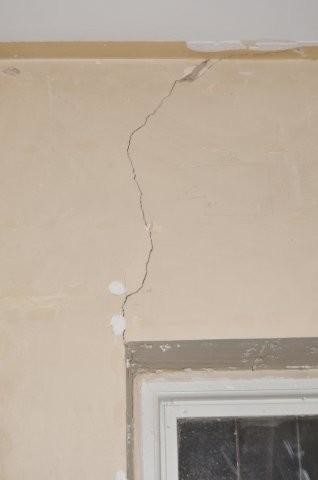
We have been living for a year in a functionalist house from 1939, built in brick (solid 1.5 stone) with a plastered facade and originally plastered interior walls. In the staircase, previous owners added insulation by simply gluing polystyrene to the wall with setting adhesive. Since this both looked ugly and seemed less ideal from a fire and moisture perspective, I have removed the polystyrene, but behind it I found a rather significant crack in the plaster. How large can cracks be without being dangerous? What is the best way to repair a crack in the plaster?
I am attaching a picture of a part of the crack; it runs from the corner of the window, up along the edge towards the ceiling, and down along the edge towards an interior wall.
Regards,
Erik
We have been living for a year in a functionalist house from 1939, built in brick (solid 1.5 stone) with a plastered facade and originally plastered interior walls. In the staircase, previous owners added insulation by simply gluing polystyrene to the wall with setting adhesive. Since this both looked ugly and seemed less ideal from a fire and moisture perspective, I have removed the polystyrene, but behind it I found a rather significant crack in the plaster. How large can cracks be without being dangerous? What is the best way to repair a crack in the plaster?
I am attaching a picture of a part of the crack; it runs from the corner of the window, up along the edge towards the ceiling, and down along the edge towards an interior wall.
Regards,
Erik
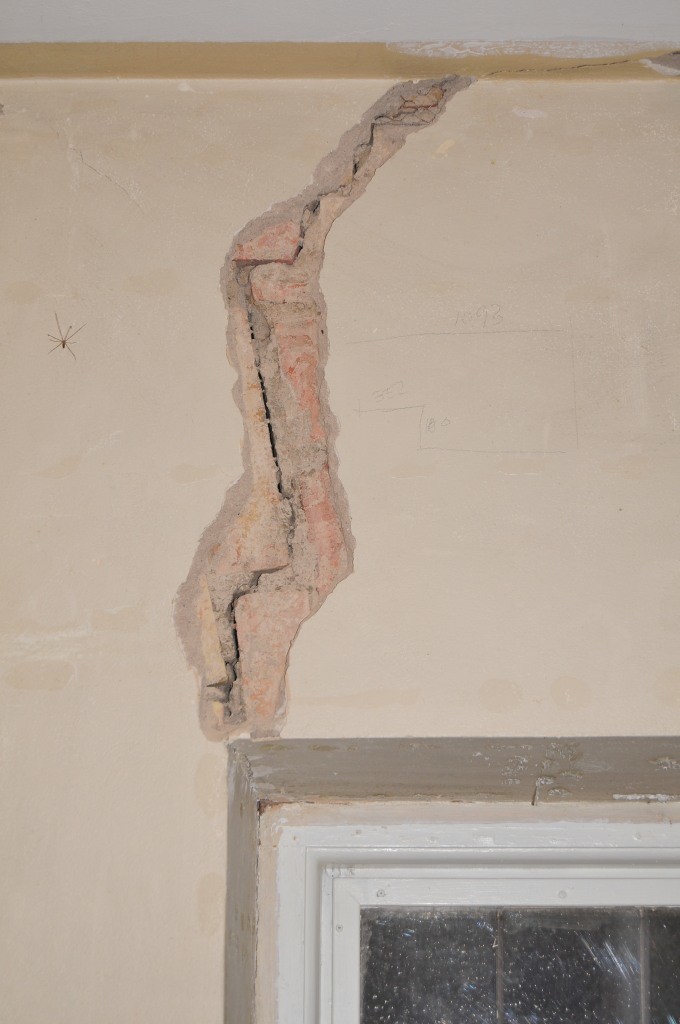
An update, if anyone is interested or has input now. I have chipped away the plaster around the crack, and there is a crack about half a centimeter in the joints of the brick wall, through the arch above the window, see photo. The window is four windows high, the entire height of the staircase, so I guess it's a rather significant weakening of the wall.
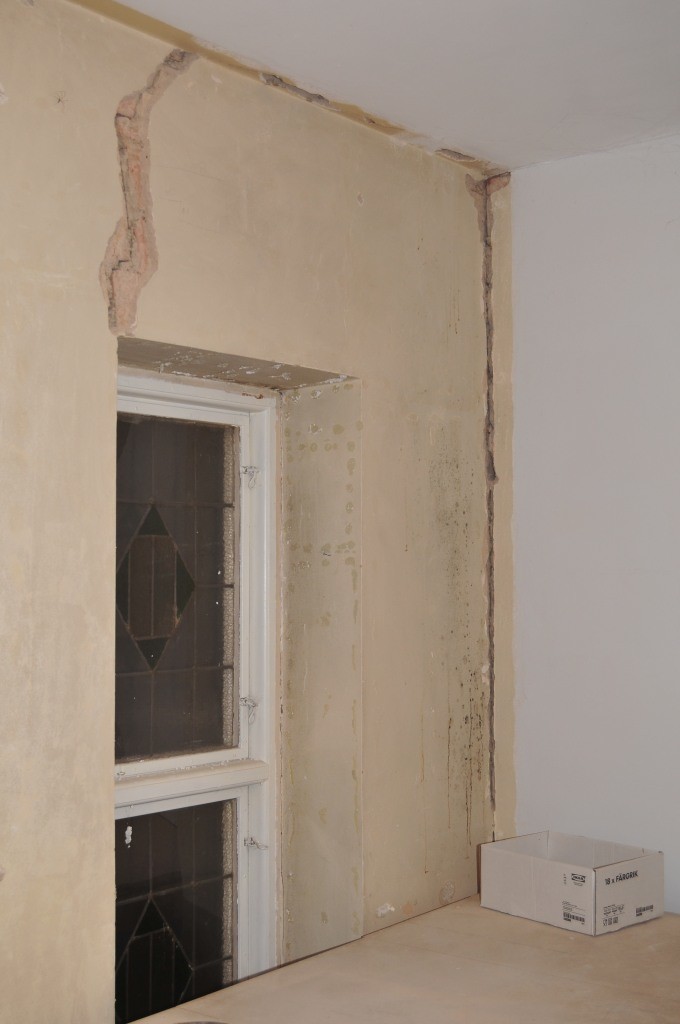
As can be seen in the second picture, the crack runs along the ceiling, it feels like that entire part of the wall is coming away from the house sort of.
It doesn't seem to move much, it's cracked on the outside too but repaired with plaster, and the plaster is still holding there for now. There was also glue from the polystyrene insulation that had penetrated the crack, so it hasn't increased since it was installed a couple of years ago. Despite this, it does feel a bit unsettling... Should I be worried the house will collapse..? If not, should I fill the joints with something before applying new plaster?
Thanks in advance
Erik
As can be seen in the second picture, the crack runs along the ceiling, it feels like that entire part of the wall is coming away from the house sort of.
It doesn't seem to move much, it's cracked on the outside too but repaired with plaster, and the plaster is still holding there for now. There was also glue from the polystyrene insulation that had penetrated the crack, so it hasn't increased since it was installed a couple of years ago. Despite this, it does feel a bit unsettling... Should I be worried the house will collapse..? If not, should I fill the joints with something before applying new plaster?
Thanks in advance
Erik
Is there really no one who dares to speak out about this? Is it so unusual to have old brick houses on the forum..? :S
Maybe someone can at least recommend someone to turn to with the questions? I had a builder here for another matter, and he suggested I should consult a masonry firm. I think it should rather be some form of engineer who can comment on the house's strength, but maybe that's wrong?
/Erik
Maybe someone can at least recommend someone to turn to with the questions? I had a builder here for another matter, and he suggested I should consult a masonry firm. I think it should rather be some form of engineer who can comment on the house's strength, but maybe that's wrong?
/Erik

Cracks from the ceiling to the upper corners of the windows are common.
Before applying new plaster, fill the crack with repair mortar and add a little latex to allow for movement in warm/cold seasons.
Then buy reinforced plaster mesh intended for cracks between the ceiling/window. Check the Finja Cement website,
Then plaster.
Before applying new plaster, fill the crack with repair mortar and add a little latex to allow for movement in warm/cold seasons.
Then buy reinforced plaster mesh intended for cracks between the ceiling/window. Check the Finja Cement website,
Then plaster.
Thank you for your response
Here, it's not just the window where the crack extends from, but it also runs along the ceiling. Should we fill in as much as possible? It feels like reinforcing in the corner might be difficult.
Repair mortar, what type, brand? Add latex, do you mean mix it into the mortar?
Here, it's not just the window where the crack extends from, but it also runs along the ceiling. Should we fill in as much as possible? It feels like reinforcing in the corner might be difficult.
Repair mortar, what type, brand? Add latex, do you mean mix it into the mortar?


No, I understand that, but how do you know if it's an ongoing settlement? I think it hasn't moved significantly for a couple of years as I said.Stefan N said:
If it is, what do you do about it? Steel bands around the whole house like they put on the leaning tower of Pisa..? :blushing:
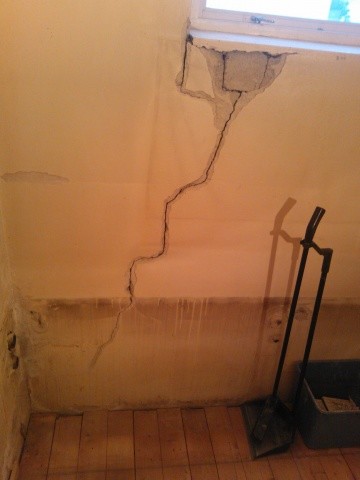

How has it gone for you? It would be interesting to follow up on whether it has stopped cracking or if it is still moving.
Best regards, Torpalainen
Best regards, Torpalainen
My staircase project has been delayed so I'm not completely finished with the room yet, but I had the crack plastered by a bricklayer, then I filled and painted it, so now I'll just keep my fingers crossed that it will hold.
Click here to reply