Hello!
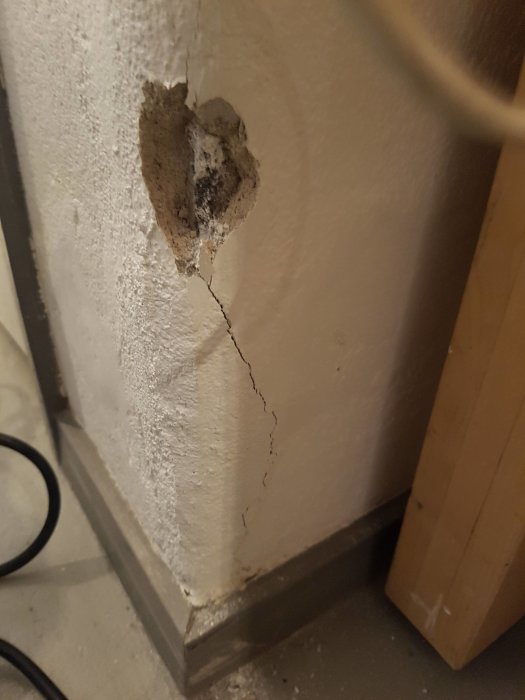
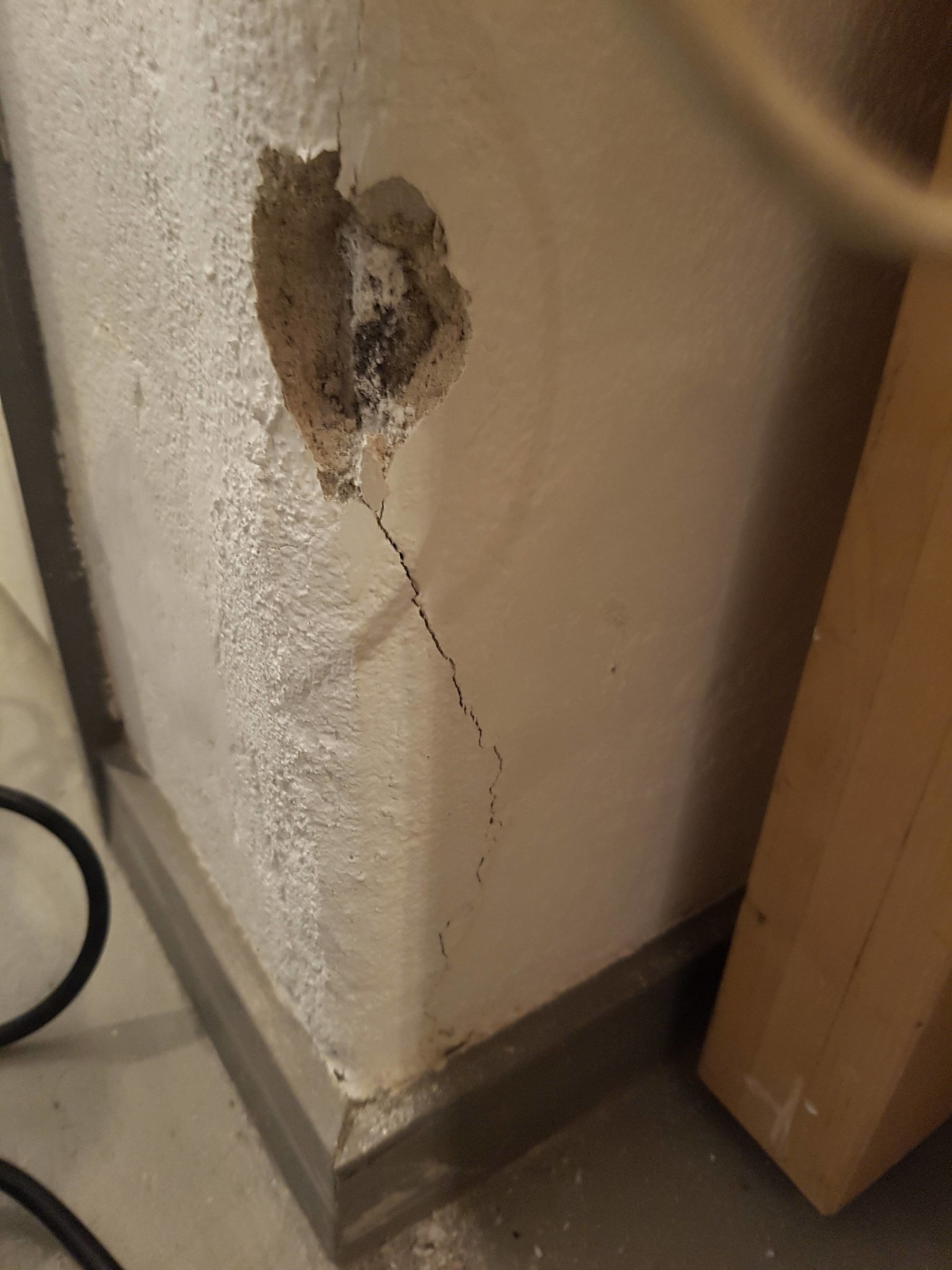
Hoping for good advice. In a corner of the basement, a crack keeps appearing in the plaster. I have primed, applied new plaster, waited a few weeks, and painted with silicate paint.
But after a couple of months, the crack reappears and I have to chip away and apply new plaster.
On the other side of the wall, there is a toilet and there are no leaks or the like.
I really don't understand why this is happening. The house is from '57, and otherwise, all the plaster is holding as it should.
Anyone know what I should do to achieve a durable repair?
Why the crack occurs, I don't entirely understand. Does the plaster shrink so that it detaches from the substrate? Does the wall move with the seasons?
Have you tried lime plaster instead of mortar cement plaster? It is softer and more flexible than the mortar cement variant.
Why the crack occurs, I don't completely understand. Does the plaster shrink so that it detaches from the substrate? Does the wall move with the seasons?
Have you tried lime plaster instead of cement mortar plaster? It's softer and more flexible than the cement mortar variant.
I don't think the wall moves; I'll probably try lime plaster since it is a bit more flexible. Thank you for the response!
Are you sure it's concrete behind it? If so, is the corner cast in one piece? Trying a softer plaster like lime plaster is always good, but recurring cracks usually have a cause. In this case, it could be deficiencies in the foundation.
Are you sure that it's concrete behind? In that case, is the corner cast in one piece? Trying a softer render like lime plaster is always good, but recurring cracks usually have a cause. In this case, it could be issues with the foundation.
It's hollow concrete blocks. Fairly certain after having removed all plaster in a room a few meters away. A bit curious, how do you conclude that the corner is cast in one piece after a picture of a hole about 5cm in diameter?
Washing machine or similar that creates movement (and thereby affects the wall) on the other side?
No, nothing like that. However, there is a pipe on the other side from the toilet above. This was previously cast iron and was replaced when we changed all the plumbing. This pipe runs "freely" in the room and it doesn’t leak as far as I can see. Then there is also new plaster and tiles between the pipe and the wall.
Since you were talking about concrete (i.e., reinforced cast-in-place concrete), I asked if it was cast in one piece. It should have been if it was concrete. Concrete hollow blocks, popularly called "gråsuggor," are more plausible considering the house's construction year. These blocks, which are unreinforced, stand on concrete soles and are laid in regular running bond patterns. Most likely, it suggests some minor form of settlement or neglect during the masonry work. This doesn't justify digging up the entire basement, but keep an eye out for other signs.
Since you were talking about concrete (i.e., reinforced cast-in-place concrete), I asked if it was cast in one piece. It should have been if it was concrete. Concrete hollow blocks, commonly called "gråsuggor," are more plausible considering the house's construction year. These blocks, which are unreinforced, are then placed on concrete footing and are laid in regular running bond pattern. Most likely, there's some minor settling or negligence during construction. This doesn't justify digging up the whole basement, but keep an eye out for other signs.
Ah, then I understand. So strange that it only happens on this edge. However, I have repaired it with cement-based plaster and can imagine this is the reason for the latest "releases."
Yes, lime plaster is very forgiving and easy to work with. The only downside is that it corrodes your hands so badly.
I mix bagged lime (dry-slaked lime) with water to a smooth paste in a bucket. It's good to let it sit in the bucket for a few weeks to become smoother (or you can use it immediately). Then mix the lime paste with suitable sand, e.g., 5 parts sand to one part lime paste is quite typical for early 1900s plastering.
Click here to reply
Vi vill skicka notiser för ämnen du bevakar och händelser som berör dig.


Claes Sörmland said:


MrJay said: