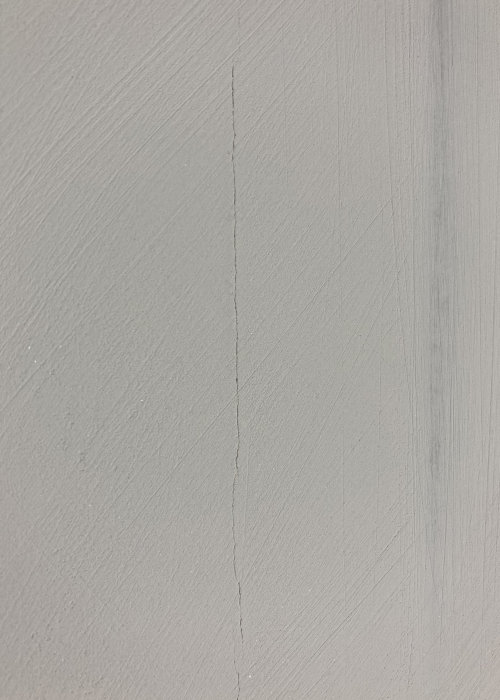
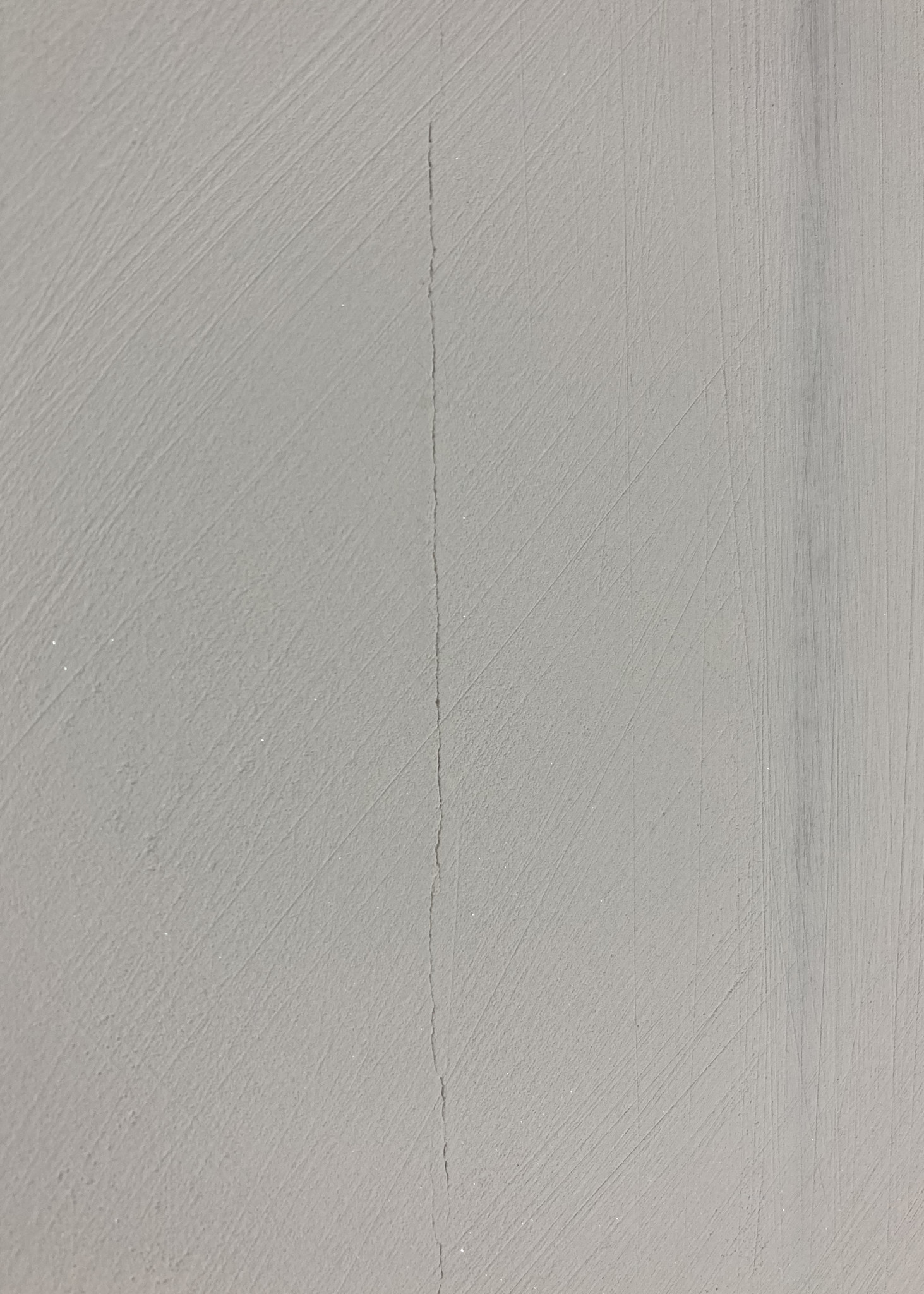
I have glued 6 mm renovation plasterboard onto a lightweight concrete wall with PL600. I have done this before without any problems at all. I glued a paper tape over the joints using wallpaper adhesive, filled, and sanded. Now, a few weeks later, I see that it has cracked between the plasterboards in two places. The crack is between the plasterboards, in the middle of the paper tape. I'm going to put up a photo wallpaper on this wall so it must absolutely not crack after wallpapering. A friend suggested putting another layer of plasterboard overlapped, but I have no idea if that will work. What can I do to solve this?
Is that smoothed?
It looks very uneven for attaching wallpaper...
Is it in the seam or edge of the paper tape that it has cracked?
My guess is that the paper tape has come loose at the edge after it dried. If you are gluing paper tapes, you must do it with waterproof glue, but I always use waterproof primer myself and wait until it dries and then apply another coat. Then I can also see that I don't get any bubbles in the paper tape.
If you're not familiar with paper tapes, in my opinion, it's better to use mesh tape...
If you add another layer where you offset the seam, this should obviously fix the problem, but the question is why it cracks.
It could just as well be that you didn't get the paper strip quite right. I would start by tearing it off and trying again with the seam; if that doesn't work, apply another layer on top.
Is that sanded?
It looks very uneven to apply wallpaper on...
Is it in the seam or the edge of the paper strip where it has cracked?
My guess would be that the paper strip has come loose at the edge after it dried. If you're going to glue paper strips, you must do it with waterproof glue, but I always use wet room primer myself and wait until it has dried before applying another coat. This way, I also ensure there are no bubbles in the paper strip.
If you're not used to paper strips, it's better to use mesh tape in my opinion...
Just pull off the strip and start over...
Yes, it is sanded with grit size 80. The idea was to sand with finer paper afterward. It seems to have cracked right in the middle of the paper strip, that is, right between the drywall sheets. I have used Flugger's weave glue 378.
The boards are probably not completely flush with the surface at the joint, so there is air behind them. An old trick is to make holes in the joint at intervals of about 10 cm and inject foam sealant that seeps in and fills up, gluing the boards. Then you fill the holes with plaster before applying a tape and spackling.
I have done this with wooden structures with successful results on several occasions. How it works on concrete I cannot answer, but it should be similar.
Suspect you applied slightly thicker strings of glue on the board and then pressed it against the substrate, which creates voids behind where the glue hasn't been pushed out.
I have glued 6 mm renovation plasterboard onto a lightweight concrete wall with PL600. I have done this before without any problems whatsoever. I have glued a paper tape over the joints with wallpaper paste, plastered, and sanded. Now, a few weeks later, I see that it has cracked between the plasterboards in two places. The crack is between the plasterboards, in the middle of the paper tape. I am planning to put up a photo wallpaper on this wall, so it absolutely must not crack after wallpapering. A friend suggested adding another layer of plasterboards overlapping, but I have no idea if that will work. What can I do to solve this?
[image]
You should use wet room adhesive when gluing paper tapes, otherwise, there's a risk of detachment when using regular wallpaper paste which I've experienced before!
By the way, it's a very rough finish, depending on the sidelight, it will all show through your photo wallpaper!
Tap with your fingers and listen if there's air behind the tape. Plaster once, glue a new tape with wet room adhesive, plaster, and paint. If there's air behind, cut it open.
You should use wet room adhesive when gluing paper strips, as there's a risk of them coming loose if you use regular fabric adhesive, which I've experienced before!
Paper strips should be attached with J joint filler as far as I know.
Been working as a painter for 10+ years, I know what I'm talking about
if it's newly plastered, then obviously joint filler, but if there's no bevel in the plasterboard and it's smooth, it's better to glue
You mean when plasterboards are missing the original edge of the board? You usually bevel at 45 degrees on such edges, do you mean to smooth plaster the bevel and then glue the tape? There's a bit of technique to plastering tapes on those joints otherwise.
Vi vill skicka notiser för ämnen du bevakar och händelser som berör dig.

anders07 said:
Is that sanded?


EddieHansson said:
