
Hello! I own a 1950s house in solid brick. The roof trusses are framework trusses with a raised wall plate, a somewhat unusual solution. Anyone have any experience? It looks like the truss rests on the interior walls/plank wall too. What do you think, are these load-bearing? The knee walls are about 1 m deep, so it's a fairly short distance between the outer and inner wall. We've opened up about 1 m of interior wall to install roof windows. Is any form of reinforcement needed where the inner wall is opened?
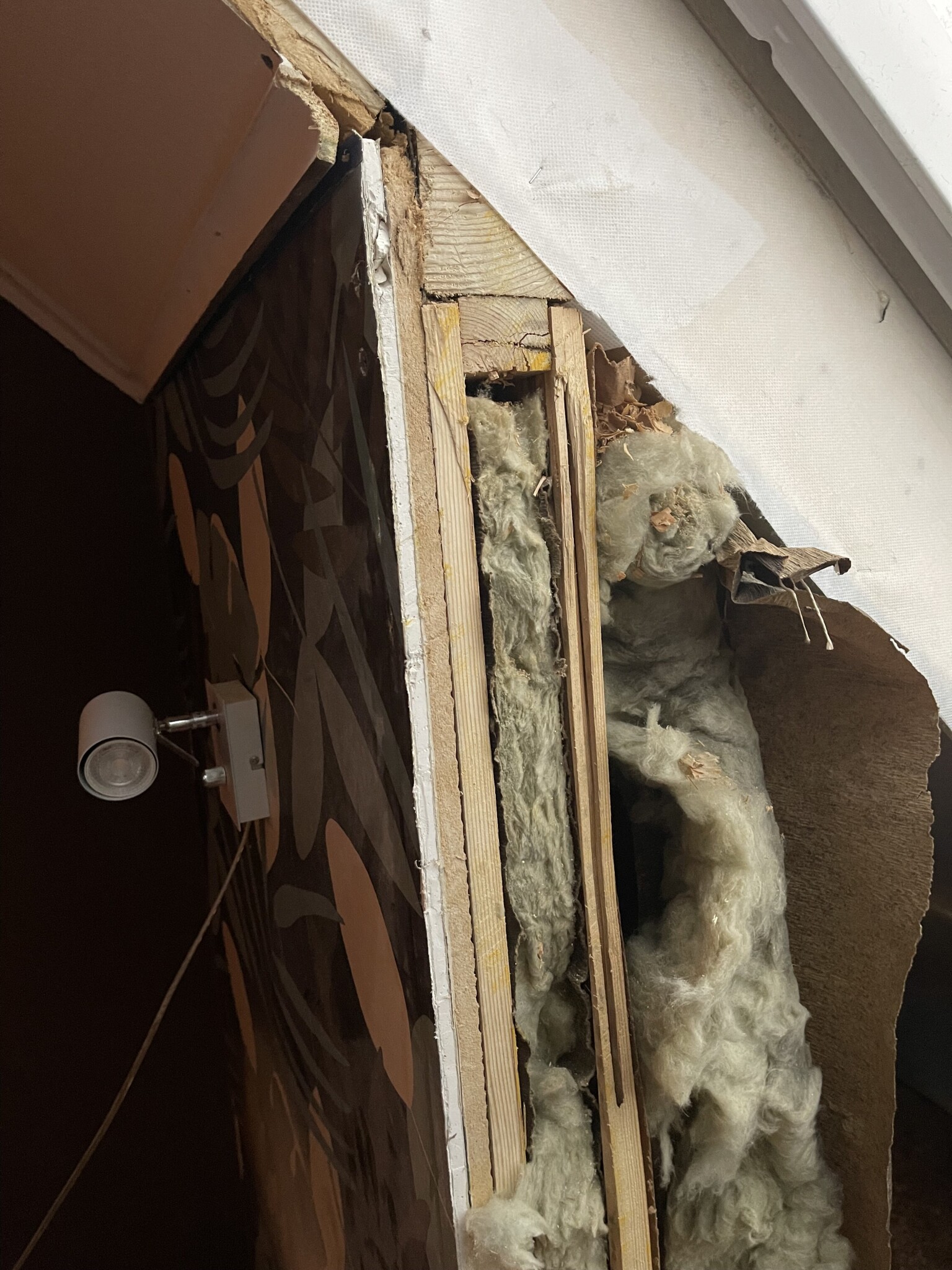
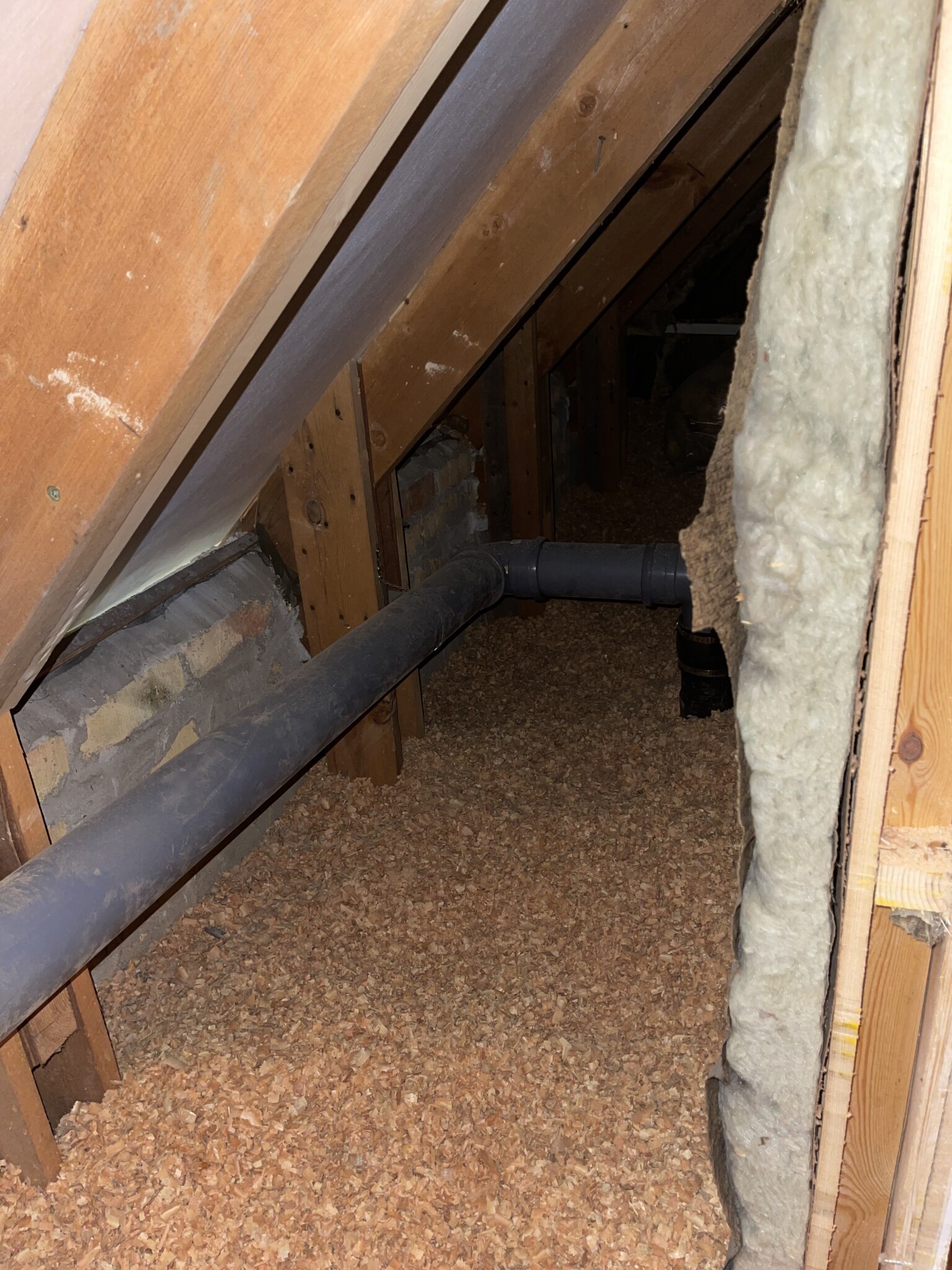
Hello again, maybe a silly question. But the trusses are untouched, just cut between two trusses. The remaining section is somewhat reinforced as the kattvind is closed, though it's in the wrong direction.A AG A said:
Would additional reinforcement still be needed? The existing plank wall is quite thick at 11cm in construction, although 4 cm of this is unregulated insulation. The carpenter claims that the solution is okay since no truss rests on the cut part of the wall.
As you seem to be hinting at, it's not really the wall that's load-bearing. It's just the post of the rafters that is load-bearing. As long as these posts consist of a 45x70mm post, or larger, you can probably remove all the wall in between. But you should take a look at the rest of the construction. Because even if the post/posts hold the forces downward, there are lateral loads that aren't handled by the posts. It's probably no problem at all, as there are likely plenty of other walls and/or building components that stabilize. But it might be worth taking a look at.K Kahh77 said:Hello again, maybe a dumb question. But the rafters are untouched, just cut between two rafters. The remaining length will be somewhat reinforced as the attic is closed off, however, that is in the wrong direction.
Would additional reinforcement still be needed? The existing plank wall is quite thick 11cm frame construction, but 4cm of this is insulation that is not regulated. The carpenter claims the solution is okay since no rafter rests on the cut section of the wall.
Click here to reply