In a few months, I am going to build a U-staircase with a landing. After receiving quotes for a ready-made solution, I decided to build the staircase myself. The lowest priced quote was 108 000 SEK..
This is something I have never done before and would need some advice..
I feel confident about the construction.
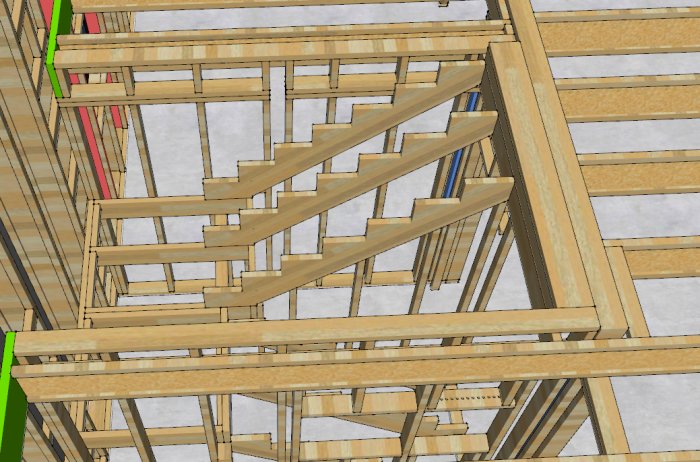
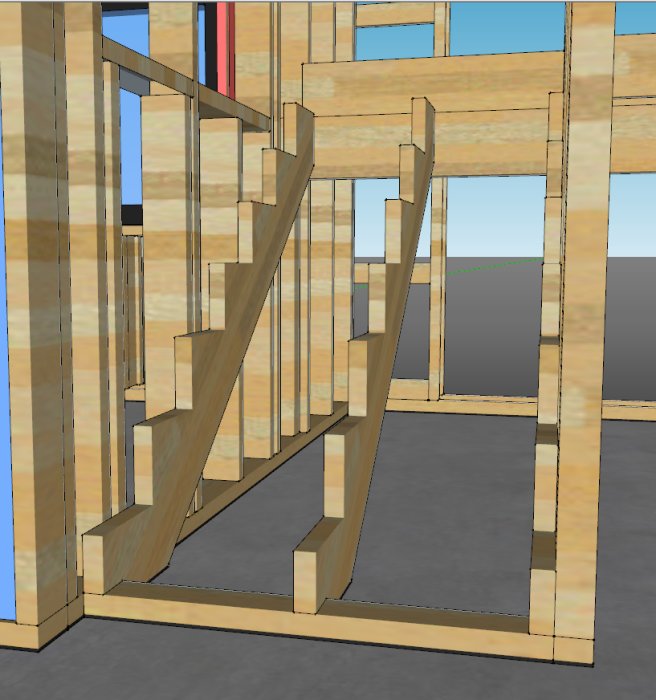
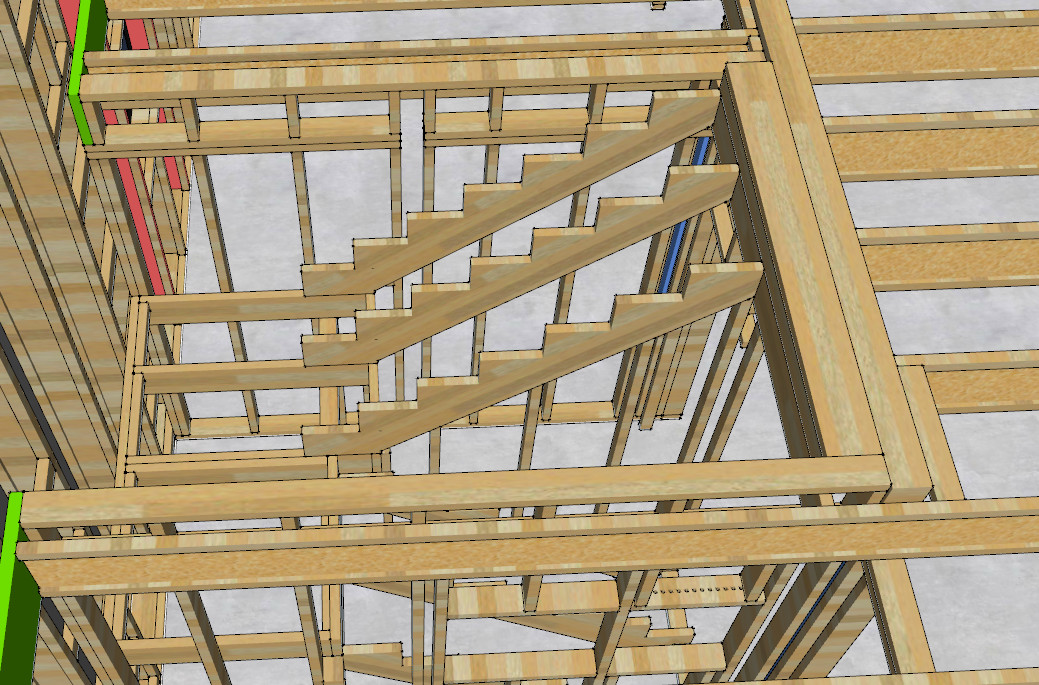
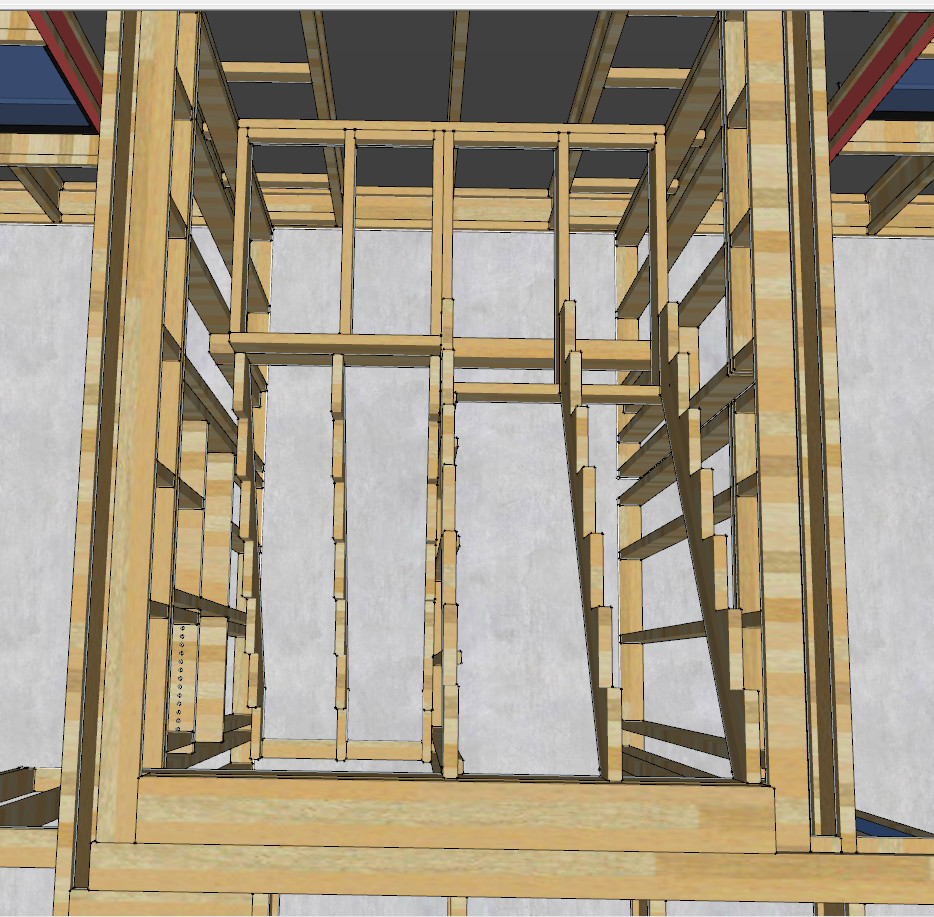
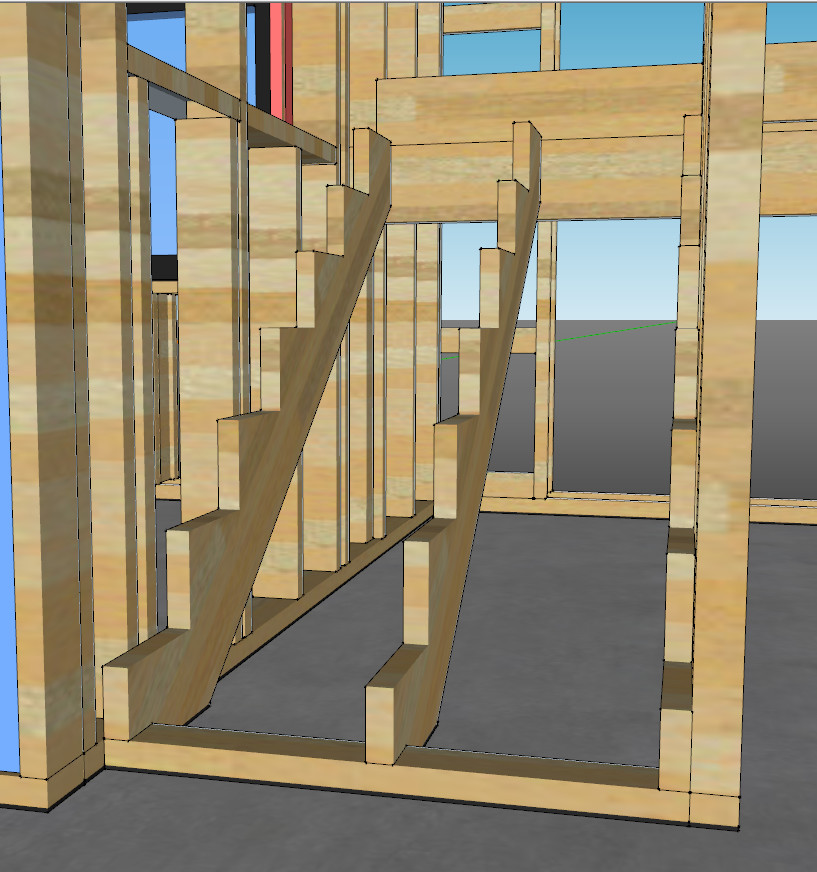
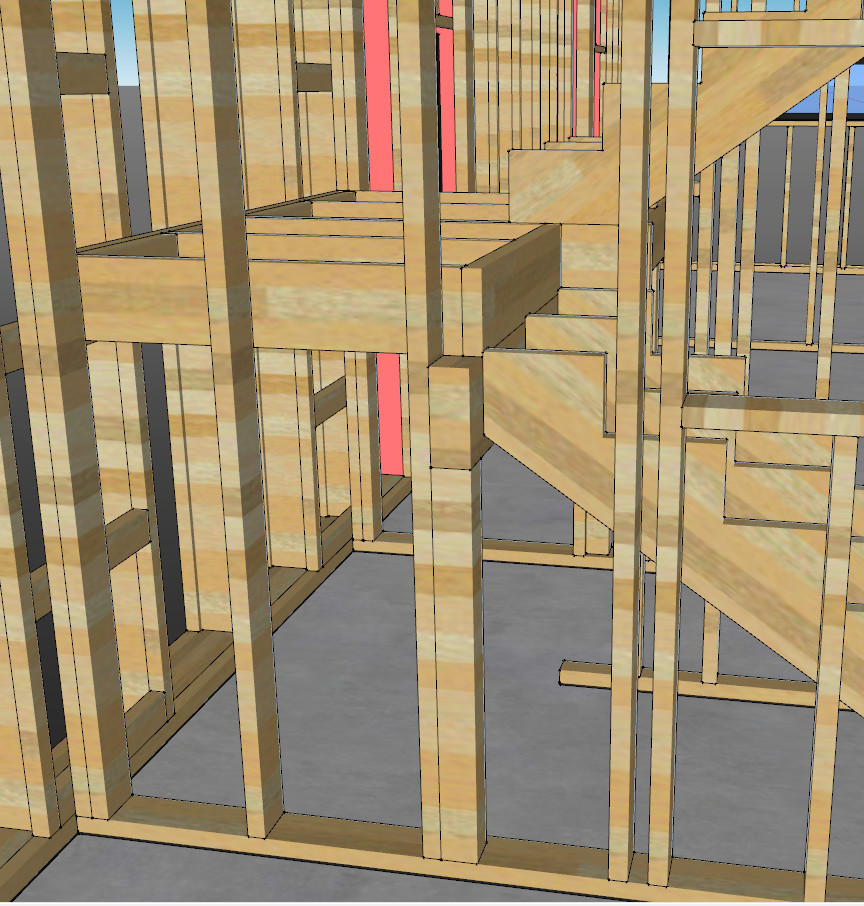
It will be three underlying stringers made of 45x360 kerto.
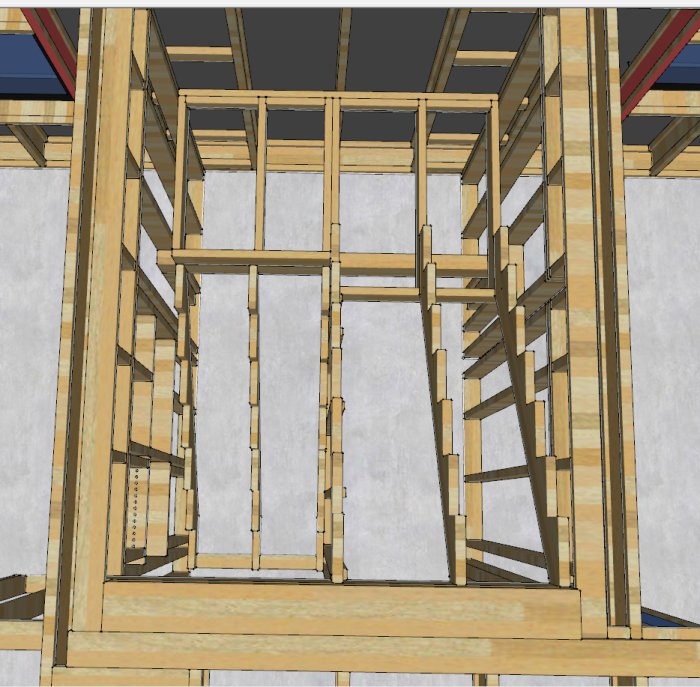
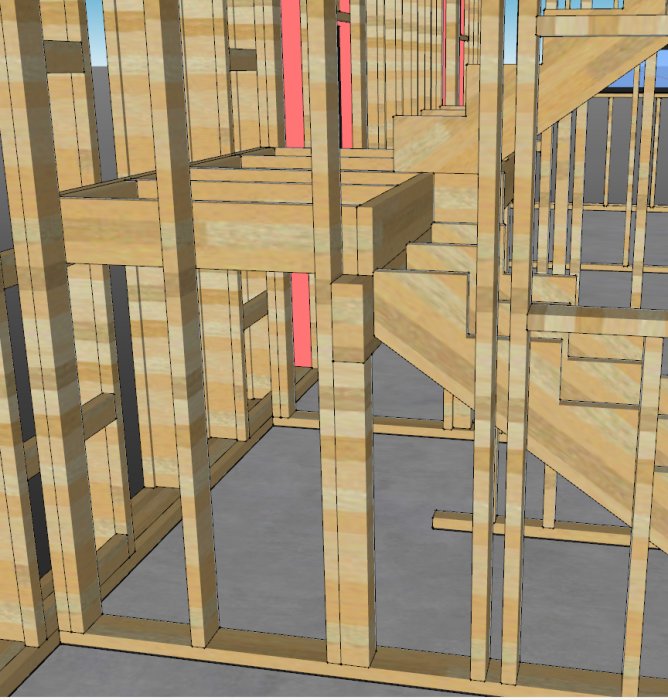
And a landing constructed with 45x195 joists that are mounted to the standing studs of the outer wall at the back, interior wall on the sides, and an underlying glulam beam+pillar at the front (90x225 + 90x90)
See some pictures of the construction below.
But what I need advice on is how I can make the staircase look nice and be quiet.
My current thought is that I first clad the frame with 21mm plywood. Double layers as risers?
Then clad the plywood with the flooring I will be laying on the ground floor.
With the above conditions, how do you achieve a nice and quiet result?
Should I screw-glue or just screw all layers?
What is the best/easiest way to get seamless transitions from stairs to wall?
I'm thinking that there will be quite an ugly edge at the transition from tread to riser if the staircase is clad with parquet flooring. I also don't want a molding there that will be annoying. Does anyone have suggestions for a solution?
What do you think is the best way to get a nice transition from stair step to wall?
If I first drywall the wall and mount the stringer against the drywall and then can mount the risers very tightly against the drywall?
In the images below, I've drawn it so that the stringers are attached to the wall studs, but I think I will set them against the drywall according to my above thought.
Stair frame seen diagonally from above:
Straight from above:
Does anyone have any opinions here?
I have found Nissabo where you can buy glued laminated boards for stringers, treads, and risers.
When I put together a shopping cart with all the materials I will need, it came to 53,000 SEK. More than half the price compared to the offer from drömtrappor. However, that is without the handrail, etc., so it will be pretty much exactly half the price.
But I still think it should be possible to achieve a cheaper construction. Hence, I am back to the reasoning in the first post, with some changes.
Construction:
Stringers of Pine A/A finger jointed 42 mm
Treads of 22 mm screw-glued floor chipboard + 11 mm hardened wood floor from Bjelin
Risers of 11 mm hardened wood floor from Bjelin
What do you think about first screw-gluing 22 mm floor chipboard onto the stringers? This assuming I go with 3 underlying stringers per section. Then the span between the stringers would be about 45 cm.
And then glue hardened wood floor on top of the chipboard?
When I built my stairs, I used glulam beams as stringers and then oak countertops from Ikea, which I ripped and cut to the right dimensions as treads and glued boards as risers. It turned out both nice and cheap. I think I ended up around 5000-7000 somewhere, but I only have two stringers and no landing either. This was, however, 5-6 years ago, so it was before the timber prices went wild. It becomes difficult to make the landing out of the countertop since it doesn't cover the entire area with one board width. There, perhaps you can lay chipboard and then the same flooring as in the rest of the house? If you go with the countertop, you will need to screw underneath with brackets or screw a rule into the stringer that you then screw the treads into.
I think your solution to plaster first and then mount the stairs tight against the plaster will look the best. I did the walls first, though with paneling, and then I have visible stringers that I routed grooves for the treads in. So, it doesn’t involve as much millimeter trimming to get it tight against the wall.
When I built my staircase, I used laminated beams as stringers and then an oak countertop from Ikea which I ripped and cut to the right size for treads and laminated boards for risers. It turned out both stylish and cheap. I think I ended up somewhere between 5-7000 but I only have two stringers and no landing either. This was, however, 5-6 years ago, so it was before lumber prices went crazy. It will be difficult, however, to make the landing out of a countertop since it doesn't cover the entire surface with one panel width. Maybe you can lay chipboard and then the same flooring as in the rest of the house? If you go with a countertop, you'll have to screw from underneath with angles or attach a batten to the stringer which you then screw the treads into.
I think your solution to plaster first and then mount the staircase tight against the plaster will look the best. I did the walls first, with panel though, and then I have visible stringers that I routed grooves for the treads in. So then there's not as much millimeter cutting to get it tight against the wall.
What dimension of laminated beam did you use as a stringer?
A countertop from Ikea is a good idea that I can consider.
But what do you think about using chipboard + the same flooring as the house for the treads?
Do you have any tips on minimizing the risk of creaking in the steps?
I had glue-laminated beams of dimension 56x270 for the stringers. Yes, it was a friend of mine who had used that idea and I thought it looked nice and it was a cheap and convenient way to get oak treads.
It should work fine with chipboard and then lay flooring on them too. Just make sure to glue the chipboard properly at the joints and also in the stringers.
The only tip I can give there is to screw and glue properly at every place possible. And build as stable a construction as possible so it doesn't move at all when you walk on it. My staircase is visible on the underside, so I made all the attachment hidden, and unfortunately, it has started to creak a bit after a few years. But I think it's partly because the beam that the staircase is bolted into has settled a bit and the staircase construction itself has also settled. I have started thinking about trying to retighten it and see if it helps.
Probably your staircase will also "settle" a bit after a few years when you have run up and down and the wood has finished moving. So then it will certainly need to be retightened too. But as I said, screw and glue as much as possible and if you're lucky, you won't need to do that
Maybe there's someone on the forum who is a professional cabinetmaker/stair builder who can give good tips? I'm just a regular carpenter and building stairs is not something we do daily, so I went with trial and error.
Hello!
I really appreciate this thread and your drawing of the stairs now that I'm about to make similar stairs myself. We also plan to use floor soap and glue on Bjelin's hardened flooring. It's been a few years since the thread was created, and I wanted to ask how it went and if you have any tips? Do you have any pictures? Another question, I want the flooring on the stair treads to blend with the flooring on the upper floor (it’s not laid yet), how did you solve the transition?
When I built my stairs, I used glued-laminated timber for the stringers and then oak countertops from Ikea that I ripped and cut to the right dimensions as treads, and glued-board panels as risers. It turned out both nice and inexpensive. I think I ended up somewhere in the 5,000-7,000 range, but I only have two stringers and no landing either. This was, however, 5-6 years ago, so it was before lumber prices went crazy. It would be difficult to make the landing out of a countertop since it doesn't cover the entire area with just one panel width. Perhaps you could use chipboard and then the same flooring as in the rest of the house? If you go with the countertop, you'll have to screw up from below with brackets or attach a batten to the stringer, which you then screw the treads into.
I think your solution of plastering first and then installing the stairs tightly against the plaster will look best. I did the walls first, though using paneling, and then I have visible stringers which I routed grooves for the treads in. That way, you won't have as many millimeter adjustments to make it tight against the wall.
Hello!
I really appreciate this thread and your staircase drawing now that I'm about to make a similar staircase myself. We’re also thinking of using floor soap and gluing on Bjelin's hardened floors. It's been a few years since the thread was created, and I wanted to ask how it went and if you have any tips? Do you have any pictures? Another question, I want the flooring on the steps to blend seamlessly with the flooring on the upper floor (which is not yet laid), how have you solved the transition?
IIntershade said:
What dimension of glued-laminated timber did you use as the stringer?
The countertop from Ikea was a good idea that I might consider.
But what do you think about chipboard + the same flooring as the house as treads?
Do you have any tips on minimizing the risk of creaking in the steps?
Hello @Intershade!
I really appreciate this thread and your staircase drawing now that I'm about to make a similar staircase myself. We’re also thinking of using floor soap and gluing on Bjelin's hardened floors. It's been a few years since the thread was created, and I wanted to ask how it went and if you have any tips? Do you have any pictures?
Another question, I want the flooring on the steps to blend seamlessly with the flooring on the upper floor (which is not yet laid), how have you solved the transition?
Click here to reply
Vi vill skicka notiser för ämnen du bevakar och händelser som berör dig.