
12,604 views ·
16 replies
13k views
16 replies
Concrete countertop, vibrate and treat?

I've built a mold for a concrete countertop in formply, which will lie on a sideboard and has the dimensions 240x39x4 cm.
The concrete is coming this week (Bemix from Finja) and I'm wondering how to proceed with vibrating?
The mold will be on the floor as it's flat, so I can't tap from underneath. Will a bolt in the hammer drill be enough to vibrate out the bubbles?
Regarding surface treatment, what do you recommend? As mentioned, it will be indoors and relatively far from the kitchen, so grease and dirt aren't a problem. I can imagine water might occasionally get on the surface, and we're not afraid of a little patina.
Thanks in advance!
The concrete is coming this week (Bemix from Finja) and I'm wondering how to proceed with vibrating?
The mold will be on the floor as it's flat, so I can't tap from underneath. Will a bolt in the hammer drill be enough to vibrate out the bubbles?
Regarding surface treatment, what do you recommend? As mentioned, it will be indoors and relatively far from the kitchen, so grease and dirt aren't a problem. I can imagine water might occasionally get on the surface, and we're not afraid of a little patina.
Thanks in advance!

Car engine against the mold edge if it makes it last time I cast one it was on my workbench then I put the chisel in the vise
It will work reasonably well to use carriage bolts in the drill. There's probably an optimal frequency depending on the mixture. I used Osmo hard wax oil, not satisfied with it at all. I would have gone for epoxy if I was worried about stains. Otherwise, soap. I got air bubbles last time, mostly in the part where I made a sink. Otherwise, I could recommend putting a plastic film in the mold. I used solar film because that's what I could find locally.
Poured on Sunday and unmolded on Wednesday, turned out great! Very few bubbles despite limited vibrating/tapping (poured with bemix from Finja, maximum water). Tomorrow I hope to have time to wet sand, then it will be Nitor's stone soap during the week, hoping to place the slab next weekend. Will try to remember to upload a picture!
The plan is to apply the soap tonight, I thought of mixing up 3 liters (5ml of soap per liter of water, so my 750 ml will go a long way  )
)
Then we'll see if I can find a strong neighbor to help me lift it up during the week (my wife is 8 months pregnant, otherwise she's usually stronger than me).
Feels like I'm just writing to myself here in the thread
)Then we'll see if I can find a strong neighbor to help me lift it up during the week (my wife is 8 months pregnant, otherwise she's usually stronger than me).
Feels like I'm just writing to myself here in the thread
Be careful so it doesn't break, I guess it's far from fully cured. Read about many who have broken such long ones.
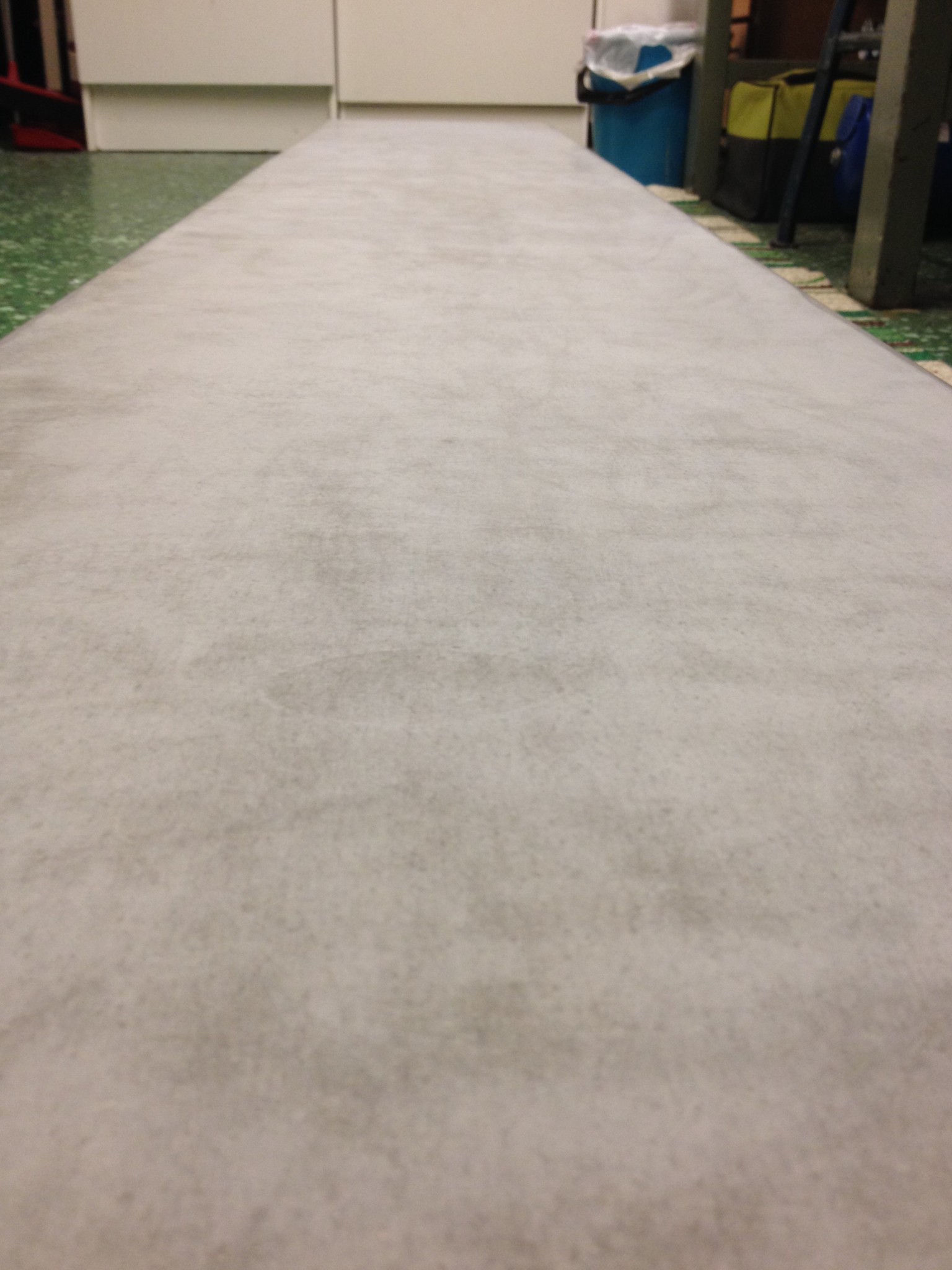
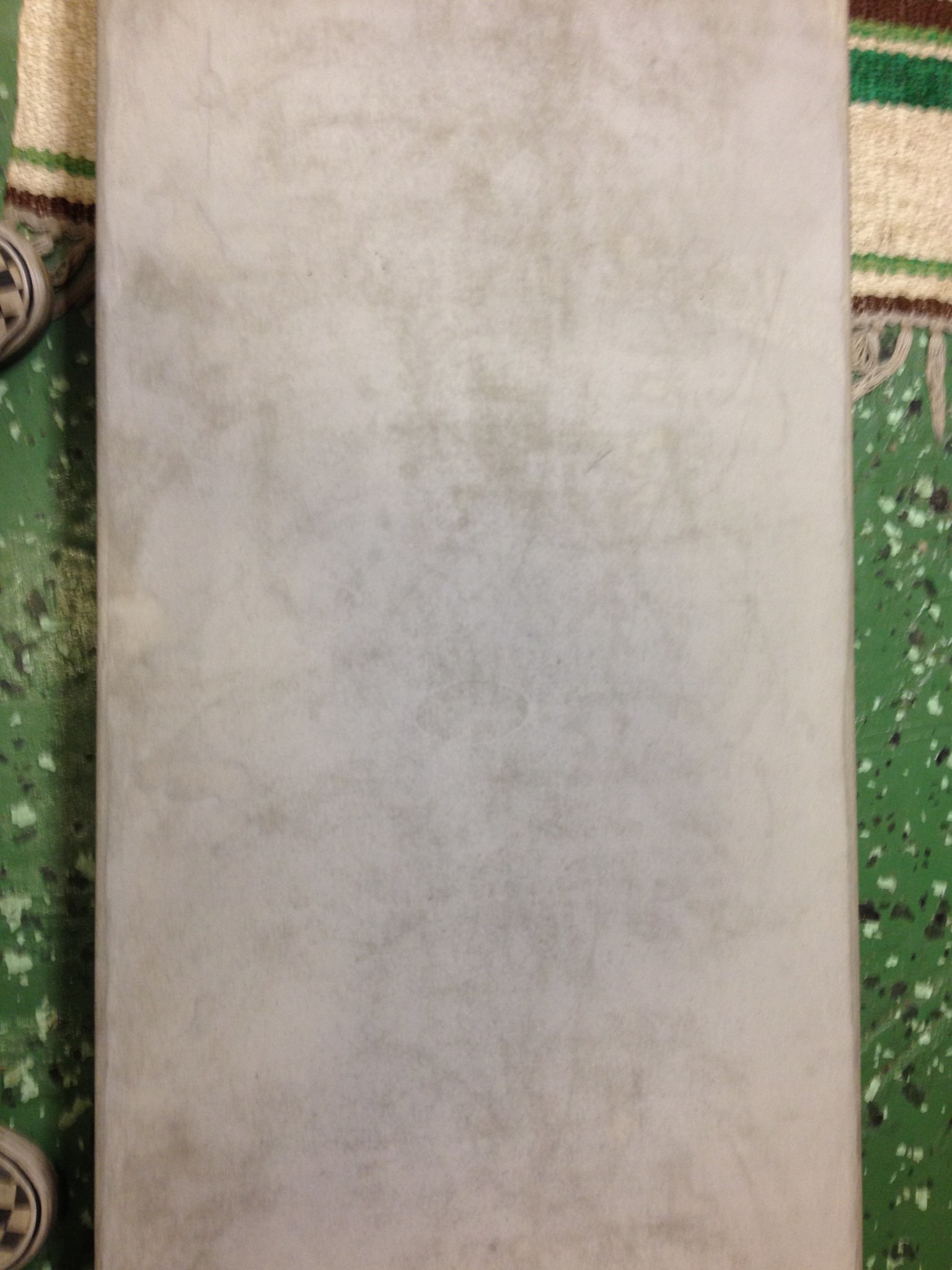
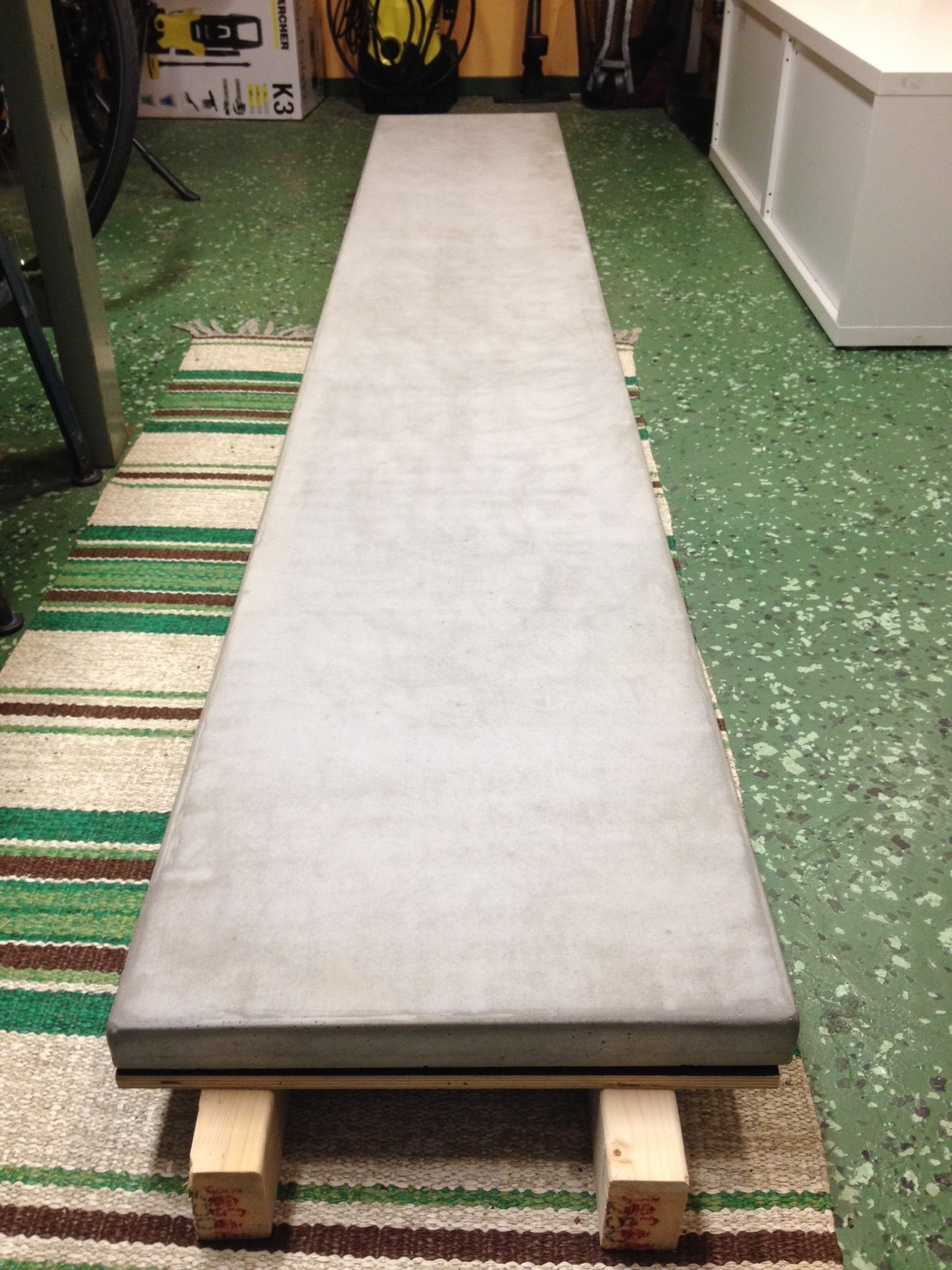
I attached two standing 45x70 under a board so it can be carried horizontally, became stable as hell!
Now it's soaped 7-8 times, wiped off and polished!
Just needs to be lifted into place as well!
Regarding the curing of the concrete, by the way, I read somewhere that concrete cures over several years, but reaches about 90% of its strength after 5-6 weeks. So if you're worried about long slabs cracking, it's probably a good idea to wait a while during the curing process.
As I mentioned, I built according to the above to be able to carry it lying down since it is significantly easier to move. However, when it is lifted into place, it is lifted on its side!
As I mentioned, I built according to the above to be able to carry it lying down since it is significantly easier to move. However, when it is lifted into place, it is lifted on its side!