
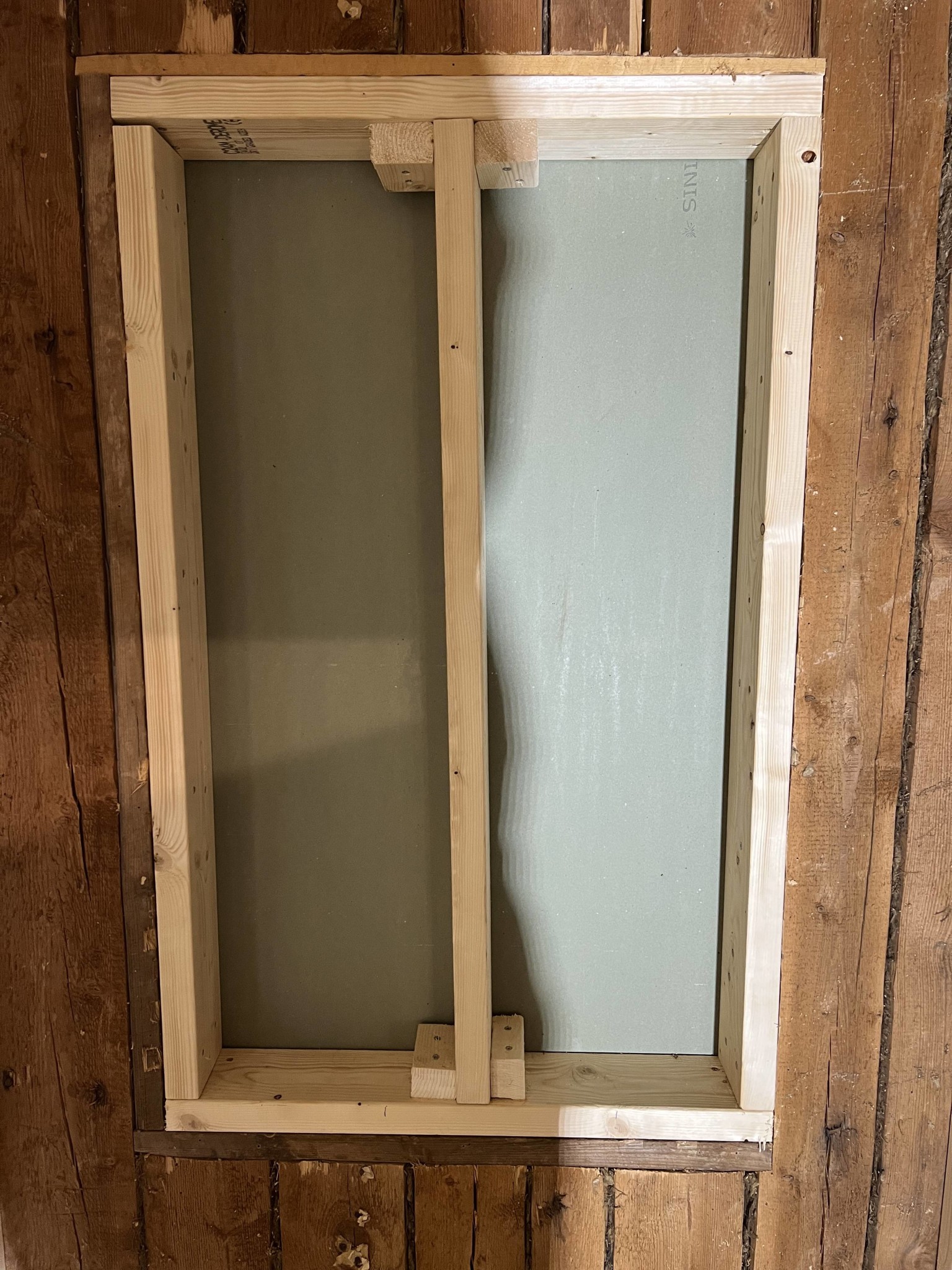
Hello! I have filled in a window in a future bathroom. It's an old wooden house that doesn't have any vapor barrier plastic today, as it was built before this started being used. The exterior wall is constructed as follows, (from outside to inside) Wooden facade - additional insulation - Windproof paper - Insulation - 9 cm thick plank wall. In the hole where the window was, I now plan to put vapor barrier plastic. Is it OK to put plastic that covers the hole + about 20 cm extra around? Or how should you proceed?
After that, it will be framed with 45 studs and insulated, with a Plywood board, Gypsum, waterproofing, and tiles.
After that, it will be framed with 45 studs and insulated, with a Plywood board, Gypsum, waterproofing, and tiles.

It is not okay in this case, but it's also not necessary since the waterproofing membrane functions as a vapor barrier.
I don't think it would directly cause any catastrophe, but it's a completely unnecessary risk and offers nothing. One should always avoid multiple layers of vapor barriers.
I don't think it would directly cause any catastrophe, but it's a completely unnecessary risk and offers nothing. One should always avoid multiple layers of vapor barriers.
According to the latest findings, a vapor barrier should be placed behind the waterproofing layer in a bathroom since the new waterproofing layers are so vapor-tight. Now it seems sensible only if you actually have a continuous vapor barrier along the entire wall. If it's just a small area in a wall that otherwise lacks any form of barrier, it probably does not matter what you do.
Rickard. said:
Okay, how about a vapor retarder then? Is it a must instead of a vapor barrier? So, having Tile - waterproof layer - plasterboard - plywood - insulation - VAPOR RETARDER - insulation - windproof paper - facade.
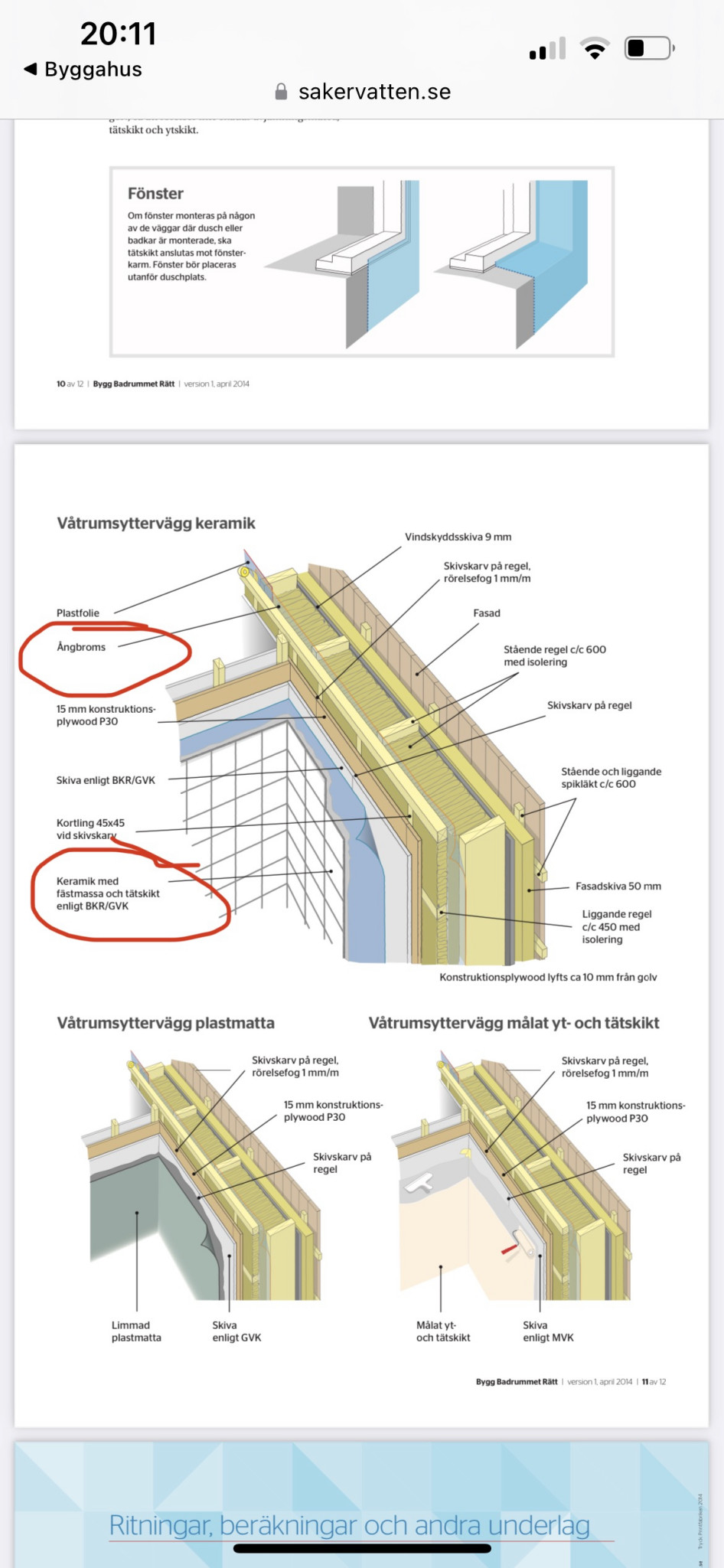
Does it increase the risk if the entire exterior walls in the bathroom lack a vapor retarder? Or is it not an issue since the rest of the house doesn't have it either? I want to avoid potential problems in the future.U Ursidae said:According to the latest findings, you should have a vapor retarder behind the waterproofing layer in a bathroom since the new waterproofing layers are so vapor-tight. Now it seems to be sensible only if you actually have a continuous vapor barrier/retarder along the entire wall. If it's just a small section in a wall that otherwise completely lacks any form of barrier/retarder, it probably doesn't matter what you do.
No, a vapor stop is not a must.
The purpose of the vapor stop is to be able to connect the vapor barrier in the adjoining rooms with something because it is impossible to seal the vapor barrier against the back of the waterproofing layer.
The purpose of the vapor stop is to be able to connect the vapor barrier in the adjoining rooms with something because it is impossible to seal the vapor barrier against the back of the waterproofing layer.
Click here to reply