
5,725 views ·
8 replies
6k views
8 replies
Cladding of interior walls with plasterboard, everything is cracking?!
Hello, I have a few questions regarding cladding interior walls with plasterboard.
I prefer to keep the walls as "natural" as possible, a plastered brick wall should remain plastered. In the house we bought, the previous owner had already plasterboarded all the interior walls and ceilings.
Several hundred square meters of plasterboard have probably been used, and in the areas where I've been able to inspect behind the plasterboard, they have also placed OSB boards behind it. Since the work looks decent, all the plasterboard will stay; I don't plan to tear it down to expose the natural walls. However, cracks have continuously appeared in the plasterboard, and these are what my questions pertain to. Each year, I find more and more cracks between the large plasterboard sheets.
In some places, you can clearly see from the cracks that the builders joined several smaller pieces of plasterboard without using any paper tape or mesh tape in the joint compound, so I can kind of understand why it cracks here.
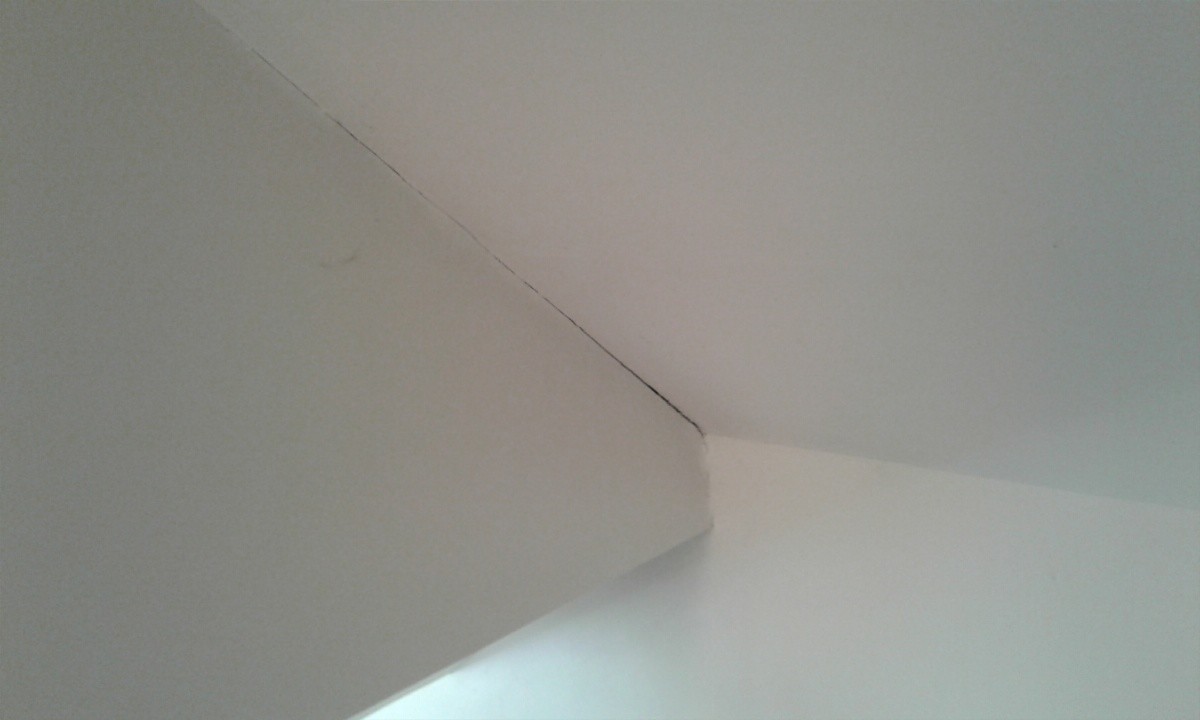
For example, it cracks at the transitions between wall and ceiling but also between wall to wall. Sometimes it results in an open crack, and sometimes the top layer curls/bubbles.
Is this normal?
Should/must paper tape or mesh tape be applied in these transitions, and if so, is it possible that the builder missed or ignored doing this?
If that's the case, is it just a matter of redoing the transitions?
Will it ever stop cracking?
Attaching some pictures to make it easier to give advice and suggestions. Thanks in advance!
I prefer to keep the walls as "natural" as possible, a plastered brick wall should remain plastered. In the house we bought, the previous owner had already plasterboarded all the interior walls and ceilings.
Several hundred square meters of plasterboard have probably been used, and in the areas where I've been able to inspect behind the plasterboard, they have also placed OSB boards behind it. Since the work looks decent, all the plasterboard will stay; I don't plan to tear it down to expose the natural walls. However, cracks have continuously appeared in the plasterboard, and these are what my questions pertain to. Each year, I find more and more cracks between the large plasterboard sheets.
In some places, you can clearly see from the cracks that the builders joined several smaller pieces of plasterboard without using any paper tape or mesh tape in the joint compound, so I can kind of understand why it cracks here.
For example, it cracks at the transitions between wall and ceiling but also between wall to wall. Sometimes it results in an open crack, and sometimes the top layer curls/bubbles.
Is this normal?
Should/must paper tape or mesh tape be applied in these transitions, and if so, is it possible that the builder missed or ignored doing this?
If that's the case, is it just a matter of redoing the transitions?
Will it ever stop cracking?
Attaching some pictures to make it easier to give advice and suggestions. Thanks in advance!



Yes, I've done some digging in the cracks.S sblixten said:
It looks like there's fiberväv, at least in some places.
In one of the easily accessible cracks, I dug a little deeper and took a photo.
It certainly looks like there is fiberväv there. But what is the outer layer?
It feels too thick to just be paint, or maybe they have applied an enormous amount of paint...
In any case, it's a framed interior wall, non-load-bearing.

It's probably filler.
I find it strange that a framed interior wall with OSB and drywall can move so much.
Try to figure out what's moving and why.
My best tip is to try to redo a crack and glue a paper strip with wet room glue, but this assumes you have time to wait a year to see the result.
I don't have any good theories about why this happens.
I find it strange that a framed interior wall with OSB and drywall can move so much.
Try to figure out what's moving and why.
My best tip is to try to redo a crack and glue a paper strip with wet room glue, but this assumes you have time to wait a year to see the result.
I don't have any good theories about why this happens.

One option is fiberduk, and to stagger the seams with the plasterboard joints. Then fine-spackle the fiberduk seams. Hopefully, it will never crack! I did just that in my kitchen, even the ceiling, easier than you might think actually!
Walls move incredibly much so of course they are a contributing factor.
But you can quite clearly see what the problem is in several pictures.
When two materials meet, they obviously crack; different materials move differently.
Ceiling/wall angles crack too, there you need to apply a sealant.
Above and below windows and doors the gypsum board is improperly installed, there the gypsum needs to extend over the door or alternatively metal strips should be mounted behind the gypsum.
But you can quite clearly see what the problem is in several pictures.
When two materials meet, they obviously crack; different materials move differently.
Ceiling/wall angles crack too, there you need to apply a sealant.
Above and below windows and doors the gypsum board is improperly installed, there the gypsum needs to extend over the door or alternatively metal strips should be mounted behind the gypsum.


Click here to reply