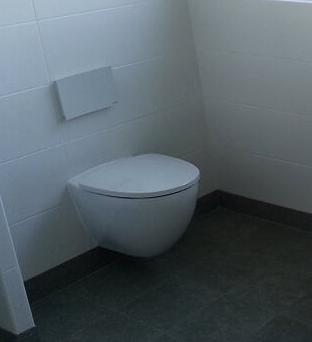
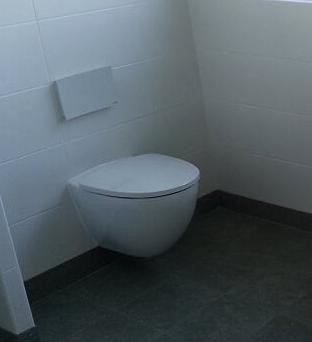
We are planning to renovate a small toilet on the upper floor with a slanted ceiling, where the back wall is load-bearing and behind it is a fairly large space in the form of a storage attic that runs along the entire length of the house. One of the contractors who provided a quote suggested that we could build a wall-hung toilet with the cistern in the storage attic to save space in the actual bathroom.
My question is: how will it be with condensation around the cistern if it is in an uninsulated storage attic? The temperature varies greatly between summer and winter (very cold in winter and very hot in summer). Can we insulate around the cistern itself, inside the storage attic?
Yes, but how? I have also understood that it should somehow be covered by the (same?) waterproofing as in the actual bathroom. How do you solve that if there is a wall in between?
As you say, the waterproofing should go into the niche, but you don't need to have tiles in there. The cistern is put in place when the waterproofing has dried and is preferably covered with building board (nothing organic) that is installed at the same level as the surrounding wall. It is crucial that the cistern is rock solid; it must not flex because then the tiles will come loose or crack! Also, add a small drainage pipe that leads any leak out into the bathroom.
The niche is open at the top, but the cistern has a lid, so it doesn't get damp in the space behind. I have a walk-in closet behind it, so I didn't have to worry much about frost risk, but I do have a thermostat-controlled fan heater on hand in winter in case it gets extremely cold (I live in Skåne).
Something along those lines should be solvable, with the addition of insulating the "box" on the back of the wall also towards the attic space... Worth considering. Thanks for the inspiration and tips!


 I have also understood that it should somehow be covered by the (same?) waterproofing as in the actual bathroom. How do you solve that if there is a wall in between?